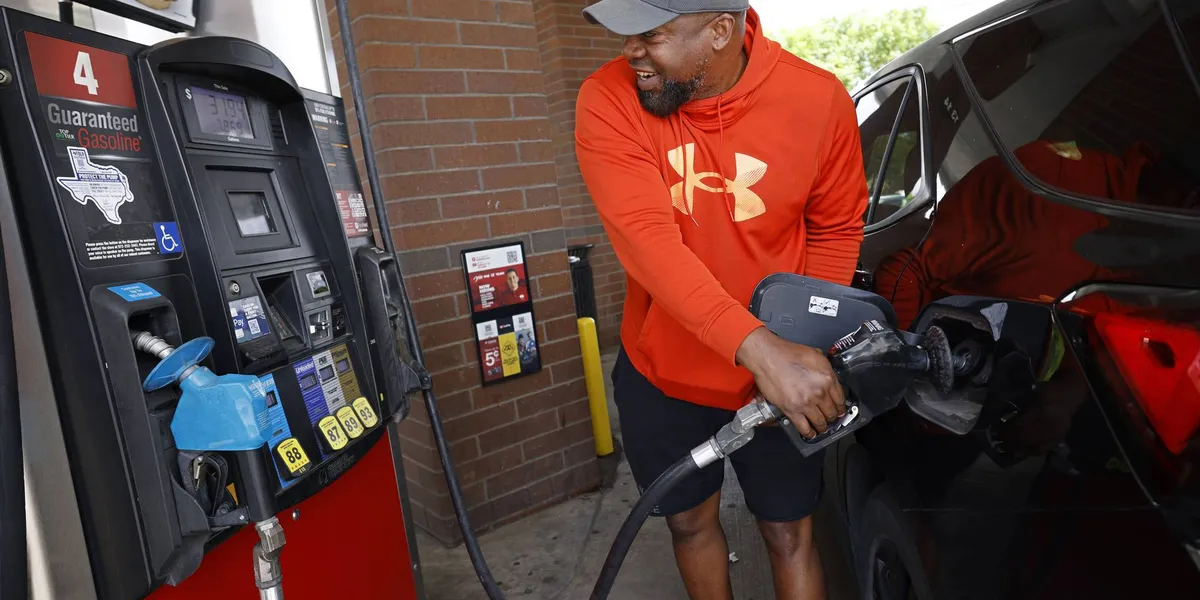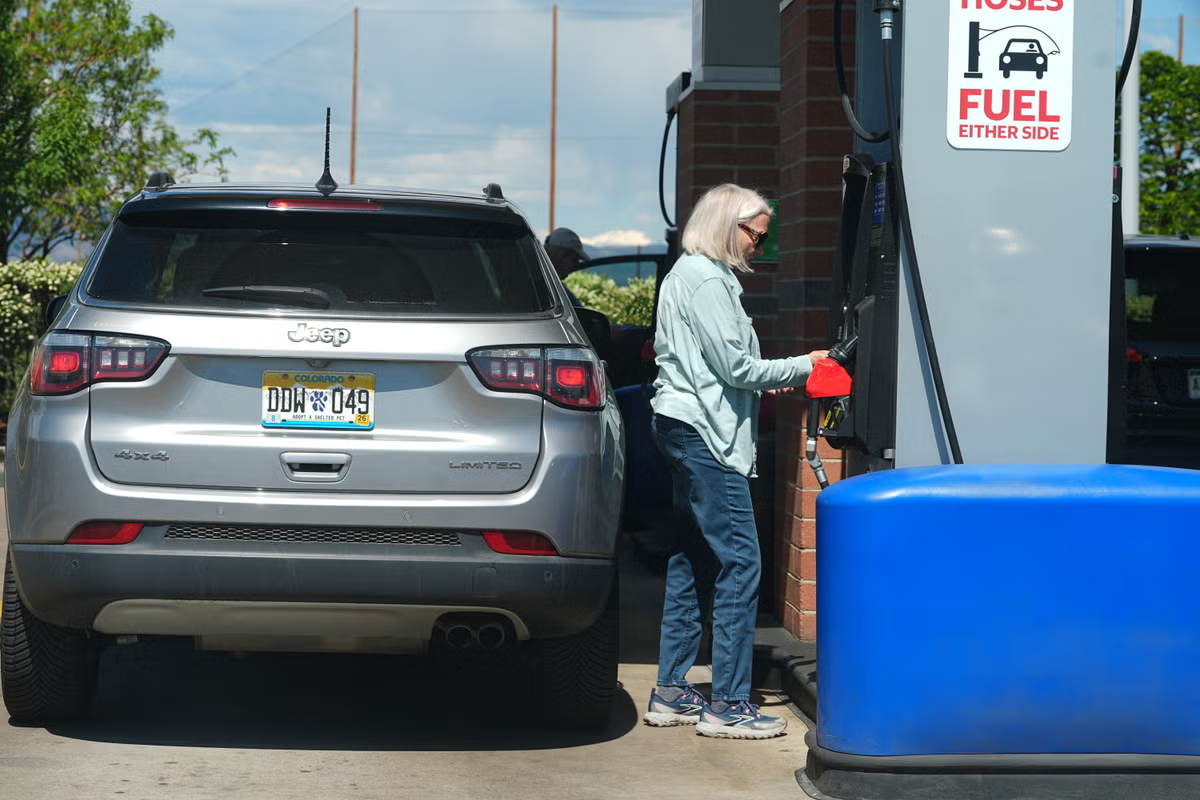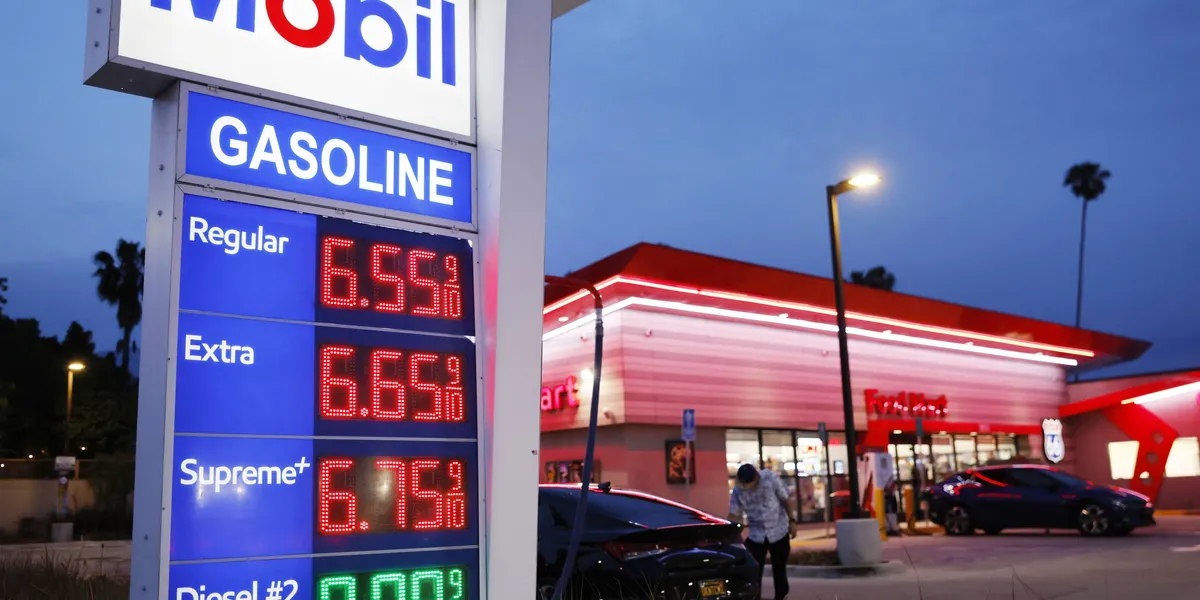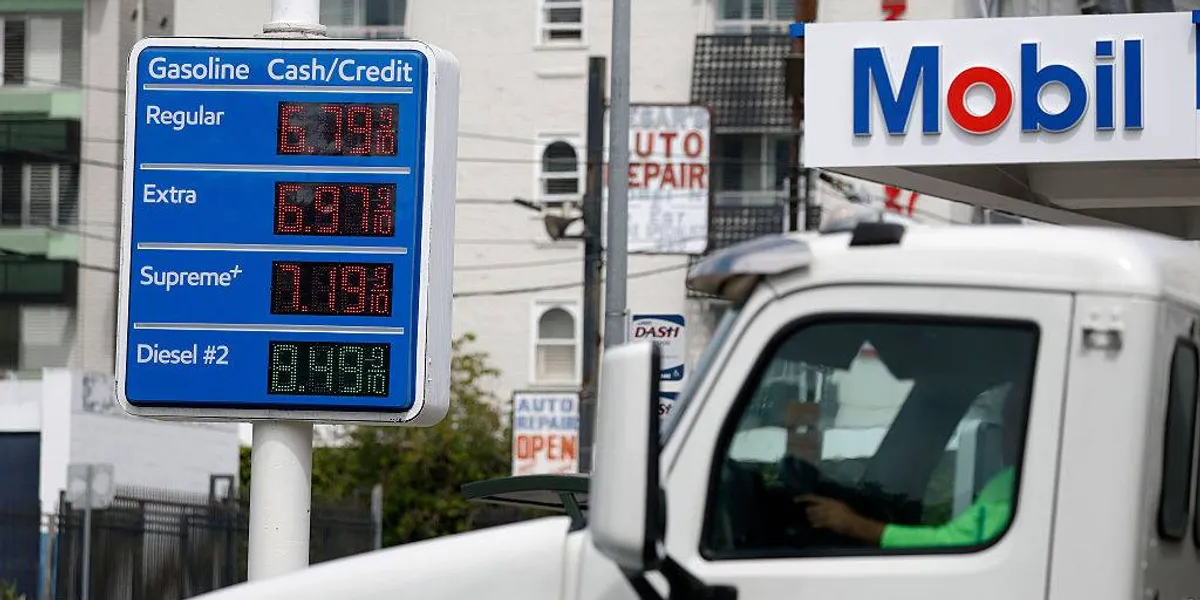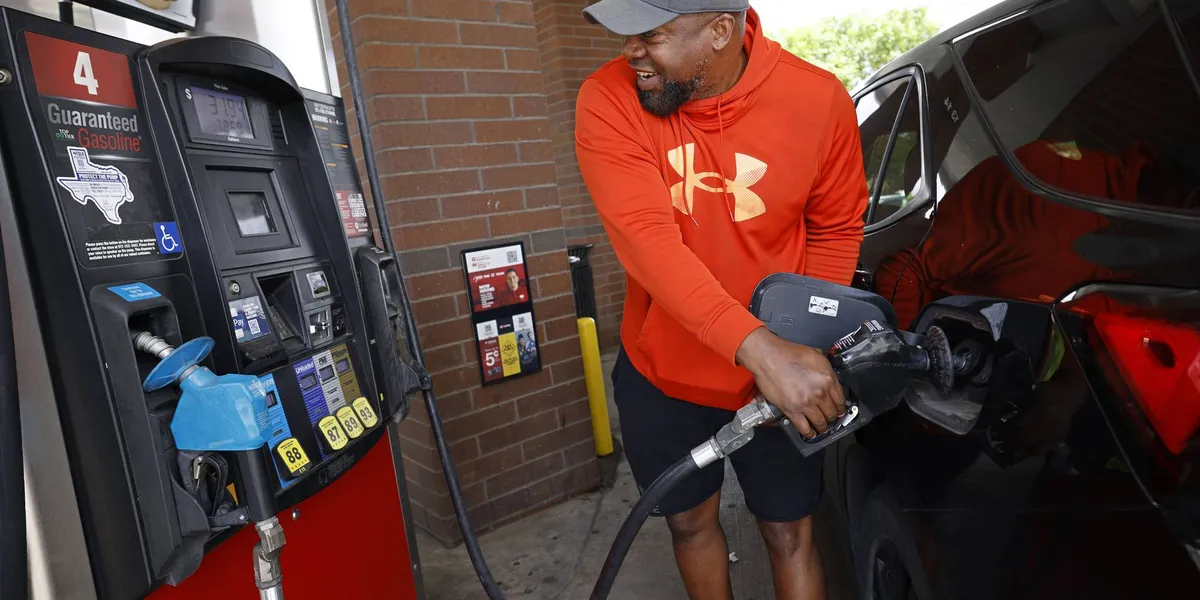
The average U.S. household has spent an additional $333 and counting on gasoline due to President Donald Trump’s war in Iran — a massive diversion of money that families could have put toward groceries, vacations or their savings accounts if not for significantly higher gas prices.That figure comes from the Iran War Energy Cost Tracker at Brown University’s Climate Solutions Lab. The site keeps a running calculation of the estimated added fuel costs U.S. consumers have borne since the Feb. 28 military operation by the U.S. and Israel. Average U.S. gas prices remain above $4 a gallon, versus a pre-war average below $3. To assess the hit to households, the energy cost tracker sets the actual gas prices since February against the projected prices had there been no war, taking into account seasonal fluctuations in demand for fuel.“Once you start to add it up and see what else we could have spent that money on, it really hits a nerve for people,” said Jeff Colgan, a political science professor at Brown and director of its Climate Solutions Lab. “It’s dead money,” he added. “It’s a transfer of wealth from ordinary consumers to the shareholders of Exxon and Chevron.”The cost is even greater when the price of diesel is taken into account. Diesel prices have risen, even as crude oil has dropped recently, and are higher than they were during the energy shock prompted by Russia’s invasion of Ukraine.“Once you start to add it up and see what else we could have spent that money on, it really hits a nerve for people.”- Jeff Colgan, Brown UniversityDiesel fuel powers the farm equipment that produces food and the trucks that carry all manner of goods. So even though most drivers don’t pay for diesel directly at the pump, consumers tend to swallow higher diesel costs in the form of higher prices at the store. “There’s very little that you buy as a regular consumer, either at the store or having it delivered by Amazon or some other company, that isn’t touched by diesel at some point,” Colgan said. “It touches basically everything in the U.S. economy…. This is a price that’s still hitting Americans in the pocketbook.”Dividing the additional diesel costs by the nation’s roughly 131 million households, the tracker estimates that each one on average has taken on an added $275 since February. That would bring the combined tab of added gasoline and diesel costs to nearly $610 per household, or $80 billion in total as of Thursday. President Donald Trump looks on during a meeting with Prime Minister of Iraq Ali al-Zaidi in the Oval Office on July 14, 2026. SAUL LOEB / AFP via Getty ImagesColgan said his lab created the tracker as a way for people to easily visualize how much they’re paying for the war — and not in the form of fighter jets, munitions and troop deployments. “When you see the numbers coming out of the Department of Defense [showing] how much it’s cost to fight from a purely military perspective, that’s something that way undercounts the cost of the war,” he said. Colgan noted that gas prices hit different households in different ways. Those in cities with reliable public transit have been more insulated from the shock, while families with a pair of cars or trucks used for long commutes have paid well above the tracker’s average. The burden is greater for people in rural and suburban areas, especially in the South, Colgan noted, where cars are essential to getting around. “This is going to bite them a little harder,” he said.The war has become a major political liability for Trump and Republicans, with three-quarters of respondents in a recent poll saying it hasn’t been worth the cost. The president has struggled to find a face-saving exit from the conflict after his fragile ceasefire deal fell apart and Iran reasserted control over the Strait of Hormuz, the vital passageway through which about one-quarter of the world’s oil moves. Ships had been moving freely through the strait before the war.“The war has become a major political liability for Trump and Republicans, with three-quarters of respondents in a recent poll saying it hasn’t been worth the cost.”Trump has alternately dismissed the massive cost for consumers — “I love the inflation,” he remarked in June — and insisted prices would soon “drop like a rock.” Oil futures fell this week on news of a possible deal to reopen the strait, though prices have fallen previously only to shoot back up as conflict flared again.Gas prices typically dip late in the summer as vacations wind down. But if prices don’t drop several cents by Saturday, it will mark the latest in the calendar year that they’ve ever remained above $4. The only people coming out ahead amid higher fuel costs are stakeholders in the major oil companies, Colgan said. ExxonMobil recently reported $14.5 billion in profits during the second quarter, doubling its revenue from a year earlier, while Chevron raked in $12.1 billion. “We’re at record refining margins for gasoline, jet fuel and diesel,” an oil industry analyst told CNN.Trump, a major ally of the fossil fuel industries, said Monday that he doesn’t appreciate how the oil companies have profited off the price run-up he created. “They’re making too much money based on a shortage,” he told reporters. “I don’t like it.”For Colgan, the transfer of wealth that’s happening is yet another argument for a U.S. transition to clean energy. Consumers would be much better off if their energy costs weren’t subject to the whims of global oil markets or the guy in the White House, he said.“There’s a national security cost associated with oil and gas that doesn’t happen with solar and wind,” he said. “No one can have a war or embargo that affects the price of sunshine or wind.”
‘It Hits A Nerve’: This Number Reveals How Much Americans Are Paying For Trump’s War With Iran
The Trump administration’s invasion of Iran has cost the typical U.S. household several hundred dollars in added fuel costs. The tab grows every day.
973 words~4 min read