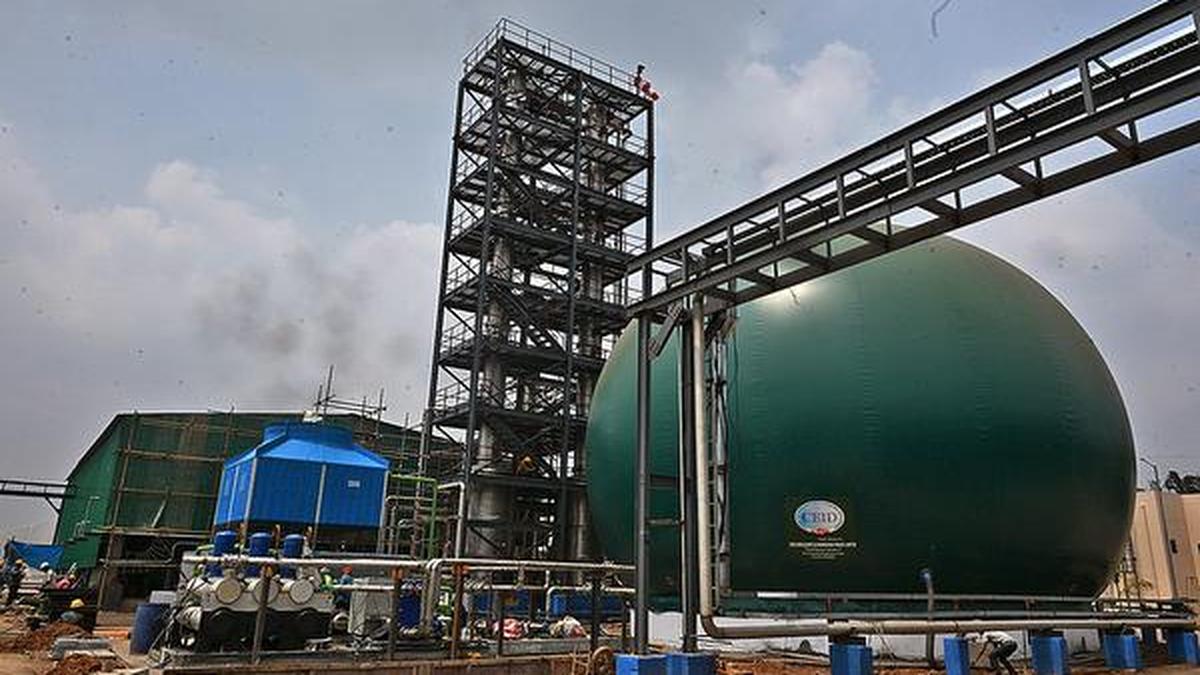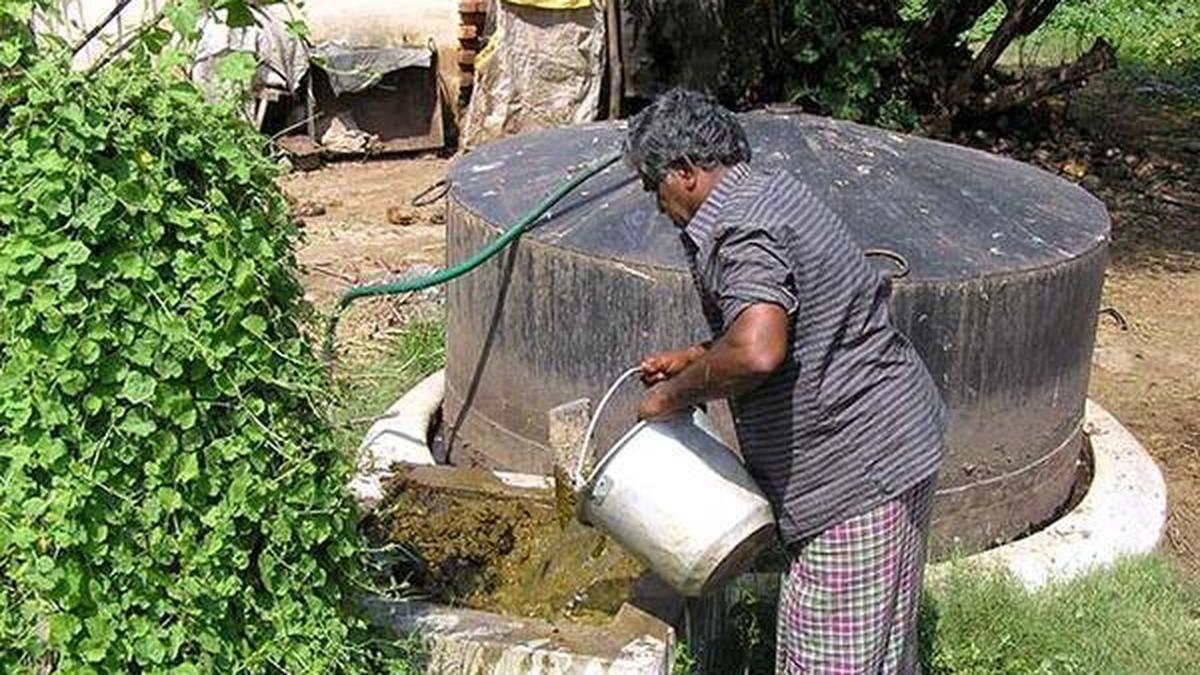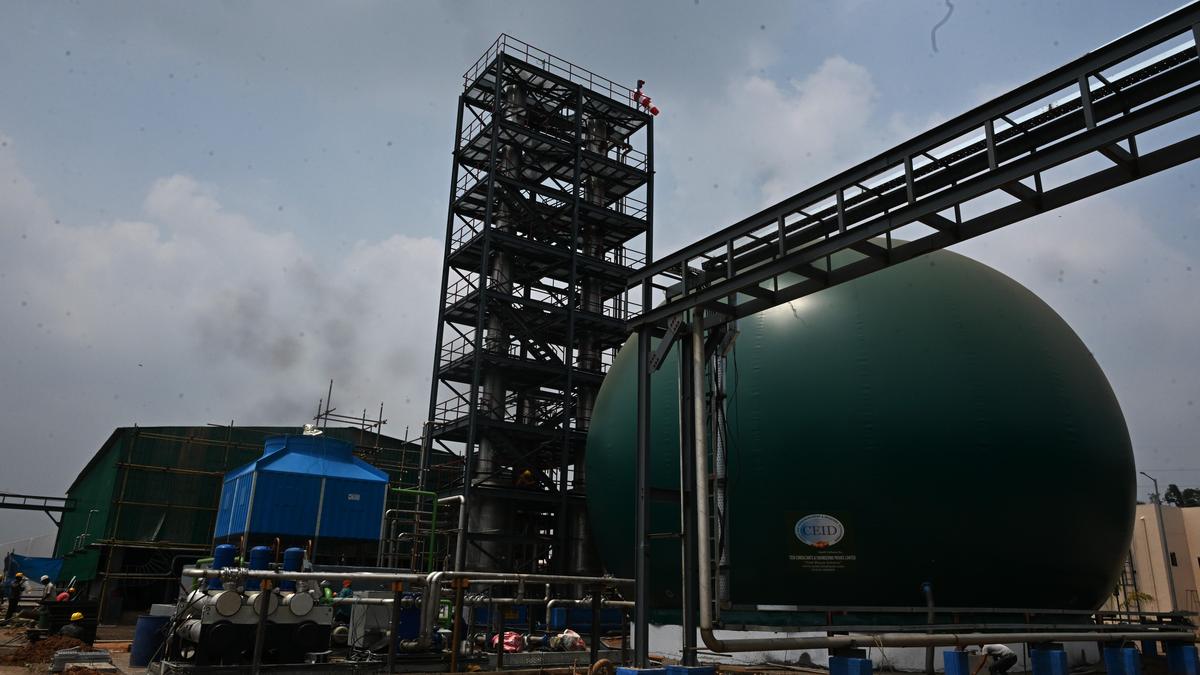
FILE PHOTO: The government has also approved the ₹23,731-crore GOBARdhan scheme to accelerate bioenergy production and strengthen the CBG ecosystem.
| Photo Credit:
H.VIBHU
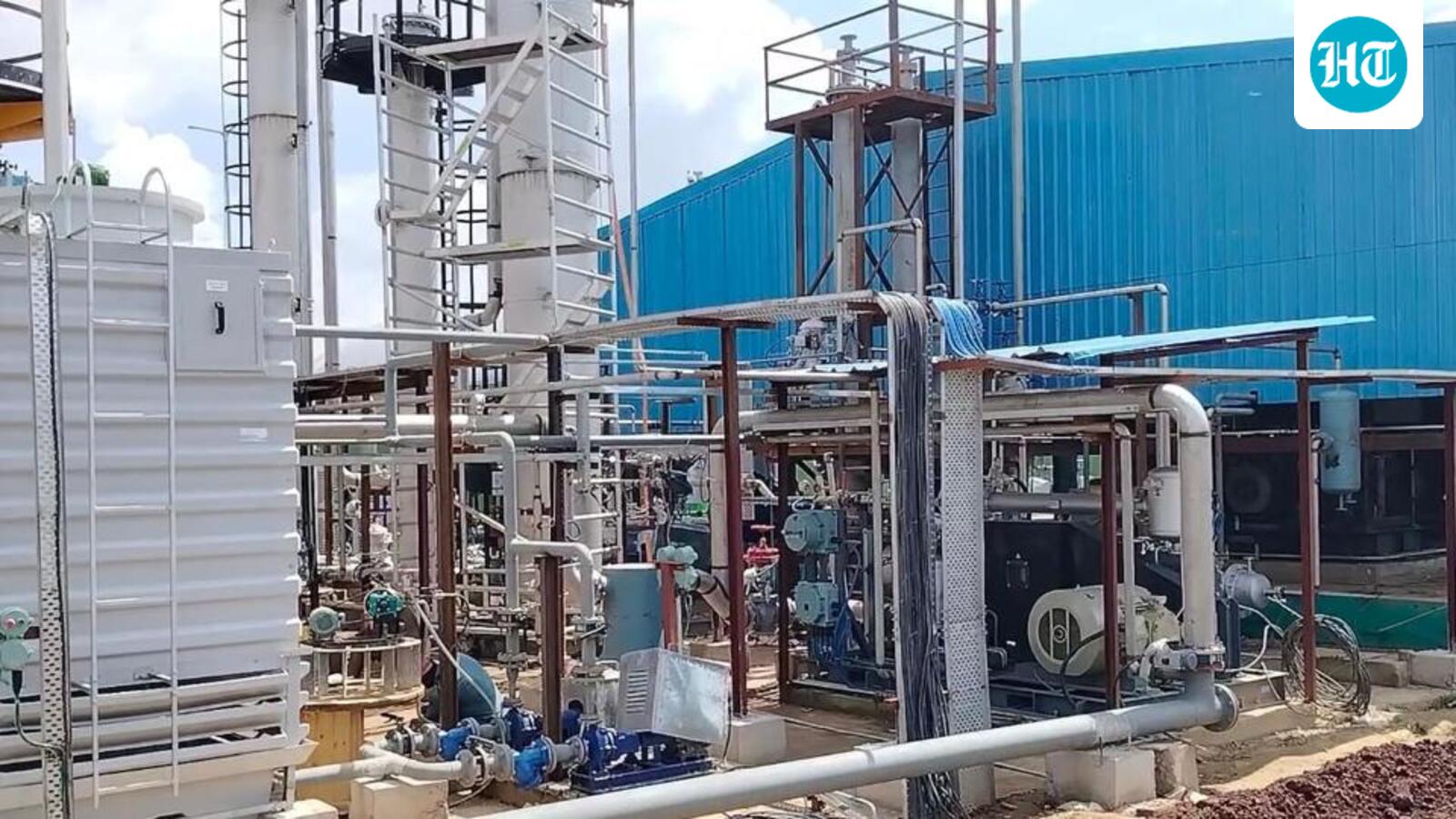
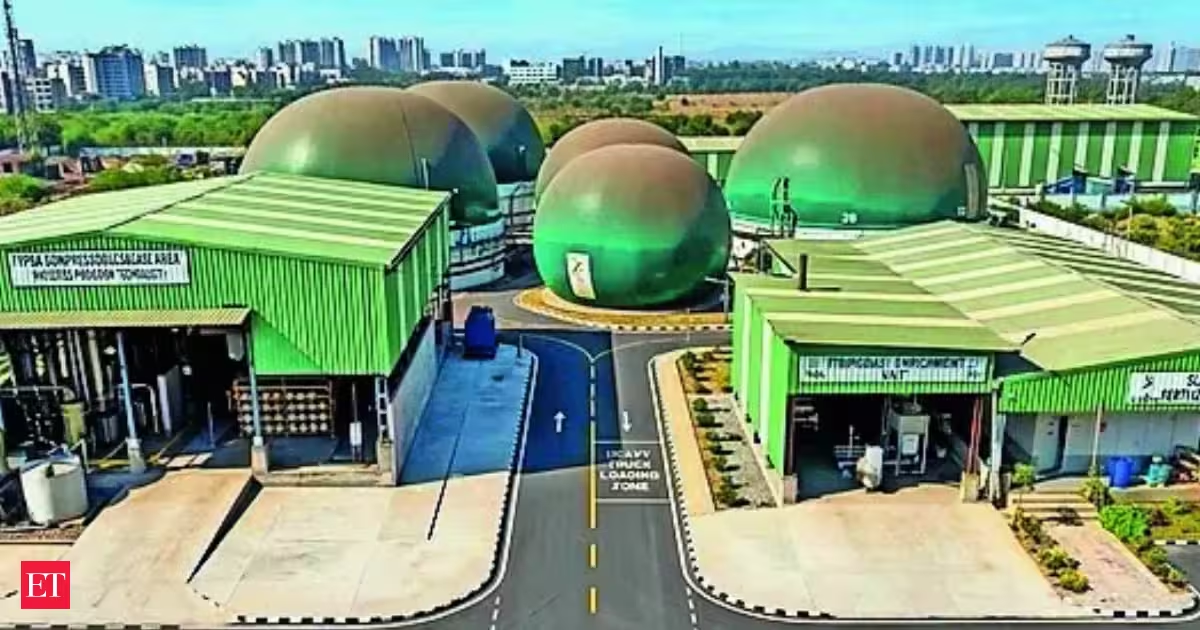
Under the government’s mandate to blend Compressed Biogas (CBG) with Piped Natural Gas (PNG) for households and Compressed Natural Gas (CNG) for the transport sector, India has marginally surpassed the 1 per cent target set for FY26.Under the CBG Blending Obligation (CBO), a blending rate of 1.05 per cent was achieved in the last financial year. The CBO aims to promote the production and consumption of CBG.The introduction of phased mandatory sale of CBG in the CNG (Transport) and PNG (Domestic) segments of CGD networks, prescribed at 1 per cent for FY26, 3 per cent (FY27), 4 per cent (FY28), and 5 per cent (FY29 onwards), Oil Minister Hardeep Singh said in response to a starred question in Lok Sabha on Thursday.“During FY26, CBG sales in the CNG (Transport) and PNG (Domestic) segments reached 1.05 per cent against the target of 1 per cent,” the Minister noted.In FY26, oil and gas marketing companies (OGMCs) procured around 96.5 thousand tonnes of CBG, more than twice the quantity procured in FY25.The extent of substitution of fossil-fuel imports depends on the quantity of CBG produced and consumed in place of conventional natural gas and other fossil fuels. With the commissioning of additional CBG capacity and increased utilisation of CBG, its contribution to the substitution of imported natural gas is expected to increase further.CBG capacity expands as more plants come onlineAccording to the GOBARdhan Portal, 217 CBG plants with an aggregate production capacity of around 1,773 tonnes per day (TPD), have been commissioned as of July 31, 2026, including 180 CBG plants under the Sustainable Alternative Towards Affordable Transportation (SATAT) and CBG-CGD Synchronisation scheme.The Minister emphasised that CBG plants support clean-energy production by converting agricultural residue, cattle dung, press mud, municipal solid waste and other organic waste into renewable fuel. This contributes to improved waste management, reduced stubble burning and greenhouse gas emissions, the production of organic manure, improved soil health, and the promotion of a circular economy.CBG plants also support the rural economy through direct and indirect employment, additional income opportunities for farmers, the development of feedstock and organic-manure supply chains, the promotion of organic farming, the creation of local infrastructure, and the enhancement of energy security, he added.Government approves GOBARdhan scheme to accelerate bioenergyTo boost India’s CBG push, the government on Thursday approved GOBARdhan, or the National Circular Bioenergy Scheme, with a total outlay of ₹23,731 crore, or roughly $2.5 billion, addressing long-standing bottlenecks such as assured offtake, stable pricing, evacuation infrastructure, and efficient feedstock aggregation.The government is focusing on six growth engines under the GOBARdhan scheme — assured off-take, stable pricing, capital assistance, developing pipeline infrastructure, credit guarantee, and an ecosystem challenge fund.Published on August 6, 2026