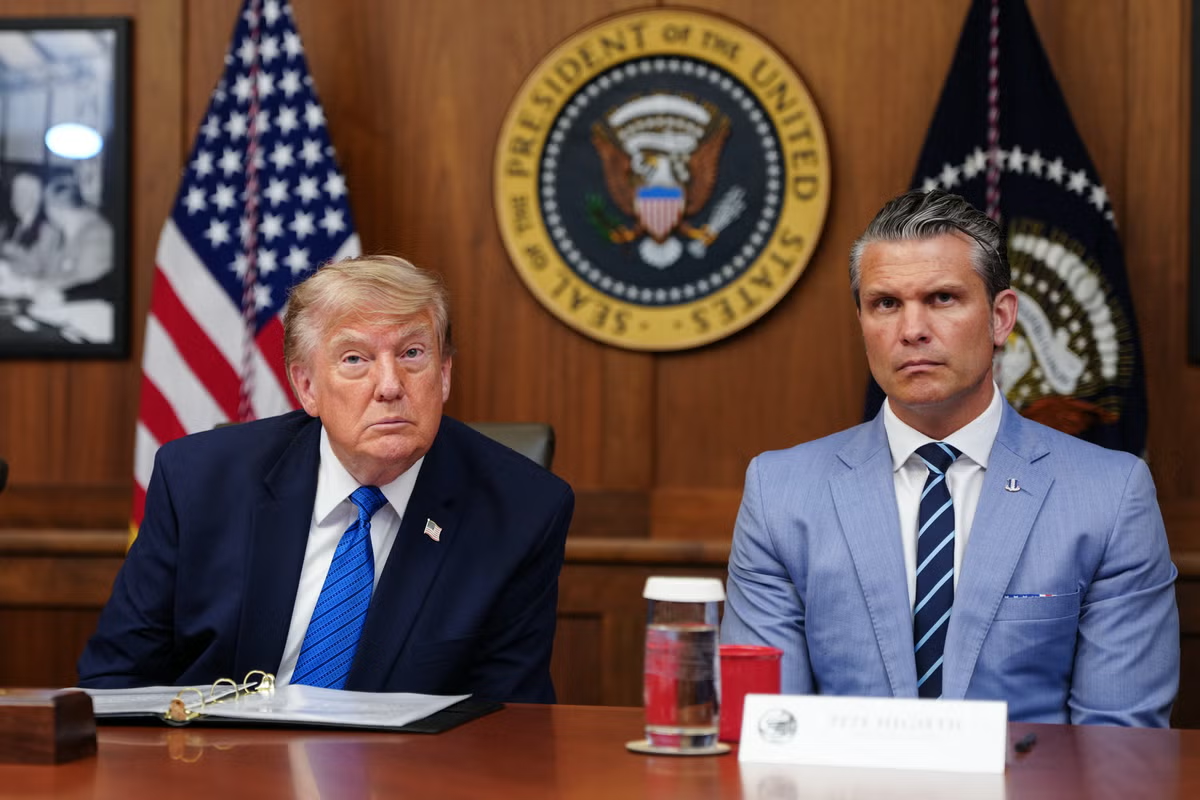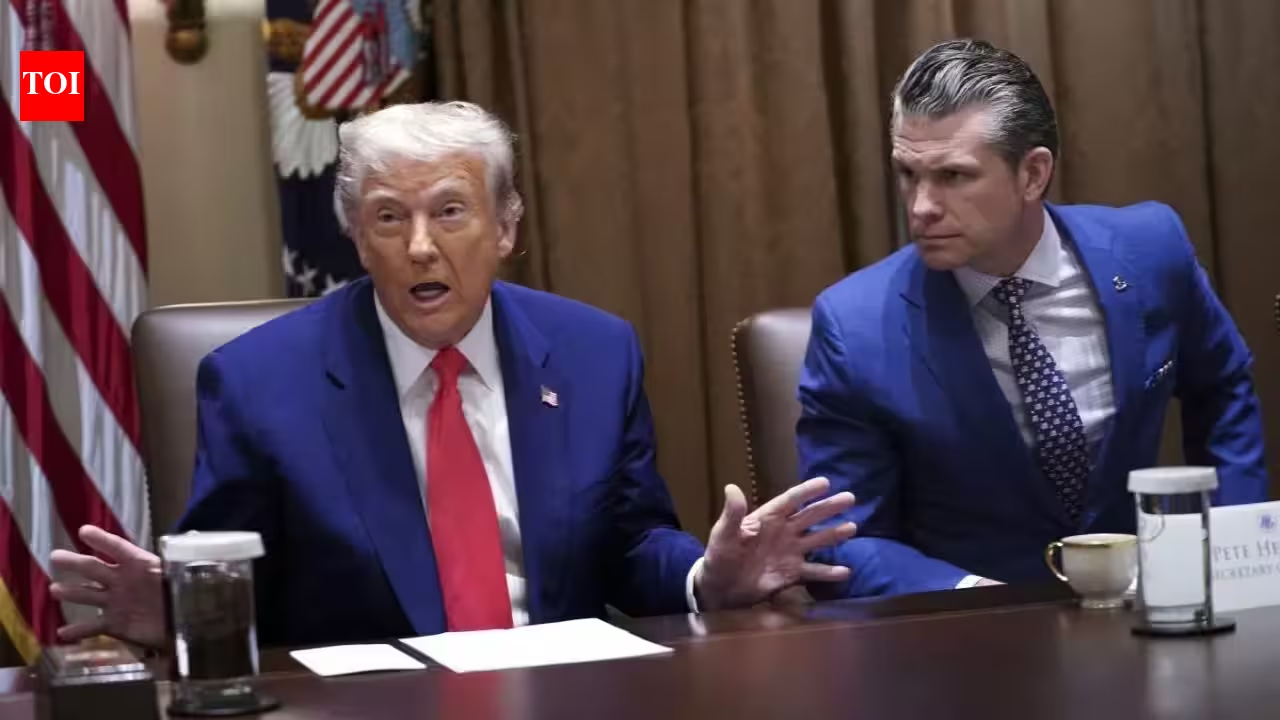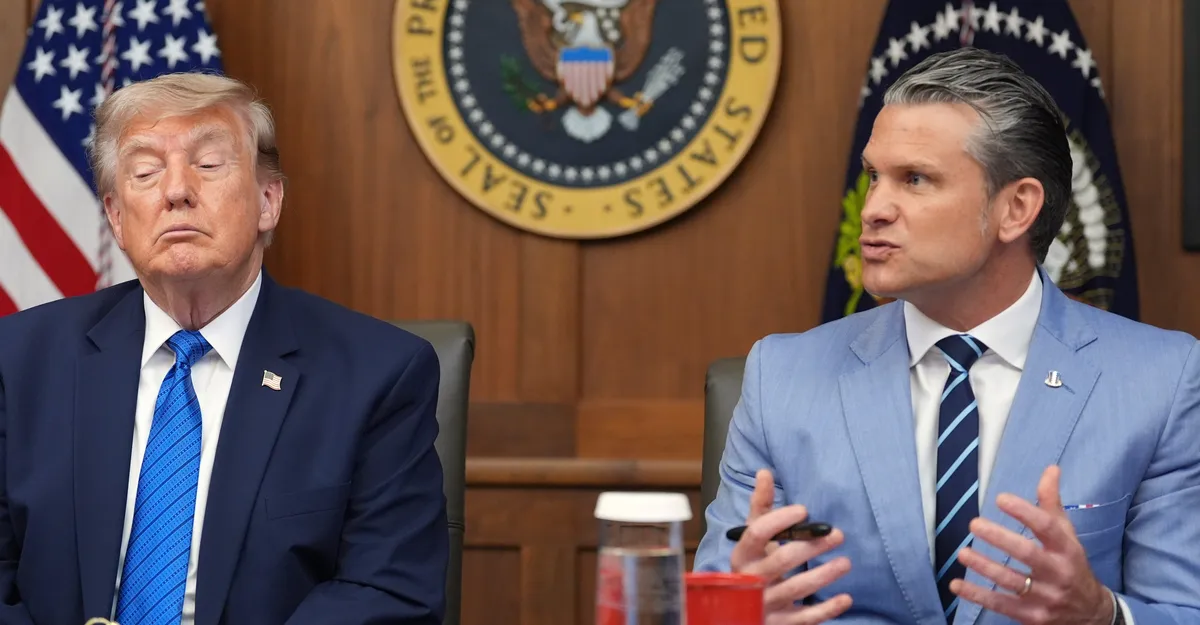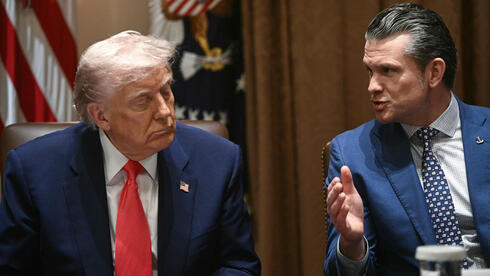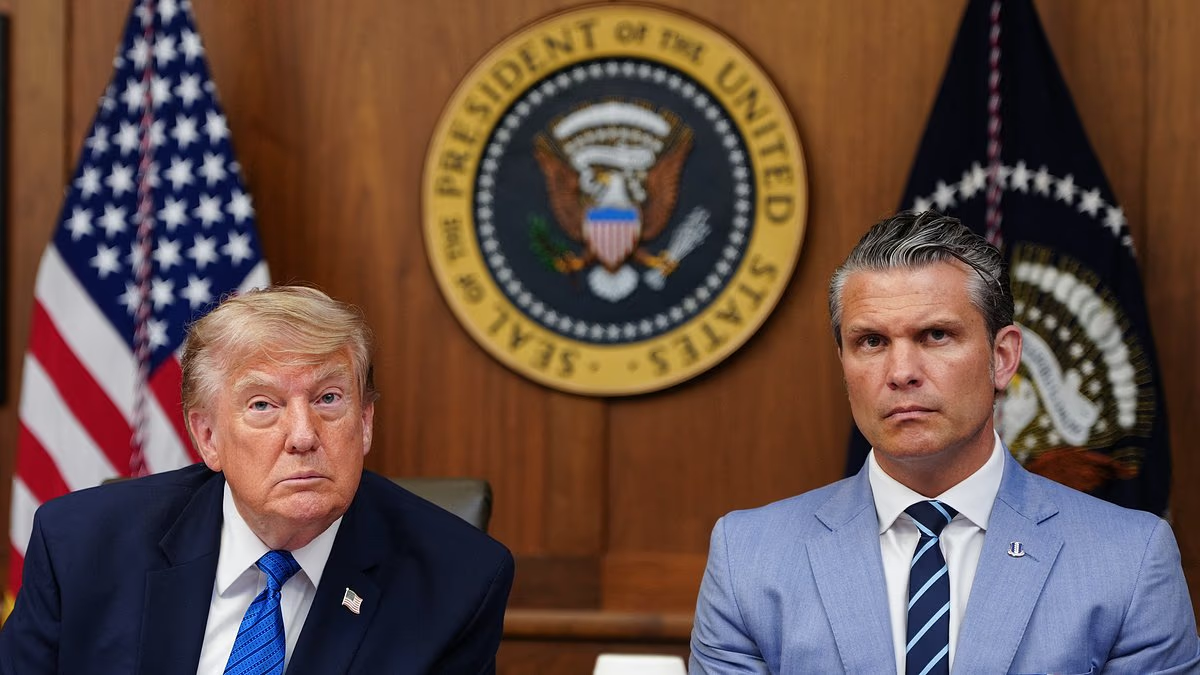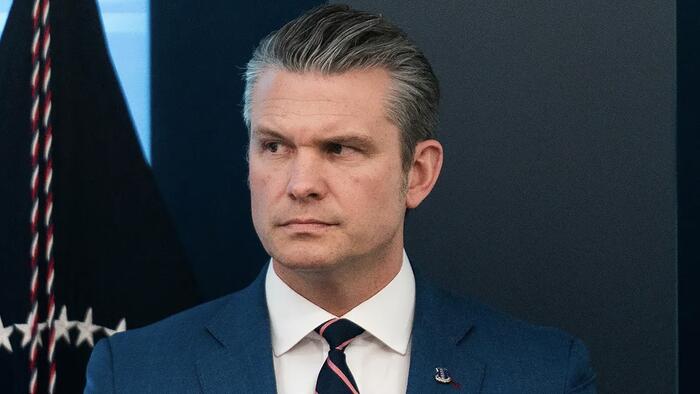
Following reports that US forces have "used up virtually all" of their precision, long-range missiles in futile attempts to first trigger an Iranian regime change and then to compel Iran to open the Strait of Hormuz, now comes reporting that an angry President Trump confronted Defense Secretary Pete Hegseth in recent days, accusing the Pentagon of misleading him on critical munitions shortages that leave Trump increasingly powerless in the five-month-old fiasco of a war. According to sources cited by the Washington Post, who spoke on condition of anonymity due to concern about retaliation, Trump's ire erupted alongside a cabinet meeting held Friday at Camp David. Trump expressed consternation that he'd been assured that the weapon shortage "had been fixed" when that is apparently far from true. The Post's administration sources portrayed Hegseth as one of the biggest and most persuasive proponents of launching a regime-change war on Iran (Photo: The Hill)According to "multiple officials" who -- reading between the lines -- clearly seem to have had it with Fox News talking-head-suddenly-turned-Defense-secretary, Hegseth defended his own actions and tried redirecting the blame to Deputy Defense Secretary Steve Feinberg, a billionaire GOP donor whom Trump plucked out of his role as co-CEO of Cerberus Capital Management to give him the number-two job at the Pentagon. Hegseth was said to have thrown Feinberg under the bus for both the shortages and failing to keep Trump fully informed. The officials characterized Trump as increasingly exasperated by Hegseth, whom they describe as one of the most enthusiastic supporters of launching a war on Iran, saying he persuaded Trump that victory would come quickly and easily. The war that the administration once projected to last three or four weeks is now in its sixth month. Iran has used both its sophisticated missile technology and its inexpensive but huge arsenal of drones to wreak havoc on US and allied forces around the Gulf. Hammered by a shock and awe campaign peppered with the multiple incidents involving mass casualties among innocents -- including scores of elementary schoolgirls -- the Iranian people have rallied around the Islamic regime, for all its faults. At least 18 US service members lay dead, several hundred have been wounded, and some estimates of the war's cost to date exceed $100 billion. Sources tell Reuters the Pentagon has blown through "virtually all" of its long-range ATACMS missiles The White House and Pentagon denied the account given by the Washington Post's sources. “This is 100% fake news. Literally never happened. And President Trump has the utmost confidence in Secretary Hegseth,” White House press secretary Karoline Leavitt told the Post. Speaking more broadly, Pentagon chief spokesman Sean Parnell said "claims about depleted stockpiles, internal disagreements, [and] the Secretary’s position on Iran" are "fictional." As for Hegseth's job security, Parnell said he "isn't going anywhere."On Tuesday, Reuters reported that the US munitions crisis is even worse than previously understood. In particular, the Army Tactical Missile Systems (ATACMS) and Precision Strike Missiles (PrSM) are said to be running critically low. "Washington has used virtually all of these weapons," two sources told Reuters, after several media reports and think tank studies had already sounded the alarm over dwindling missiles amid both the Iran war and in the years-long process of supplying Ukraine. Low Patriot defense missile supplies have also been a persisting issue in the headlines.Over the weekend, Trump's backtracking on his threat to launch “the biggest attack since World War II" was widely attributed to Saudi Crown Prince Mohammed bin Salman urging Trump to refrain, fearing a large attack would accomplish little more than triggering massive and devastating retaliation against the kingdom and other Gulf states. Trump's calculus also likely reflected Pentagon warnings about its shrinking capacity to attack. On Saturday, the Post reported that the commander of US European Command told superiors, in writing, that his forces were stretched thin, and that he might be put in a position where he'd have to choose between defending his "homeland" or the State of Israel.His candor was praiseworthy, but it may have put a dent in his prospects for advancement.
Camp David Clash: Trump Hammered Hegseth For Misleading Him On Arms Supply, WaPo Reports
A different kind of "Epic Fury" erupts on the home front..
681 words~3 min read