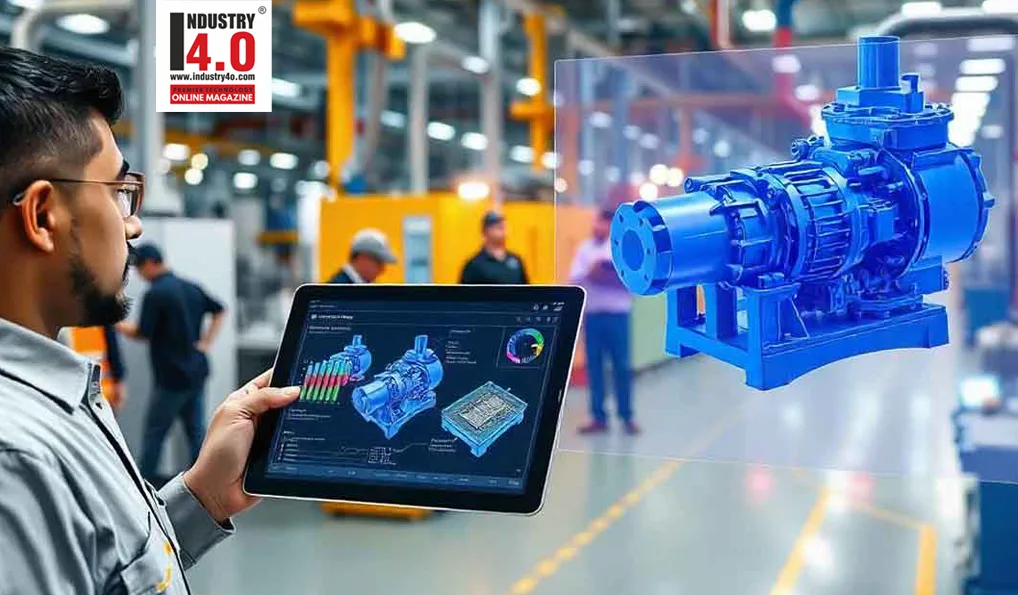
Richard Clough is the EY Global Chief Data Officer, mobilizing the AI Ready Data Strategy and AI Ready Data Governance. gettyExecutives who were around for the first wave of digital twins remember the pitch: Build a virtual replica of your factory, your supply chain or your city grid, and you'd be able to see problems before they happen. The pitch was compelling. The results, for the most part, were not.What companies got instead were expensive, narrowly scoped models that replicated individual assets in impressive detail but couldn't tell you much about how the business worked. By the early 2020s, the pattern was familiar enough to have its own shorthand: pilot purgatory.The conventional explanation is that the technology wasn't ready. That's partly true, but it misses the deeper problem.Digital twins didn't fail because the simulation engines were weak. They failed because they modeled the wrong thing. They modeled assets instead of the web of decisions, data flows, incentives and human behaviors that connect those assets into a functioning business. The missing layer was never better sensors or faster compute. It was enterprise knowledge.Why This Time Is DifferentThree shifts have converged to make enterprise-scale simulation practical in recent years:1. Rising Autonomy: Nearly all technology executives view the pursuit of autonomous AI as a high or essential priority, according to EY research, which means agents will soon be taking unprecedented action on behalf of organizations. You can't hand that kind of capability to a system you haven't stress-tested in a synthetic environment first, because the cost of getting it wrong compounds with every degree of autonomy.2. Better Inputs: Early digital twins were starved of realistic input. You could model a supply chain disruption, but only if you had enough historical examples of disruptions to train on, which most companies didn't, and even where the data did exist, privacy regulations and cross-border data rules often prevented organizations from using it for simulation or model training. Synthetic data changed this equation. Generative models trained on real operational data can generate thousands of plausible scenarios, including rare edge cases that have never occurred but easily could.3. Models That Read Context: AI has the ability to learn relationships, not just replicate them. LLMs (large language models) are contributing to this change. They can process unstructured enterprise data, such as emails, contracts and incident reports, and help teams identify the behavioral patterns that earlier simulation tools couldn't encode. They can learn that when a certain supplier misses a delivery window, a specific sales team tends to over-promise on lead times to compensate, which creates a downstream quality problem three months later. These are the kinds of behavioral patterns that lived in people's heads but never made it into a digital twin.The Simulation EnterpriseTogether, these shifts point toward something more ambitious than a better digital twin. They point toward what we call the "simulation enterprise": an organization that routinely uses synthetic environments to stress-test decisions before committing real resources.This is already happening. In January, PepsiCo announced a collaboration with Siemens and Nvidia to simulate upgrades across its U.S. manufacturing and warehouse facilities before any physical work begins. What makes this different from first-generation digital twins isn't only the fidelity of the models; it's the scope.Rather than replicating individual machines in isolation, PepsiCo is using AI agents to test system-level changes across its supply chain, simulating layout reconfigurations, line-balancing scenarios and format changeovers before anything is physically moved. Early results include a 20% throughput increase within just a few months and an estimated 10% to 15% reduction in capital expenditure.But results like that only compound if the data gets better with every cycle. At EY, we call this the AI-Ready Data Flywheel. The idea is straightforward: Each simulation run doesn't just produce a decision; it produces better data that feeds the next simulation. Over time, the organization's data estate stops being a static warehouse and starts behaving like a compounding asset.Building It Without Breaking ItNone of this means simulation is easy or risk-free. Synthetic data can amplify biases if the seed data is flawed. Models trained on their own synthetic outputs can degrade over time, a phenomenon researchers call model collapse. The challenges are solvable, but only if they're taken seriously from the start:1. Governance frameworks need to be in place before the first dataset is generated, not bolted on afterward. Assemble a small cross-functional group spanning data, legal, risk and operations, and give them authority to approve every production use case from seed data through to the decision.2. Have the flywheel model in mind from day one. The most common way simulation efforts die is by succeeding once and then stalling, because nobody designed the outputs of the first run to feed the next one. Assign someone to own the whole feedback loop, structure outputs so they flow back into the data estate as reusable assets and treat the compounding effect as the goal.3. Start with the decision, not the asset. The first wave of digital twins failed because teams asked, "What should we model?" when they should have asked, "What decision are we trying to improve?" Identify the highest-stakes call your organization regularly makes with incomplete information, whether that's demand forecasting, capital allocation or supplier selection, and build the simulation around that. The model exists to serve the decision, not the other way around.The Harder Problem AheadDigital twins were supposed to let executives see problems before they happened. Billions of dollars later, most organizations got pilot purgatory instead.What's different now isn't just better technology; it's a fundamentally different model: the simulation enterprise, where synthetic environments stress-test decisions across functions, not just assets, and the AI-Ready Data Flywheel ensures every cycle makes the next one sharper.The organizations that build that flywheel can compound their advantage with every turn. The ones that don't could find themselves back in pilot purgatory.The views reflected in this article are the views of the author and do not necessarily reflect the views of the global EY organization or its member firms.Forbes Technology Council is an invitation-only community for world-class CIOs, CTOs and technology executives. Do I qualify?
Why Digital Twins Failed, And Why Enterprises Are Trying Again
Digital twins didn't fail because the simulation engines were weak. They failed because they modeled the wrong thing.
TL;DRAI
Digital twins failed modeling isolated assets. AI agents, synthetic data, and LLMs enable enterprise-scale simulation: PepsiCo +20% throughput, 10-15% capex reduction. Tech leaders: stress-test capital and demand decisions in AI simulations before resource commitment.
1,013 words~5 min read