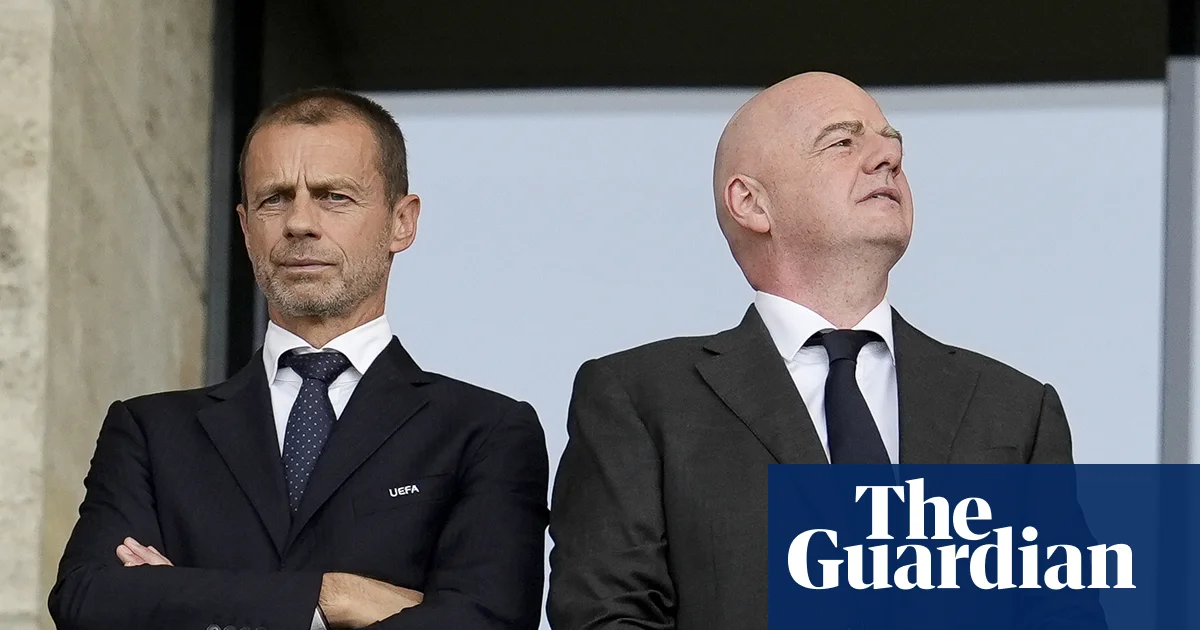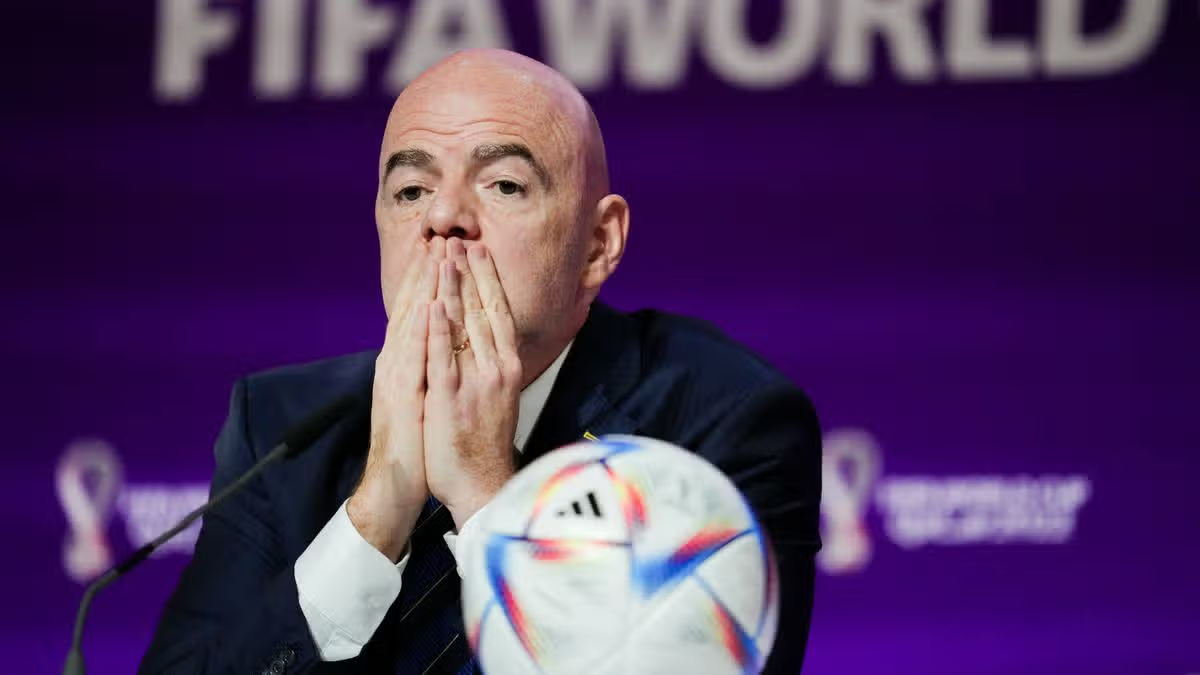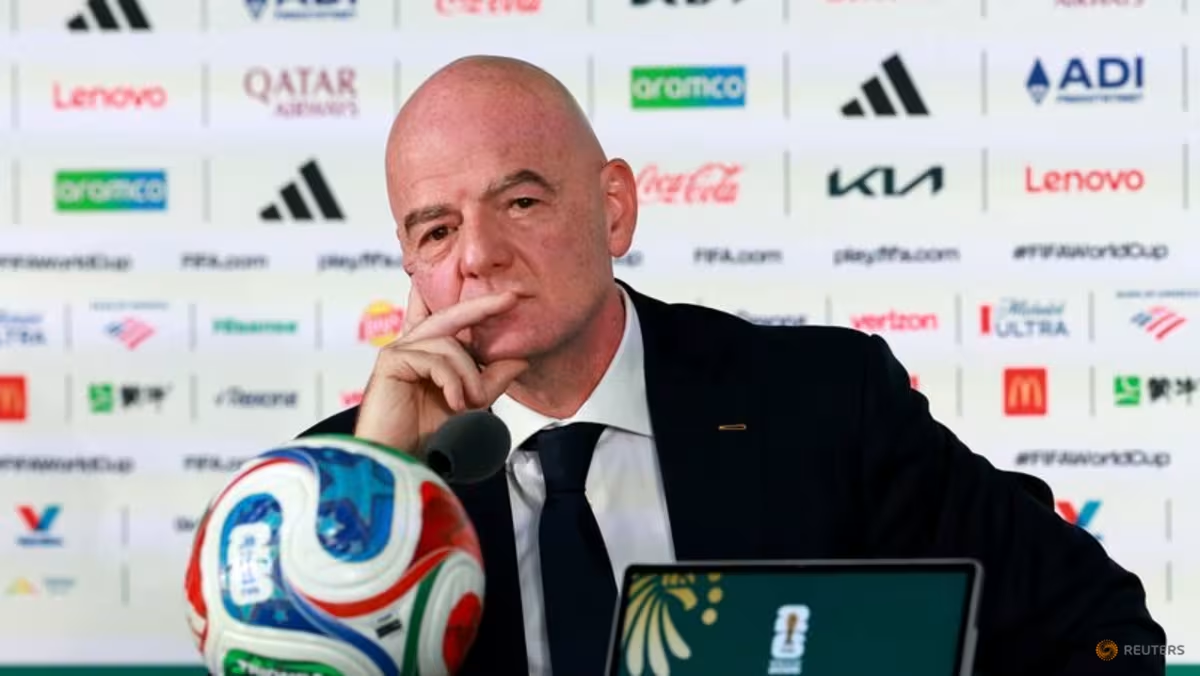
Aug 6 : FIFA's bid to move past the biggest internal crisis of Gianni Infantino's presidency is unlikely to end scrutiny of how world soccer is governed, with UEFA saying on Thursday that it remained committed to boycotting the World Cup.A day after FIFA's leadership gathered in Rabat to publicly reaffirm support for Infantino, the world governing body apologised to its 211 members for mistakes around the abandoned proposal to sell a slice of the World Cup's commercial future.FIFA also pledged to review the processes that led to the controversy that sparked the fiercest revolt of Infantino's tenure after national federations complained they had been sidelined.In a statement issued after Wednesday's meeting, FIFA acknowledged that the proposal "should have been handled differently" and said it was not their intention for the FIFA Council or associations to feel excluded from the process.
As the dust settles, a review will now be conducted before a report is presented to the Council at its next meeting and the conciliatory tone marked a stark contrast with the increasingly public criticism that forced FIFA into retreat.However, FIFA can no longer dodge questions raised by several confederations, leagues and national associations over how major strategic decisions are made and communicated, and the concerns extend beyond the doomed commercial rights proposal.UEFA'S WORLD CUP BOYCOTTEuropean soccer's governing body UEFA stressed that its key conditions for a return to FIFA competitions had not been met."First, the proposals to sell off the major competitions had to be withdrawn and secondly, assurances have to be made that such attempts to disfigure the game in this way will never be made again," UEFA said in a statement."These conditions have not been met."In addition, UEFA made it abundantly clear in its statement on Saturday that it has lost confidence in Gianni Infantino's presidency. That position holds."UEFA added that FIFA employees "whose careers depend on his favour" agreeing with Infantino did not alter its position.UEFA did not say if teams would boycott FIFA's next event - the women's Under-20 World Cup in Poland next month. Reuters has contacted the Polish FA for comment.Questions continue to linger over whether FIFA's promised reforms will lead to meaningful change before its 2027 presidential election.South America's CONMEBOL expressed concerns over the "repeated unilateral actions taken without resorting to dialogue," stressing the importance of institutional reforms FIFA introduced more than a decade ago to promote transparency.The CONMEBOL Council noted that nominations for the FIFA presidency close on November 18, with the FIFA Congress responsible for electing the next president."Consequently, CONMEBOL will not support any action or procedure that ignores or deviates from these institutional mechanisms," it said."The CONMEBOL Council calls for the preservation of unity within the football family, for acting with institutional responsibility, for strengthening dialogue, and for fully respecting governance mechanisms."'PROFOUND ABUSE OF PRESIDENTIAL POWER'Players' union FIFPRO said Infantino's proposal "negotiated behind closed doors" was not just a governance failure but a "profound abuse of presidential power."However, FIFA insists that all actions taken over the commercial rights proposal complied with its regulations and stressed that mistakes related to process and communication rather than breaches of governance rules."If true, that is not a defence. It is an indictment of FIFA's current governance framework." FIFPRO said."A framework that allows a project of this magnitude to be developed behind closed doors and hidden from those it affects until it leaks, is a framework that must be reformed, not defended."FIFA attempted to present a united front, warning critics that, with the project now abandoned, it would "no longer tolerate any attacks on its integrity, good governance and due process."Jordan's FA President Prince Ali bin Hussein also said he would not endorse Infantino despite finally receiving money outstanding for their participation in the 2025 Arab Cup.European Leagues criticised FIFA over what it described as an unrealistically short four-week assessment timeline on a separate proposal to expand the 2030 World Cup from 48 to 64 teams.The body, which represents over 1,300 European clubs, reinforced complaints that stakeholders are too often presented with decisions rather than consulted on them.POLITICAL FALLOUTFor Infantino, the immediate priority has been containing the political fallout ahead of March's presidential election in Morocco, where he will seek a fourth term through 2031.Wednesday's meeting delivered that objective, with FIFA's management board and Secretary General Mattias Grafstrom publicly endorsing the president, while Infantino returned the backing by praising the administration's work.Grafstrom had sent an internal memo to staff lamenting the "sad and reproachable series of events" and although he did not mention Infantino by name, he noted that "individuals, unstable moments and unfortunate episodes come and go".Any suggestion of lingering tensions, however, appeared to have been set aside publicly, with Infantino later posting a photo of the pair smiling for the camera and giving a thumbs-up at a women's Africa Cup of Nations match in Rabat.INFANTINO'S LEADERSHIP QUESTIONEDBut several influential stakeholders, including UEFA, have openly questioned Infantino's leadership, while criticism has also emerged from confederations like CONCACAF, which runs the game in North and Central America and the Caribbean, and the Asian Football Confederation.At the same time, Infantino continues to enjoy strong support from many smaller associations, particularly across Africa and Asia, where FIFA development funding remains central to national soccer programmes.Infantino still appears well placed politically with no viable challenger emerging ahead of the presidential election, but the controversy has shifted the spotlight onto FIFA's internal decision-making.Any future proposals that involve commercial strategy, tournament expansion or governance reforms are likely to face significantly greater demands for transparency, consultation and accountability.