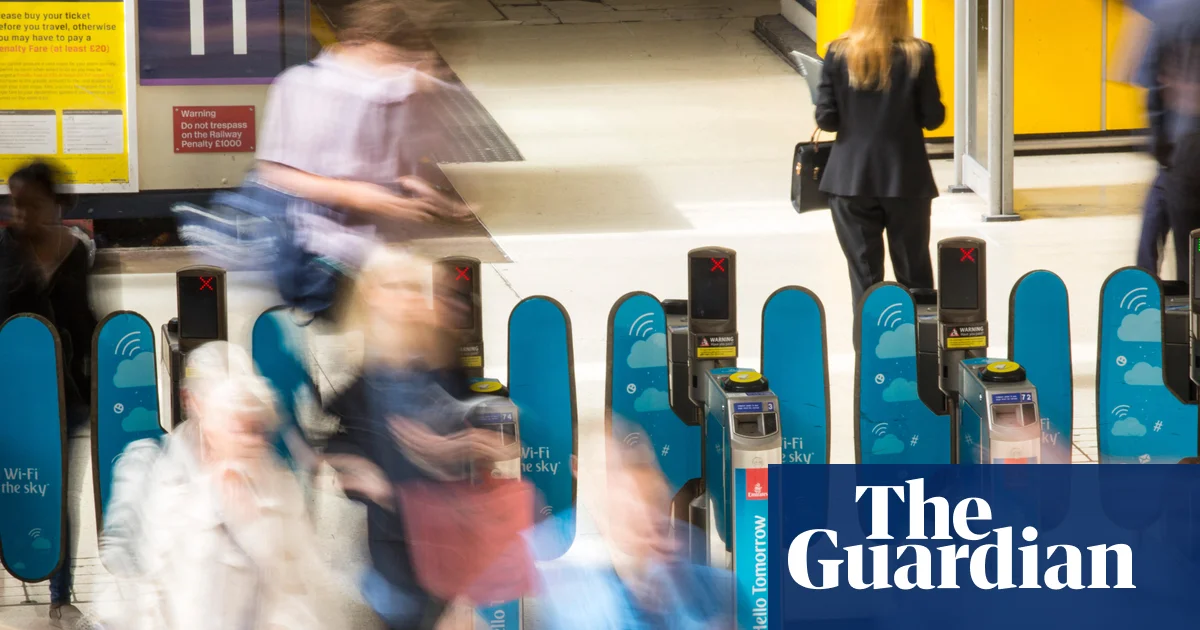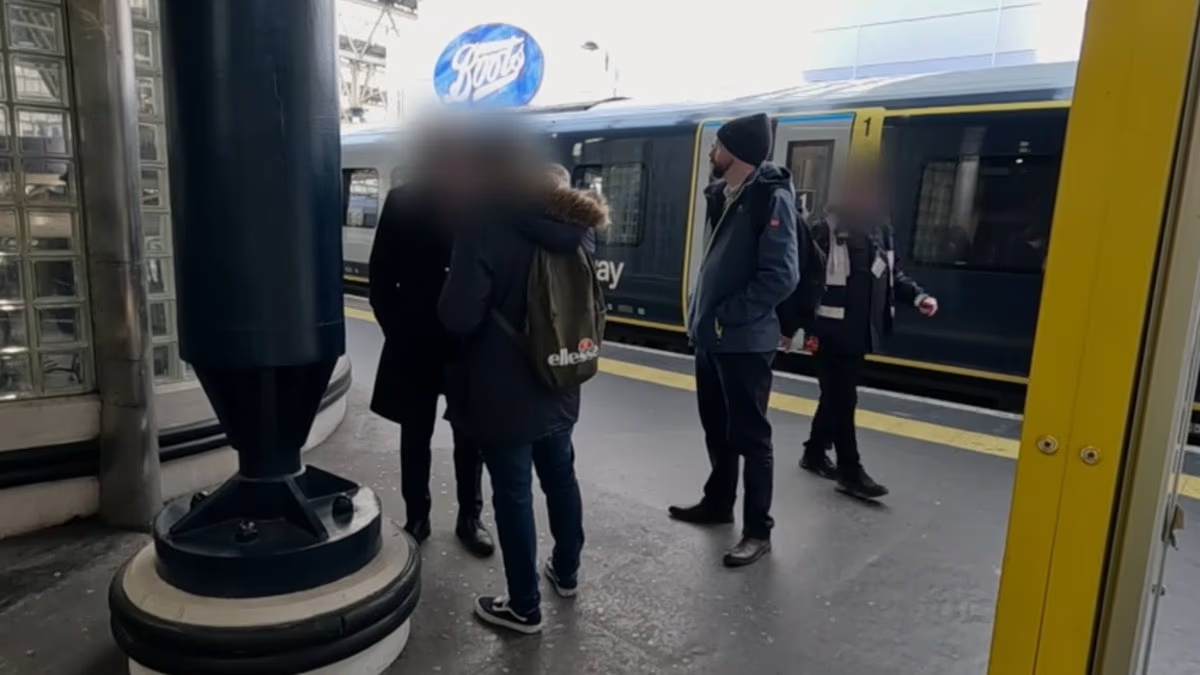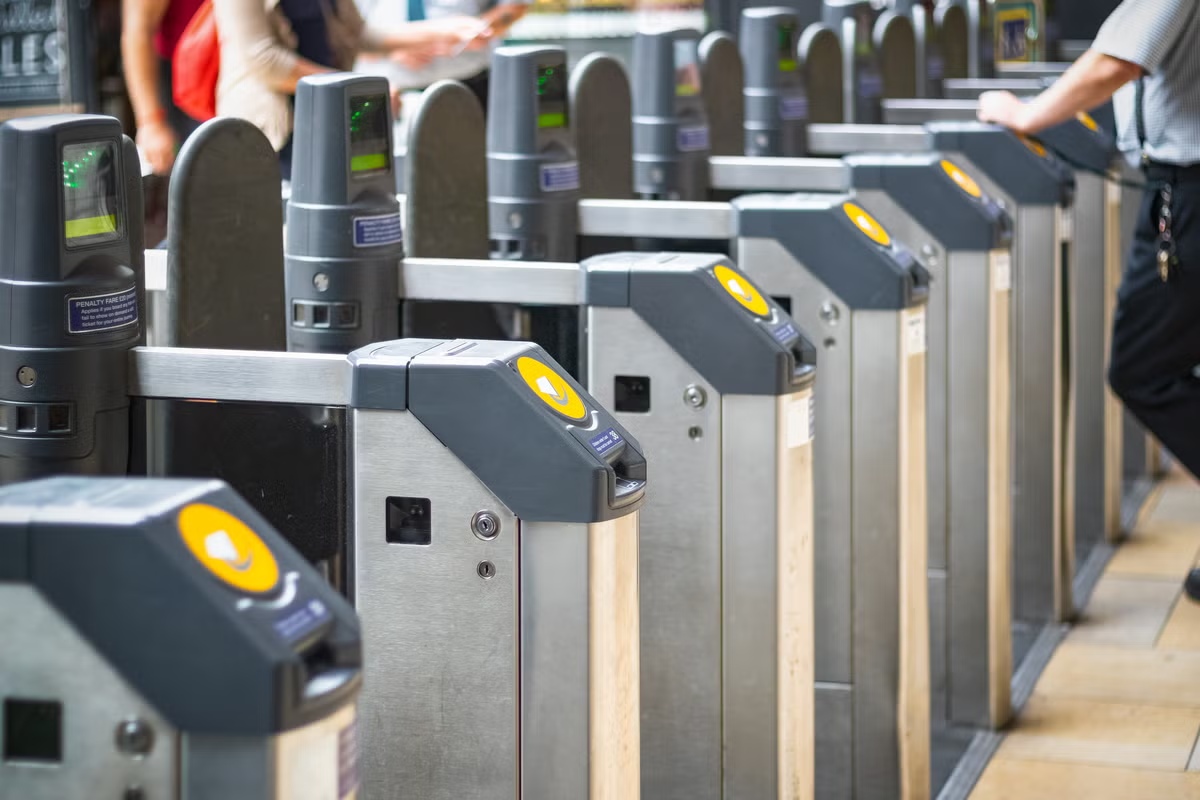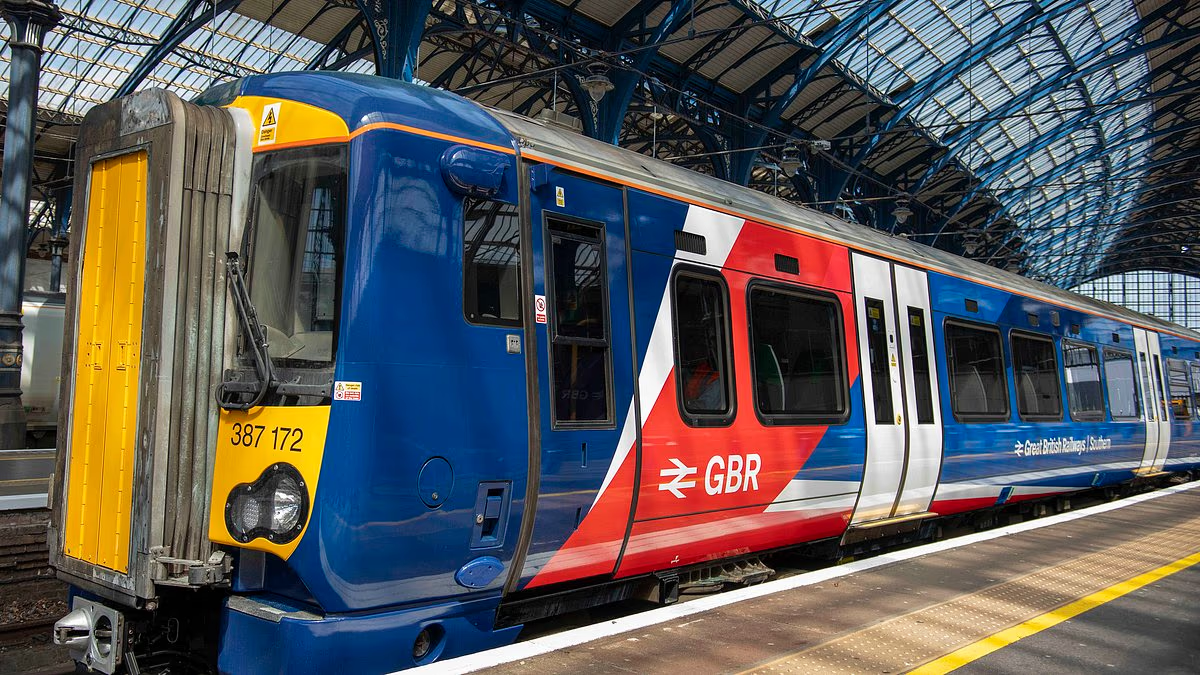
Rail passengers travelling on some commuter trains in south-east England are being blocked from buying digital tickets in an attempt to cut fare evasion.Greater Thameslink Railway (GTR), which operates Thameslink, Southern, Great Northern and Gatwick Express trains, is trying to reduce so-called 'quick scanning'.This tactic sees passengers board a train with no ticket before quickly buying a digital pass if they see an inspector or to exit at their destination if the barriers are shut.The tickets are sometimes bought for the last part of the journey or from the previous stop, to avoid paying the full cost - known as 'short faring' or 'short ticketing'.Now, Britain's biggest rail operator GTR has begun a three-month trial which means passengers cannot purchase digital tickets from stations around its major hubs.This means passengers buying a ticket online for selected stations will not receive a scannable QR code - but must instead pick it up from a ticket office or machine.GTR however refused to say which stations are involved in the trial, to avoid evaders changing tactics and buying a ticket from a different hub further along the line.But the change could have an impact on law-abiding commuters who correctly pay for their journey online - and might now have to queue to pick up a printed ticket. A Southern train service with new Great British Railways branding at Brighton station in MayGTR's major hubs include London Bridge, Victoria, St Pancras and King's Cross in the centre of the capital, as well as Clapham Junction, East Croydon and Gatwick Airport.The operator told the Daily Mail that it carried out a revenue 'block' at Brighton last week, where all tickets are manually inspected. Some 78 sanctions were issued – with 36 of these related to this 'quick scanning' method.GTR added that up to 95 per cent of the short-fare tickets purchased are used fraudulently.It said the pattern of tickets bought immediately before using them on a ticket gate is not consistent with legitimate customer buying patterns. There is also a disproportionate increase in tickets bought within just the 60 seconds prior to opening the ticket gates.Stephen MacCallaugh, head of revenue protection at the operator, said: 'Last week we launched a new trial to target 'quick scanning' at certain locations on our network, where passengers intentionally buy a ticket only moments before their ticket is inspected.'It is only fair that everyone travelling on our railway pays the right fare, and as the UK's largest train operator in public ownership, reducing fare evasion and the taxpayer's subsidy on the railway is crucial to our success.'This trial is one of several initiatives we're exploring to reduce fare evasion while making sure genuine customers can still buy tickets easily and conveniently.'GTR, which accounts for one in six UK passenger rail journeys, is one of the most recent operators to transfer into public ownership after being nationalised on May 31.Until then the operator was known as Govia Thameslink Railway, which was a joint venture between the British company Go-Ahead Group and French firm Keolis. It comes as fellow operator South Western Railway (SWR) launched its own crack-down on fare dodgers who deliberately buy a ticket for only part of their journey.SWR said it identified widespread misuse of electronic tickets by passengers engaged in short-faring or short-ticketing.It found that up to 95 per cent of barcode tickets – which can be bought and displayed on a phone – purchased for the four-minute journey between Vauxhall and London Waterloo were being used fraudulently, putting £1million of revenue at risk.These tickets open the barriers at Waterloo, and are considerably cheaper than for long-distance journeys on SWR's network, which stretches to Devon and Dorset.SWR's crackdown has involved deploying more revenue protection staff at Vauxhall to ensure everyone who enters the station with an electronic ticket has it scanned. In a separate plan, taller barriers have been set up at High Wycombe on the Chiltern Railways network with recording sensors and tougher mechanisms to stop passengers barging throughWhen a fare dodger arrives at Waterloo with an electronic ticket from Vauxhall that was not scanned at the start of the journey, it is apparent they have travelled from further away.Passengers caught without the correct train ticket must pay a £100 Penalty Fare – halved if paid within 21 days – and buy a single ticket for their journey. Those found to be repeat offenders can face prosecution.Separately, ministers were this week revealed to be expanding trials of a digital rail ticketing app which uses GPS to crack down on fare evasion.Digital pay-as-you-go ticket technology is currently being trialled on some routes in the East Midlands and Yorkshire, including between Leicester and Nottingham via Derby, Harrogate and Leeds and Sheffield and Doncaster. The app tracks a passenger's location and checks them in at the start and end of their journey, even if there are no barriers at a station. The cost is calculated and automatically charged to the passenger's bank card.But transport ministers hope the scheme will also be able to crack down on 'short faring' as well as 'doughnutting', when tickets for the start and end parts of a journey are bought but not for the section in between.The initial trials were open only to a limited number of passengers but now an unlimited number will be able to sign up under the expansion.This is taking place ahead of the full re-nationalisation of the network, which is happening gradually. Operators will be run by Great British Railways (GBR), aimed at creating a single 'guiding mind' for the running of the railways.SWR was the first operator to be taken back under state control in May 2025 and CrossCountry will be the last, scheduled to take place in autumn 2027.Estimates suggest fare evasion costs the rail industry £400million a year, with ministers looking at ways of cracking down. This has so far included £33million to install shoulder-high ticket barriers at fare-dodging hotspots to prevent the barriers being jumped.Transport for London (TfL) recently revealed that the number of passengers handed £100 penalty fares across the network had surged over the past year. Some 69,001 of them were issued in the year to March, up 9 per cent from the previous 12 months.Investigations into fare evasion and interceptions have been documented in the popular Channel 5 show Fare Dodgers: At War With The Law, which returned for a third series on Monday.An exclusive clip shared with the Daily Mail showed an Elizabeth line fare dodger being caught by investigators after racking up more than £2,200 in unpaid journeys in one year.
Britain's biggest rail firm blocks digital tickets at some stations
Greater Thameslink Railway (GTR), which operates Thameslink, Southern, Great Northern and Gatwick Express trains, is trying to reduce so-called 'quick scanning'.
1,091 words~5 min read