TL;DR
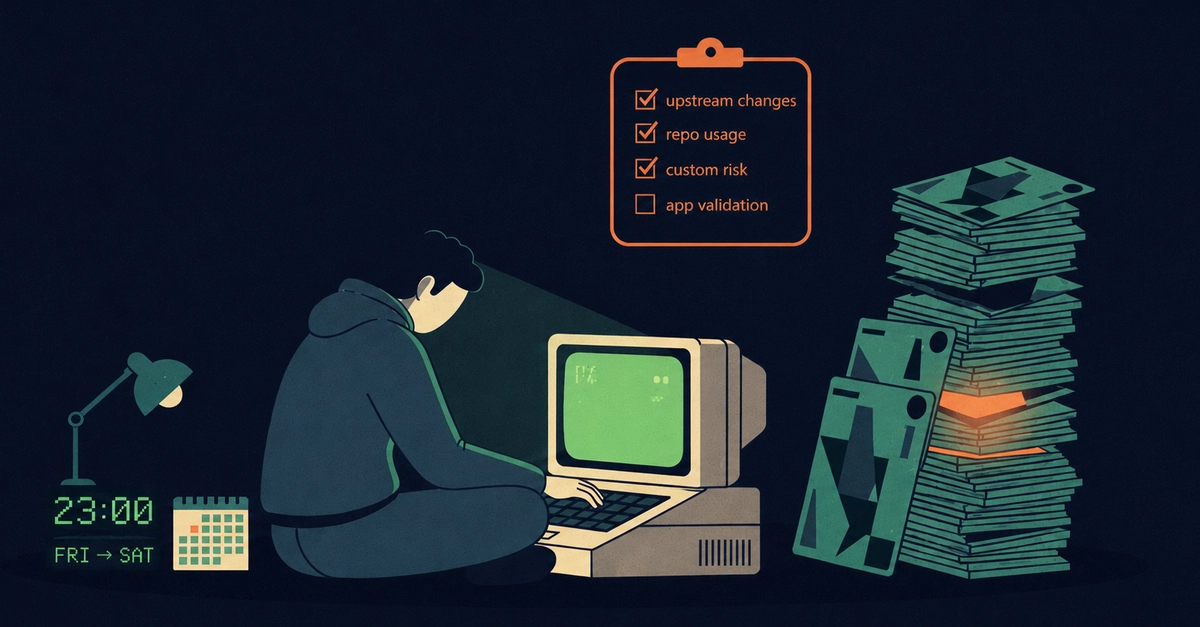
For years, "upgrade dependencies" meant blocking off a Saturday, praying nothing exploded, and reading changelogs until my eyes glazed over. I rebuilt that workflow around Claude Code (currently running v2.x) doing the grunt work — one package at a time, changelog-first, test-gated, with automatic rollback on failure. My last quarterly upgrade round took 85 minutes instead of the usual 6+ hours, and I shipped zero regressions. Here's the loop, the guardrails that make it safe, and what I got wrong the first three times I tried it.
The Problem
I maintain a mid-sized Node.js/TypeScript backend — nothing exotic, maybe 60 direct dependencies. Every quarter, npm outdated would spit out a wall of packages, and I'd do what most of us do: ignore it until a security advisory forced my hand, then upgrade everything at once in a panic.
That "big bang" approach has an obvious failure mode. When you bump 15 packages in one commit and something breaks, you have no idea which one did it. I've spent entire evenings bisecting a broken test suite across a pile of simultaneous version bumps, only to find the culprit was a patch-level bump to a logging library that changed its default output format.