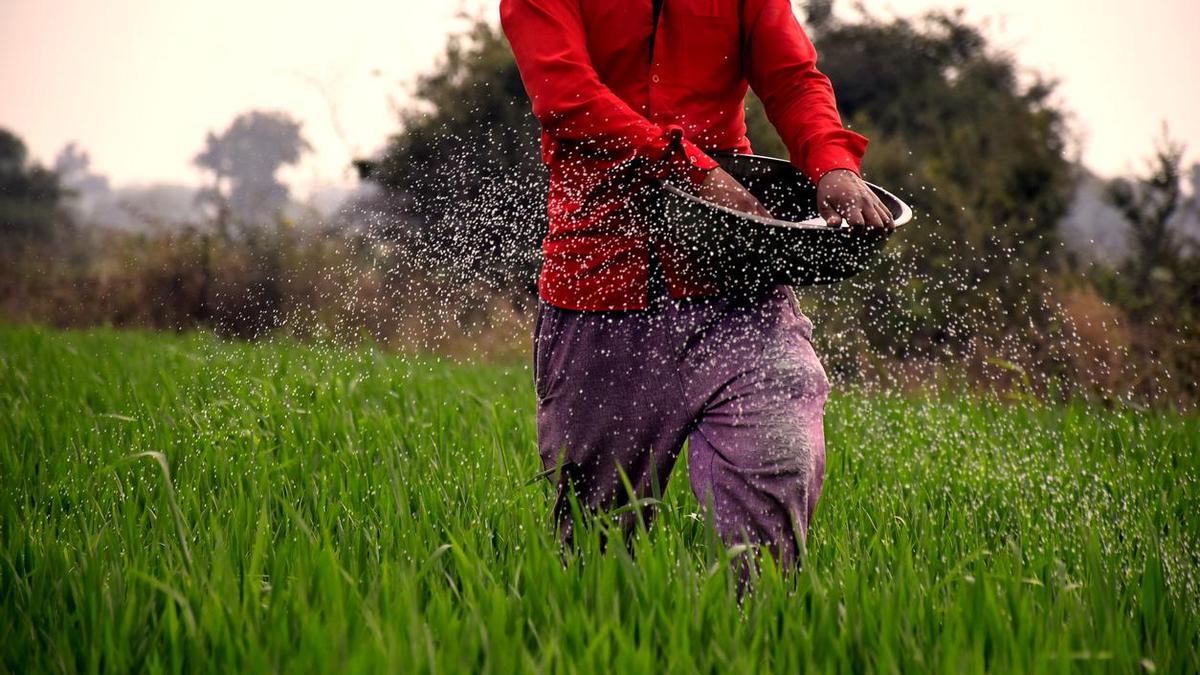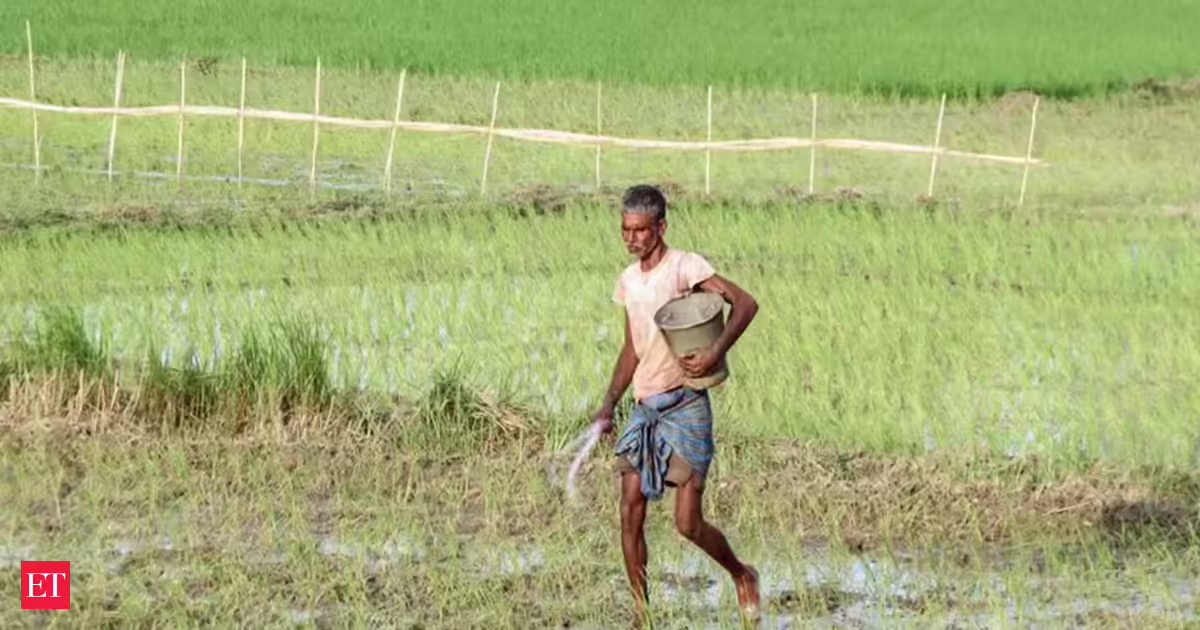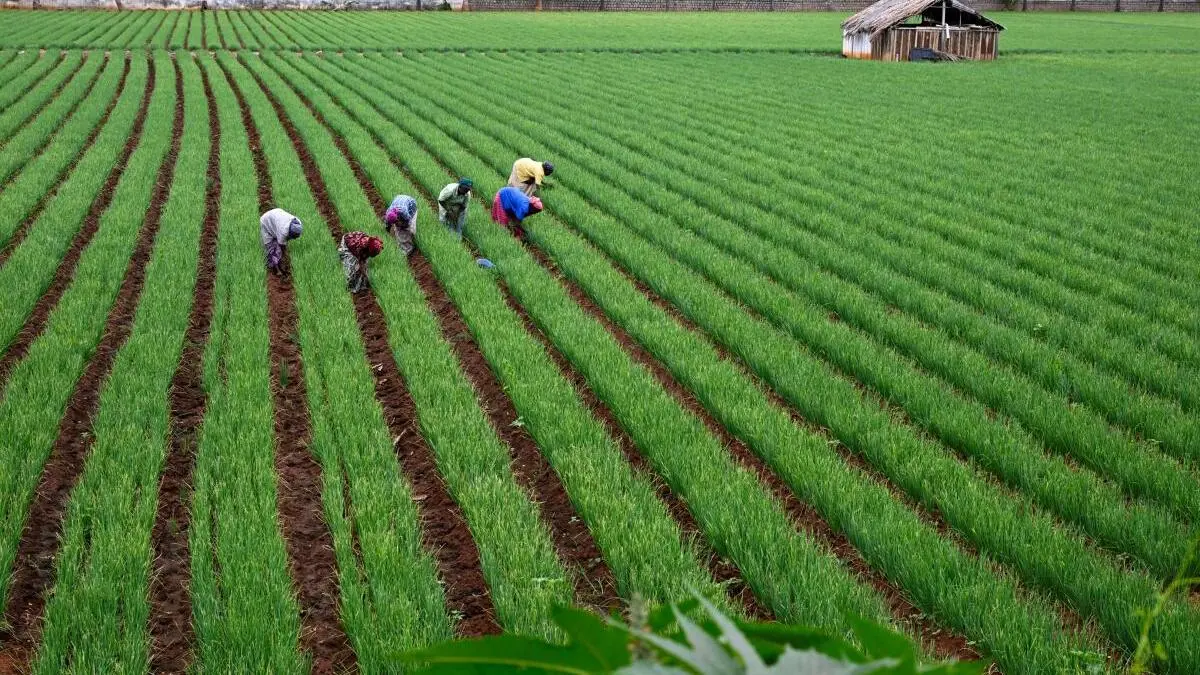
Providing a thrust to organic farming, the Budget proposes an incentive of ₹4,000 per acre to farmers taking up organic farming
The Tamil Nadu Agriculture Budget earmarks ₹58,374 crore for agriculture and allied sectors in the Revised Budget Estimates (RBE) for 2026-27. The 2025-26 Agriculture Budget earmarked ₹45,661 crore.Of the total allocation, capital expenditure stands at ₹8,689 crore, while revenue expenditure accounts for ₹49,685 crore. The Rural Development and Panchayat Raj department has received the single-largest allocation of ₹18,103 crore, says the Budget document.The State has set a foodgrain production target of 131 lakh tonnes in five years, to ensure food security. During 2026-27, the State plans to produce 125 lakh tonnes. Targets have also been set to increase the production of nutritious pulses, vegetables and fruits to achieve self-sufficiency and nutritional security through various schemes.Cotton missionThe Cotton Renaissance Mission will be implemented on 73,360 acres with a total outlay of ₹27.21 crore from the Union and State government funds, benefiting 40,000 cotton farmers.Providing a thrust to organic farming, the Budget proposes an incentive of ₹4,000 per acre to farmers taking up organic farming. This will cover 20,000 acres, for which ₹8 crore will be allocated.In addition, ₹9 crore will be allocated from Union and State government funds during 2026-27 to form Organic Farming Clusters covering 7,500 acres by mobilising farmers under the Paramparagat Krishi Vikas Yojana(PKVY) Scheme. The Budget also proposes to form New Natural Farming Clusters, covering 3,125 acres, besides continuing with the second-year activities of Natural Farming Clusters covering 7,500 acres to produce safe and chemical-free food by improving the soil health through Natural Farming under the National Mission on Natural Farming.Uzhavar AI schemeFor ensuring quality of organic produce, certified under the National Programme for Organic Production, a 100 per cent subsidy will be extended for undertaking Pesticide Residue Analysis. The State has set aside ₹25 lakh for this.The Budget has allocated ₹10 crore for establishing permanent vermicompost production units.To restore soil fertility, seeds of green manures such as Sunn hemp, Daincha, Kolinji, etc required for covering one lakh acres, and multi-grain crop seeds required for 22,000 acres, will be distributed to farmers at subsidised cost. The State will provide ₹3,000 per acre as ploughing subsidy for incorporation of well-grown green manure crops into the soil. A sum of ₹63.50 crore will be allocated for this.The State government has come up with the Uzhavar (farmers) Artificial Intelligence (AI) Scheme to provide farmers with real-time information on soil health and crop cultivation. For the current fiscal, ₹2 crore has been allocated.A scheme to enhance maize (corn) production will be implemented during 2026-27 with a total outlay of ₹36 crore from the Union and State government funds. Millet, Minor Millet missionsThe State plans to increase the area under pulses, including black matpe, red gram, green gram and cowpea from 15.19 lakh acres to 24.70 lakh acres, and production from 3.88 lakh tonnes to 7.72 lakh tonnes. The area under oilseeds such as groundnut, sesame, sunflower and castor will be increased from 9.26 lakh acres to 14.89 lakh acres and production from 8.77 lakh tonnes to 16.14 lakh tonnes.In the 2026-27 fiscal, a Millet Mission will be implemented with a total outlay of ₹63.81 crore from the Union and State government funds. The Tamil Nadu Minor Millet Mission will be implemented in 29 districts during 2026-27 at an outlay of ₹7.61 crore allocated from the State fund.The government will allocate ₹20 lakh from State funds to prepare a Detailed Project Report (DPR) and a Feasibility Report for establishing a 100-klpd (kilo litre per day) ethanol distillery at the Kallakurichi-I Co-operative Sugar Mill.The State has allocated ₹785 crore for micro irrigation scheme for judicious use of water, while the State plans to train women to use drones in agriculture similar to the Centre’s “Drone Didis” scheme. Published on August 6, 2026