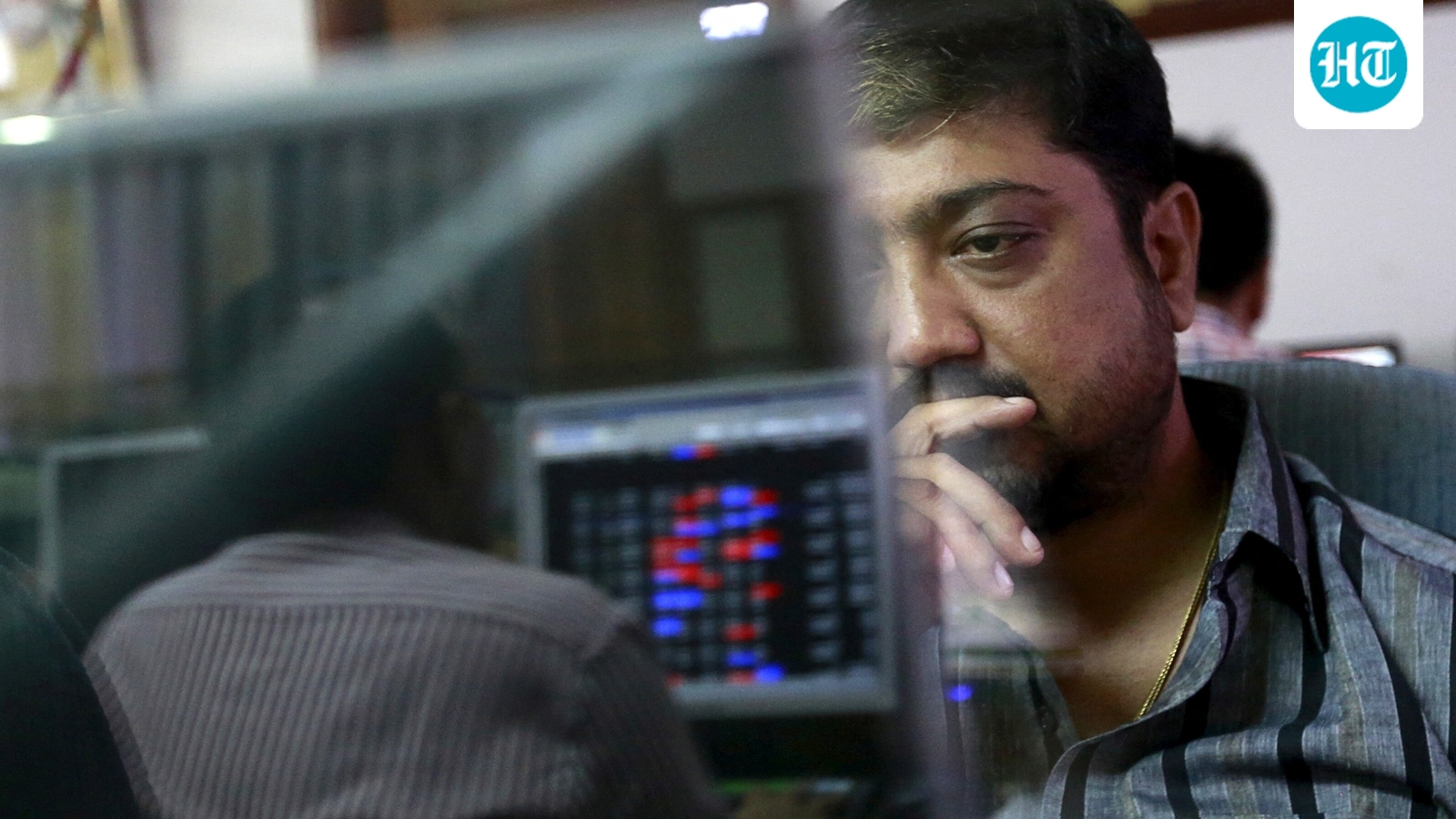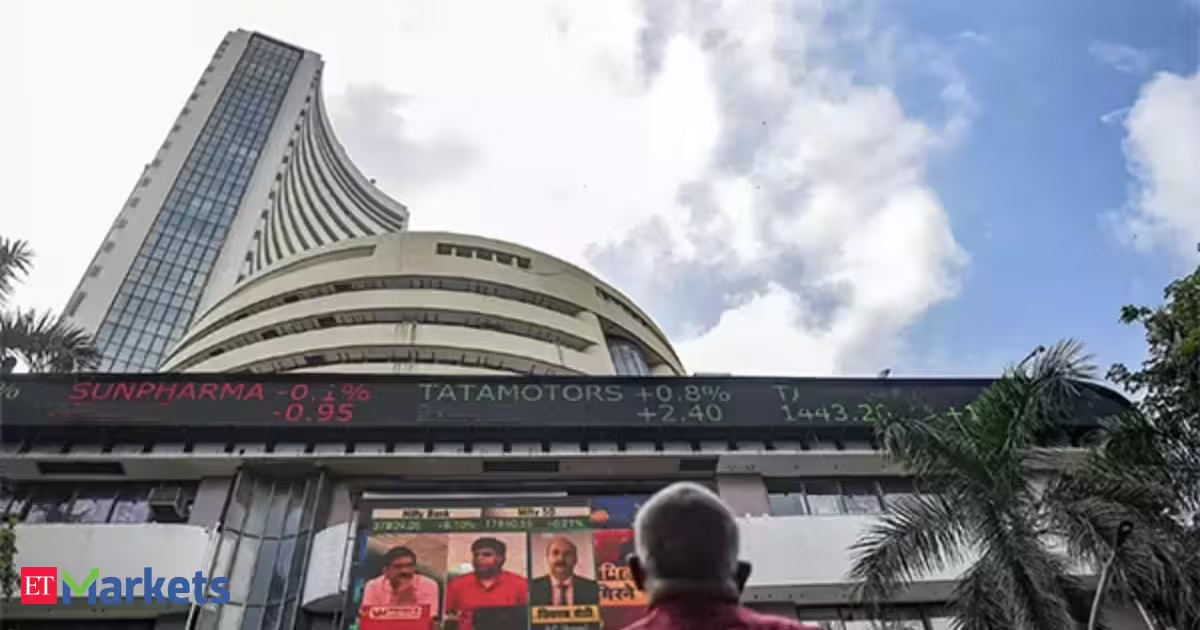
Indian equity benchmarks ended largely flat on Thursday, with the Nifty inching up 0.05 per cent while the Sensex gained 0.48 per cent, extending a four-session divergence following the NSE’s Closing Auction Session (CAS).
Markets ended Thursday’s session on a flat note, with the headline indices masking a sharper story beneath the surface, a nearly 3 per cent surge in defence stocks and a four-session-old structural quirk that is cleaving the Sensex and Nifty apart at close.The Nifty 50 settled at 24,636, up just 11.35 points or 0.05 per cent, after oscillating in a 73-point band through the session. The Sensex, however, closed at 78,954.76, up 0.48 per cent, a gap of roughly 43 basis points between the two benchmarks that has now persisted for four straight sessions since the NSE introduced its Closing Auction Session (CAS) on August 3. Market observers say the divergence reflects differences in institutional order flow and auction-window liquidity between the two index baskets, rather than any fundamental disconnect. Most analysts expect the distortion to narrow as participants recalibrate.“...the Nifty appears poised for the next leg of the upmove after consolidating in a narrow range over the past three sessions,” said Ajit Mishra, SVP-Research at Religare Broking. “...the index is likely to first test the 24,800–25,000 zone.”Thursday was also the weekly Sensex expiry day, which added an element of caution and kept volumes from breaching dramatically, though NSE cash market turnover was 3 per cent higher than on Wednesday. Reliance, SBI, and BEL were the standout gainers in the Nifty pack, while Powergrid, Tata Steel, and TCS weighed on the index.Defence stocks shine; PSU banks gain while Realty and Auto lagThe day’s real action was in defence. The India Defence Index jumped around 3 per cent, led by Hindustan Aeronautics and Bharat Electronics, as persistent global geopolitical tensions and sector rotation drove fresh buying. PSU Bank stocks also attracted buyers, with the Nifty PSU Bank index gaining 2.2 per cent, partly aided by a positive Q1 FY27 earnings showing. On the other side, Realty fell 1.3 per cent and Auto shed 1 per cent, both among the weakest performers, while Media and Metal also closed in the red.Broader markets delivered a split verdict. The Nifty Midcap 100 declined 0.44 per cent while the Nifty Smallcap 100 advanced 0.48 per cent, the latter continuing to trade near its all-time high. The BSE advance-decline ratio came in at 0.98, pointing to mild profit-booking in the mid and small-cap space.Rupee weakens, gold surges; RBI proposal and US jobs data in focusThe rupee was among the weaker performers in the Asian currency basket, slipping 10 paise to close at 95.21-95.22 against the US dollar, pressured by importer demand for dollars and a firming Dollar Index near 99.50. Gold prices, meanwhile, surged, with MCX Gold rising roughly ₹1,400 to near ₹1,49,900 per 10 grams, tracking gains in COMEX Gold, which advanced about $28 to around $4,275 per ounce on a softer dollar and optimism over US-Iran nuclear talks. Brent crude stayed below $80 a barrel, with Iran signalling an understanding with Oman on Strait of Hormuz shipping arrangements, easing one of the more acute near-term energy supply risks.On the policy front, the RBI proposed a uniform, principle-based interest rate framework for banks and NBFCs to improve transparency and monetary policy transmission. While the move could level the playing field for lenders, it may gradually reduce NBFCs’ pricing flexibility.Looking ahead, the next session’s trading range for Nifty is pegged at 24,400–24,800. Investors will be closely watching Friday’s US Non-Farm Payrolls data, which is expected to shape near-term dollar direction and, by extension, the rupee and foreign flows. On the earnings front, results from SBI, Titan, Hindalco, Hitachi Energy and Godrej Consumer are due. With crude stable, earnings broadly holding up, and the RBI’s growth outlook supportive, the broader bias remains sideways to bullish, though a decisive move above 24,800–25,000 will likely be needed before the market’s next leg gets convincingly underway.Published on August 6, 2026