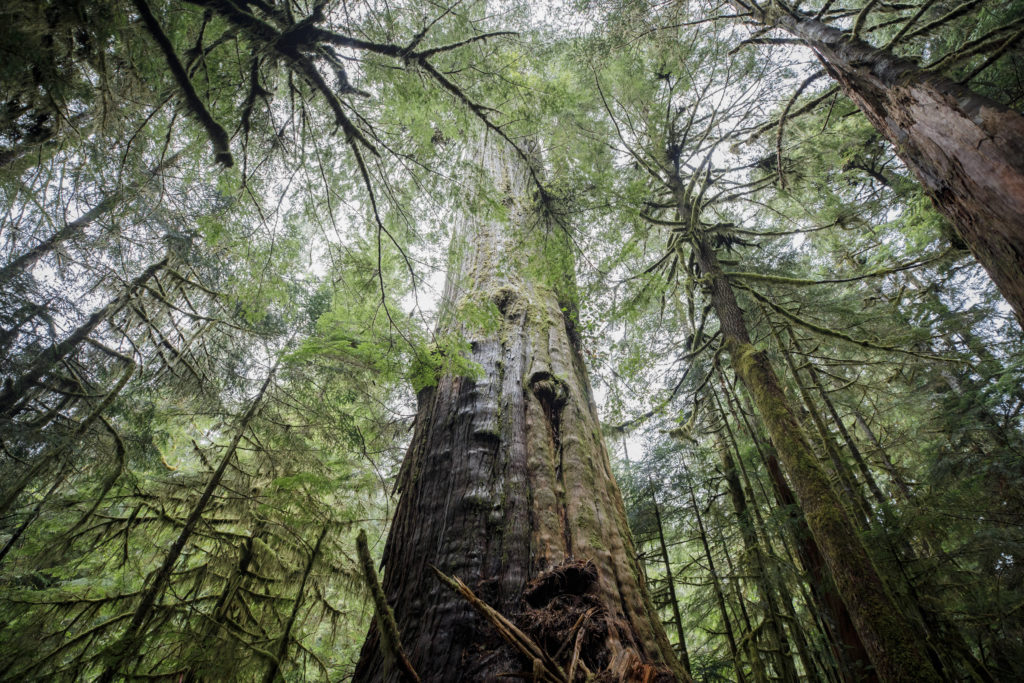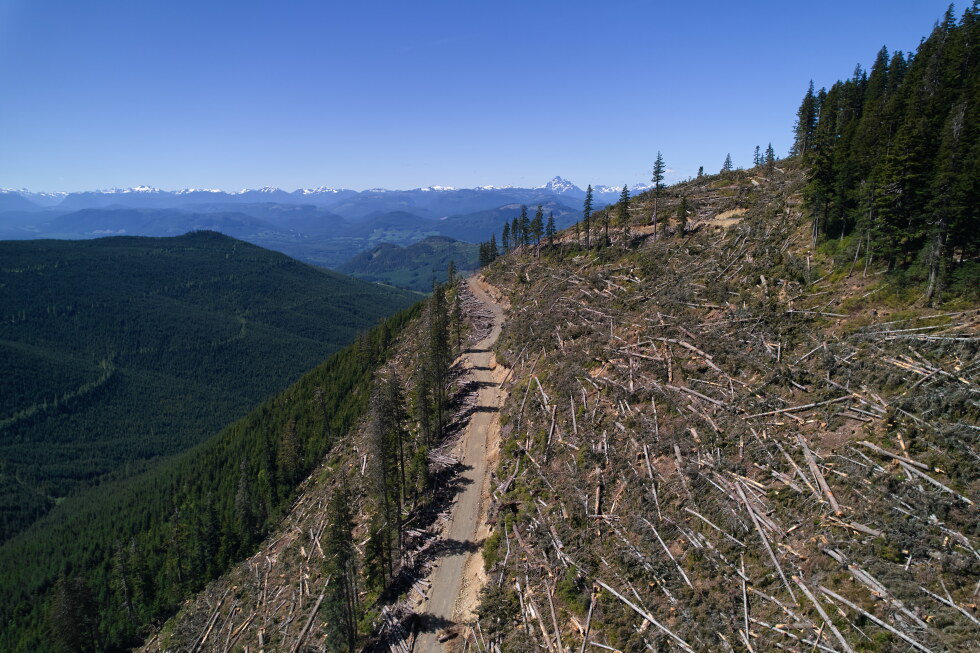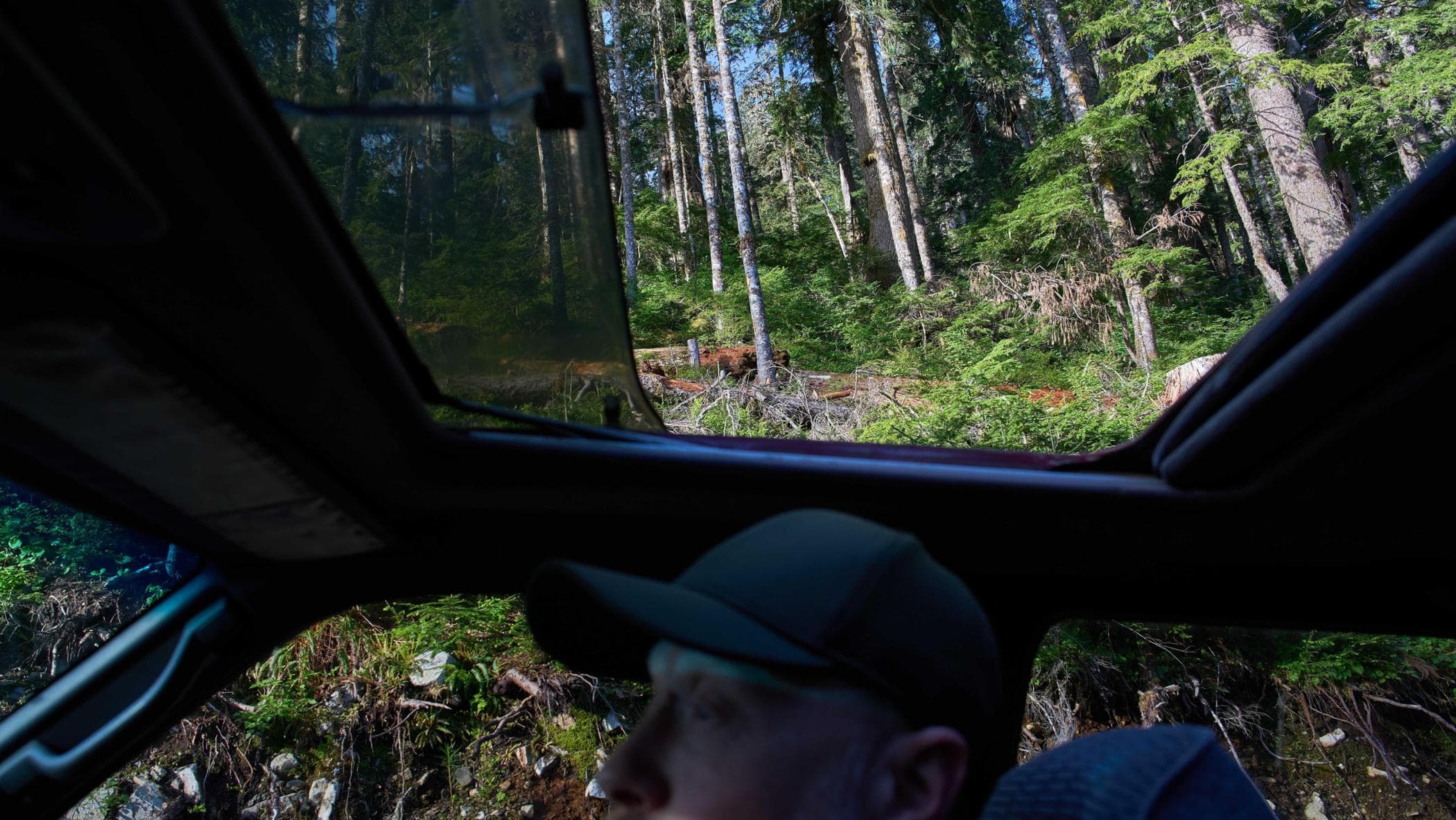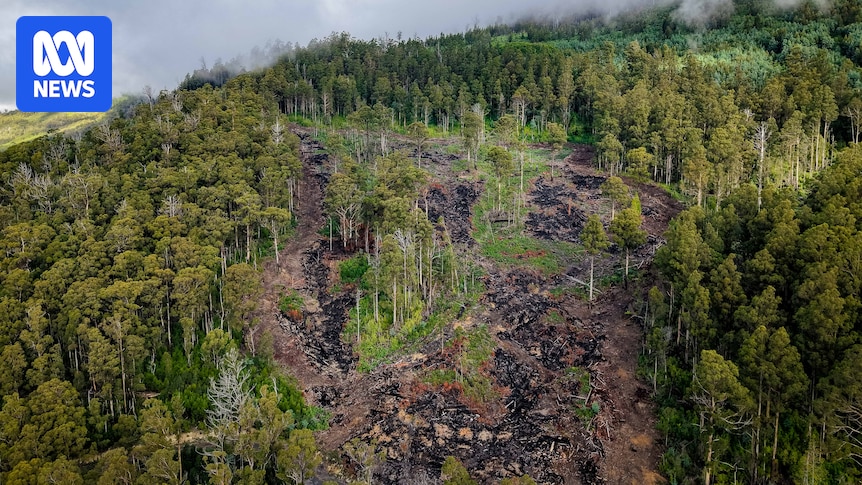
The five-car caravan crept down a gravel logging road as the day’s last beams of golden light filtered through the trees. About 20 forest defenders were making a stand in southwest Vancouver Island, at a spot where a logging company was expected to cut old-growth trees the following morning.
They made camp in tents and the backs of cars. One truck parked sideways across the road. They awoke at 3 a.m., their headlamps tracing the ground, as they took their positions.
An hour later, headlights appeared in the distance. A logging truck slowed, idled, then turned around. Nobody got out. Nobody spoke.
It was a small, inconclusive victory in a fight that has spanned generations. But for those gathered in the forest, it mattered.
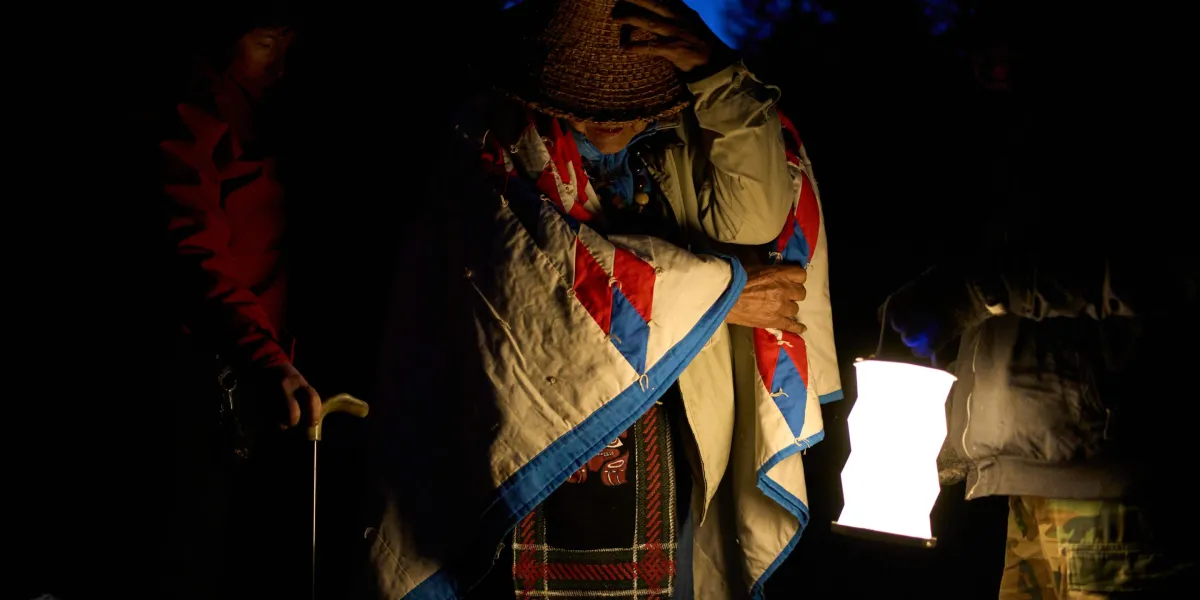
“There is no dispute about what happened to our land,” said Bill Jones, a First Nations Pacheedaht elder who sat in the road as daylight crept in. At 86, he’s watched the forests on his nation’s territory disappear for most of his adult life. He started logging himself at age 18, he said, before he understood what he was helping to dismantle.