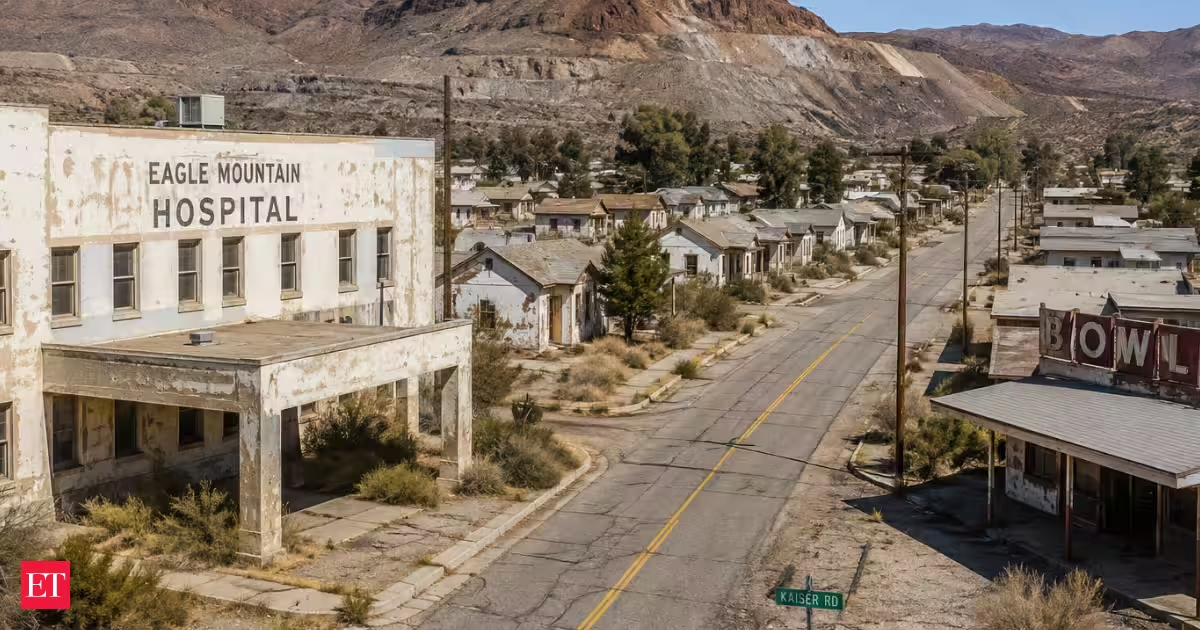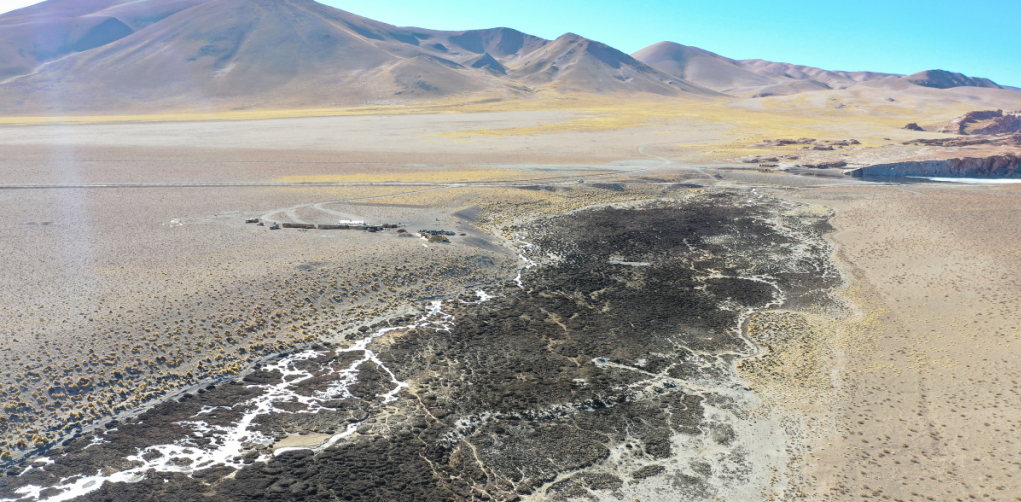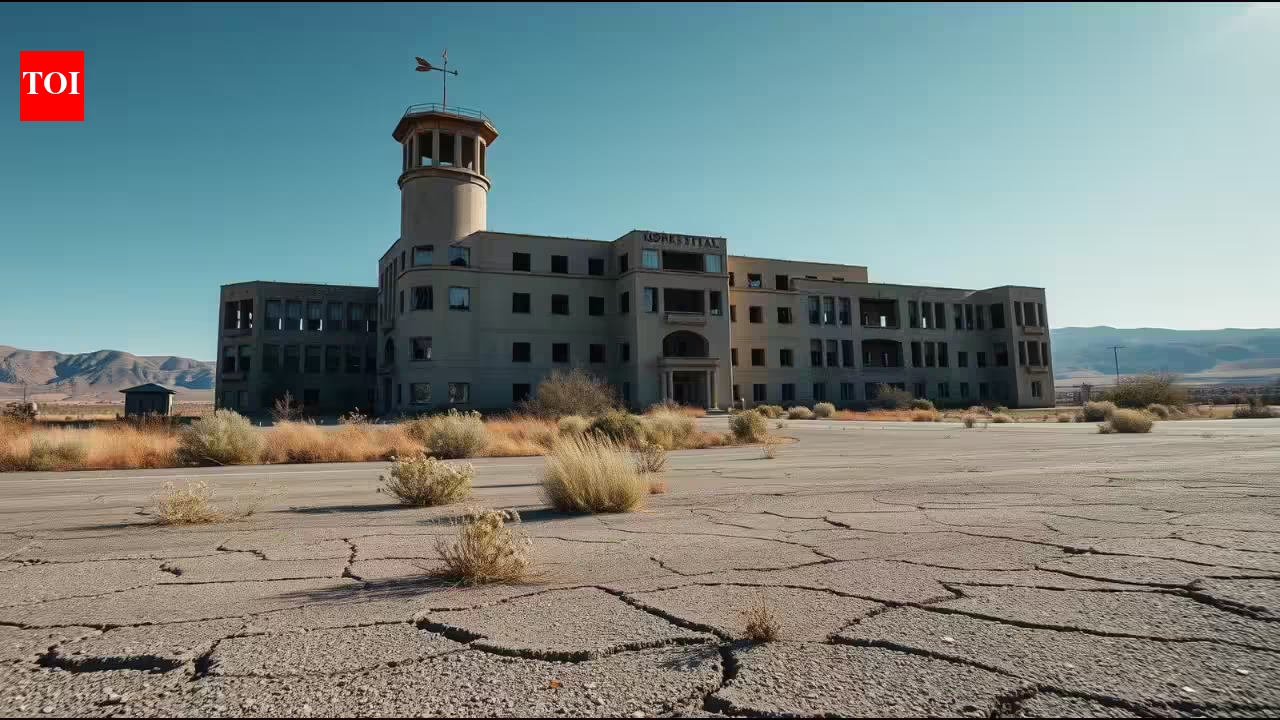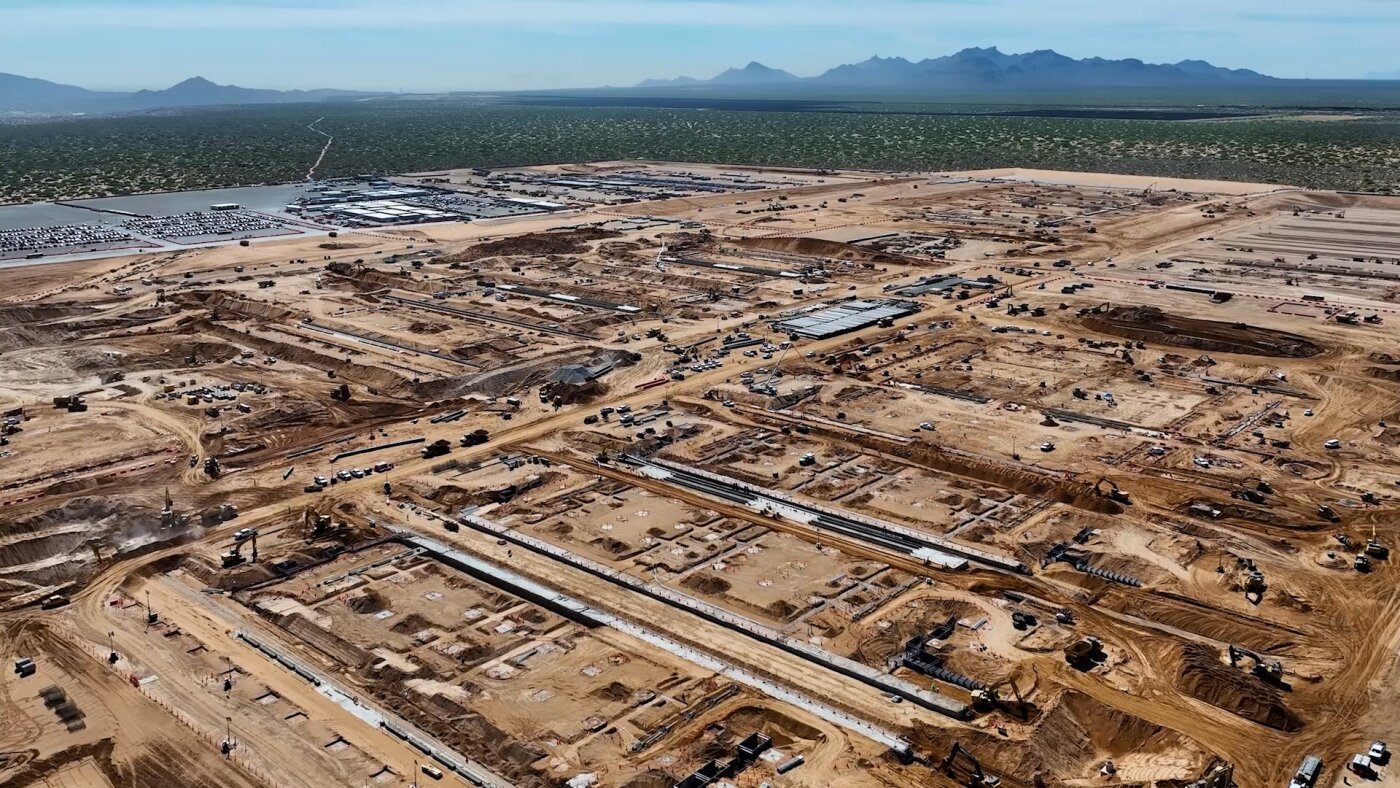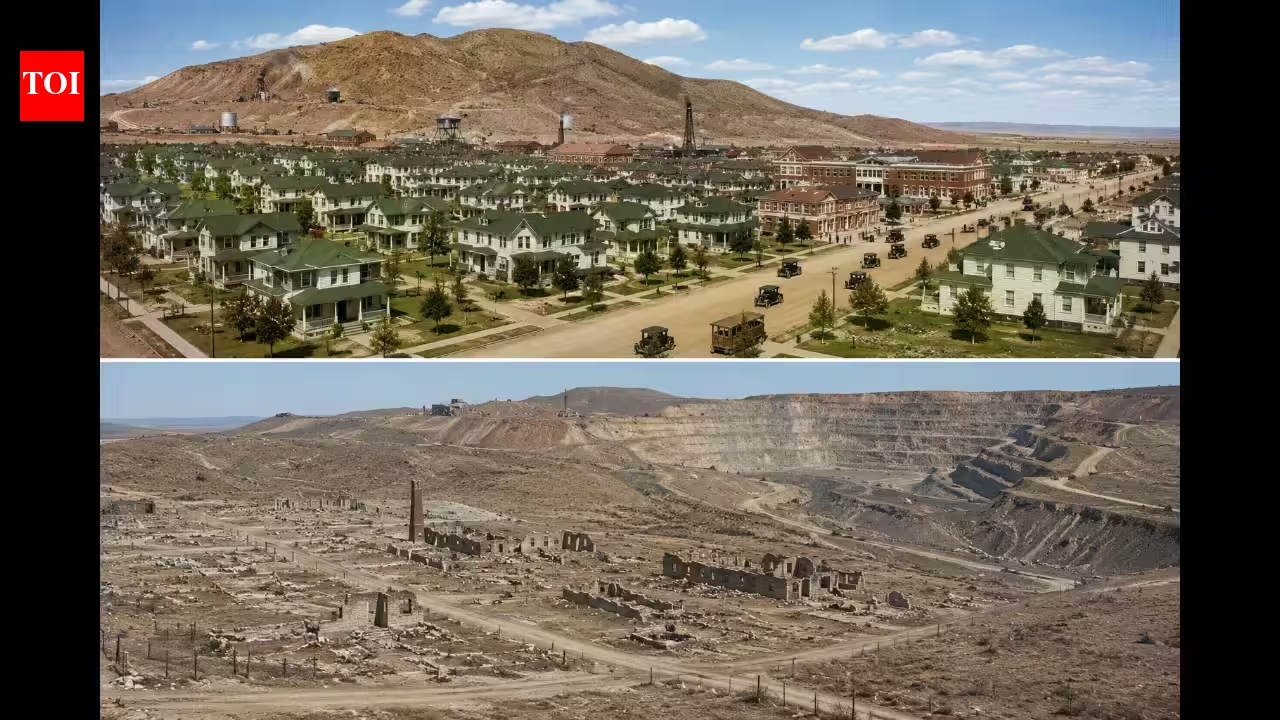
Representation of the rise and disappearance of the planned mining town of Tyrone, New Mexico, contrasting its carefully designed community of homes, streets and public buildings at the height of the copper boom with the abandoned landscape that remained after residents left and the expanding open-pit mine consumed the town. Image Credits: ChatGPT.In the mountains of southwestern New Mexico, a mining company tried to build something more ambitious than a workers’ camp. In 1915, Phelps Dodge created Tyrone, a carefully planned community designed by prominent architect Bertram Goodhue to house thousands of people working at its copper mine.According to the American Philatelic Society, Phelps Dodge's new Tyrone was designed by architect Bertram Grosvenor Goodhue as an ambitious, master-planned community with a railroad depot, department store, hospital, school, churches, theatre and other modern facilities. Construction began in 1915, and despite wartime shortages, enough of the town was completed to accommodate about 4,000 worker-residents at a cost of more than $1 million. The town's prosperity, however, was closely tied to the copper market. The 1920 census recorded 4,062 residents, but after copper prices fell following the First World War, Phelps Dodge announced the mine's closure. When operations ended in April 1921, the population fell to about 700 within weeks and to roughly 50 a year later. Tyrone survived as a small community for several decades, until Phelps Dodge resumed mining in the 1960s with an open-pit operation that eventually engulfed the original townsite.A mining town designed as a utopiaTyrone grew out of Phelps Dodge's effort to develop a large copper operation in the Little Burro Mountains. Instead of allowing another rough mining settlement to develop around the mine, the company commissioned Goodhue, a nationally recognised architect, to design a complete community. The design drew heavily on Spanish Colonial and Mediterranean architectural ideas, reflecting the architectural style Goodhue had helped popularise in the American West.The layout of the mining settlement was rather extensive for its time. The town of Tyrone had a central plaza area, and other business and government buildings were built around it. The town consisted of a train station, a department store, a bank, a school, a church, a hospital, recreational parks, and various types of residences. The town did not resemble a typical mining camp.The design also reflected the company's control over daily life. Phelps Dodge owned much of the land, housing, utilities, railway and commercial infrastructure. The town’s appearance was therefore not simply an architectural exercise. It was also part of a company-town system in which the employer had considerable influence over where workers lived, shopped and worked.Copper prices brought the experiment to an abrupt endTyrone's prosperity was closely tied to the copper market, and that dependence became its greatest weakness. Copper demand had surged during the First World War, helping the town grow rapidly. By 1920, about 4,000 people lived there. But when wartime demand weakened and copper prices fell, the economic foundation beneath the carefully planned community began to disappear.By 1921, the boom that had created Tyrone was beginning to unravel as copper prices fell and mining operations declined. According to the American Archive of Public Broadcasting, workers and residents tried to save the town by offering Phelps Dodge a 25% pay cut to keep the mine and community operating. The company nevertheless shut down the operation, and Tyrone rapidly lost most of the population that had arrived during the mining boom. The settlement entered a long period of decline, with only a small number of residents remaining. The community survived in a much-reduced form until 1966, when Phelps Dodge announced plans for an open-pit copper mine nearby. The new operation required the remaining settlement to be cleared to make way for mine buildings, bringing an end to the physical remains of the community that copper mining had created.Tyrone’s decline was therefore not an overnight disappearance. Although the mining boom had ended, a small population continued to live there for years, including artists, writers, architecture students and retirees. The post office also continued operating, even after the town had lost the population and economic activity that had once made it a thriving mining settlement.Copper prices brought the experiment to an abrupt end. Image Credits: Wikimedia Commons.The mine eventually consumed the townMining eventually returned to the area in a different form. Beginning in the late 1960s, Phelps Dodge developed a huge open-pit copper operation, replacing the earlier underground workings with surface mining capable of extracting large quantities of lower-grade ore. USGS records show that open-pit excavation began in 1967, while historical accounts place the beginning of open-pit operations around the end of the decade.The new mine required a much larger area than the underground workings had occupied. The old town was now standing on ground needed for the expanding operation. Tyrone, which had originally been built to serve the mine, had become an obstacle to the mine's expansion. By the late 1960s, the townsite was demolished and eventually covered by the expanding open pit. The carefully designed plaza, houses and public buildings disappeared along with the landscape on which they had stood. The Centre for Land Use Interpretation describes the sequence starkly: the town was built for the underground mine, became a ghost town when that mine closed, and was later demolished when open-pit mining returned.Copper wealth created the town, falling prices weakened its economy, and later mining erased its physical remains. The more than $1 million spent creating a model community could not protect it from the boom-and-bust cycle that sustained it. And when mining returned decades later, the town that had once represented the industry's vision of an ideal community stood directly in the path of the mine that had made it possible.Today, little remains of the original Tyrone. The town survives largely through photographs, historical records and the memories of former residents. Its story is a reminder that company towns can be remarkably sophisticated and carefully planned while remaining fundamentally dependent on the industry around which they are built.
In 1915, New Mexico built a $1 million mining utopia for 4,000 residents; six years later, it was empty, and the copper mine eventually swallowed the town
In the mountains of southwestern New Mexico, a mining company tried to build something more ambitious than a workers’ camp. In 1915, Phelps Dodge created Tyrone, a carefully planned community designed by prominent architect Bertram Goodhue to house thousands of people working at its copper mine.
995 words~5 min read