Trees age very slowly. The reason is that they constantly renew their tissues: needles or leaves, bark, twigs, trunk and roots are continuously regenerated while older parts gradually die off.
A remarkable fact: while trunk and crown are exposed to wind, weather, animals and loggers, a tree's vast underground root system can continue to live on, hidden from view, for much longer.
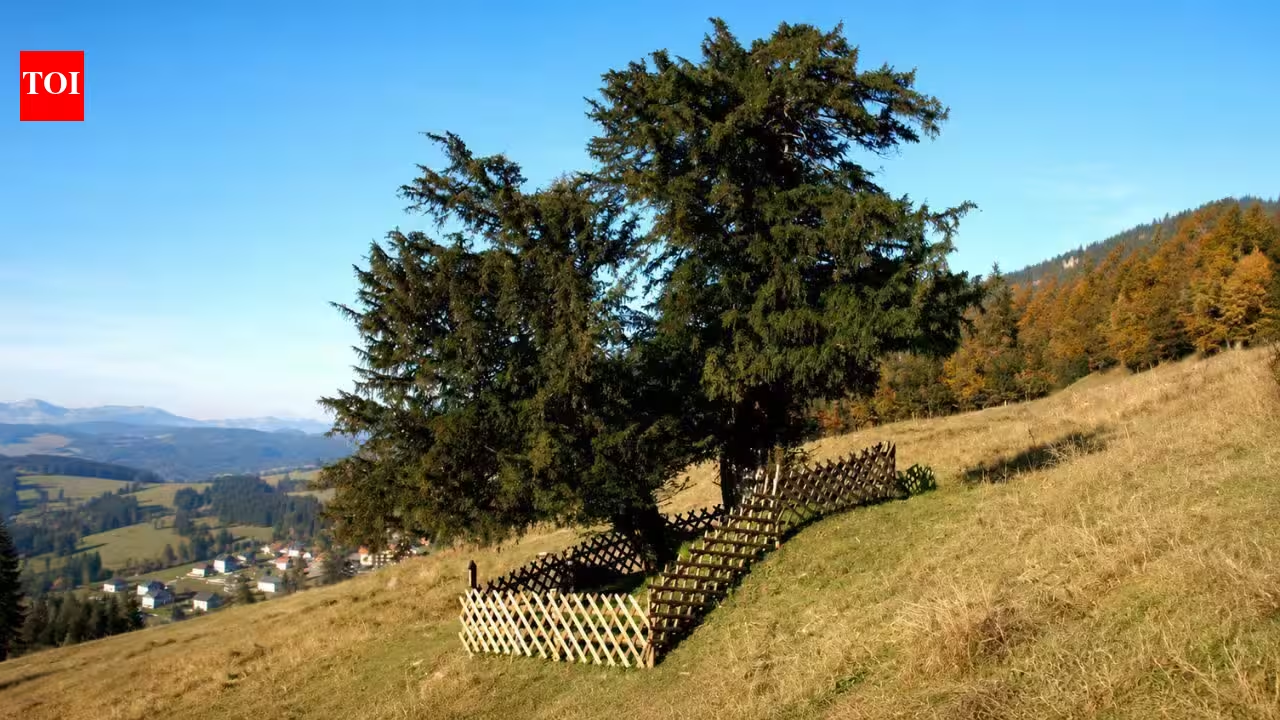
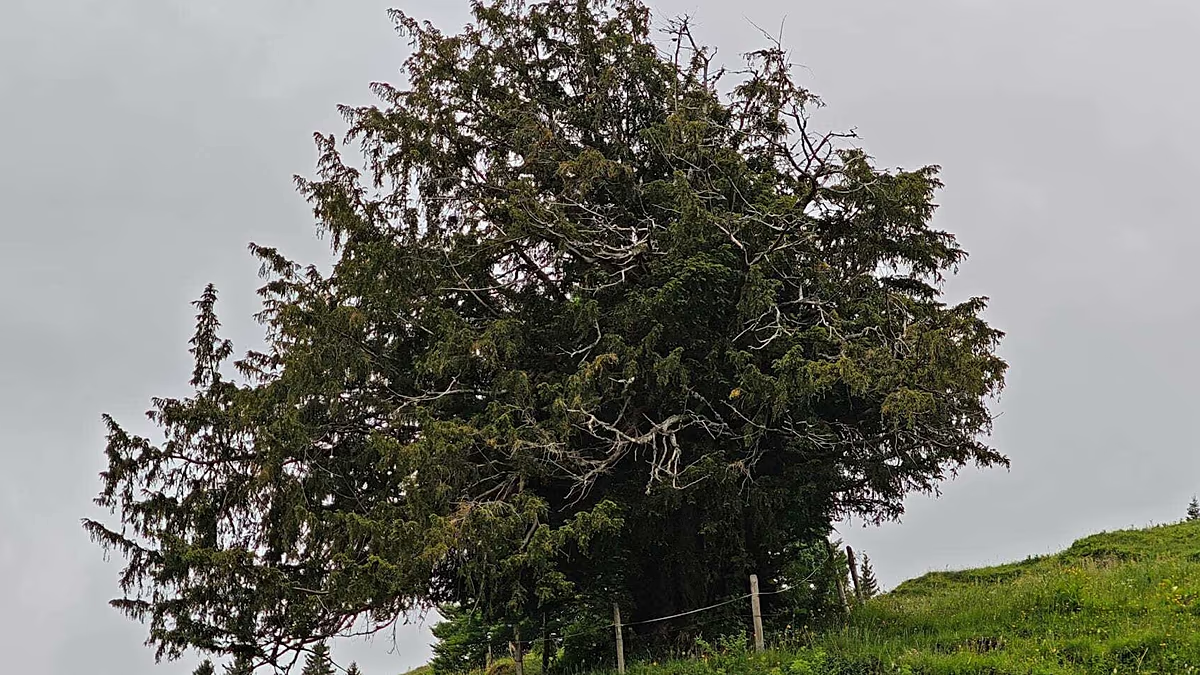
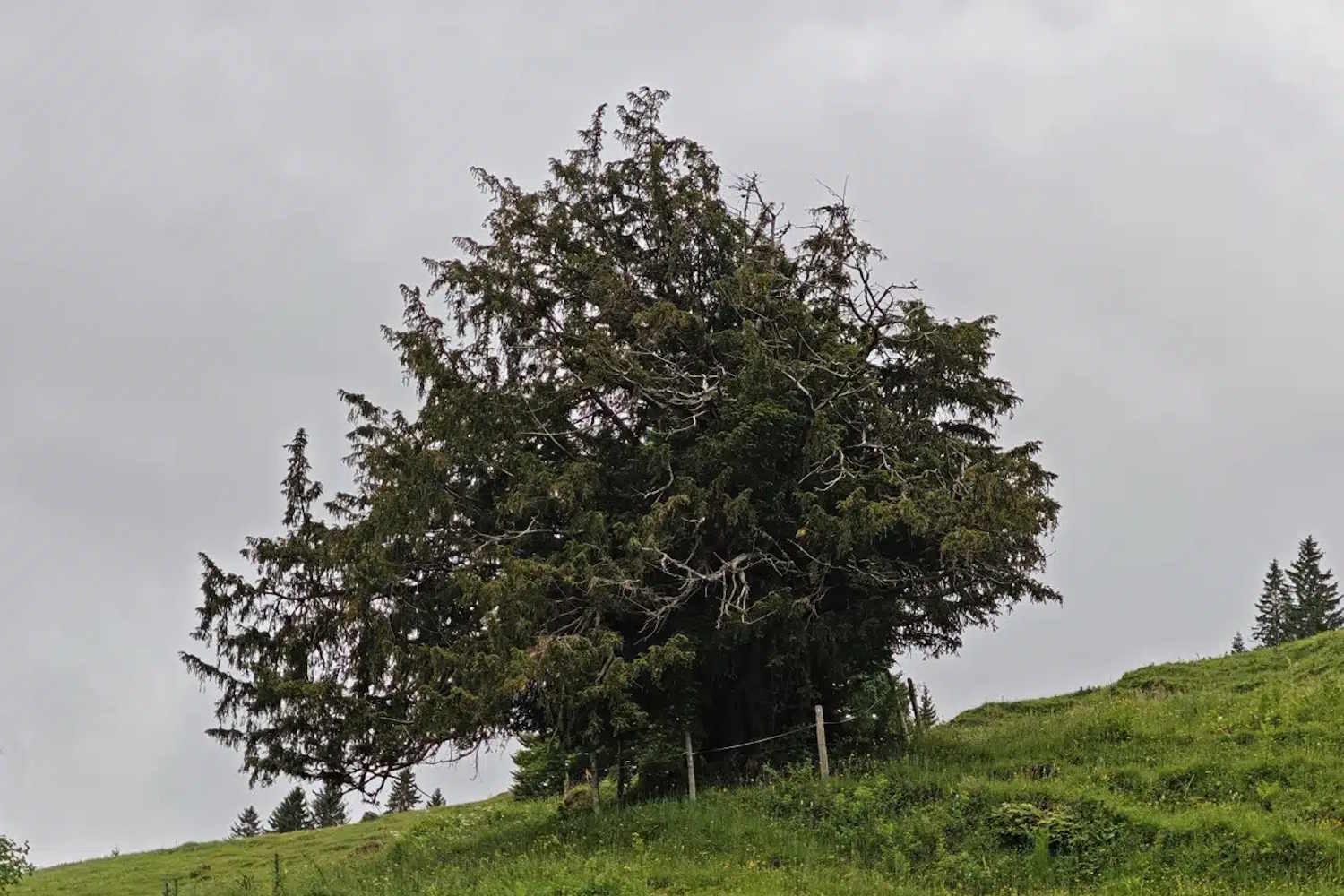
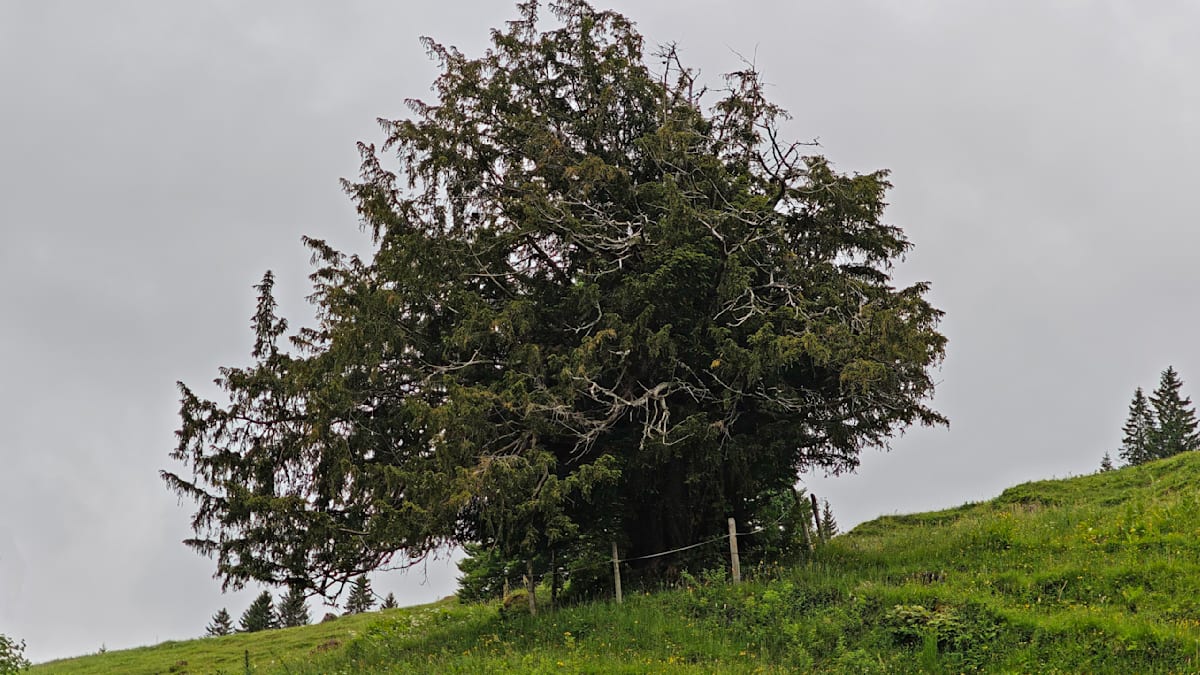
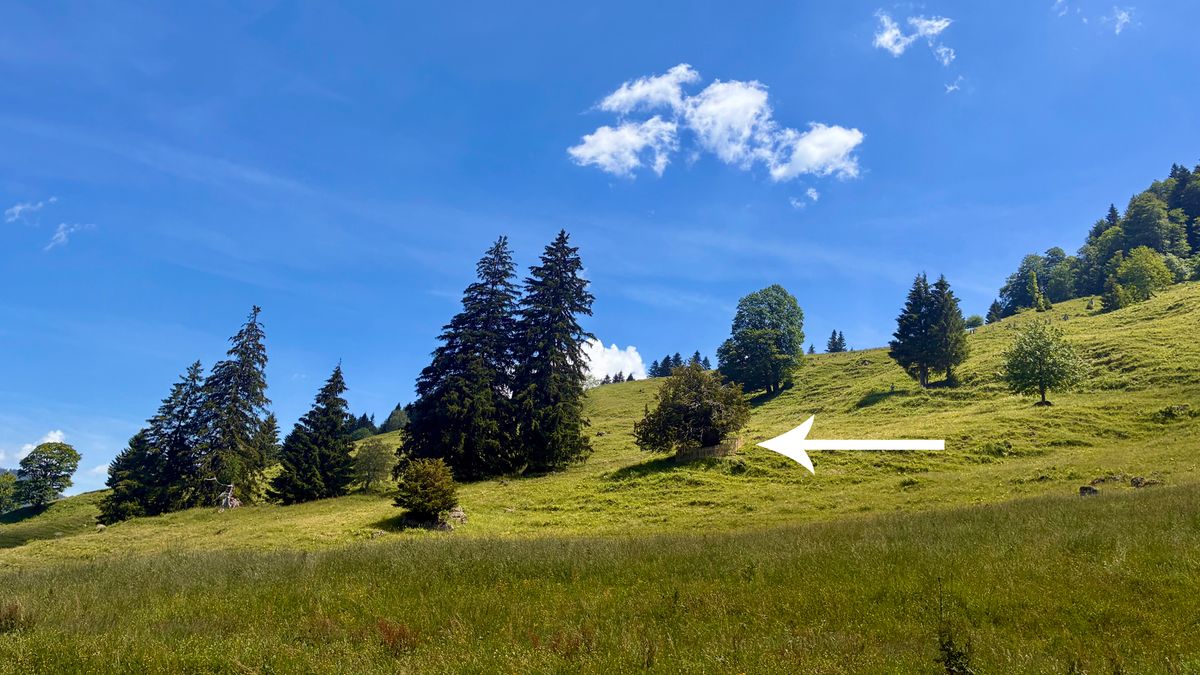
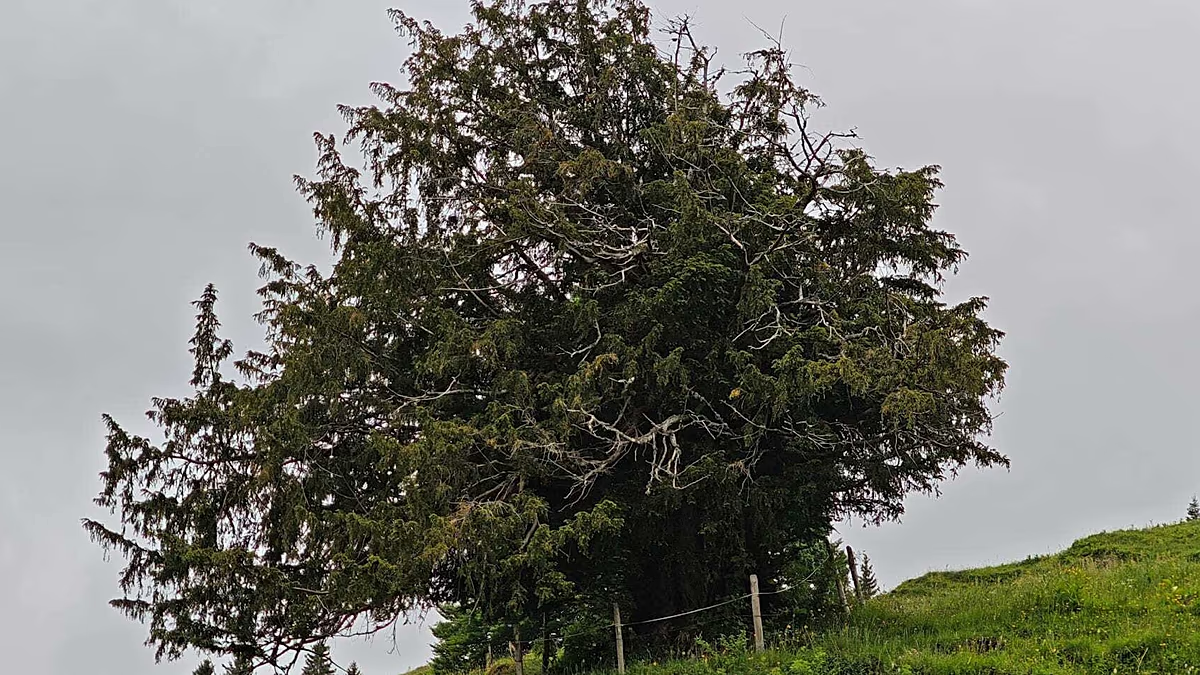
Germany's probably oldest tree stands in complete seclusion on a grazed alpine meadow between Steibis and Balderschwang in the Upper Allgäu, at an altitude of 1,100 metres.
The German Dendrological Society, an association of experts in tree science, estimates that the yew is around 1,100 years old. Its trunk circumference is 5.1 metres.
Located on a north-west facing slope, the tree is close to the upper limit of the yew's altitudinal range, which in the Alps is around 1,300 metres: "During the winter half of the year it hardly gets any sun there, and it is noticeably colder than on south-facing slopes at this altitude," say the tree experts. "That is why it is a miracle that it has survived all these centuries and is obviously thriving – it may even be 'pleased' about the current warming."