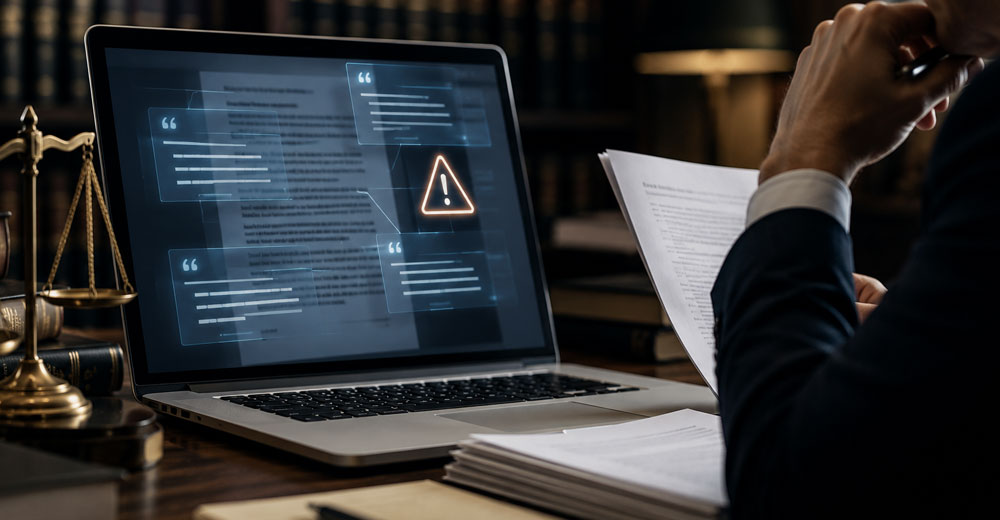
Every legal-AI product on the market in 2026 will, at some point, produce a hallucination. This is not a controversial claim — it's the well-documented nature of large language models. The question for legal practitioners isn't whether hallucinations happen. The question is what vendors and users do about them.
This piece proposes a "hallucination defense" standard — a checklist of what a serious legal-AI product should do to minimize the probability and impact of hallucinations, and what a practitioner should look for when evaluating a vendor.
The taxonomy of hallucinations in legal AI
Not all hallucinations are equal. A useful framework distinguishes four categories:
Type 1: Citation fabrication. The AI produces a citation to a source that doesn't exist — a statute section that was never enacted, a case that was never published, a court rule that was renumbered.