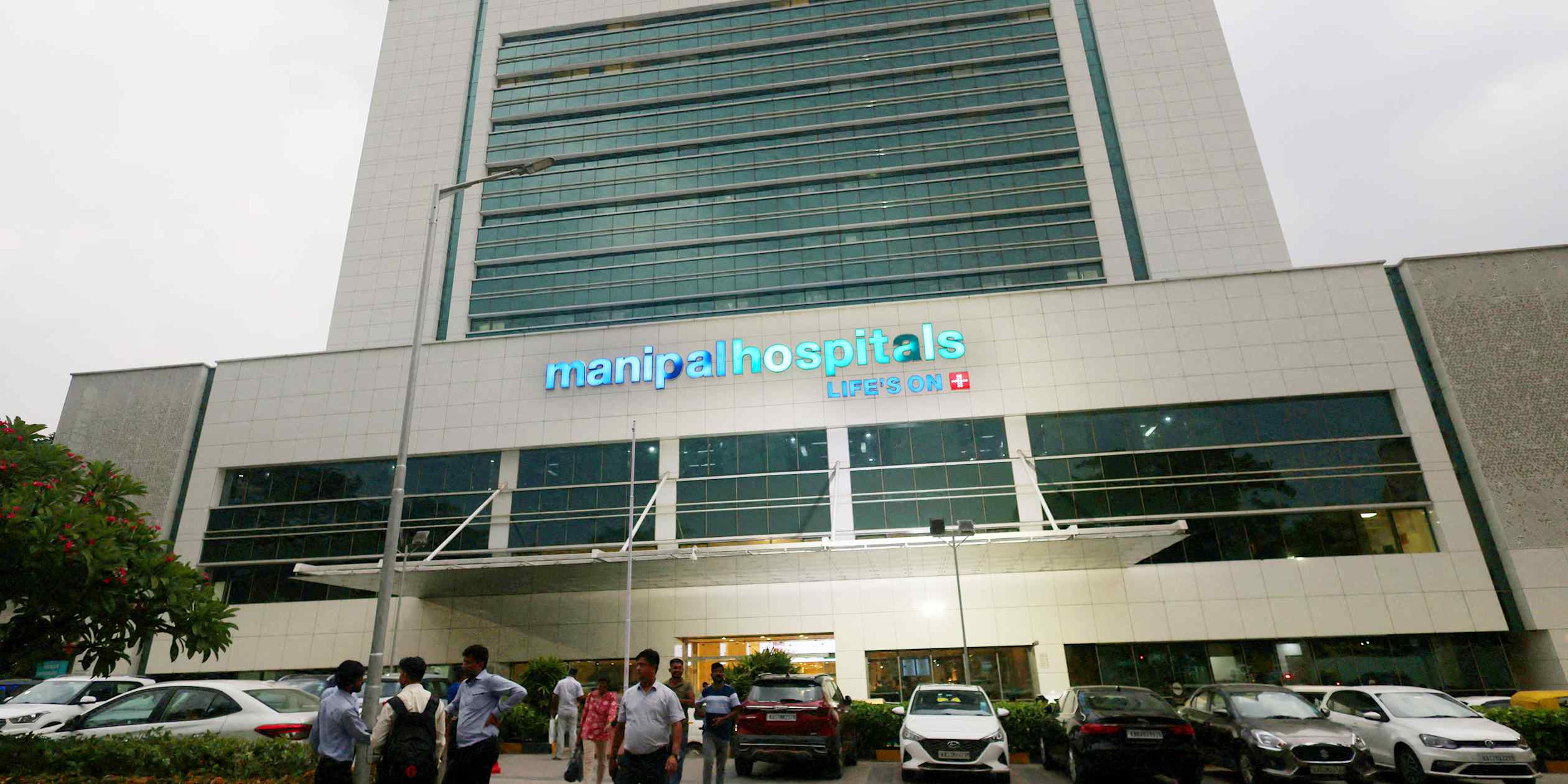
Mumbai: Global investment firm KKR announced the acquisition of Medicover India's hospital business from Sweden-based healthcare and diagnostics company Medicover AB on Thursday.While the financial terms were not officially disclosed, the transaction values the hospital chain at around ₹10,000 crore, according to people familiar. In addition, KKR is expected to infuse ₹3,000-4,000 crore of primary capital to support the company's next phase of expansion. KKR will invest about $1.4-1.5 billion in Medicover.ET had first reported the transaction on Thursday.Also Read: KKR to acquire Medicover India in $1.5 billion deal"We look forward to contributing to its next phase by investing behind its talent, technology, infrastructure and clinical capabilities, while reinforcing strong clinical governance and operational standards," said Akshay Tanna, Akshay Head of India Private Equity at KKR.Medicover India is a multi-specialty hospital network with 24 hospitals and approximately 4,800 beds across South and West India. It provides comprehensive care across more than 80 clinical specialties, supported by more than 1,900 doctors and advanced clinical infrastructure and technology, said the press statement.Medicover entered the Indian healthcare market in 2017 by acquiring a controlling stake in Hyderabad-based Sahrudaya Healthcare, the operator of the MaxCure hospital chain. InMedicover currently operates through the entity Sahrudaya HealthCare Pvt Ltd (SHPL).The parent company Abc Medicover Holdings B V holds about 67% stake, while the rest is owned by a team of founding doctors of Sahrudaya Healthcare led by Gundana and the company’s senior management.In FY25, Medicover India reported revenue of $217.25 million, annual growth of 14%. It generated an EBITDA of $25.68 million, translating into an EBITDA margin of 11.82%. However, despite the positive operating performance, the company reported a net loss of $ 23.69 million, according to Tracxn.The top two specialities, cardiology and neurology, accounted for 34% of SHPL’s in-patient revenues in FY2025. The company plans to further diversify its speciality mix by adding new departments such as oncology toits existing and new hospitals, said a recent ICRA report in January 2026."Through our investment, we look to support Medicover India’s doctors and employees in enhancing the quality of care they deliver, broadening access to advanced healthcare services, and improving patient outcomes for the communities the platform serves across India., Tanna added.Since 2004, KKR has invested more than $20 billion across the healthcare ecosystem globally, it said.KKR has steadily expanded its presence in India's healthcare sector over the past few years, returning to hospital investments after a successful exit from Max Healthcare.Nearly four years after monetising its investment in Max Healthcare with an estimated five-fold return, KKR re-entered the hospital sector in 2025 by acquiring a 70% controlling stake in Kerala-based Baby Memorial Hospital (BMH) for about $300 million (around ₹2,500 crore), signalling a renewed strategy of building a regional healthcare platform through acquisitions.Since then, KKR has used BMH as the cornerstone of its South India expansion strategy. The hospital chain acquired Kozhikode-based Meitra Hospital in a deal valued at about ₹1,000-1,200 crore, following its earlier acquisition of the 350-bed Chazhikattu Multi Speciality Hospital in Thodupuzha.In 2025, the global investment firm acquired a controlling stake in oncology-focused Healthcare Global Enterprises (HCG) from CVC Capital Partners.Beyond acquisitions, KKR has also backed India's healthcare ecosystem through structured financing. In 2025, it anchored a $600 million financing for Manipal Education and Medical Group through its private credit and insurance platforms, after having previously been among the contenders for a controlling stake in Manipal Hospitals before Temasek emerged as the winning bidder in 2023.KKR's renewed push into hospitals reflects growing investor interest in India's healthcare sector, driven by rising demand for quality medical care, increasing health insurance penetration and opportunities to build scalable regional healthcare networks.
KKR buys Medicover’s India hospitals business
Global investment firm KKR has acquired Medicover India's hospital business. Sources said the the transaction values the hospital chain at around ₹10,000 crore and KKR may invest another ₹3,000-4,000 crore to fuel expansion. The acquisition strengthens KKR's healthcare portfolio, adding Medicover's 24-hospital network while reinforcing its long-term strategy to capitalise on India's rapidly growing healthcare and hospital sector.
605 words~3 min read