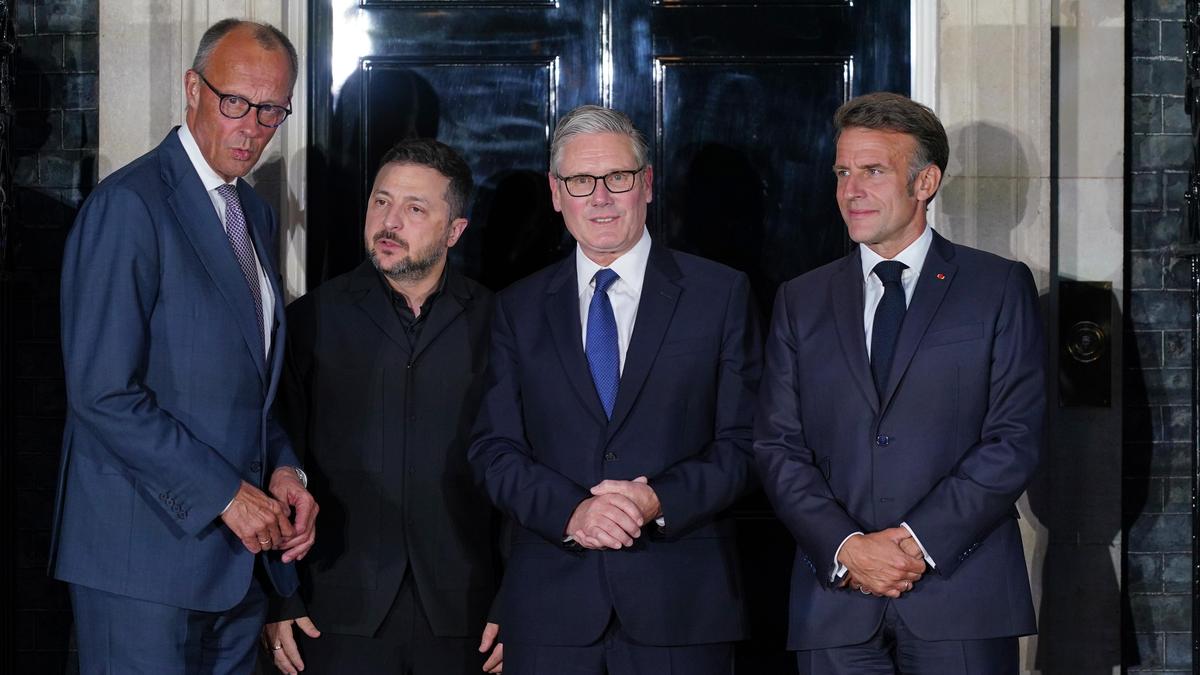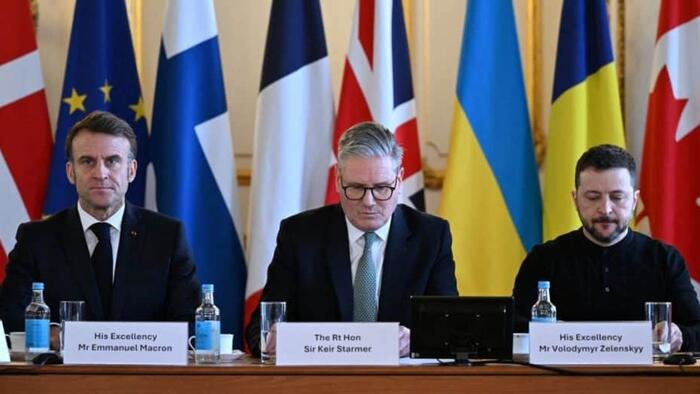
As Russia’s war in Ukraine gets nastier and more dangerous for civilians, formal peace talks have stalled. But the back channels are buzzing.Back channels to peace?Bloomberg reported on Wednesday that former senior officials from Germany, France, Britain and Russia met in Vienna last month to explore potential conditions for peace talks to end the war in Ukraine. This follows confirmation from Azerbaijani president Ilham Aliyev that former German and Russian officials met in Baku a few weeks ago for talks about how to end the war.The Baku talks were the latest in a series of meetings involving social democrat Matthias Platzeck, the former prime minister of Brandenburg, and Ronald Pofalla, a former chief of staff to Angela Merkel. They met former Russian prime minister Viktor Zubkov, who now chairs the supervisory board of energy giant Gazprom, and Valery Fadeyev, who chairs Russia’s Presidential Council for Human Rights and has been sanctioned by the European Union.The meetings were held under the informal banner of the Petersburg Dialogue, a German-Russian forum established by Vladimir Putin and former German chancellor Gerhard Schröder in 2001 and shut down by the German side in 2023. The German government denied all knowledge of the Baku talks, which have been portrayed in the German media as a Russian influence operation.It is harder to sustain such a charge against the Vienna meeting, not least because of the standing of the three western European representatives, who remain at the centre of the foreign policy establishment in their national capitals. Tim Barrow, who was Britain’s national security adviser from September 2022 until November 2024, is a former ambassador to Russia and to the EU.One of Germany’s most experienced Russia hands and a former state secretary at the foreign ministry, Markus Ederer, was ambassador to Moscow when Putin launched his full-scale invasion of Ukraine in 2022 and he was deeply involved in the Minsk process almost a decade earlier. Pierre Vimont is one of France’s most distinguished diplomats, a former ambassador to the United States and to the EU, chief of staff to three foreign ministers and the first secretary general of the European External Action Service, who was named as Emmanuel Macron’s special envoy for the architecture of security and trust with Russia in 2019.Germany, France and Britain, known as the E3, have been increasingly active as a formation in the search for a diplomatic resolution of the war. On June 11th, their ambassadors met Russian deputy foreign minister Mikhail Galuzin at the foreign ministry in Moscow, a rare example of direct engagement by western diplomats with Russia since 2022.The meeting followed a summit in Downing Street attended by the leaders of Germany, France and Britain and Ukrainian president Volodymyr Zelenskiy. That meeting reaffirmed the four leaders’ support for direct negotiations between Kyiv and Moscow with US and European participation, to agree a ceasefire.When European Council president António Costa’s chief of staff Pedro Lourtie made two calls to a senior Russian official a few months ago to open a line of communication, French and German noses were out of joint and some eastern European member states baulked at the prospect of talking to Putin’s people. But other member states argued it was important the EU should represent its own security and political interests in shaping any future negotiations and that Costa was the right person to do so.Much European scepticism about engaging with Russia is based on the fact that Putin has shown no interest publicly in negotiating on any basis that could be acceptable to Ukraine and its partners. But he cannot achieve his maximalist aims on the battlefield alone and the war is having an ever-harsher impact on the lives of Russian civilians as well as on the economy.Formal peace talks between the United States, Russia and Ukraine stalled in Geneva last February and Donald Trump has been distracted by the war in Iran since then. Moscow complains that Trump has failed to follow through on whatever he agreed in talks with Putin in Alaska last year and it is affecting indifference towards the idea of renewed negotiations.But if Putin thinks Trump is insufficiently sympathetic to Russia’s concerns, he is in for a rude awakening if the Democrats, who are overwhelmingly supportive of Ukraine, regain control of Congress in November. The military campaign is unpredictable and situation reports from both sides are unreliable but it is unlikely that any advantage gained by either of them during the coming months will be decisive.Bloomberg did not identify the Russian participants in last month’s talks in Vienna but Zubkov and Fadeyev, who met the Germans in Baku, are both close to Putin. Back-channel contacts will not be enough to end the war but they are a useful mechanism, deniable by all governments concerned, to map potential compromises that could lead to peace. Please let me know what you think and send your comments, thoughts or suggestions for topics you would like to see covered to denis.globalbriefing@irishtimes.com
Europe stepping up back-channel talks with Russia
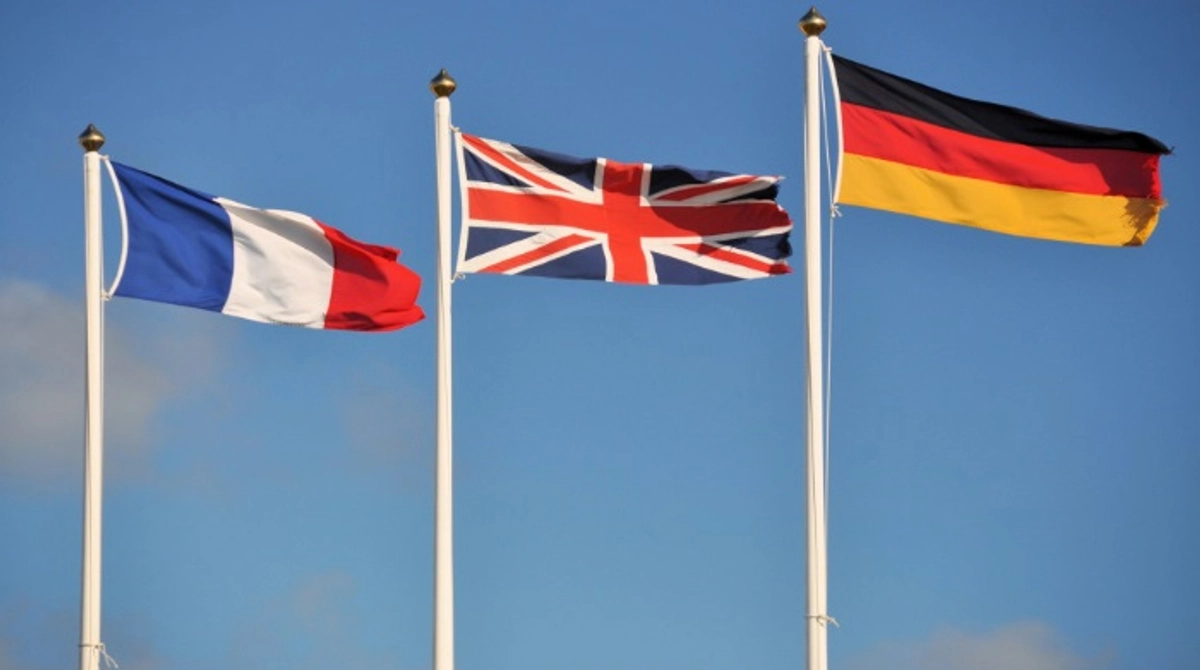
Germany, France and Britain have been increasingly active as a formation in the search for a diplomatic resolution of the war
825 words~4 min read