Story audio is generated using AI
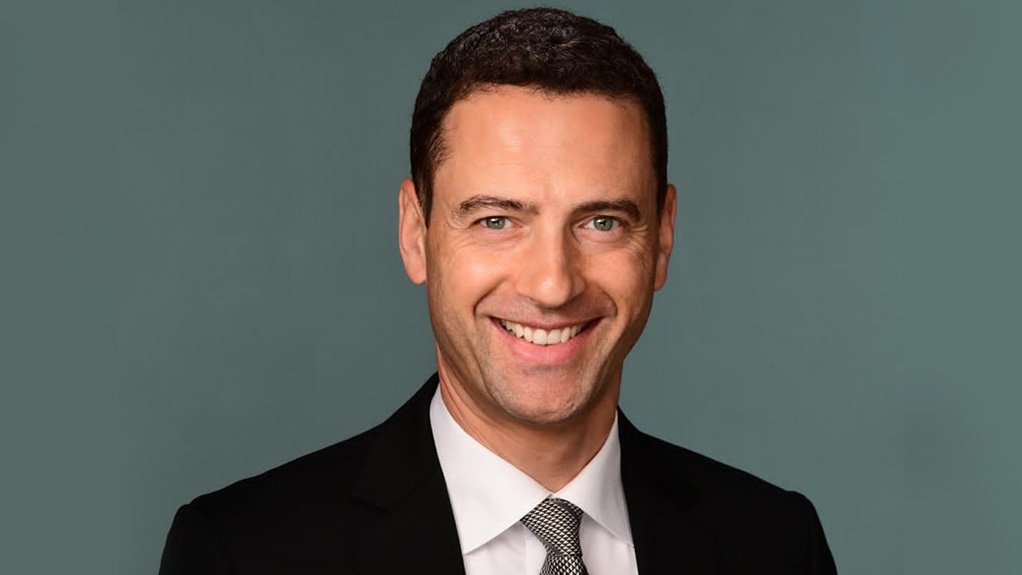
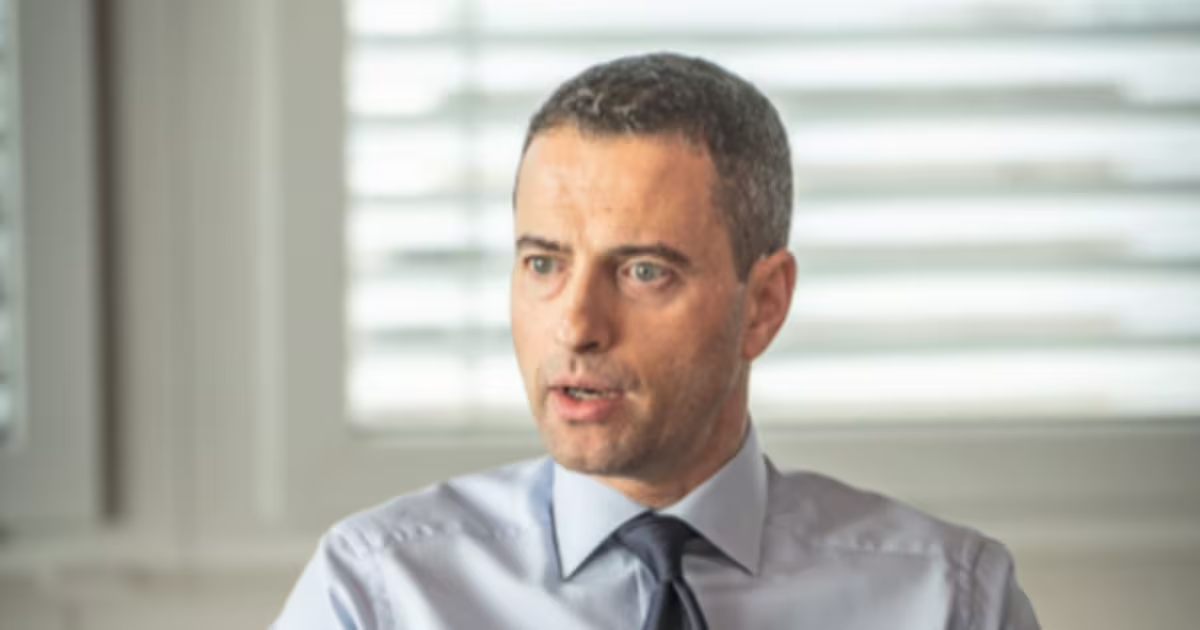
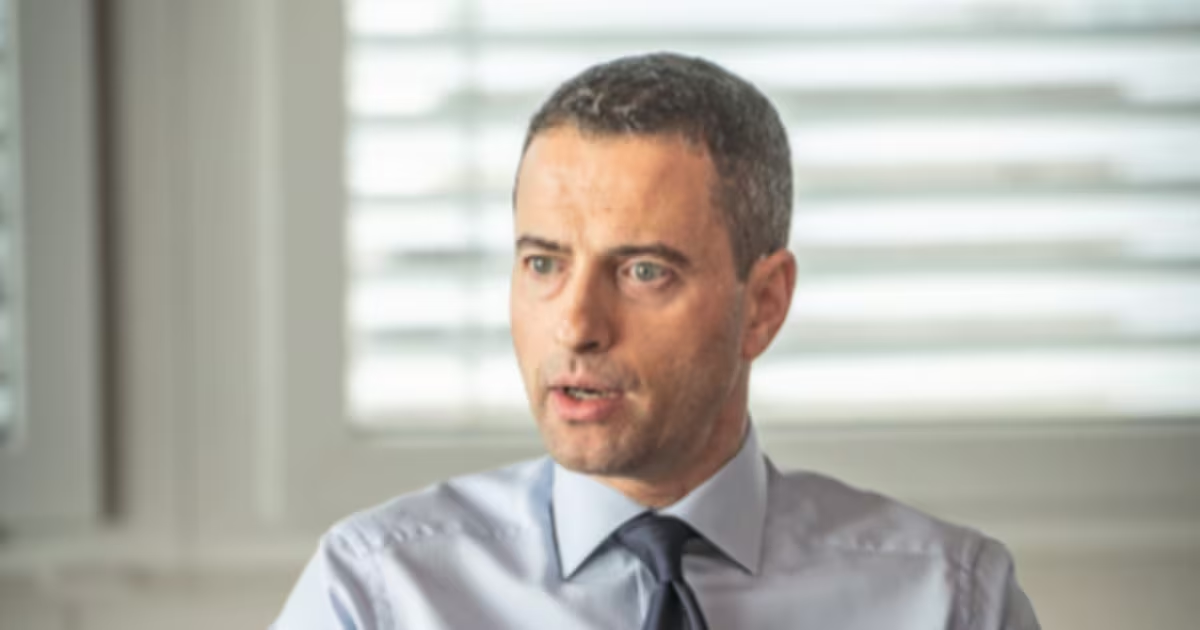
South African-born Glencore CEO Gary Nagle has allayed fears that the group’s move to seek a secondary listing in Australia, an important mining jurisdiction, might see the Swiss-based group ditch its 13-year stay on the JSE.Nagle, who succeeded another South African, Ivan Glasenberg, five years ago, said leaving the JSE was out of the question for the commodities trading and mining group.The group’s shares have surged 88% on the JSE over the past five years, valuing it at just under R1.7-trillion.The JSE listing in 2013 “has been a standout performer for us. South Africa has a deep pool of capital … and an investor community that understands mining and deep knowledge. We have built a shareholding in South Africa,” Nagle said. (Dorothy Kgosi) “This has given us the confidence to do the same in Australia. Because Australia, like South Africa, is a mining economy, with deep knowledge and understanding of how mining works.“South Africa has been a trailblazer for us. We have 8% of our [share] register there, which is equivalent to A$10bn (about R115bn); if we can replicate that in Australia, that will be a great success. We believe there will be a demand for our stock because we provide a great value proposition for our shareholders.”Nagle added that Australia is home to one of the world’s largest and fastest-growing pools of long-term investment capital, with around A$4.4-trillion in pension fund assets.Investors, meanwhile, have plenty of reasons to love Glencore. The group has returned $28.8bn to shareholders in dividends and buybacks since 2021, which equates to about 33% of its market valuation.Nagle said the group, which earlier this year abandoned merger talks with Australian rival Rio Tinto, will maintain its primary listing in London, having last year toyed with the idea of moving to New York.Glencore is the second big mining house to stick with the JSE over the past five years as many companies go in search of other markets with deep liquidity.When BHP, the world’s largest mining house, undertook a share consolidation in 2022, it also retained its secondary listing on the JSE and primary listing in its home country, Australia, effectively choosing Johannesburg over London. BHP is worth R3.7-trillion on the JSE, up 56% over the past five years.Glencore on Wednesday reported that group adjusted earnings before interest, tax, depreciation and amortisation (Ebitda) increased 86% to $10.1bn in the six months to end-June. Attritable net income increased to $4.4bn after a loss of $655m a year ago.It also announced a special dividend and a new share buyback programme.“Consistent with prior practice, recognising our Bunge shares as surplus capital, we announce today a top-up special cash distribution of 8.5 US cents a share (about $1bn), alongside a new $500m share buyback to be completed by February 2027,” the group said.Glencore acquired the Bunge shares when its agricultural business, Viterra, officially completed its multibillion-dollar merger with Bunge.The special dividend brings the total 2026 announced shareholder returns to about $3.5bn, Glencore said.The group said the first half was characterised by the significant repricing of energy and closely related markets and risks after the escalation of the Middle East conflict.“What began the year as a relatively well-supplied energy complex quickly shifted towards a focus on security of supply and access to physical commodities. Constraints across oil, refined products, LNG [liquefied natural gas] and freight capacity drove heightened volatility across global energy and other markets,” it said.Nagle said the group delivered another strong operational and financial performance, with its assets performing in line with market guidance. That, and substantially higher average prices for its core commodities and a favourable marketing backdrop, underpinned a material increase in earnings, he said.WATCH | Peter Major, director of mining at Modern Corporate Solutions, on the miner’s performance.