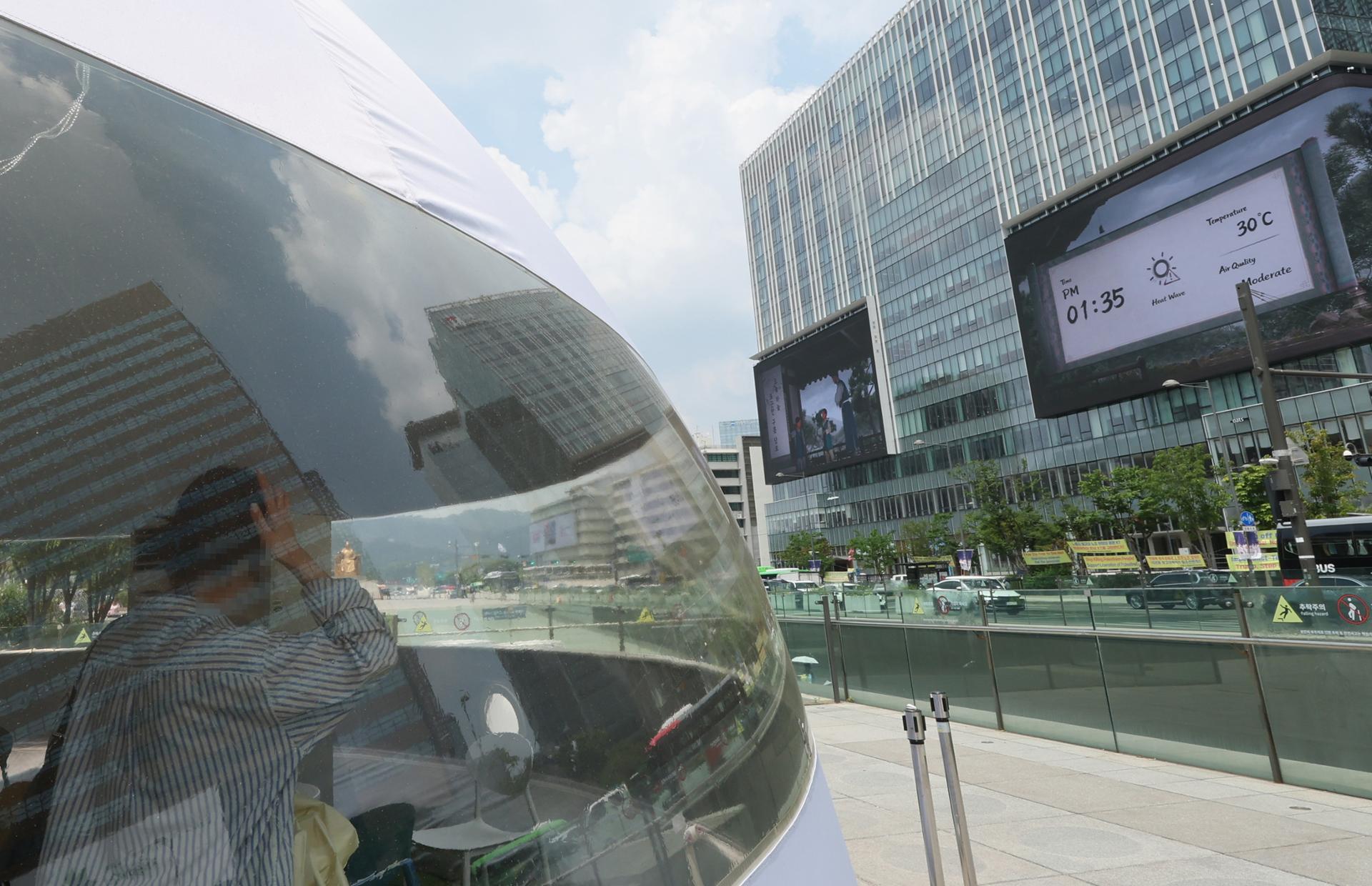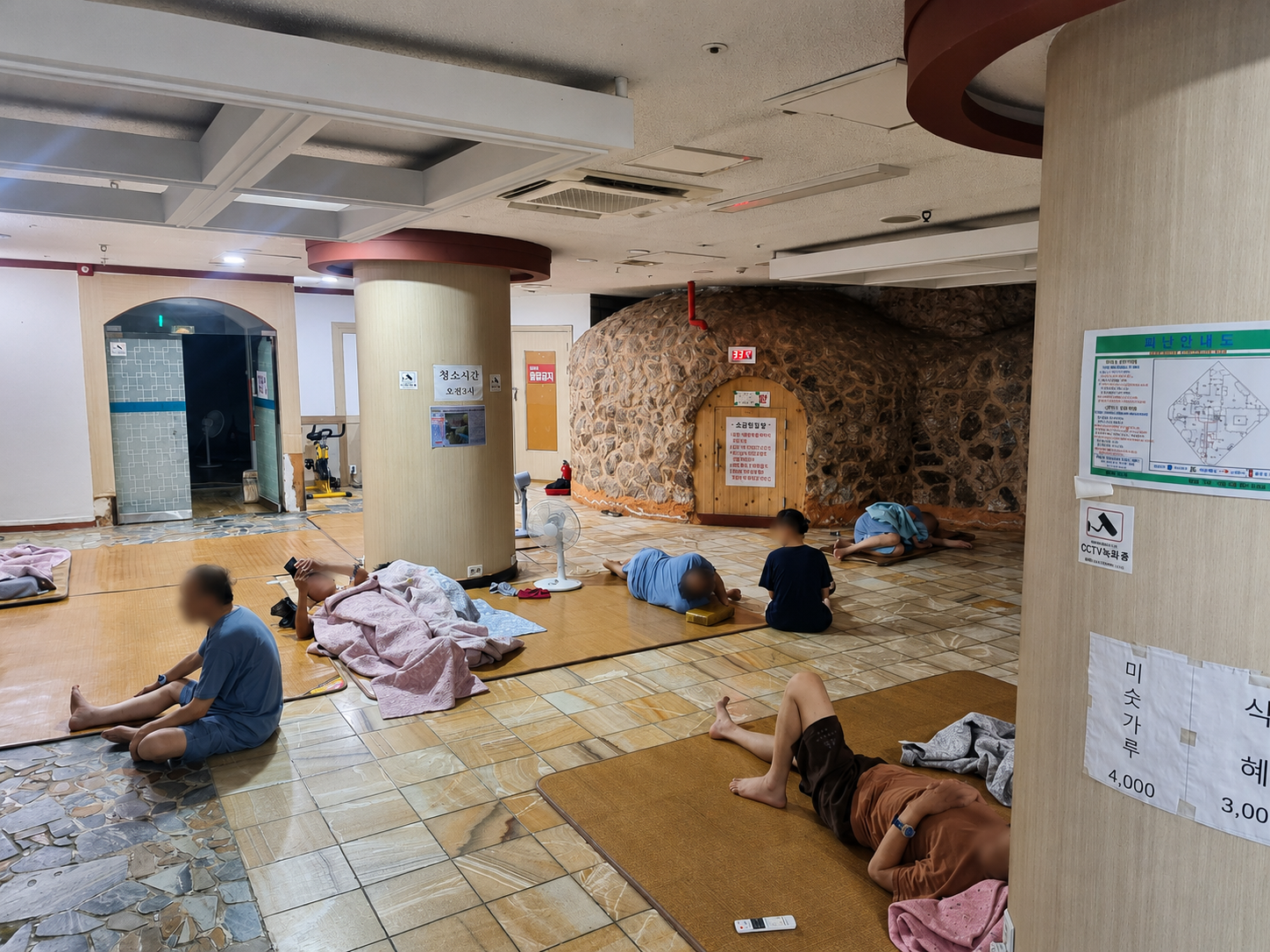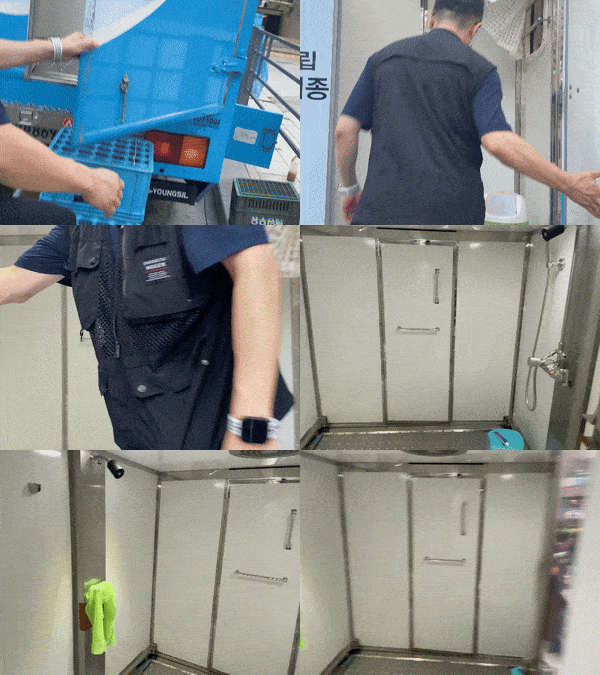
A shower truck is stationed near Exit No. 3 of Euljiro 1-ga Station in central Seoul on Wednesday. (Lim Jae-seong/The Korea Herald) People become homeless for many different reasons, but South Korea’s brutally hot and humid summer is a hardship they all share. For those sleeping in underpasses or on the streets, a shower at the end of a sweltering day can offer rare relief.Four evenings a week, after many office workers have returned home, the Seoul Metropolitan Government parks a small truck equipped with a private shower booth near Euljiro 1-ga Station.“During the day, they are rarely seen here because the area is crowded with office workers and international visitors,” said Lee Jin-san, a Seoul city official overseeing the program. “After sunset, they return here to sleep, so we park the truck here four evenings a week to provide showers.”The mobile shower service operates at five locations across Seoul through three homeless support centers funded by the city government. One of the locations is near Exit No. 3 of Euljiro 1-ga Station.The homeless support center that manages the Euljiro service launched the program in 2018. It operates year-round except during the coldest winter months, when freezing temperatures could damage the water system.Visitors are provided not only with shower facilities but also toiletries, basic hygiene products, underwear and socks.According to city officials and outreach workers, about 12 people used the Euljiro shower daily between May and July. That roughly matches the number the truck can serve with its water supply, although users are not subject to formal time or water-use limits.“Several years ago, around 100 homeless people stayed near Euljiro 1-ga Station. Now only four or five regularly sleep here, although many still come from nearby areas to use the shower,” said an outreach worker from the center. The interior of a shower truck for homeless people stationed near Exit No. 3 of Euljiro 1-ga Station in central Seoul is displayed on Wednesday evening. (Lim Jae-seong/The Korea Herald) Building trustDuring a 30-minute visit at 7 p.m., only two people used the showers, and no line formed at the truck. Instead, the outreach worker pointed to a group of homeless people gathered about 50 meters away.“I think many avoid standing near the truck because of the cameras and unfamiliar faces,” the worker said. “Everyone has a different story, and some simply don’t want to be seen on camera or in photographs.”Outreach workers say the truck serves a purpose beyond providing a place to wash. It also gives them an opportunity to build trust with people who are often wary of offers of assistance.“Some people come wearing thick quilted winter pants even in the middle of summer,” Lee said. “Even when we offer them new clothes, they refuse. Some have never even told us their names after years of meeting them.”The truck allows workers to deliver basic supplies to people who, for various reasons, are reluctant to visit support centers. Over time, those encounters can make it easier to connect them with counseling and other welfare services.“When we approach people during our nighttime street outreach, many don’t ask for help,” Lee said. “But through the shower service, they gradually realize that the counselors and the support center are people they can trust.”Reaching those left behindThe service, however, still has a long way to go in reaching more of Seoul’s homeless population, many of whom are particularly vulnerable during persistent heat waves nearing 40 degrees Celsius.According to a 2025 survey by the Seoul Metropolitan Government, 543 people, or 17.5 percent of the city’s homeless population, were living on the streets. Jung-gu, where the center operates the Euljiro shower truck, had 162 people living on the streets.The survey, which covered 3,110 homeless people in Seoul, found that 40.2 percent reported mental health conditions, including depression, schizophrenia and alcohol dependence. Another 69.3 percent reported physical illnesses such as hypertension and diabetes.Many remain reluctant to accept assistance despite continued outreach efforts.The truck’s presence in the downtown area has also prompted concerns from some pedestrians. On Wednesday, two elderly men politely asked officials to move it.Despite such concerns, outreach workers said they plan to continue the program as a way to build trust and expand support networks.“Once people try the service, they keep coming back. Many also tell others about it, and I think more people will come,” the outreach worker said.
Shower truck offers Seoul’s homeless more than relief from the heat
People become homeless for many different reasons, but South Korea’s brutally hot and humid summer is a hardship they all share. For those sleeping in underpass
726 words~3 min read