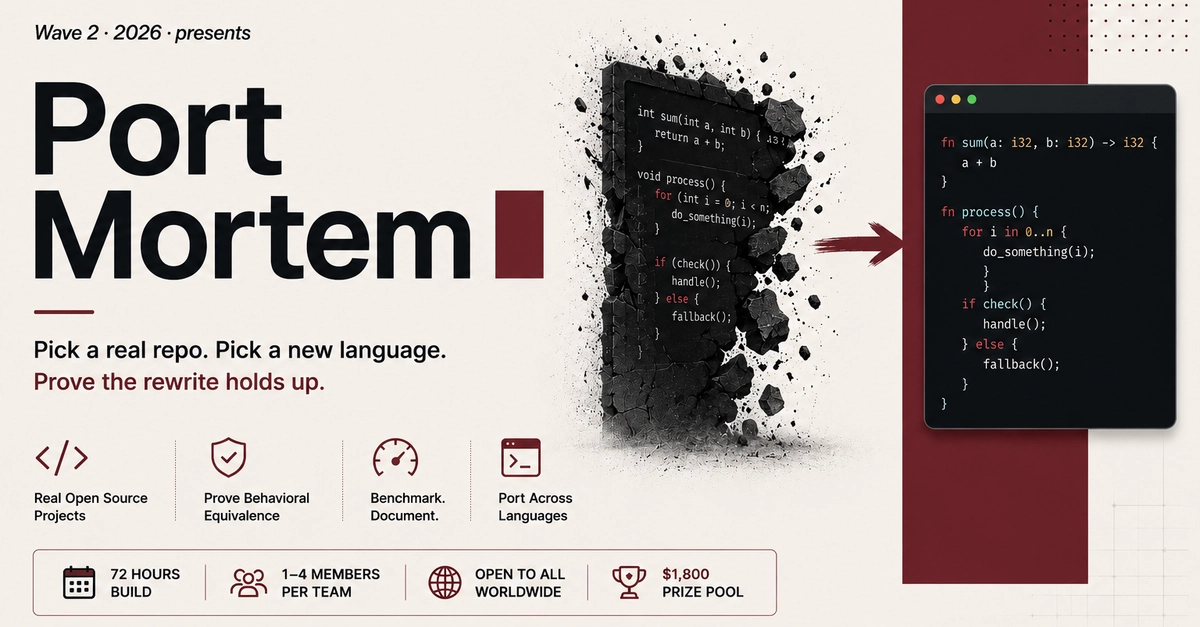
For Port Mortem 2026 (a 72-hour "resurrect dead code" hackathon, Track D: Python → Rust), I rewrote python-semanticversion — SemVer 2.0 parsing/comparison plus npm-style SimpleSpec / NpmSpec / LegacySpec range matching — as a from-scratch Rust port. Solo.
The result: the original, unmodified pytest suite passes against the Rust build — 54 passed, 16 skipped, 586 subtests, zero test edits — with zero unsafe, 0 fuzz divergences over 24,500 differential pairs, and 0 panics over 2.5M crash-fuzz runs.
This is the story of how, and the mistakes that nearly sank it.
The one constraint that shaped everything
The rules said the original test suite must pass unmodified, hashed at kickoff. That's a brutal constraint, and it's the best thing about the event — you can't fudge your way to green.