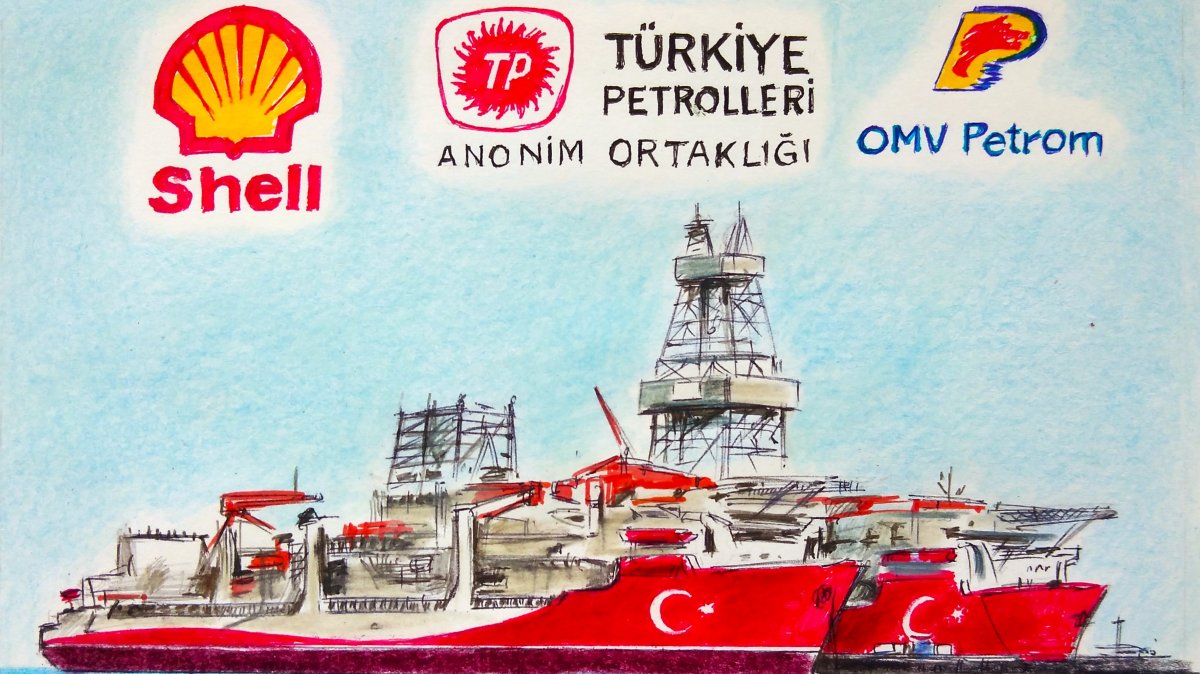
On July 31, the government of Bulgaria approved the transfer of 33% of the rights and obligations in the Khan Tervel offshore exploration license to Turkish Petroleum’s overseas subsidiary, TPOC. The decision’s finalized partnership structure presents Shell as operator holding 42%, while TPAO has 33% and OMV Petrom has 25%. Covering nearly 4,000 square kilometers in Bulgaria’s exclusive economic zone, the block lies relatively close to Türkiye’s giant Sakarya Gas Field. The partners will first begin with collecting and assessing 3D seismic data, and then an exploration well may follow if the results are promising.
The agreement does not, of course, guarantee a commercial discovery. Offshore exploration is both a costly and inherently uncertain process. Yet, its strategic value begins well before the first cubic meter of gas is produced. Costs and geological risks will be shared, new data will be collected, and three companies with different strengths will work on the same project. Türkiye will also carry the experience gained in its own waters into the maritime jurisdiction of a neighboring EU country.
Only a few years ago, discussions on Türkiye’s energy security focused almost entirely on import bills, pipelines and long-term contracts. These issues remain important, but they no longer tell the whole story. The National Energy and Mining Policy announced in 2017 placed domestic exploration and production at the center of reducing external dependence. The Sakarya gas discovery and rising oil production in Gabar showed what this policy could deliver. Sakarya, in particular, gave TPAO experience across the offshore value chain, from seismic surveys and deep-sea drilling to field development and production. Now, Türkiye is therefore moving beyond managing import dependence. It is gradually building the capacity to own, develop and produce resources at home and abroad.