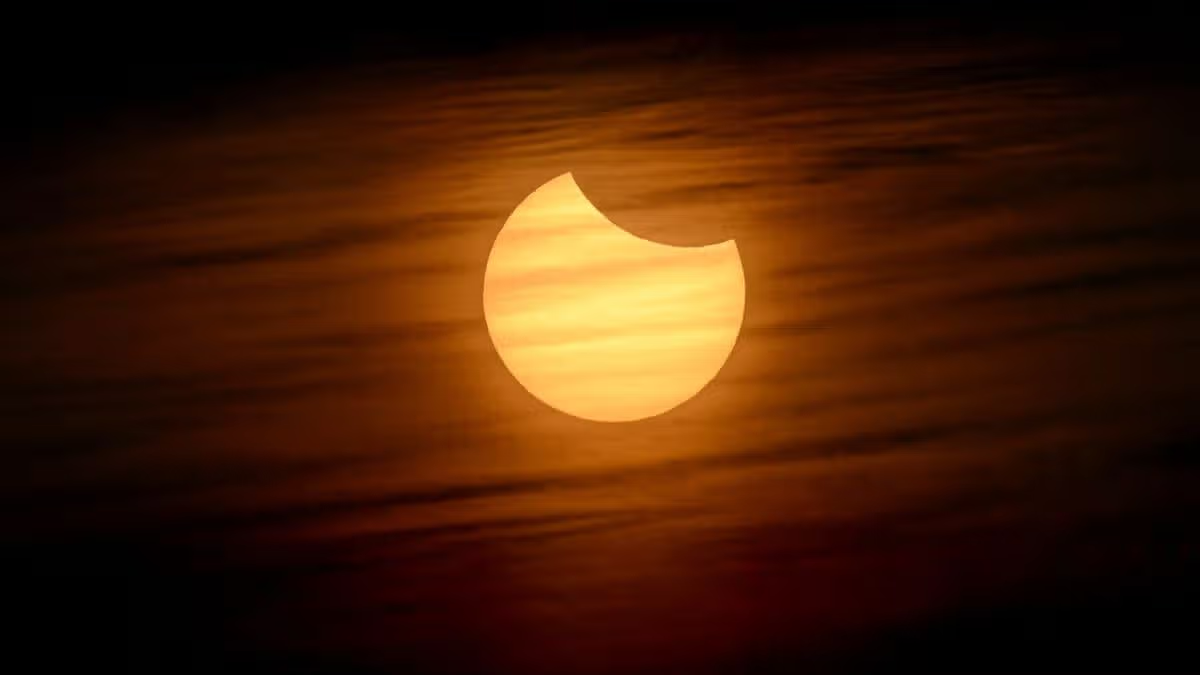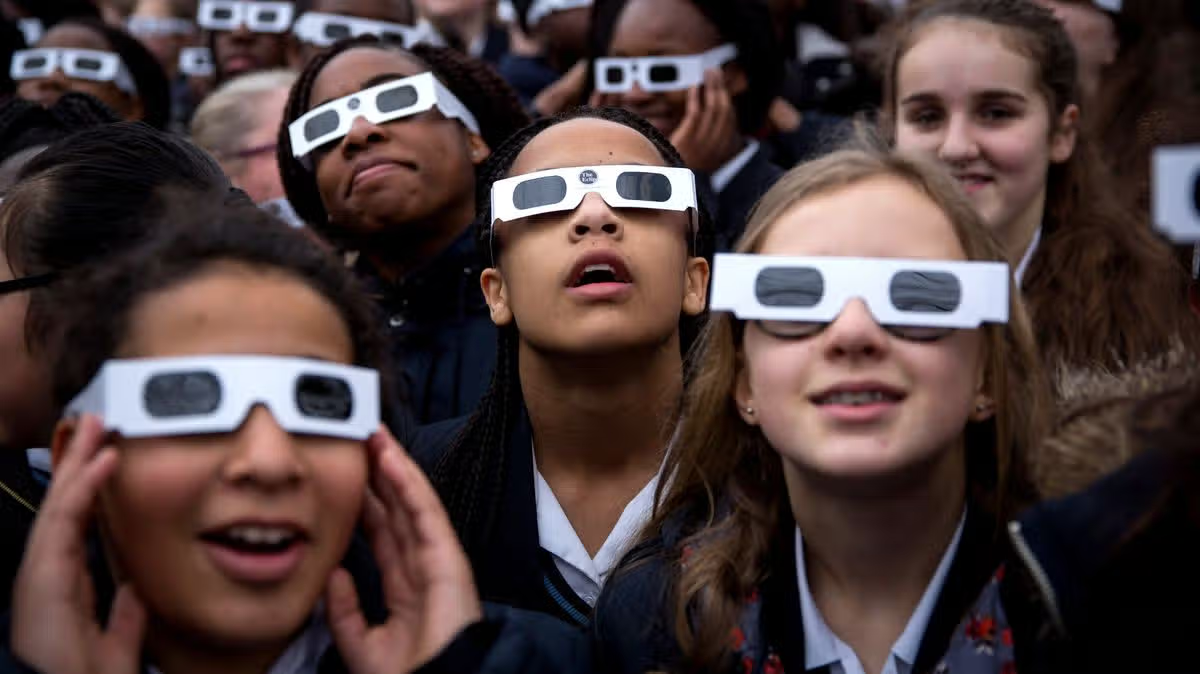
The UK is just days away from its most dramatic solar eclipse since 1999 - but before you look up, here's what you need to know about protecting your eyes21:14, 05 Aug 2026Updated 21:40, 05 Aug 2026This is what a solar eclipse looks like from spaceWith the most dramatic solar eclipse visible from the UK since 1999 just days away, many skygazers will be wondering if they can watch the spectacular event safely.Health experts have warned people against using ordinary sunglasses to watch the eclipse as they can still allow harmful solar radiation to damage eyes.But there are other many ways people will be able to enjoy the eclipse - including special glasses and homemade pinhole viewers.Where and when will the eclipse be visible?On Wednesday, August 12, people across much of Europe, including the UK and Ireland, will be treated to an impressive partial solar eclipse, with around 90 per cent of the Sun covered by the Moon.A total solar eclipse, where the Moon completely covers the Sun, will be visible from parts of Spain, Greenland, Iceland, northern Russia and a small area of northern Portugal.The exact timings will vary depending on location. In London, Bristol and Cardiff, the eclipse will begin at around 6.17pm, reach its maximum at around 7.12pm and finish at around 8.06pm, according to the Royal Museums Greenwich.Viewers in Cornwall will witness around 95 per cent coverage at 7.16pm, with the south-west set to experience the greatest eclipse coverage in the UK, according to the Royal Observatory Greenwich.Do I need special glasses to watch the solar eclipse safely?Health officials have warned that even cloudy skies do not make it safe to look directly at the Sun during the eclipse, urging people to take the necessary precautions.You should use specially designed eclipse glasses or handheld solar viewers to watch a solar eclipse safely as they are "thousands of times" darker than regular sunglasses, according to NASA.The UK Health Security Agency (UKHSA) has also warned that looking directly at the Sun during an eclipse without proper protection can cause serious eye damage.It said: "Ordinary sunglasses – no matter how dark – do not provide adequate protection for viewing a solar eclipse."A solar eclipse happens when the Moon passes directly between the Sun and Earth, blocking some or all of the Sun's light from reaching our planet.During an eclipse, the sky becomes darker and the Sun may appear less bright, which can make people more likely to stare at it for longer. But the remaining visible part of the Sun still emits intense ultraviolet, visible and infrared radiation that can damage the retina, the UKHSA warned.The Royal College of Ophthalmologists reported around 70 cases of people experiencing vision problems after viewing the 1999 total solar eclipse. Around 40 per cent of those affected had observed it for less than a minute.Even when wearing eclipse glasses or using a handheld solar viewer, NASA says people should never look at the Sun through a camera lens, telescope, binoculars or any other optical device.Can I use cameras or binoculars to get a closer look?NASA has warned people not to look at the Sun through cameras, telescopes or binoculars while wearing eclipse glasses.The space agency said the concentrated rays of the Sun can burn through eclipse filters and cause severe eye injuries if optical devices are used without correct front-mounted filters.It advises anyone planning to use cameras, telescopes or binoculars to "seek expert advice" and ensure the correct solar filter is securely fitted to the front of the equipment before observing the eclipse.Experts also recommend checking eclipse glasses before use and discarding them if they are torn, scratched or otherwise damaged.Are there other ways to watch the solar eclipse safely?For those without eclipse glasses, there are some other cheap and cheerful ways to watch the phenomenon safely using items you may already have at home.The UKHSA recommends the following options:Making a pinhole viewer at home . To do this you need a long cardboard box, such as a cereal box, white paper, aluminium foil, tape, scissors, and a push pin. Tape white paper inside the bottom of the box as a screen. Seal the top, cut two small holes on opposite ends, cover one with foil, and poke a clean pinhole in itViewing the Sun's image projected through a colander or the gaps between tree leavesProjecting the Sun's image onto a sheet of paper using a simple pinhole projectorArticle continues belowYou can also watch the eclipse online. The European Space Agency is hosting a live webcast from Spain's Astrophysical Observatory of Javalambre, alongside a public celebration in León. NASA will also provide coverage, as will the Italy-based Virtual Telescope Project, among others.
Solar eclipse health warning as UK experts issue major 'do not' alert
The UK is just days away from its most dramatic solar eclipse since 1999 - but before you look up, here's what you need to know about protecting your eyes
779 words~4 min read