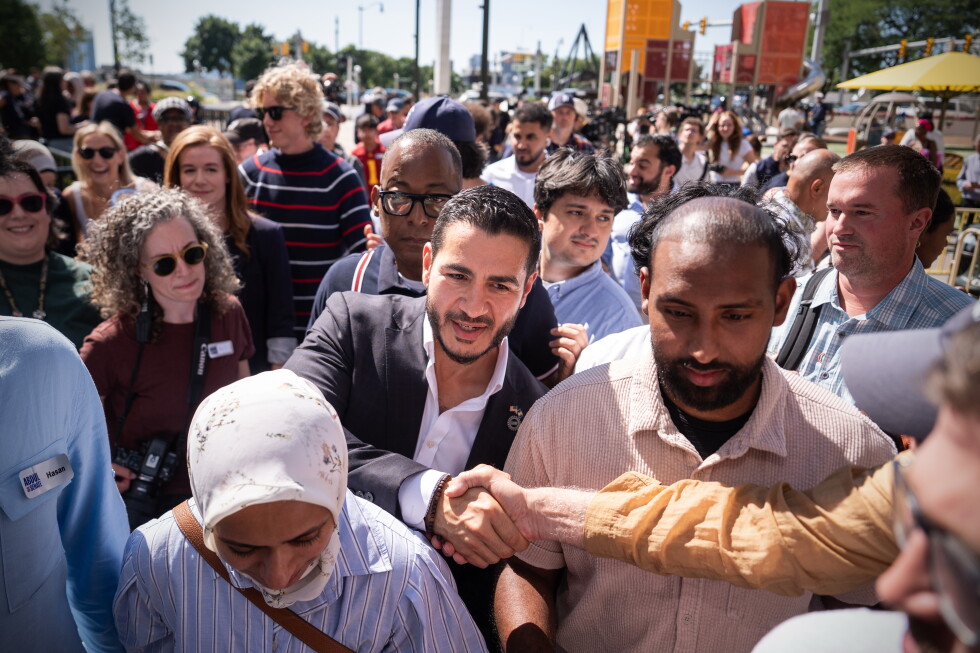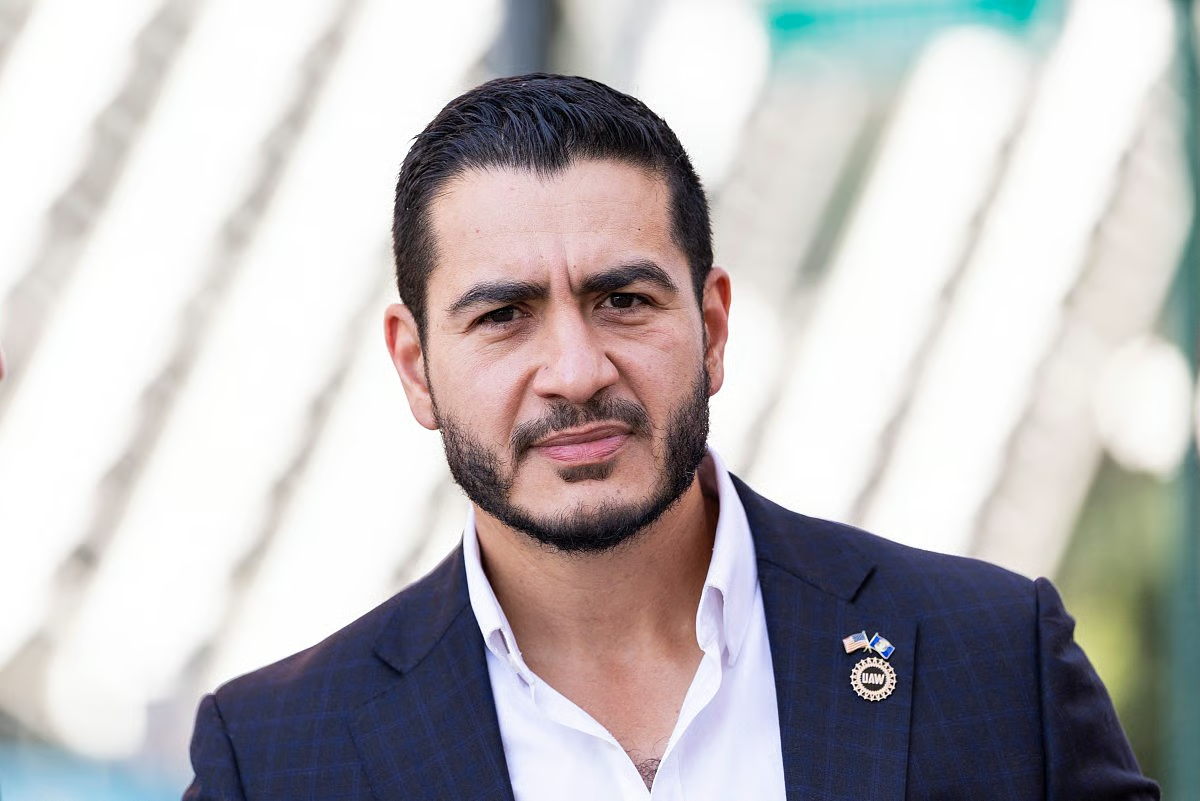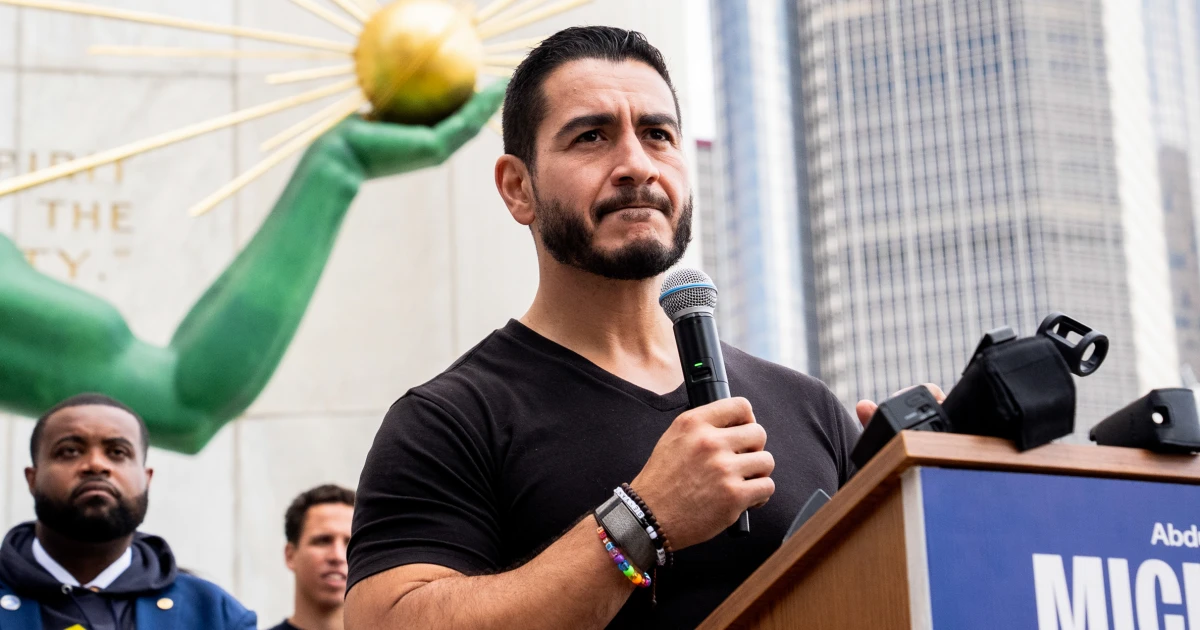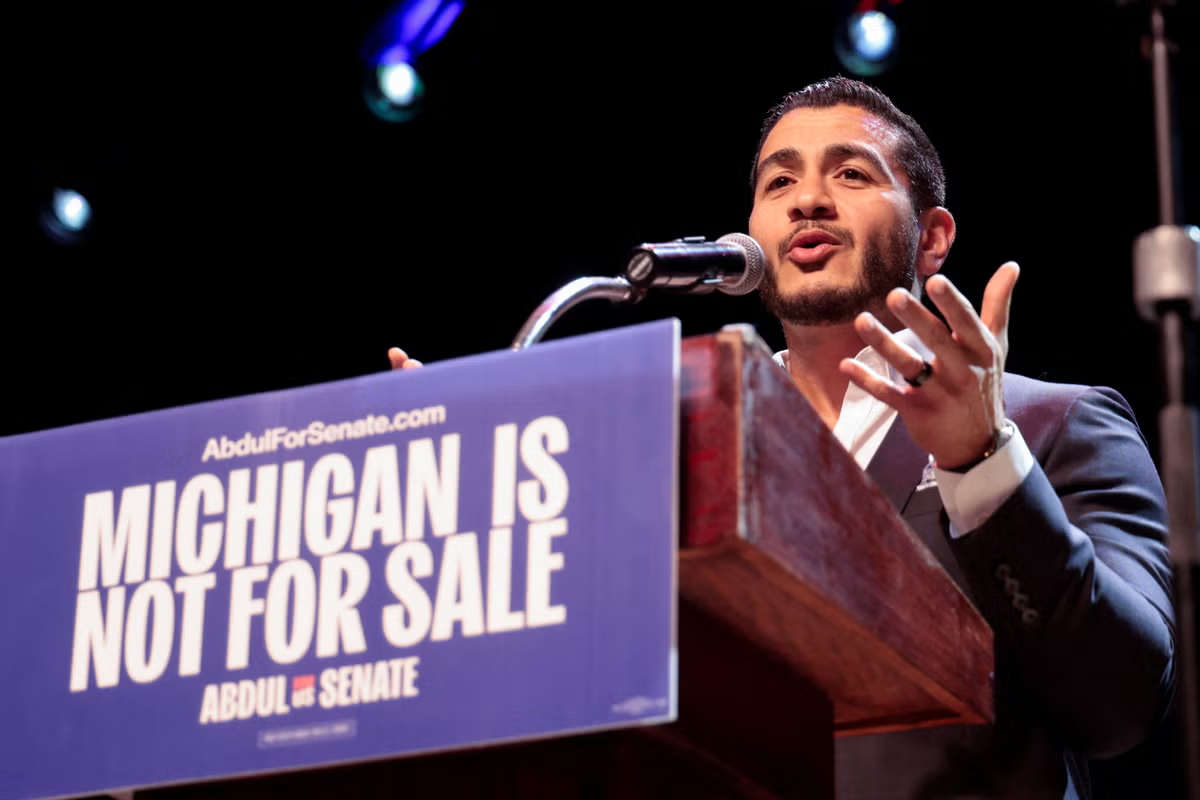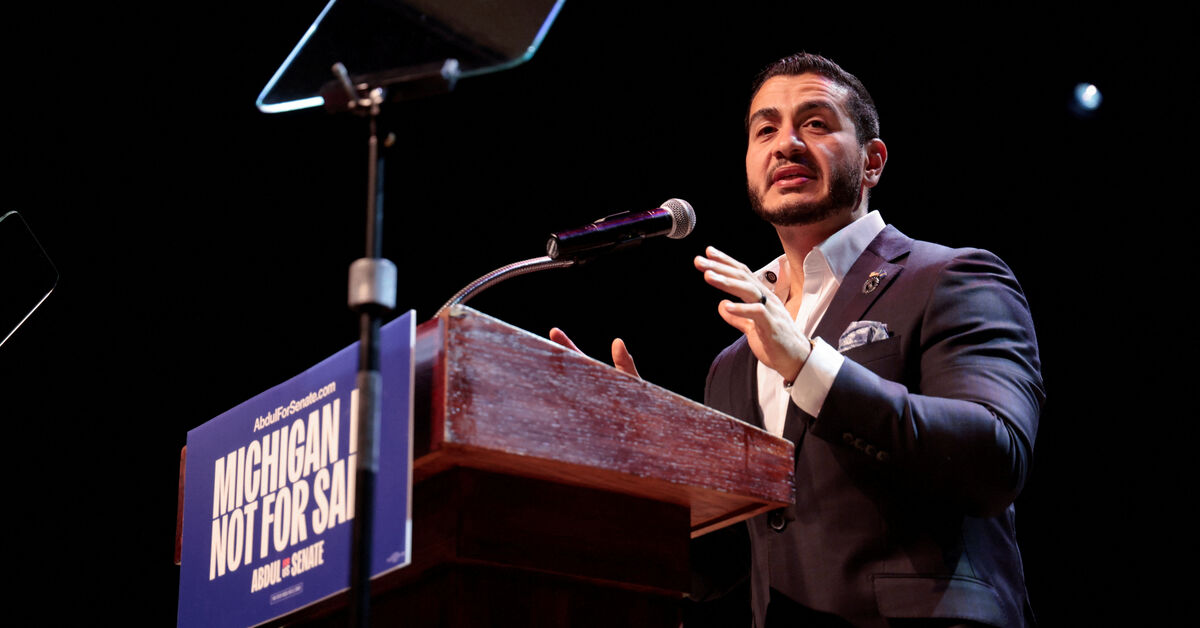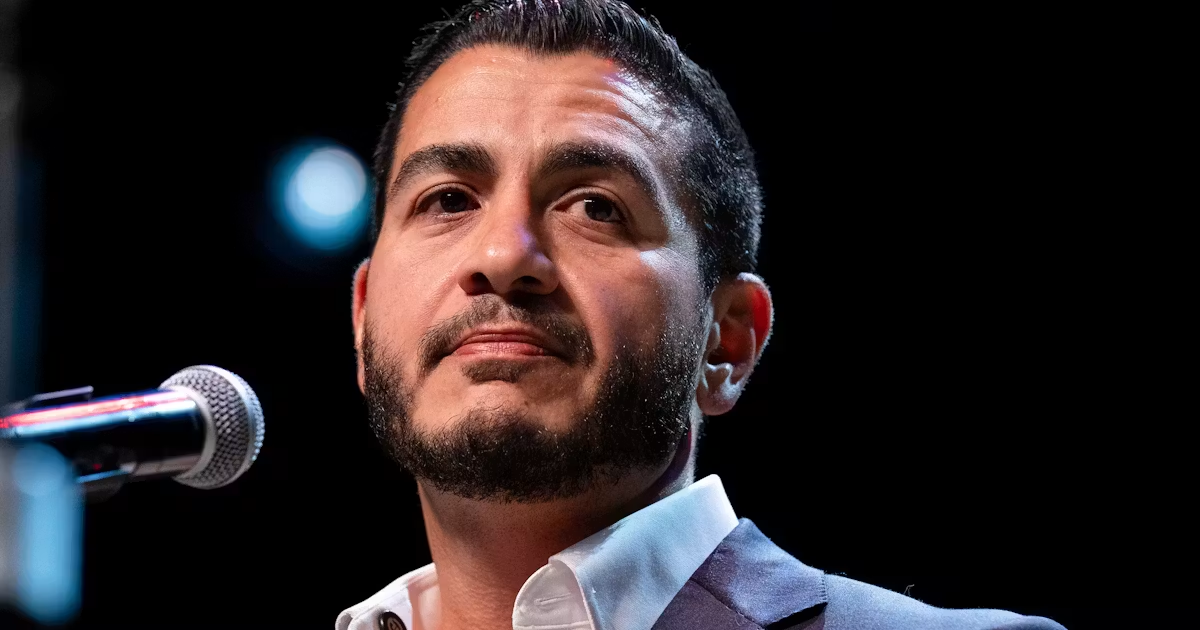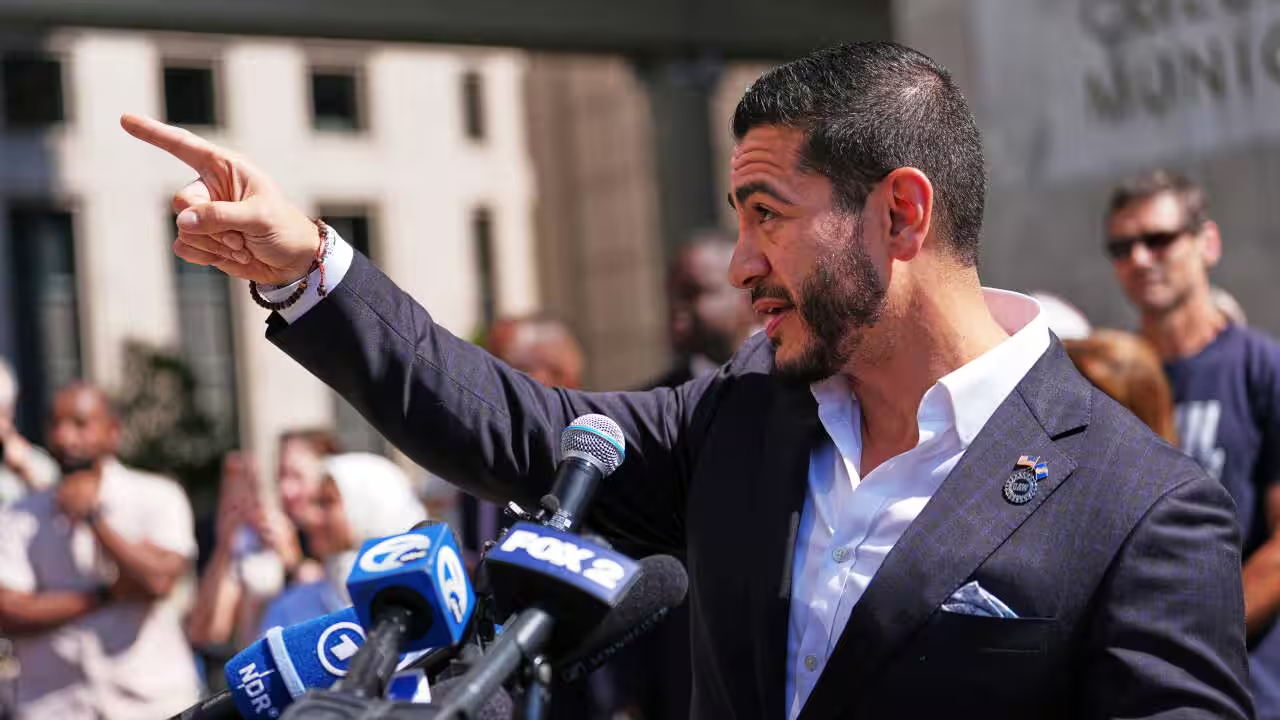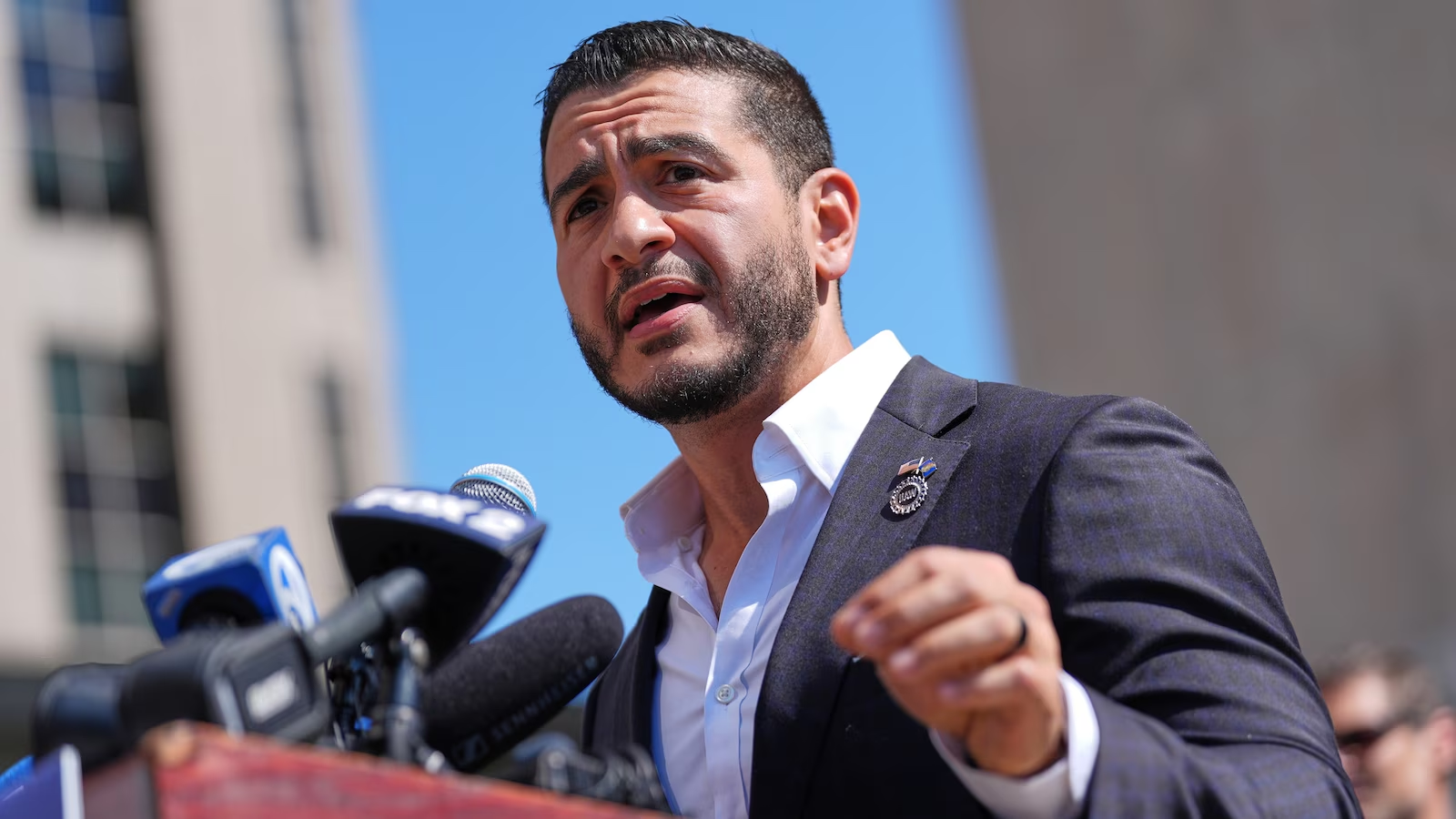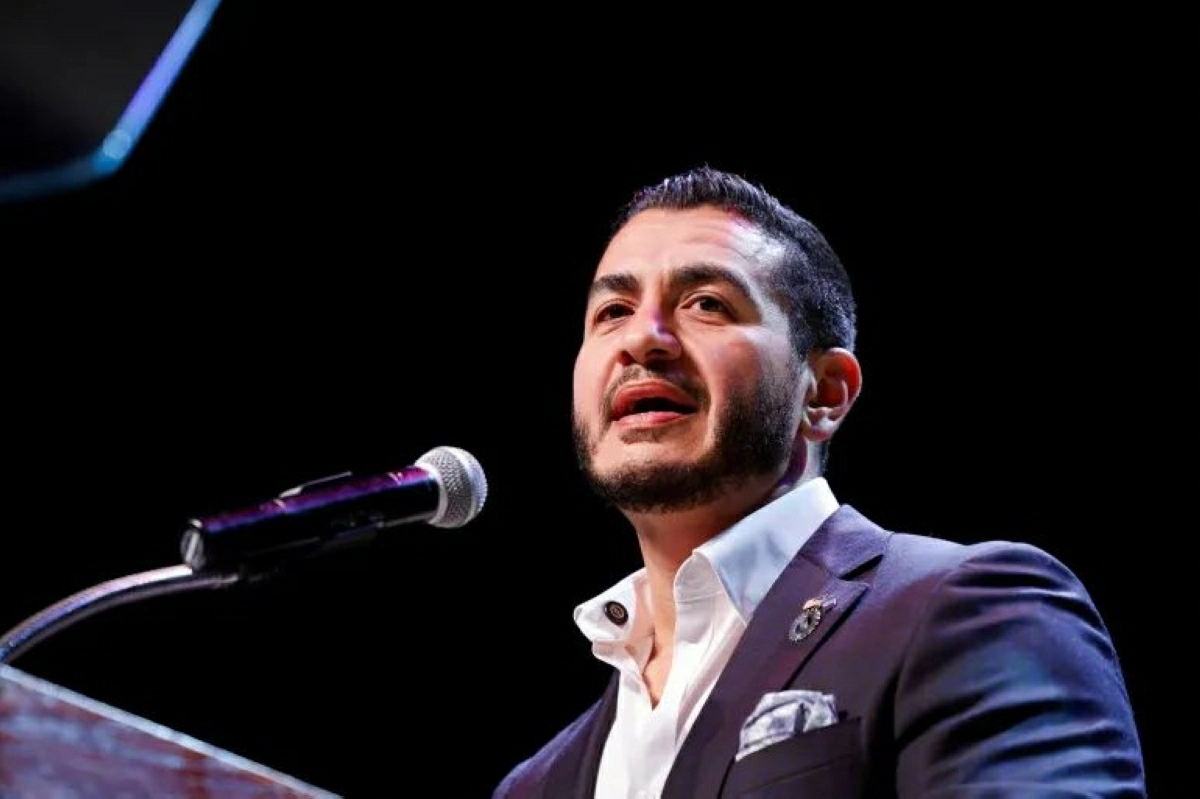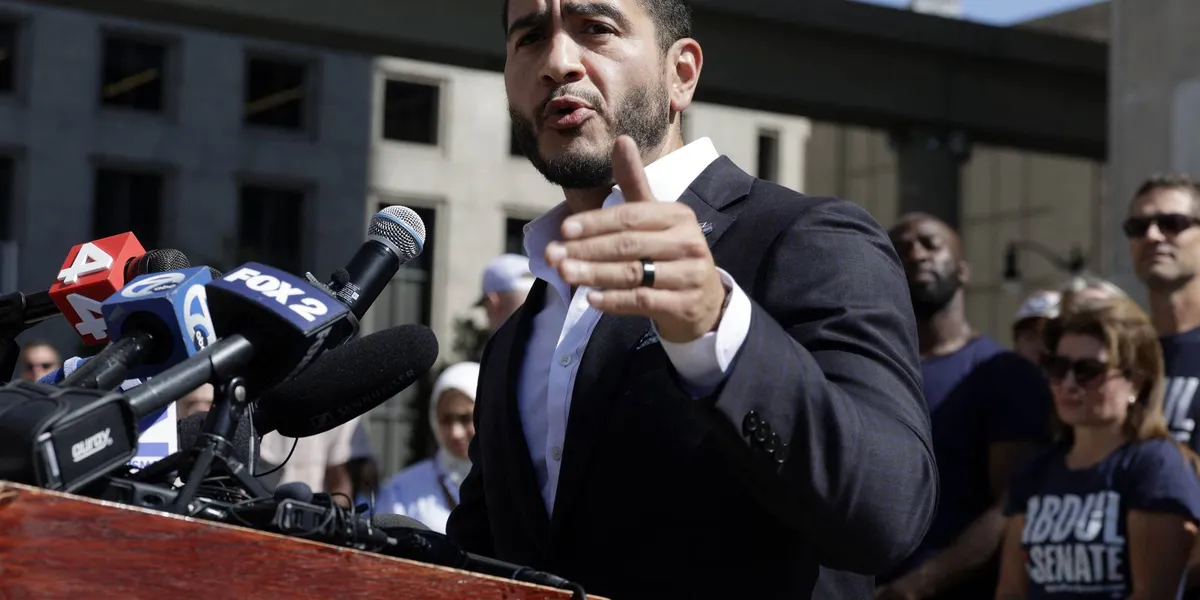
In a victory speech on Aug. 5, the Democratic upstart reflected on how if not "for an accident of history," he might have been a cab driver in Egypt.Show Caption
Abdul El-Sayed, the Democratic party upstart who just won a contentious primary in Michigan, says that if not for an "accident of history," he would have become a cab driver in Egypt like others in his family.Instead, the 41-year-old Michigander is a Senate nominee after winning an Aug. 4 primary race against U.S. Rep Haley Stevens, an establishment Democrat pick who was backed by tens of millions of dollars from pro-Israel lobbyists. The race was closely watched around the nation as it is seen as a bellwether for where the Democratic Party is headed. El-Sayed, a former public health official turned politician, offered up a vision of that direction in an Aug. 5 victory speech, where he reflected on the luck of his upbringing in suburban Detroit and what it means for his goals."But for an accident of history that allows my dad to immigrate to Detroit to go to Wayne State University, I would have been a cab driver in Egypt like my cousins," El-Sayed said in Detroit shortly after the primary race was called in his favor. "Except for I got to be born in America."El-Sayed noted all the differences in his life that resulted from that distinction, including access to vaccines that saved him from diseases that killed family abroad, access to public schools and finally public funding for his medical education that led to the work in public health that inspired his campaign and its cornerstone issue of "Medicare for all." "I know what America gave me, but I also know what America continues to deny too many of its own children," said El-Sayed, a father of two girls. "So when the opportunity to run for U.S. Senate came up, I realized this was a fight not just against Mike Rogers and Donald Trump, it was a fight for the kind of America that can give what I had to all of her children."El-Sayed lives in Ann Arbor with his wife and their daughters Emmalee and Serene, according to his campaign website. His wife, Sarah Jukaku, is a psychiatrist. Raised in suburban DetroitEl-Sayed delivered his victory speech on Aug. 5 in downtown Detroit, "not 20 minutes" from where he grew up in the Michigan city’s suburbs. He was born on Halloween in 1984. The Michigan native noted his father moved to the U.S. from Egypt to study at Wayne State University in Detroit. According to reporting by the Detroit Free Press, part of the USA TODAY Network, El-Sayed’s father became an engineer and professor at Eastern Michigan University, his mother a nurse practitioner.El-Sayed’s parents split up and afterwards he grew up mainly with his father and stepmother, a professor from a Protestant household in Central Michigan, the Free Press reported.He captained his high school’s football, wrestling and lacrosse teams, according to his campaign website.Time in EgyptEl-Sayed grew up in the United States, but he described his summers in Egypt as formative. "I would spend a lot of my childhood summers in Egypt," El-Sayed said Aug. 5. "I’d spend them there with a front-row seat to what my life should have been."According to the Free Press, his family in Egypt lived in Alexandria, the ancient port city on the Mediterranean. The Free Press described his family there as "not as financially secure as his Michigan family."El-Sayed noted the experience impressed upon him the luck of his own upbringing and value of public health. Education, public health work The 41-year-old has an impressive professional and educational resume. He has a medical degree from Columbia’s College of Physicians and Surgeons and a doctorate in public health as a Rhodes Scholar at Oxford University. For his undergraduate degree, he went to the University of Michigan, where he studied biology and political science. People at the time joked that the two majors were so opposite each other that El-Sayed would never find a way to combine them in a career.His turn to politics was preceded by years of working in public health. He served as Detroit’s public health director and as an assistant professor of epidemiology at Columbia University. He managed a team of 20 with a $1.2 million budget at Columbia's Systems Science program and Global Research Analytics for Population Health center.Many Americans became introduced to El-Sayed at the height of the COVID pandemic when he appeared frequently as an expert across many media platforms. Detroit was among the major U.S. cities with a high number of COVID-related deaths during the early stages of the pandemic.He made an earlier foray into politics in 2018 when he ran for governor of Michigan.Work in public health fueled campaignThe former public health official cited challenges he faced trying to improve the health of Michiganders, especially those who faced severely shorter life expectancies, as the main impetus for his turn to politics. "I kept running up against one thing," El-Sayed said, "a politics that tells us that the corporations should do what they can and the rest of us do what we must, a politics that tells us our democracy is there for the taking if you have enough money to take it."He added: "That’s what this is about, building a movement to take our democracy back to serve the people who absolutely deserve the best of what America has to offer."Contributing: Terry Collins, USA TODAY