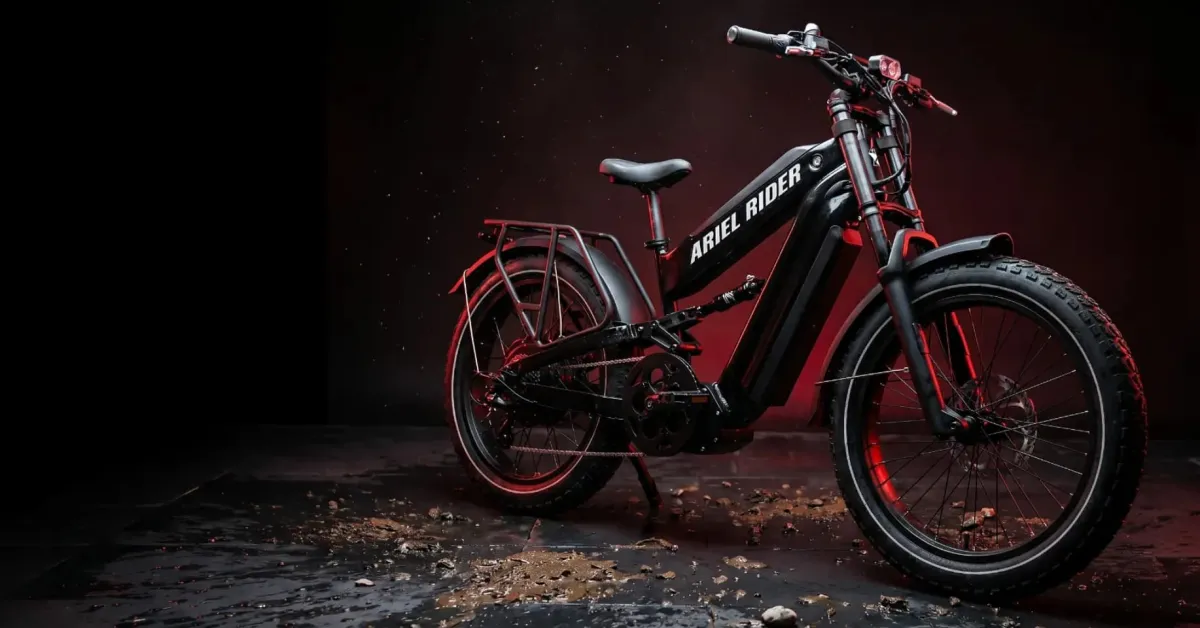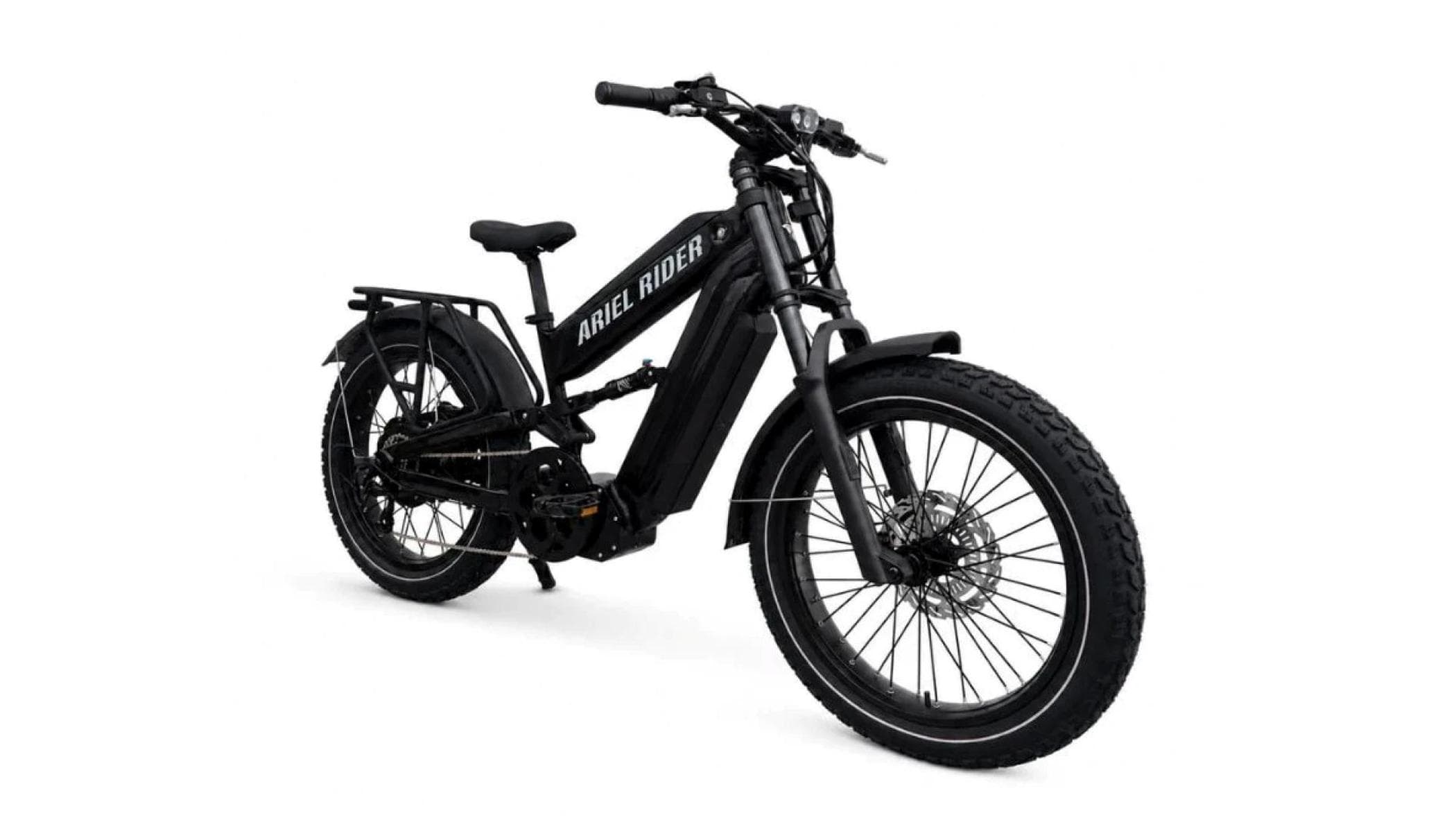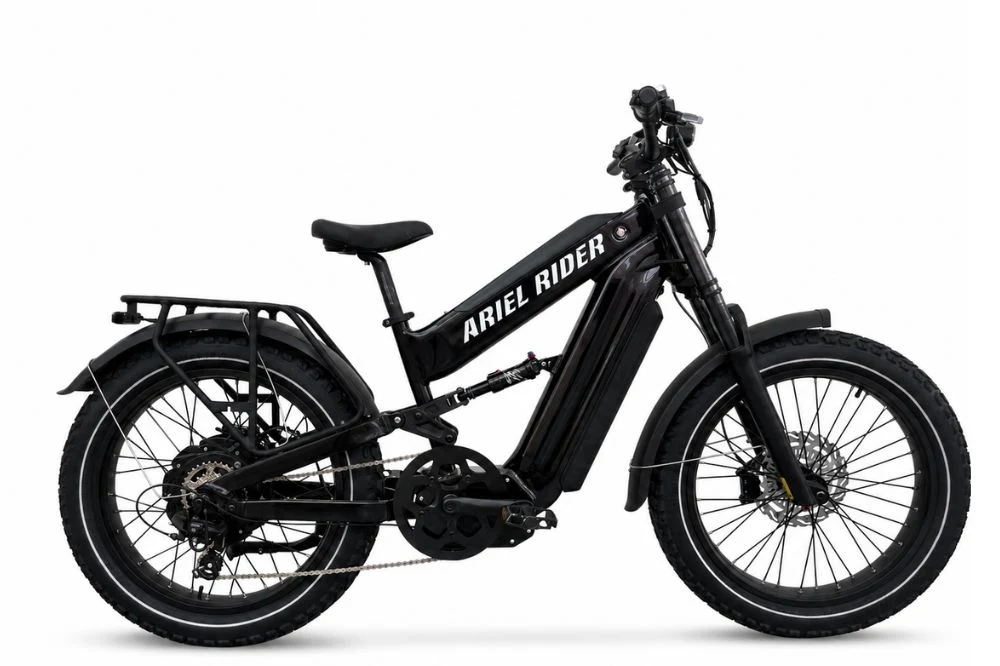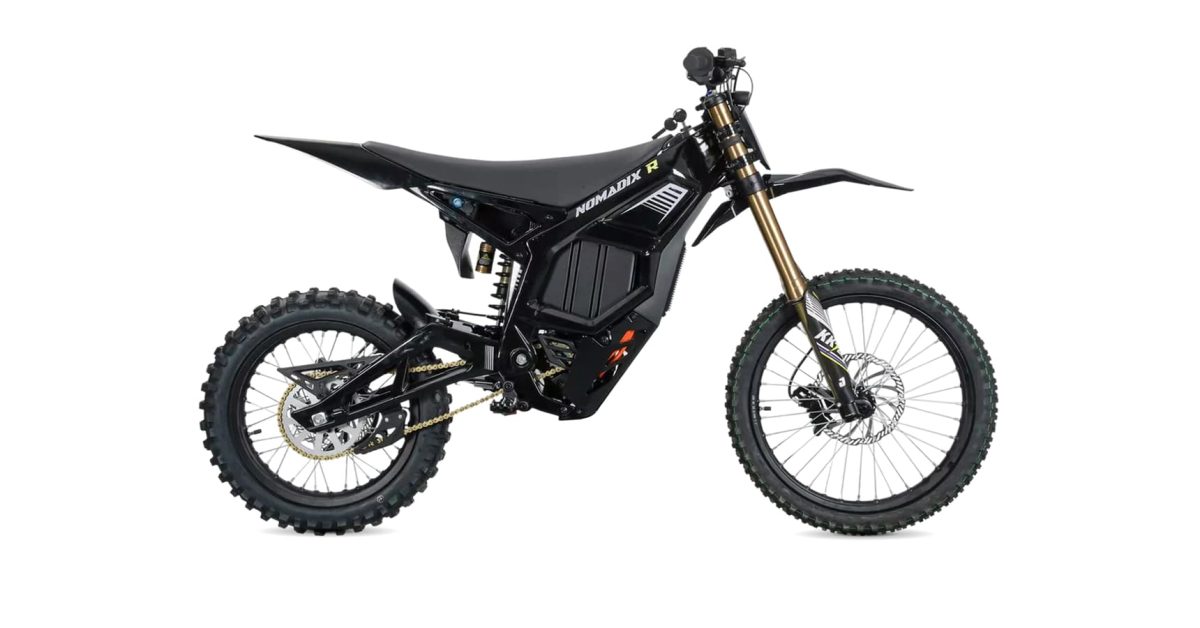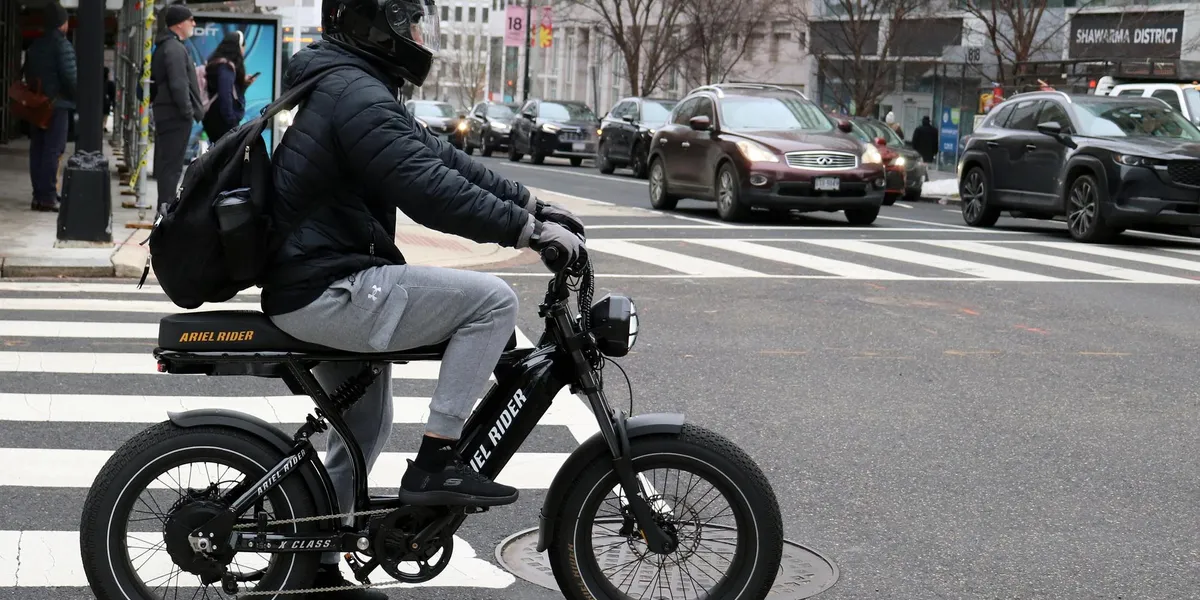
Ariel Rider, an e-bike maker in Redmond, Wash., opened preorders this month for the MUDD 72V, a 105-kilometer-per-hour (65-mile-per-hour) 8,000-watt machine it calls a “power bike.” It looks like a fat-tire e-bike. It rides like a lightweight electric motorcycle. Legally, it’s neither.That gap isn’t a loophole Ariel Rider found. It’s a hole regulators haven’t filled yet.Two regulatory frameworks apply to every e-bike sold in the U.S. The first is a vehicle classification system, set mostly by states, defining what counts as an e-bike. Under New York’s vehicle and traffic law, for example, e-bikes split into three classes: Class 1 assists only while pedaling, up to 20 mph; Class 2 adds a throttle, capped at the same 20 mph; and the last category, Class 3, allows pedal-assist bikes to operate up to 25 mph, but only in cities of a million-plus—meaning just New York City.The second system is safety certification, layered on top by New York City’s fire code, which requires UL Solutions–certified batteries and electrical systems for any e-bike sold in the five boroughs. That system is about fire risk, not vehicle type; a fully compliant Class 2 e-bike can still be barred from sale if its battery lacks certification, which is what happened to Ariel Rider’s older models in 2024, per the company’s own compliance notice at the time.Both systems assume the maker of the vehicle in question wants it to be an e-bike. Ariel Rider doesn’t.When a Bike Outgrows Its CategoryNew York’s vehicle and traffic law reclassifies anything exceeding the state’s speed or power thresholds as a moped or motorcycle, requiring registration, a license, and insurance. New York has leaned on that fallback for years: Too fast for Class 3 and a bike becomes a limited-use motorcycle by default.Ariel Rider sidesteps that by selling the MUDD as a private-property/off-road machine unintended for public roads. Its terms of service state the bike isn’t an e-bike, isn’t certified for on-road use, and is sold only for private land or closed courses, with no DMV title path to opt into. IEEE Spectrum asked Ariel Rider how it squares those terms with marketing the MUDD as a “power bike,” but the company did not respond.That creates a second gap, around off-road use itself. New York Vehicle and Traffic Law §2407 requires liability insurance the moment an all-terrain vehicle (ATV) leaves land its owner owns, and mandates DMV registration even on private property—but that statute is written around New York’s ATV definition, typically three or more wheels. A two-wheeled machine like the MUDD doesn’t trigger it, so on land that belongs to the machine’s owner, current law doesn’t require registering or insuring the two-wheeler.The result: a machine capable of highway speeds that isn’t a legal e-bike, a registrable motorcycle, or an ATV under state law.The MUDD Isn’t an Outlier—It’s a CategoryAriel Rider didn’t invent this space. Hangzhou Qiulong Technology, in Hangzhou, China, launched the Sur-Ron Light Bee in 2014 and is credited by trade outlets like the Pack with creating the lightweight electric-dirt-bike segment. Talaria Power Tech, in Chongqing, China, entered a few years later, founded by former Hangzhou Qiulong Technology staff, per the same reporting. Segway and newer brands have followed, all selling machines with the MUDD’s profile: no pedals, motors in the thousands of watts, and marketing that avoids the word “motorcycle.”The category is growing fast. The Business Research Company estimates the global dirt-bike market, combining both gas and electric motors, will hit US $9.17 billion this year, with electric models the fastest-expanding segment. Prices have dropped sharply industry-wide in two years, pulling the machines into mainstream reach. Sur-Ron and Talaria even faced off in federal court: A Texas jury found Talaria liable for willfully infringing a Sur-Ron design patent, per court records reported by Bloomberg Law, with damages later set near $13 million—a sign of how much money now rides on this segment.Regulators are noticing the volume, not just individual bikes. New Zealand Police have publicized repeated operations seizing lightweight electric dirt bikes ridden illegally on public roads. In New York, State Sen. George Borrello introduced a bill (S8909) this year letting peace officers seize Class 3 e-bikes operated outside New York City, on top of the “Ghost Car Task Force“ already sweeping up unregistered mopeds and out-of-class machines. Law enforcement are targeting a category that arrived faster than regulators could write paperwork to govern it.That’s what turns the MUDD from a product launch into a bellwether. States updating their e-bike or off-highway vehicle (OHV) rules in 2026 are responding to the same pressure: low-cost, high-power two-wheelers that don’t fit a legal system built when 32 km/h (20 mph) was the ceiling anyone worried about.Even the bicycle industry’s own trade group agrees the gap needs closing, just not through a blunt fix. Matt Moore, policy counsel for PeopleForBikes, a national advocacy and trade group based in Boulder, Colo., has testified on this exact split in New York City, Minnesota, and California, per public testimony and legislative records. The group opposes blanket e-bike registration, with Moore telling New York City Council members in December 2024 that such rules have failed elsewhere and no European country requires them for low-speed bikes. But Moore pushed the opposite way for machines like the MUDD: Backing a 2026 California bill (SB 1167) to tighten the legal definition of an electric bicycle, he wrote in a statement reported by Streetsblog California that it would close gaps letting fast motorized vehicles proliferate under the e-bike label, while shielding legitimate low-speed bikes from new restrictions. His position is part of a wider trend: Draw a harder line around what counts as an e-bike, rather than regulate every electric two-wheeler the same.How Other States Are Closing the Gap—or Aren’tNew York isn’t unusual in facing this problem. States have split into three camps.The first set comprises states with a dedicated off-highway-vehicle framework. It includes California, which enacted SB 586—signed by Gov. Gavin Newsom in October 2025, effective 1 January 2026. The statute defines “off-highway electric motorcycles” and requires a DMV-issued Green Sticker, per a California State Parks OHV bulletin. The U.S. Forest Service has separately reminded riders that Sur-Ron, Talaria, Segway, and similar electric motorcycles must register like gas-powered OHVs to use public trails. This model avoids New York’s gap by giving every off-road machine a lane, regardless of wheel count. California is also where PeopleForBikes is pushing hardest for a legislative fix—evidence the pressure isn’t coming only from regulators.In another group of states, laws treat anything too powerful for e-bike rules as a motorized off-road vehicle, unless it meets full on-road motorcycle requirements—a VIN, title, and registration path. Some manufacturers now build electric motorcycles to that standard specifically to avoid the gray zone the MUDD occupies.Then there are the states that haven’t addressed the regulatory gap at all. Per a 2026 state-by-state survey published by e-bike retailer Mokwheel, 14 states haven’t adopted the three-class system. Alaska treats e-bikes as motorcycles outright; New Jersey eliminated the class system earlier this year, folding every e-bike into a single “motorized bicycle” category requiring registration and insurance.New York sits in an uncomfortable middle: a precise e-bike system paired with an equally narrow ATV definition, but no catch-all OHV category to sweep up the rest. Until state officials build a new category, bikes like the MUDD will keep landing between the rules.The Bottom LineNone of this makes the MUDD illegal to own. It’s a machine the law hasn’t caught up to yet. It’s fast enough to outrun New York’s e-bike classes, off-road enough to dodge its motor-vehicle rules, and two-wheeled enough to slip past its ATV statute. Riders who stay on land they own face no state mandate to register or insure it today. So a rider who injures someone or damages property is still personally liable—mandate or no mandate.
The Power Bike That Slips Through Every Legal Crack
Ariel Rider’s MUDD is part of a new class of e-bikes on steroids
1,296 words~6 min read