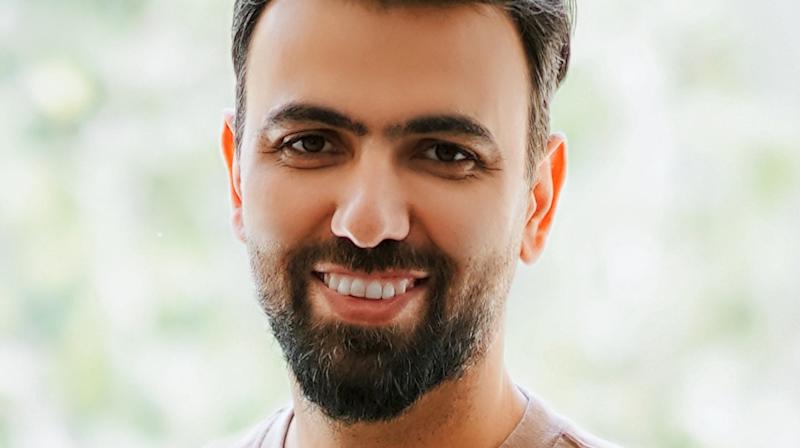
Most of the artificial intelligence running inside American hospitals today does the same thing. It watches, logs, flags, and then waits for someone to act on it. Dashboards surface infection risk data. Ambient monitoring tools track patient movement. Predictive models generate alerts that land in inboxes already overloaded with notifications. The technology is sophisticated, but the workflow it creates still depends entirely on a human being available, attentive, and fast enough to act before the window closes. In a clinical environment where operating rooms turn over multiple times a day, and patient rooms cycle through admissions that rarely align with cleaning schedules, that dependency has become the bottleneck.Mohammad Noshad, cofounder and CEO ofShyld AI, is working on a different approach. “We believe in an AI that takes action and gets something done,” he said. “Not just reporting or ambient intelligence. We call this Active AI.”The gap between knowing and doingThe data on hospital-acquired infections have been available for years, and progress has been slower than many hospitals would prefer. Healthcare-associated infections still contribute to roughly72,000 hospital deaths each year in the United States, according to CDC data, despite decades of investment in hand hygiene campaigns and stricter disinfection protocols.Astudy found that manual chemical disinfection of an operating room consumed an average of 49 minutes of employee time per turnover, a meaningful drag on surgical schedules where every minute of downtime carries a direct financial cost. The information about what needs to happen exists. The problem is that execution still depends on people performing repetitive, time-sensitive tasks under pressure, and that model has a ceiling.Across a large hospital system, that ceiling can absorb a considerable share of staff time, and the consistency of each disinfection cycle may vary with staffing levels and workload on any given day. Variation of that kind can carry implications for both patient outcomes and operational costs, though the full picture is often difficult to isolate within a standard hospital budget line.Noshad traces his urgency to a personal loss. A close friend of his went in for a routine surgery and died from an infection contracted in the hospital. “Healthcare is touching the lives of so many people, and I want to spend the rest of my life building technology that I know is adding a lot of value,” he said. “We're starting in healthcare, but our vision extends far beyond it.”What active AI looks like inside a hospital roomThe distinction Noshad draws between passive and active AI is fundamental. Passive systems collect data and present it to clinicians, who then decide what to do. Active systems perceive conditions, make decisions, and execute responses continuously without requiring a human in the loop. Shyld AI's implementation of this concept takes the form of small wall-mounted devices that install directly inside hospital rooms, pairing onboard sensors with targeted UV-C disinfection in a single compact unit.According to Shyld AI, the sensors map the room in real time and identify high-touch surfaces, while the onboard AI triggers a precise dose of UV-C light designed to inactivate pathogens within seconds.“For the first time, we're building an AI that's automating that,” Noshad said. “It's taking action instead of people going into the rooms and doing disinfection.” The intelligence runs locally on each device through Shyld AI's proprietary foundation model, VERTEX, which executes on the edge rather than calling out to hospital cloud infrastructure. For hospital IT teams, Noshad describes deployment as closer to installing a smoke detector than integrating enterprise software. “It's a plug-and-play technology,” he said. “There is zero behavior change needed on the customer side.”From proof of concept to clinical validationA peer-reviewedstudy conducted at the Stanford Hospital Advanced Endoscopy Unit by Stanford researchers Monique T. Barakat and Timothy Angelotti together with Shyld AI's Mohammad Noshad, and published in the American Journal of Infection Control, found that the company's autonomous UV-C system reduced cumulative microbial bioburden by more than 93 percent compared with a control room running standard manual disinfection.According to Shyld AI, the same hardware is also being applied to operating room workflows, where the company says it is intended to help address turnover delays by identifying missing surgical supplies before procedures begin. The company plans to expand its Active AI capabilities into pharmaceutical cleanrooms and other regulated environments where continuous autonomous prevention applies.The broader implication extends past any single company. Hospitals have spent years investing in AI that watches and reports. A growing category of clinical technology is being designed to perform the work itself, taking action inside the room as conditions unfold. If that direction holds across the industry, parts of infection control and operating room coordination could increasingly happen continuously and in real time.VentureBeat newsroom and editorial staff were not involved in the creation of this content.
Mohammad Noshad and Shyld AI: The future of AI in hospitals
Most of the artificial intelligence running inside American hospitals today does the same thing. It watches, logs, flags, and then waits for someone to act on it. Dashboards surface infection risk data. Ambient monitoring tools track patient movement. Predictive models generate alerts that land in inboxes already overloaded with notifications. The technology is sophisticated, but the workflow it creates still depends entirely on a human being available, attentive, and fast enough to act before the window closes. In a clinical environment where operating rooms turn over multiple times a day, and patient rooms cycle through admissions that rarely align with cleaning schedules, that dependency has become the bottleneck.Mohammad Noshad, cofounder and CEO ofShyld AI, is working on a different approach. “We believe in an AI that takes action and gets something done,” he said. “Not just reporting or ambient intelligence. We call this Active AI.”The gap between knowing and doingThe data on hospital-acquired infections have been available for years, and progress has been slower than many hospitals would prefer. Healthcare-associated infections still contribute to roughly72,000 hospital deaths each year in the United States, according to CDC data, despite decades of investment in hand hygiene campaigns and stricter disinfection protocols.Astudy found that manual chemical disinfection of an operating room consumed an average of 49 minutes of employee time per turnover, a meaningful drag on surgical schedules where every minute of downtime carries a direct financial cost. The information about what needs to happen exists. The problem is that execution still depends on people performing repetitive, time-sensitive tasks under pressure, and that model has a ceiling.Across a large hospital system, that ceiling can absorb a considerable share of staff time, and the consistency of each disinfection cycle may vary with staffing levels and workload on any given day. Variation of that kind can carry implications for both patient outcomes and operational costs, though the full picture is often difficult to isolate within a standard hospital budget line.Noshad traces his urgency to a personal loss. A close friend of his went in for a routine surgery and died from an infection contracted in the hospital. “Healthcare is touching the lives of so many people, and I want to spend the rest of my life building technology that I know is adding a lot of value,” he said. “We're starting in healthcare, but our vision extends far beyond it.”What active AI looks like inside a hospital roomThe distinction Noshad draws between passive and active AI is fundamental. Passive systems collect data and present it to clinicians, who then decide what to do. Active systems perceive conditions, make decisions, and execute responses continuously without requiring a human in the loop. Shyld AI's implementation of this concept takes the form of small wall-mounted devices that install directly inside hospital rooms, pairing onboard sensors with targeted UV-C disinfection in a single compact unit.According to Shyld AI, the sensors map the room in real time and identify high-touch surfaces, while the onboard AI triggers a precise dose of UV-C light designed to inactivate pathogens within seconds.“For the first time, we're building an AI that's automating that,” Noshad said. “It's taking action instead of people going into the rooms and doing disinfection.” The intelligence runs locally on each device through Shyld AI's proprietary foundation model, VERTEX, which executes on the edge rather than calling out to hospital cloud infrastructure. For hospital IT teams, Noshad describes deployment as closer to installing a smoke detector than integrating enterprise software. “It's a plug-and-play technology,” he said. “There is zero behavior change needed on the customer side.”From proof of concept to clinical validationA peer-reviewedstudy conducted at the Stanford Hospital Advanced Endoscopy Unit by Stanford researchers Monique T. Barakat and Timothy Angelotti together with Shyld AI's Mohammad Noshad, and published in the American Journal of Infection Control, found that the company's autonomous UV-C system reduced cumulative microbial bioburden by more than 93 percent compared with a control room running standard manual disinfection.According to Shyld AI, the same hardware is also being applied to operating room workflows, where the company says it is intended to help address turnover delays by identifying missing surgical supplies before procedures begin. The company plans to expand its Active AI capabilities into pharmaceutical cleanrooms and other regulated environments where continuous autonomous prevention applies.The broader implication extends past any single company. Hospitals have spent years investing in AI that watches and reports. A growing category of clinical technology is being designed to perform the work itself, taking action inside the room as conditions unfold. If that direction holds across the industry, parts of infection control and operating room coordination could increasingly happen continuously and in real time.VentureBeat newsroom and editorial staff were not involved in the creation of this content.
Shyld AI ha deployato sistemi UV-C autonomi negli ospedali, riducendo microbi del 93% usando AI edge senza intervento umano. Il trend passa da AI passiva (reporting) a Active AI (autonomous action), spostando budget verso tecnologie che eseguono lavoro invece di segnalarlo.