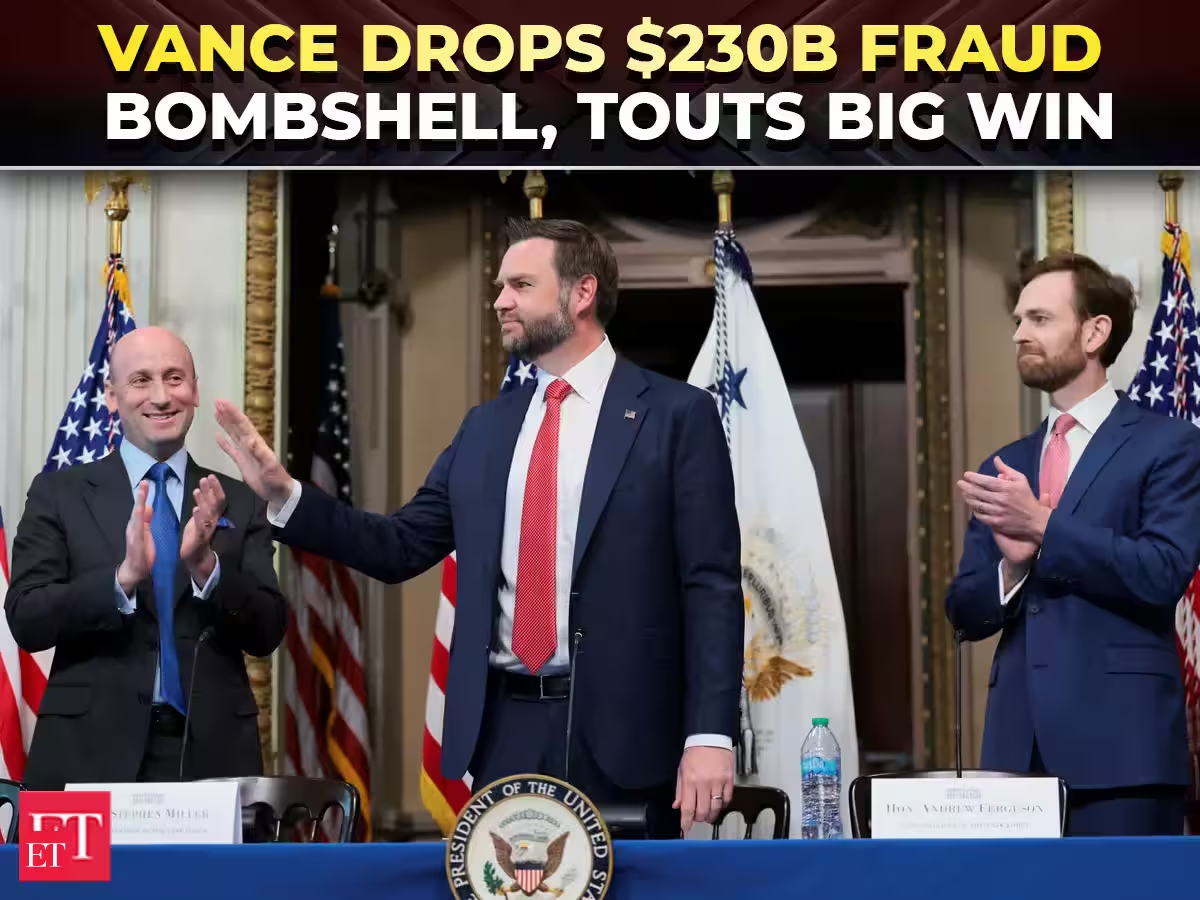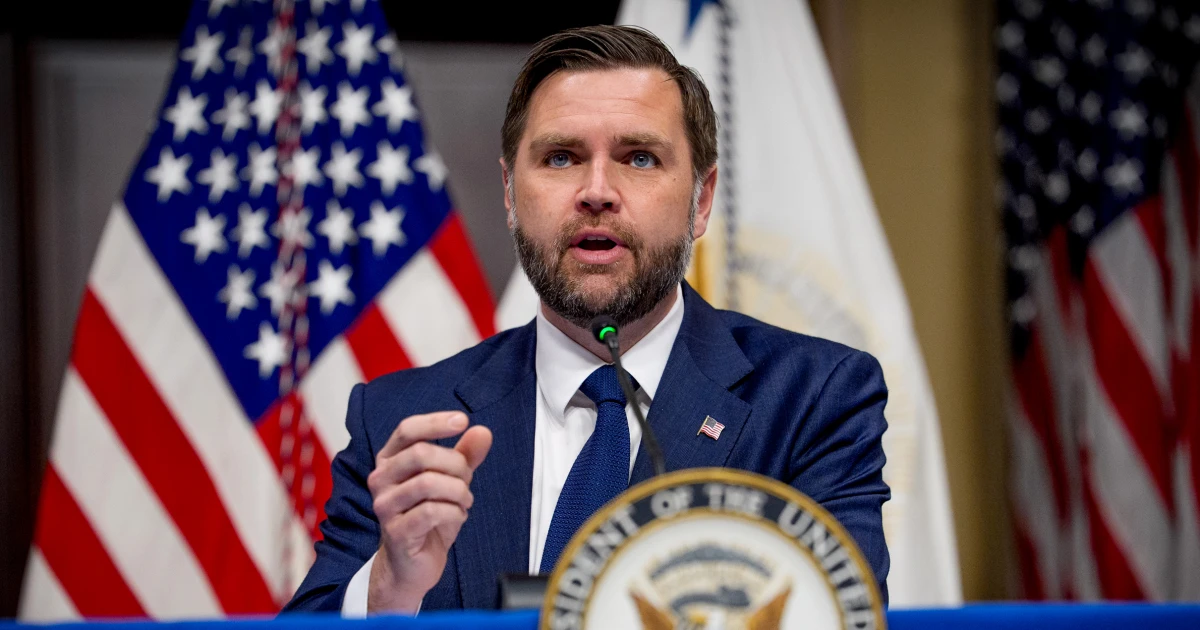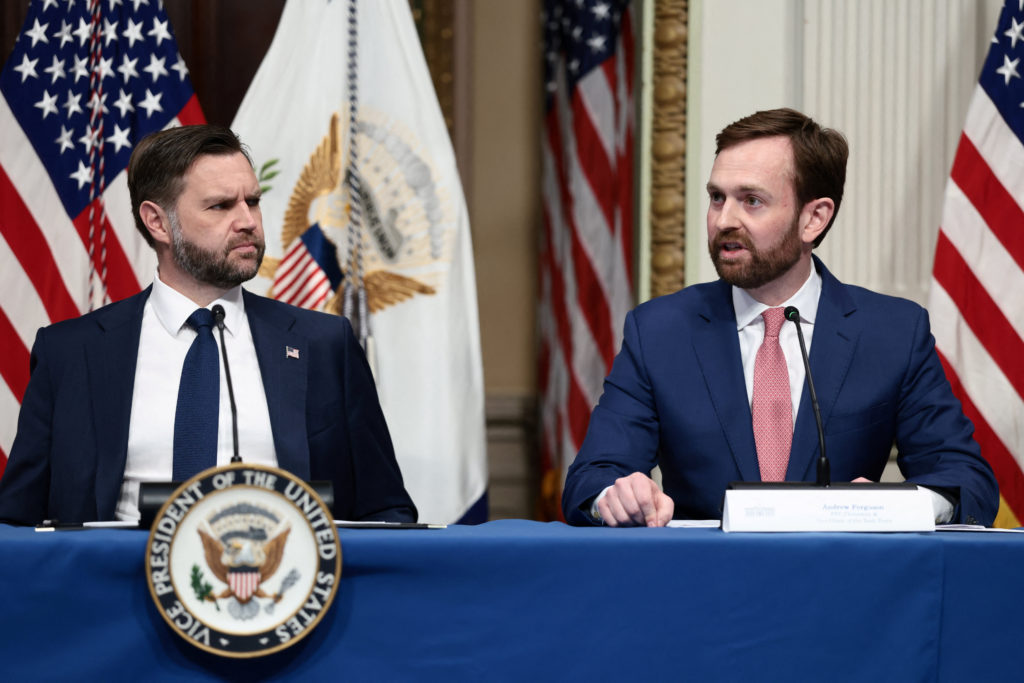
Vice President JD Vance and the White House Fraud Task Force are calling on members of Congress to codify rules requiring more data sharing from states on entitlement programs and stricter criminal penalties for welfare fraud in programs such as food stamps and Medicaid.Vance, alongside Federal Trade Commissioner Andrew Ferguson and White House Deputy chief of staff Stephen Miller, held a roundtable discussion with members of the House and Senate on Wednesday morning to ask them to pass legislation to crack down on abuse.“In order to make this really work, we need our colleagues in Congress to really codify some of this stuff to make sure that it becomes law,” Vance said.
Vance said his whole-of-government task force has been able to stop $56 billion in fraudulent claims so far across federal food assistance programs, such as the Supplemental Nutrition Assistance Program, and Medicaid, which is the healthcare program for low-income and disabled Americans and children. The task force was created by President Donald Trump via executive order in March. Since then, Vance said the team has identified $230 billion in fraud and abuse, a figure the vice president identified as a conservative estimate. Vance asked members of Congress to require increased data sharing with the federal government to verify eligibility and ensure that illegal immigrants are not receiving federal dollars from state-administered programs. The vice president highlighted that several Democrat-controlled states have refused to share SNAP records with the federal government to verify that only U.S. citizens and legal residents are receiving benefits funded by federal taxpayer dollars.“If the state of California gives those food stamp benefits to an illegal alien, to a violent criminal, the federal government has no visibility, and sometimes the states themselves have no visibility,” Vance said. “So we need to work with Congress and we need some legislation that would actually force some data sharing.”Vance also asked for stiffer criminal penalties to prosecute fraud, noting that cases with under $1 million in fraudulent claims are often not investigated or prosecuted at all.Miller said creating tougher penalties for fraud would “be able to chill the criminal conduct of millions, whereas right now, no matter how many people who prosecute, you’re still left with the criminal element thinking ‘I’m willing to risk six months in jail for $5 million in ill-gotten gains.’”“There needs to be strict, clear, mandatory minimums,” Miller said of sentencing requirements. Vince Haley, director of the White House Domestic Policy Council, provided a 10-point list for members of Congress to consider for entitlement reform: