The tools that help you build faster have no impact on the inner fears that are really holding you back.Something remarkable is happening in the startup ecosystem. Founders are building companies with one or two people that, only a few years ago, would have required teams of twenty. AI is writing code, synthesizing research, generating marketing campaigns and compressing weeks of execution into hours. Despite these extraordinary gains in productivity, many founders are discovering that the greatest constraint on growth was never execution. It was themselves.Executive coach and leadership expert Lise Bruynooghe has watched this tension emerge repeatedly among the founders and CEOs she works with. While AI is dramatically reducing operational friction, it has done little to address the internal obstacles that shape leadership decisions. As she puts it, "Sustainable change comes from working on the person first, and the business second." The cost of agreeable AIAI systems are designed to be agreeable. The result, for leaders who rely on AI for feedback and direction, is a slow erosion of their ability to take on challenges. The muscle you need as a founder, the ability to hear harsh truths and learn from them, the ability to have difficult conversations with your staff and shareholders, can slowly weaken.Bruynooghe describes AI as exceptional for 'transactional coaching' which includes brainstorming, accountability and implementation. “The sycophantic people-pleasing behavior of AI makes it more difficult for people to handle difficult feedback,” she explains. “Leaders need environments where tough truths can be shared.” Her perspective is not that AI is a threat. It’s quite the opposite. As a founder herself, she welcomes that AI performs many tasks better than any human. Yet some tasks it just can’t help with. The gap between knowing and doingOne founder recently admitted to Bruynooghe that it took him three weeks to send a single email to a prospective investor. The obstacle wasn't the fundraising strategy. He already knew exactly what to write. The real obstacle was his own self-doubt. Overthinking, overanalysing and procrastinating. Bruynooghe challenged that founder with a simple question: What’s the downside? If the investor never replied, nothing would change. The deeper fear was one of rejection. As soon as that emotional barrier was addressed, the email was sent immediately.For Bruynooghe, this illustrates the difference between information and transformation. AI can generate a perfectly structured email in seconds, but it cannot identify the fear preventing someone from pressing send. This is where human coaching can still create immense value. “There is an important element of the witnessing and the being with, noticing tense shoulders, shallow breathing, or hesitation, as someone processes whatever comes up,” Bruynooghe said. That ability to become attuned to someone else and catch the things they’re avoiding, for now, is distinctly human. The bottleneck may be youThe instinct amongst busy founders is to postpone personal coaching until later. The market is always moving, and the need to deliver never ends. During a recent conference in Berlin, Bruynooghe challenged one of the most common assumptions among founders: that they don't have time for inner work because they need to keep delivering. Her response was unequivocal. "Taking the time to truly work on yourself will remove so many bottlenecks that you'll end up achieving much more."Bruynooghe's perspective also forms the foundation of her upcoming book and the OLA-x framework: Observe, Love, Act, then iterate.The framework was shaped by experiences that extended far beyond the boardroom, including leading organizational change inside a major international development bank while simultaneously navigating her youngest son's cancer. Those experiences reinforced her belief that resilience is not built by avoiding difficult emotions but by fully experiencing them.Inner work doesn’t require two weeks away at a retreat. It requires openness and someone skilled enough to challenge you in a way you are open to hear. The leaders and teams who are most successful in their industry are the ones who have done enough inner work to stop tripping over when things get intense. What AI cannot buildBruynooghe recalls another CEO whose anxiety, rooted in a difficult childhood, created an anxious frequency that investors, employees, and clients could all feel. Rather than treating the symptoms, she focused on the root cause, and helped the leader become more grounded while removing friction across the organization.The lesson here is that AI can automate, accelerate, organize, and dramatically compress execution, but fear, self-doubt, anxiety, and unconscious behavioral patterns remain deeply human challenges. Bruynooghe doesn't argue AI will never bridge that gap. She simply says, "We're not there yet."Until then, founders who combine AI's extraordinary speed with the deeper work of understanding themselves may find that their greatest competitive advantage isn't artificial intelligence. It's self-awareness.VentureBeat newsroom and editorial staff were not involved in the creation of this content.
AI can help founders move faster. It still can't do their inner qork
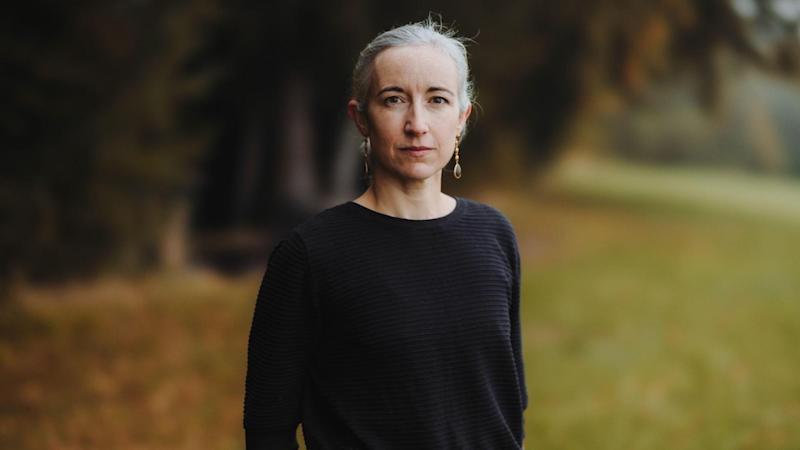
The tools that help you build faster have no impact on the inner fears that are really holding you back.Something remarkable is happening in the startup ecosystem. Founders are building companies with one or two people that, only a few years ago, would have required teams of twenty. AI is writing code, synthesizing research, generating marketing campaigns and compressing weeks of execution into hours. Despite these extraordinary gains in productivity, many founders are discovering that the greatest constraint on growth was never execution. It was themselves.Executive coach and leadership expert Lise Bruynooghe has watched this tension emerge repeatedly among the founders and CEOs she works with. While AI is dramatically reducing operational friction, it has done little to address the internal obstacles that shape leadership decisions. As she puts it, "Sustainable change comes from working on the person first, and the business second." The cost of agreeable AIAI systems are designed to be agreeable. The result, for leaders who rely on AI for feedback and direction, is a slow erosion of their ability to take on challenges. The muscle you need as a founder, the ability to hear harsh truths and learn from them, the ability to have difficult conversations with your staff and shareholders, can slowly weaken.Bruynooghe describes AI as exceptional for 'transactional coaching' which includes brainstorming, accountability and implementation. “The sycophantic people-pleasing behavior of AI makes it more difficult for people to handle difficult feedback,” she explains. “Leaders need environments where tough truths can be shared.” Her perspective is not that AI is a threat. It’s quite the opposite. As a founder herself, she welcomes that AI performs many tasks better than any human. Yet some tasks it just can’t help with. The gap between knowing and doingOne founder recently admitted to Bruynooghe that it took him three weeks to send a single email to a prospective investor. The obstacle wasn't the fundraising strategy. He already knew exactly what to write. The real obstacle was his own self-doubt. Overthinking, overanalysing and procrastinating. Bruynooghe challenged that founder with a simple question: What’s the downside? If the investor never replied, nothing would change. The deeper fear was one of rejection. As soon as that emotional barrier was addressed, the email was sent immediately.For Bruynooghe, this illustrates the difference between information and transformation. AI can generate a perfectly structured email in seconds, but it cannot identify the fear preventing someone from pressing send. This is where human coaching can still create immense value. “There is an important element of the witnessing and the being with, noticing tense shoulders, shallow breathing, or hesitation, as someone processes whatever comes up,” Bruynooghe said. That ability to become attuned to someone else and catch the things they’re avoiding, for now, is distinctly human. The bottleneck may be youThe instinct amongst busy founders is to postpone personal coaching until later. The market is always moving, and the need to deliver never ends. During a recent conference in Berlin, Bruynooghe challenged one of the most common assumptions among founders: that they don't have time for inner work because they need to keep delivering. Her response was unequivocal. "Taking the time to truly work on yourself will remove so many bottlenecks that you'll end up achieving much more."Bruynooghe's perspective also forms the foundation of her upcoming book and the OLA-x framework: Observe, Love, Act, then iterate.The framework was shaped by experiences that extended far beyond the boardroom, including leading organizational change inside a major international development bank while simultaneously navigating her youngest son's cancer. Those experiences reinforced her belief that resilience is not built by avoiding difficult emotions but by fully experiencing them.Inner work doesn’t require two weeks away at a retreat. It requires openness and someone skilled enough to challenge you in a way you are open to hear. The leaders and teams who are most successful in their industry are the ones who have done enough inner work to stop tripping over when things get intense. What AI cannot buildBruynooghe recalls another CEO whose anxiety, rooted in a difficult childhood, created an anxious frequency that investors, employees, and clients could all feel. Rather than treating the symptoms, she focused on the root cause, and helped the leader become more grounded while removing friction across the organization.The lesson here is that AI can automate, accelerate, organize, and dramatically compress execution, but fear, self-doubt, anxiety, and unconscious behavioral patterns remain deeply human challenges. Bruynooghe doesn't argue AI will never bridge that gap. She simply says, "We're not there yet."Until then, founders who combine AI's extraordinary speed with the deeper work of understanding themselves may find that their greatest competitive advantage isn't artificial intelligence. It's self-awareness.VentureBeat newsroom and editorial staff were not involved in the creation of this content.
AI accelerates execution but founder growth stalls on self-doubt and procrastination. Human coaching targeting psychological roots is critical; leaders combining AI speed with inner work achieve sustainable advantage—the competitive edge AI alone cannot build.