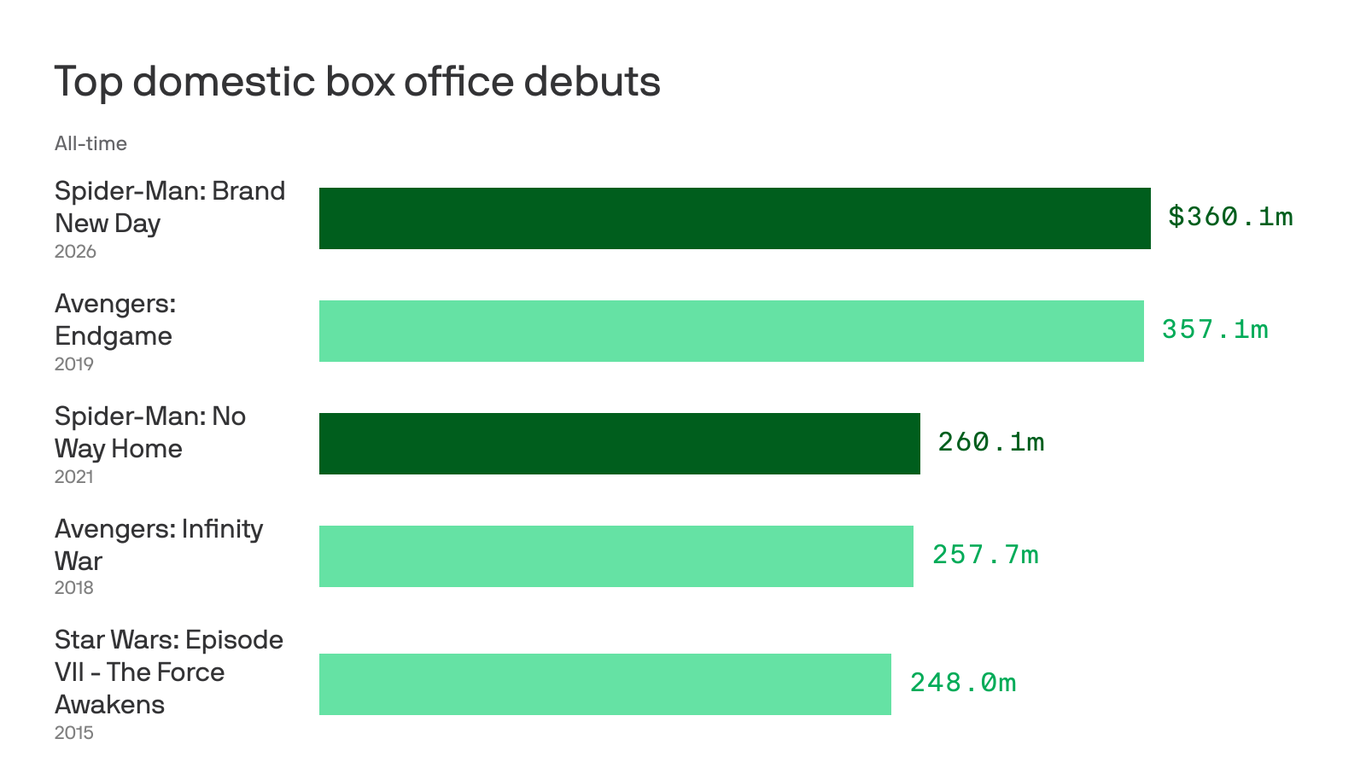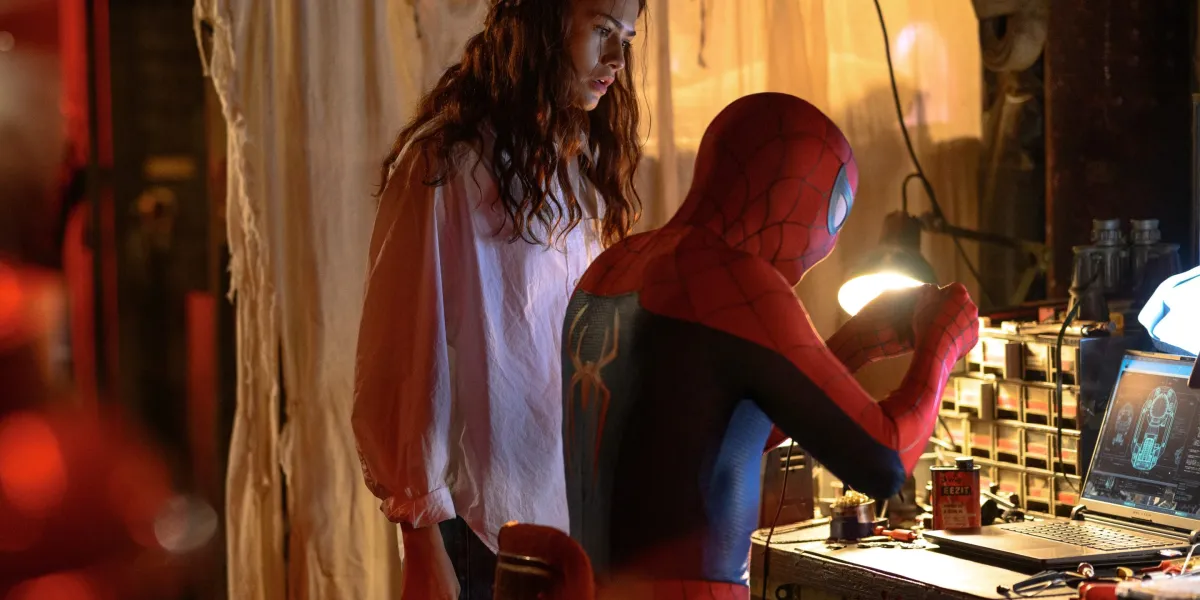
It’s Spider-Man to the rescue again – saving not just the residents of New York city, but possibly cinema itself.Spider-Man: Brand New Day is the latest in a run of box office hits to challenge modern pessimisms about the film industry’s future. Weeks after Christopher Nolan’s epic The Odyssey drew in audiences like ships to a siren, Marvel Studios’ latest superhero sequel has proved even more popular. Since opening on Friday, the film, which reunites Tom Holland’s Peter Parker and Zendaya’s MJ, has already made over $1bn, putting it firmly on course to become one of the most commercially successful films of all time. Within the spreadsheets, there is a telling statistic: 36 per cent of the ticket sales for Brand New Day’s opening weekend comprised adults between the ages of 18 and 24.‘Spider-Man: Brand New Day’ is out in cinemas now (Sony)It has long been argued that a key reason for the longer-term decline in cinemagoing among audiences – a decline intensified by the Covid pandemic, from which the industry has never fully recovered – was the lack of interest among Generation Z. There are legitimate and measurable factors that support this logic – among them the ubiquity of streaming services, and the lack of job opportunities (and therefore disposable income) for young people. The notion that Gen Z is uninterested in the cinema has been echoed by a number of prominent industry figures, including actor-producer Reece Witherspoon, who claimed in 2025 that teenagers “don’t go to the movies”. “Attention spans are shifting,” she said, adding that “the way we make movies is going to change radically in the next two to three years.”Nonetheless, Brand New Day is one of several recent hits to have comprehensively snared the youth market. Horror film Backrooms made nearly $400m, with opening weekend data suggesting nearly 85 per cent of the audience was under the age of 35. Obsession, another horror made on a budget of just $750,000, has made more than $470m, with 75 per cent of its opening audience aged between 18 and 25. (That’s not even counting the child-focused films that rank among the year’s most lucrative releases, such as Toy Story 5 and The Super Mario Galaxy Movie, both of which relied heavily on Gen Z and Gen Alpha attendees).Inde Navarrette and Michael Johnston in Curry Barker’s ‘Obsession’ (Focus Features)Watch Apple TV+ free for 7 dayNew subscribers only. £9.99/mo. after free trial. Plan auto-renews until cancelled.Try for freeADVERTISEMENT. If you sign up to this service we will earn commission. This revenue helps to fund journalism across The Independent.With prejudices about the disinterest of younger demographics proving increasingly fallible, studios will already be looking to capitalise on the possibilities of Gen Z film fans.Partly, this is a question of talent: Obsession and Backrooms were both noteworthy for their directors, both card-carrying members of Gen Z and former YouTubers. Curry Barker, who directed Obsession, is 26, while Kane Parsons, who directed Backrooms, is just 21, now the youngest filmmaker in history to reach number one at the US box office.If it could be argued that Gen Z are being successfully courted by representation behind the camera, then the same applies to stars: the rise of actors like Holland and Zendaya to the status of fully fledged, bankable A-listers is another key factor in drawing in young audiences. This year’s buzzy indie The Drama made back nearly five times its $28m budget, with 80 per cent of the audience being under 35 (and 30 per cent between 18 and 24) – a success that attests to the appeal of its two leads, Zendaya and Robert Pattinson.Exactly what lessons Hollywood will take from Brand New Day remains to be seen, but the importance of younger audiences is becoming an increasingly glaring fact. Where the money goes, the studios will inevitably follow.
Spider-Man’s hulking box office weekend has debunked the Gen Z cinema myth
The Marvel sequel has been a huge success, and it has young adults to thank
638 words~3 min read