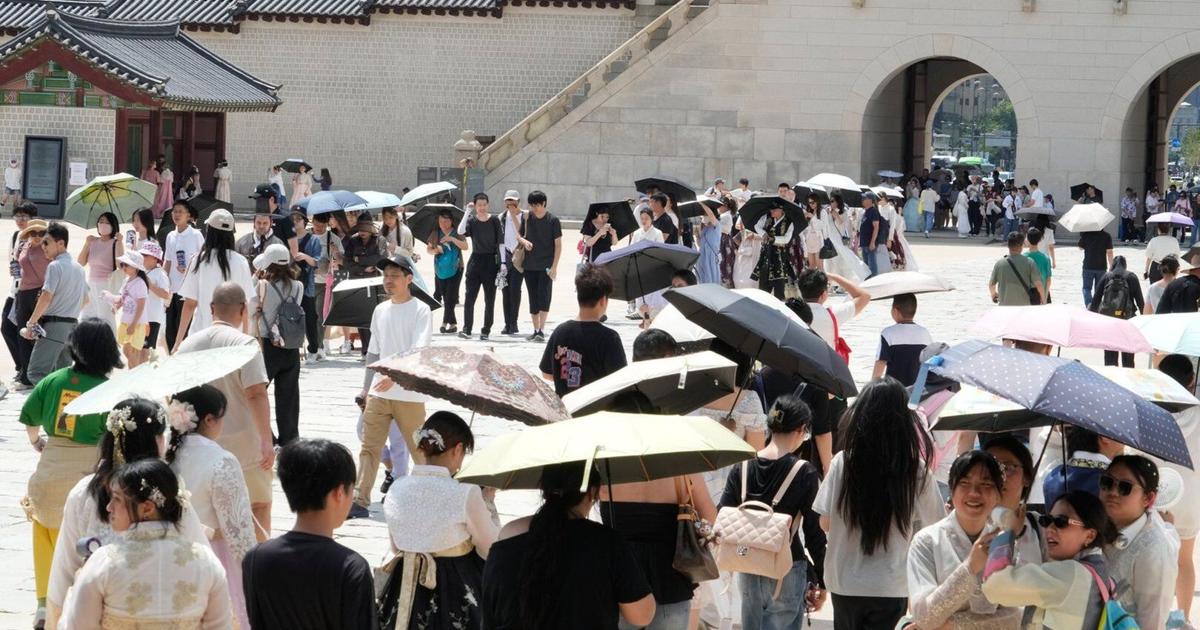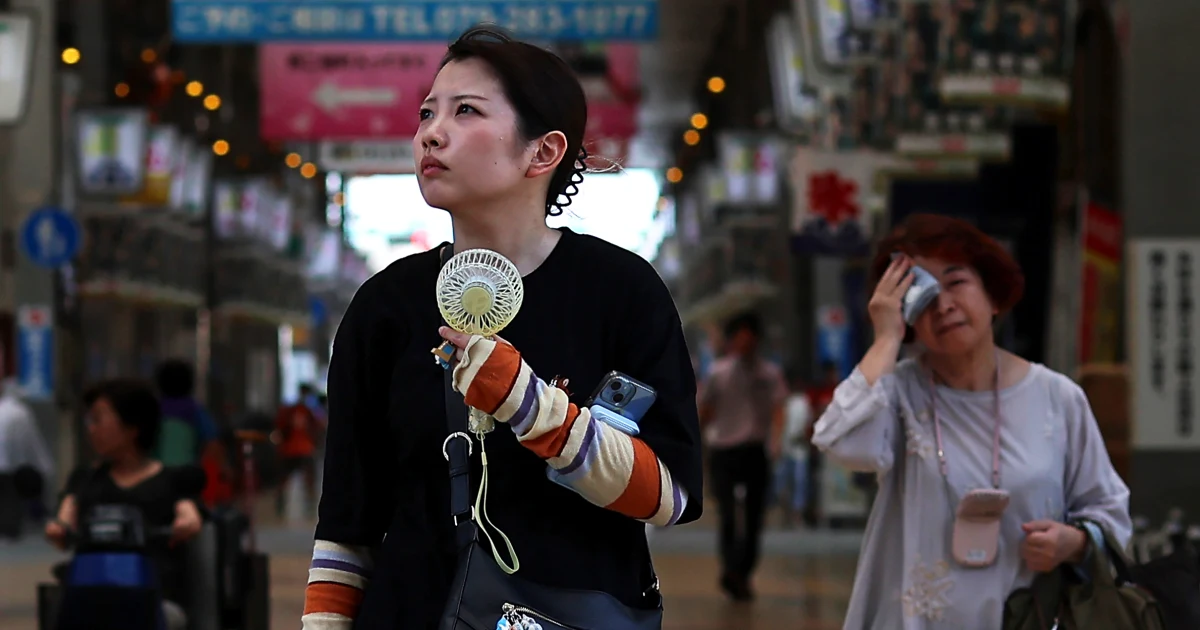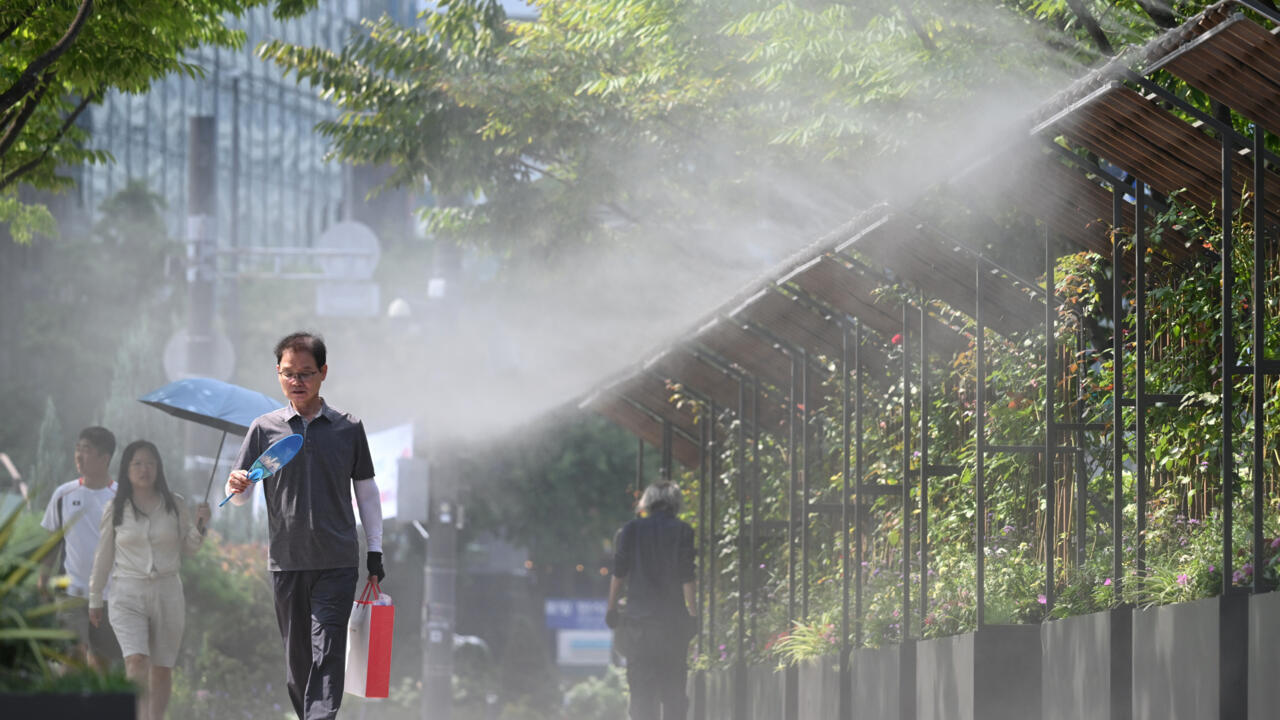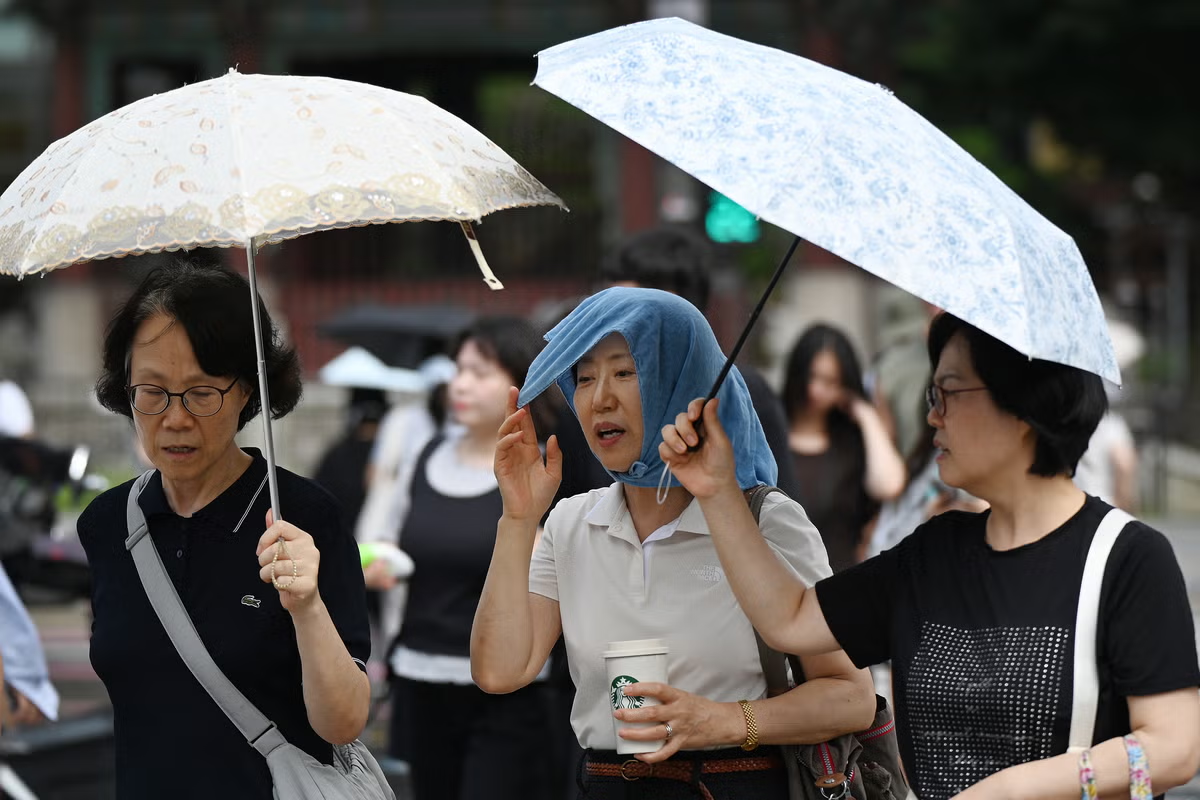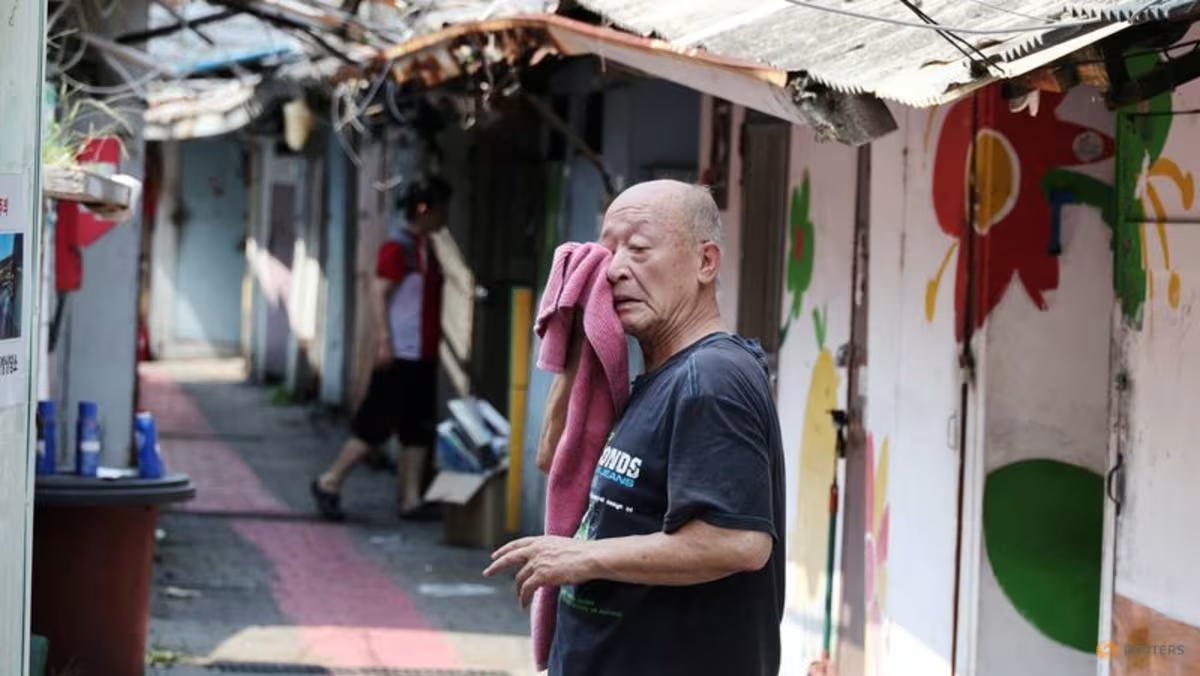
WorldExtreme temperatures in Japan and the Korean peninsula have led to deaths and illnesses and affected day-to-day life, during a heat wave that South Korean President Lee Jae Myung has deemed a "national disaster."Baseball games cancelled, lions die of suspected heat-stroke as temperatures hover in high 30sCBC News · Posted: Aug 05, 2026 10:30 AM EDT | Last Updated: 1 hour agoListen to this articleEstimated 4 minutesThe audio version of this article is generated by AI-based technology. Mispronunciations can occur. We are working with our partners to continually review and improve the results.A man cools off in a public fountain in Seoul, South Korea, on Tuesday. (Ahn Young-joon/The Associated Press)Fans fainting at a baseball park. Lions dying at a zoo. A woman taking shelter in a car found dead. A North Korean doctor advising people to eat dog meat to promote stamina.The scenes caused by a record heat wave in Northeast Asia illustrate how extreme temperatures have gripped South Korea, North Korea and Japan.In most of South Korea, a major heat wave advisory was in place on Wednesday as temperatures in densely populated Seoul, home to 20 million people, and adjacent areas soared as high as 39 C.A woman stands near a cooling fog device in Seoul on July 27. (Lee Jin-man/The Associated Press)North Korean authorities have issued a heat wave advisory in many areas and called for people to take steps to avoid heat-related health problems.Japan's anti-disaster agency reported more than 18,000 people with heat stroke symptoms were transported to hospitals during the week of July 20 to 26.Since mid-May in South Korea, about 2,220 people have been diagnosed with heat-related illnesses and 19 have died, according to a report from the Ministry of the Interior and Safety. About 17,140 livestock, such as chickens, ducks and pigs, and about 160,000 farmed fishes have also died.Visitors rest beside an illuminated installation inside Gwangmyeong Cave, a former gold mine turned into a tourist attraction, on Wednesday during a record-breaking heat wave in Gwangmyeong, South Korea. (Kim Yoo-san/Reuters)On Sunday, the southeastern city of Yangsan saw temperatures reach 42.5 C, the highest figure recorded since weather observation began in Korea in 1904.In a cabinet meeting on Tuesday, President Lee Jae Myung instructed officials to view the ongoing heat wave as "a national disaster" and make every effort to protect lives.On Tuesday night, a spectator in his 20s collapsed while watching a baseball game between SSG Landers and LG Twins at a stadium in Incheon city, west of Seoul. Emergency personnel administered CPR and transported him to a hospital, halting the game for about 10 minutes.Another fan in his 20s fell unconscious and received treatment at the stadium after the game, according to the Korea Baseball Organization, which announced on Wednesday that all 10 games scheduled for Wednesday and Thursday were cancelled and would be rescheduled.An empty baseball stadium is seen after a game was cancelled due to a severe heat wave warning in Seoul, South Korea, on Wednesday. (Yonhap/Reuters)Min Son Yong, deputy director of the internal medicine department at Pyongyang General Hospital, told North Korea's main Rodong Sinmun newspaper on Sunday that people should eat dog meat and fish porridge to supplement protein to beat the heat.Euphemistically known as "dangogi," or sweet meat, dog meat has long been considered a stamina food in North Korea and is traditionally eaten during the hottest time of the year.AnalysisWhy Europe can't air condition its way out of extreme heatAnalysisHow many people die from heat-related illnesses? The truth is, we don't actually knowMin also recommended watermelons, cucumbers, tomatoes, mung beans and ginger to cool down, the newspaper reported.Dog meat also has been eaten in China, Vietnam and African countries, as well as in South Korea, which plans to formally ban slaughtering, breeding or selling dog meat for human consumption beginning next year.Woman dies of heat-stroke in quake aftermathJapan's Environment Ministry issued a heat-stroke alert for most of western and southern Japan on Wednesday. While temperatures in the Tokyo region temporarily fell this week, intense heat continued to hit the country's south.In the southwestern city of Kumamoto, relief and cleanup work continued following a magnitude 7.1 earthquake on July 28 that killed 38 people, including a woman in her 70s who developed heat-stroke while taking shelter in a car. More than 43,000 households were still without water on Wednesday.WATCH | Heat wave complicates quake clean-up:After quake, Japan facing heat wave, water shortages, power outagesJuly 30|Duration 1:46At least 30 people are dead following an earthquake in Japan on Tuesday. Now, survivors are facing power outages and water shortages during a dangerous heat wave.Three lions have died at a Tokyo zoo, with a number of their animal peers developing apparent heatstroke symptoms.Tama Zoological Park said, Mugi, a three-year-old female lion, developed a loss of appetite on July 19 and was unable to stand the following day. Zoo keepers provided ventilation and a water sprinkler to cool her down. The lion eventually died on July 28 despite treatment with subcutaneous fluid, liver tonics and vitamins, the zoo said.Two other female lions, Ichigo, 11, and Luena, 15, also died within a few days, the zoo said.Autopsies showed dehydration and multiple organ failure in all three animals and officials say they believe heat was the cause of the health problems.Fifteen-year-old Luena, one of three lions in Tama Zoological Park that died recently due to suspected heat-related illness, is seen in Tokyo, Japan, on Jan. 14. (Tokyo Zoological Park Society/Reuters)
Record-breaking heat grips North Korea, South Korea and Japan | CBC News
Extreme temperatures in Japan and the Korean peninsula have led to deaths and illnesses and affected day-to-day life, during a heat wave that South Korean President Lee Jae Myung has deemed a "national disaster."
906 words~4 min read