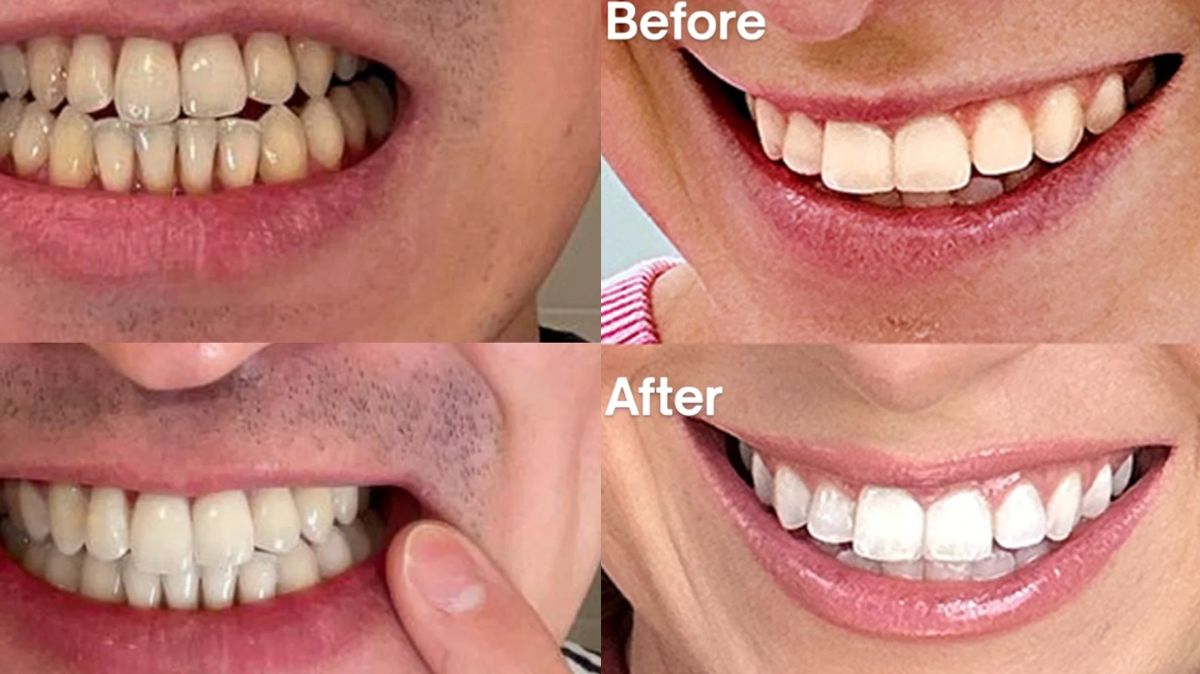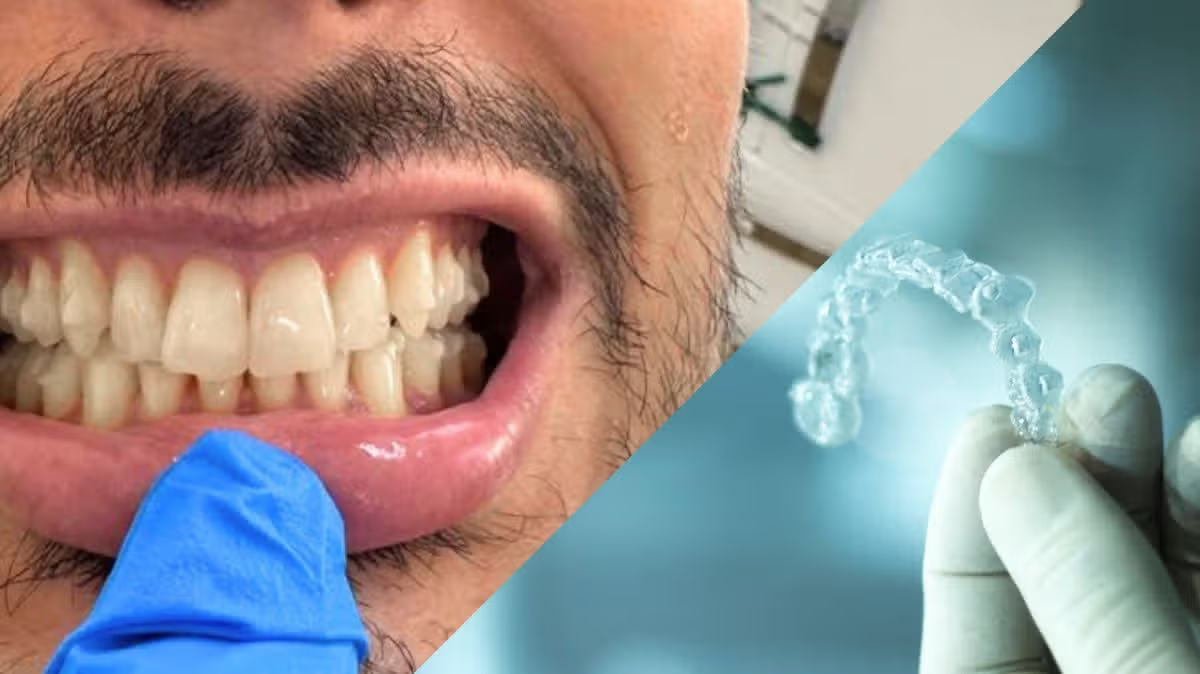
From worrying about speaking to fears of tooth removal, here's what really happened during treatment15:53, 05 Aug 2026Updated 15:57, 05 Aug 2026For years, Aman avoided smiling in photographs. Like many adults, he'd thought about straightening his teeth, but the idea of wearing traditional braces in his 30s while working in a professional role was enough to put him off.Then he discovered Invisalign. Seven months later, his before-and-after photos show a dramatic smile transformation– and, perhaps more surprisingly, none of the things he worried about actually happened. Before starting treatment at the London clinic Smiles + Smiles, Aman was convinced the clear aligners would affect his speech. "I thought I'd end up with a lisp," he admits.He also assumed treatment would drag on for years and that crowded teeth would mean having healthy teeth removed. Instead, his aligners were barely noticeable, treatment was finished in under a year and, rather than removing teeth, his dentist created the small amount of space needed using microfiling.The aligners themselves quickly became part of his daily routine. Every 10 days or so, he swapped to the next set, with only a day or two of mild soreness each time as his teeth adjusted. Perhaps the biggest surprise was just how invisible they were.Despite wearing the aligners for up to 22 hours a day, nobody noticed unless Aman pointed them out. It wasn't until treatment finished that friends and family commented on how much his smile had changed. In fact, the results have proved so convincing that three of his friends have since started Invisalign treatment themselves.According to Dr Yasmin Anaboussi, Co-Founder, Clinical Director and Principal Dentist at Smiles + Smiles, Aman's concerns are among the most common she hears.READ MORE: I didn't think Shark's CryoGlow mask needed improving– then I tried the new Plus"One of Invisalign's biggest advantages is that the aligners are clear and discreet, making them particularly popular with adults who may feel self-conscious about wearing fixed braces," she explains. "They're also removable, allowing patients to eat normally and maintain their usual brushing and flossing routine, which can make oral hygiene much easier throughout treatment."Technology has also moved on considerably in recent years. "Digital treatment planning continues to evolve rapidly," says Dr Anaboussi. "High-resolution 3D scanning and increasingly sophisticated planning software allow us to map tooth movements with much greater precision, making treatment more predictable and helping us achieve the desired final result more efficiently."Patients can even see a digital simulation of how their smile is expected to look before treatment begins. Treatment times are often shorter than people expect, too.While particularly mild cases can sometimes be completed in just seven weeks, Dr Anaboussi says the average Invisalign journey takes between three and eight months, depending on the complexity of the case and how consistently the aligners are worn.She also addressed one of the biggest myths surrounding Invisalign – the claim that it leaves teeth permanently loose."All orthodontic treatment works by applying gentle, controlled pressure to move teeth through the bone," she explains. "It's completely normal to experience some mild tenderness or a slight increase in tooth mobility during treatment, but this is temporary and doesn't mean healthy teeth are becoming dangerously loose."Today, Aman smiles confidently in photos without thinking twice. After years of assuming braces weren't an option for someone in his position, his experience proves just how much adult orthodontics has changed– and why more people are choosing clear aligners later in life.Article continues belowFull smile makeovers with Invisalign at Smiles + Smiles from £3150. See here for more information.
Four biggest Invisalign myths busted by one man's 'incredible' smile makeover
From worrying about speaking to fears of tooth removal, here's what really happened during treatment
589 words~3 min read