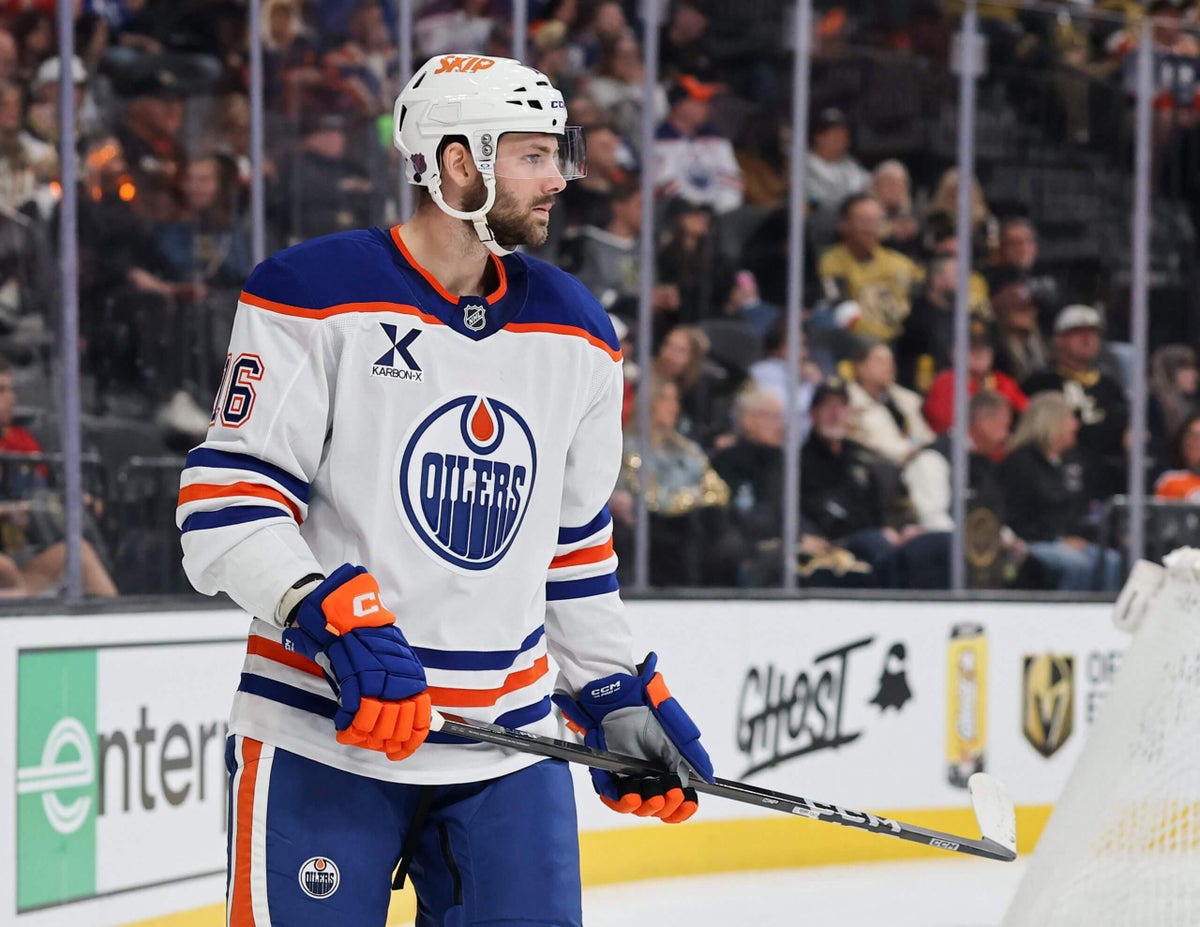
The Edmonton Oilers traded for centre Jason Dickinson at the 2026 trade deadline, but the move did not have the desired effect. Dickinson’s impressive shutdown ability at five-on-five didn’t take (the Oilers were outscored 0-3 with him on the ice versus elites, in limited playing time), as Dickinson and the entire Oilers centre depth chart battled injury. Those injuries contributed directly to the team’s early playoff exit against the Anaheim Ducks in the spring.General manager Stan Bowman re-signed Dickinson long term over the summer. Most fans believe the signing was an astute transaction, with the usual hand-wringing due to length of contract ($4 million AAV for five seasons).In order to get optimal return on that deal, Dickinson needs to be deployed in the correct manner. That means five-on-five time in the toughest parts of the game: defensive zone starts, facing high-quality opponents while suppressing offence, and outscoring those opponents while playing with defence-first linemates.A matter of trustAfter his arrival in Edmonton, Dickinson was on the ice often in defensive situations. His five-on-five zone starts consisted of 89 in the defensive zone, 36 in the offensive zone and 56 in the neutral zone. His expected goals against per 60 minutes (2.34) and his 63 minutes versus elites ranked second behind Connor McDavid (Leon Draisaitl was hurt) from the deadline through the end of the regular season (via PuckIQ). His penalty killing was splendid, with a goals-against per 60 rate of 5.69 that ranked second on the team among forwards during the final portion of the season (Natural Stat Trick). The talent is there, if used properly.During the 2013-14 season, Oilers head coach Dallas Eakins used shutdown centre Boyd Gordon in an extreme defensive role. Gordon had 640 defensive-zone faceoffs, representing 60 percent of his overall total. Dickinson’s defensive-zone start percentage with Edmonton last season (49 percent) is the likely outer marker for the coming season, but it’s possible to give him more play in the defensive end. The idea is a positive one, allowing the skill lines to deploy from the offensive and neutral zones.What Dickinson has to offerDickinson is a good skater, in the 62nd percentile in max speed according to NHL Edge. He is not a plus offensive player (0.84 points per 60 at five-on-five with Edmonton in 17 late-season games) but his best moments in Edmonton came on the penalty kill. His most common linemate while short-handed was Kasperi Kapanen, and fans should see that tandem again. At five-on-five, Dickinson had success with multiple wingers, including Trent Frederic, Colton Dach, Vasily Podkolzin and Ryan Nugent-Hopkins, all in limited minutes.Deployment by new coach Mike Babcock will dictate Dickinson’s linemates. Babcock can run McDavid and Draisaitl on two separate lines, meaning Dickinson can play the shutdown role from the third line. If Babcock stays true to last season’s lines under coach Kris Knoblauch, the top two lines will see wingers Podkolzin, Kapanen, Matt Savoie and Zach Hyman playing on the top two lines.Ike Howard, who would be ill-suited for a checking role on Dickinson’s line, might take Kapanen’s place on the second line. Such a move would free up a Dickinson-Kapanen combination at five-on-five, doubling down on the PK minutes for the duo. The obvious third man on the line would be Nugent-Hopkins, the longest-serving member of the Oilers and a player with exceptional utility.Bowman spent significant money and cap space on veteran Trent Frederic in the summer of 2025. Frederic hasn’t been able to get untracked during his time in Edmonton, but Bowman has mentioned him several times as a player who is worthy of a feature role.What could it look like?Dickinson was highly successful with the Chicago Blackhawks at five-on-five last season while playing with wingers Ilya Mikheyev and Ryan Donato. The trio played 187 minutes together and delivered a 68 percent goal share (55 percent expected). The line enjoyed 4.16 goals per 60, a stunning number considering Dickinson’s offensive shortcomings.Why did it work? Mikheyev has always had some scoring touch, averaging almost 19 goals per 82 games so far in his NHL career. He has developed over the years into a solid two-way player, making him a match for the Dickinson style. Ironically, his numbers away from Dickinson last season were poor compared to his own established past. Donato is a goal scorer (18 goals per 82 games over his career) who had success with Dickinson but was a poor five-on-five outscorer over the rest of his minutes in 2025-26. Mikheyev and Donato, in 272 minutes together (five-on-five) without Dickinson, had a 38 percent goal share in Chicago.Dickinson’s outscoring success at five-on-five came with scoring wingers in Chicago. Is it possible for the Oilers to populate a Dickinson shutdown line with wingers who have some goal-scoring ability?The idea is impractical for a team trying to win a championship. Here’s why.There is evidence the line in Chicago wasn’t successful against elites. Puck IQ tells us Dickinson-Mikheyev played 228 minutes versus elites with a 31 percent goal share. Dickinson-Donato put up a 38 percent goal share in 112 minutes.The bulk of the offensive edge the line enjoyed came against softer competition. The goal for Edmonton with Dickinson should be as part of a shutdown line. There’s no good reason for Babcock to attempt to recreate the Blackhawks’ Mikheyev-Dickinson-Donato line from one year ago.Bottom lineOptimal use of Dickinson’s skills means a checking line with appropriate two-way talents on the wing. Using his line against lesser competition, especially at home with last change and opportunities for line matching, runs counter to proper usage for a player of his type.As an Oilers centre, Dickinson played 36 percent of his minutes versus elites, 35 percent versus mid-level and 29 percent against easier competition. That’s a reasonable overall use of a line designed to take on tough minutes, mostly due to opposition coaches trying to get a favourable matchup against the McDavid and Draisaitl lines. No coach is going to get heavy minutes in a matchup if the opposition coach won’t comply.Babcock can run the Dickinson line with Nugent-Hopkins and Kapanen, with a large number of defensive-zone starts and line matching at home. The club may decide one of those wingers is best suited to playing on a skill line, which means a winger like Frederic may slide in.Babcock has a veteran shutdown centre. The Oilers need to use him on the penalty kill, for tough defensive-zone starts and against elite competition when possible. It’s an incredibly difficult assignment, but Dickinson has the resume to deliver.
How can the Oilers get the best out of Jason Dickinson in 2026-27?
Dickinson has a long history of excellent defense. The Oilers need to optimize his usage and linemates to get the best bang for their buck.
1,082 words~5 min read