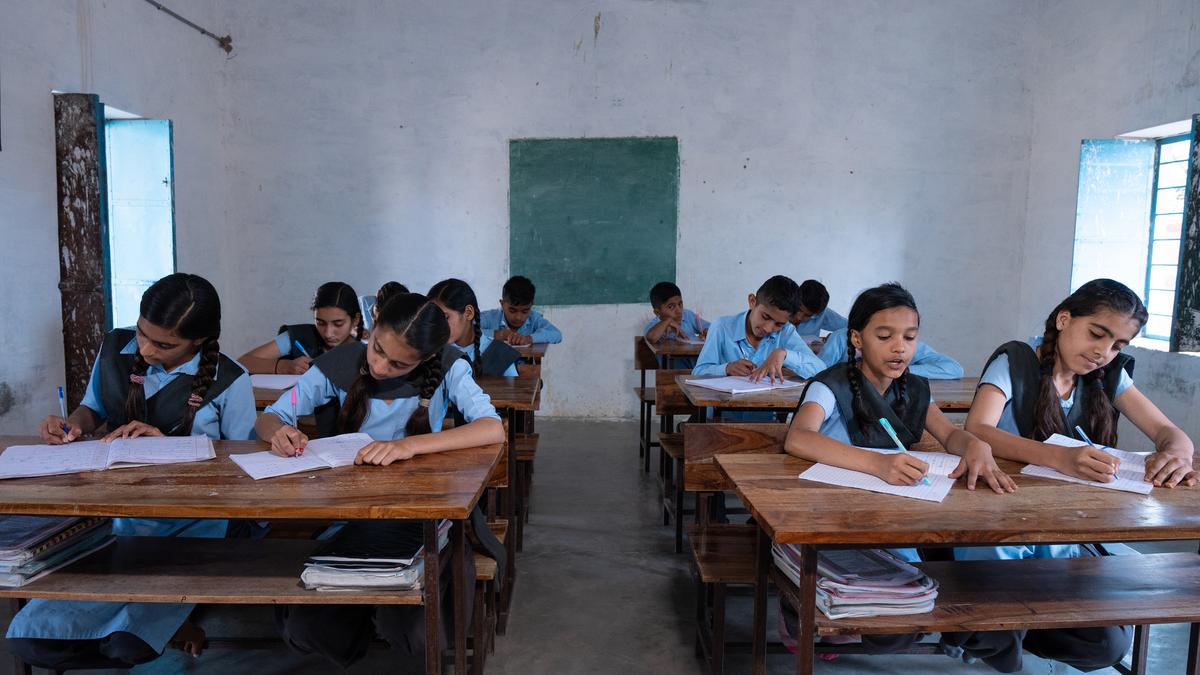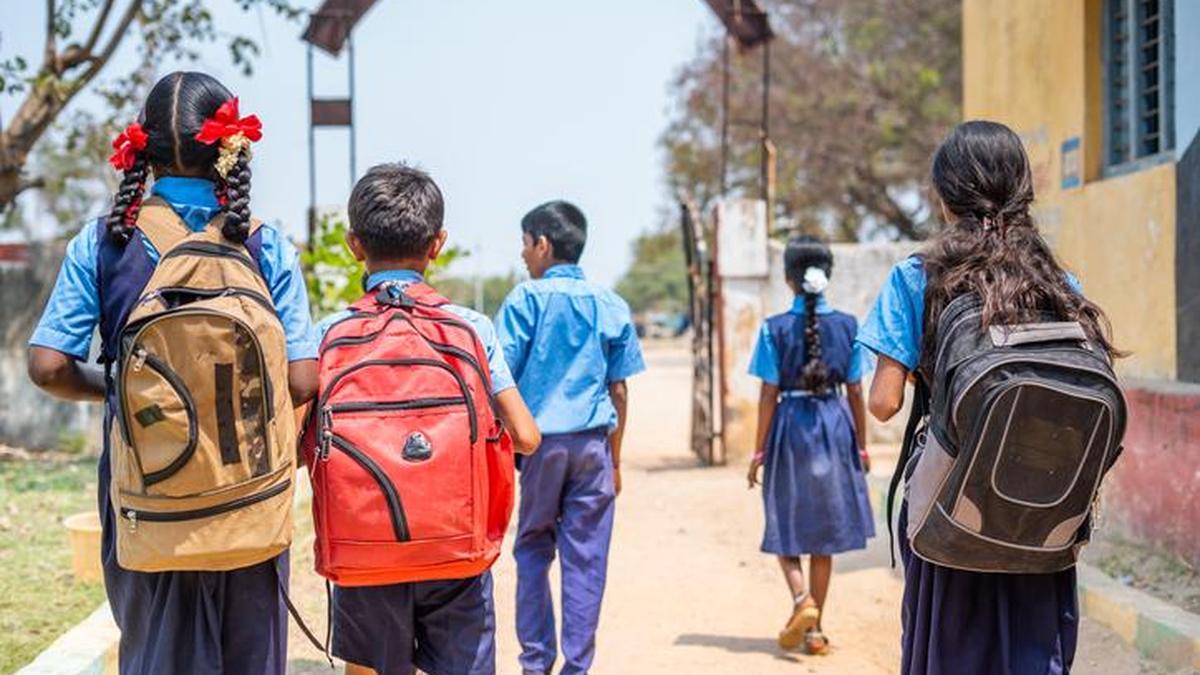
A recent NITI Aayog report said some 94,000 government schools were closed over the past decade, an average of 25 a day, contributing to a 2.26 crore decline in government school enrolment. The government schools’ share of total enrolment has fallen from 71% in 2005 to 49.24% in 2024-25. School closures are happening across States on the grounds of rationalisation. The National Education Policy 2020 advocates such rationalisation but without endangering the concept of neighbourhood schools.School closure numbers cannot be explained away as gradual demographic drift, urban migration and so on. Rather, it is a coordinated administrative decision taken in states where the poorest and most rural children have the least capacity to compensate for a school that has vanished.UDISE+ figures show the national count of government schools falling from 11.07 lakh in 2014-15 to 10.17 lakh in 2023-24, a decline of roughly 89,000 that lines up almost exactly with NITI Aayog’s own count. Private schools nationally grew from 2.88 lakh to 3.31 lakh over the same decade.Government schools in India are not a neutral public utility used evenly across classes. They are, disproportionately, the schools of the poor — of Scheduled Castes, Scheduled Tribes, and the poorer strata of backward-class communities. India is home to a significant proportion of the world’s below-poverty-line population, and it is their children who fill government classrooms.A 2019 National Sample Survey analysis found access to free education declining unevenly, with Muslim and Scheduled Caste and Scheduled Tribe households disproportionately marginalised from the schools nearest to them.The burden falls disproportionately on girls who are the first to be withdrawn when the nearest school stops being nearby. What consolidation looks like on the ground is often a single teacher covering five classes at once — unable to know an individual child’s background or tailor instruction, technically in breach of the Right to Education Act’s staffing and quality norms.Who is responsible for this trend?In Lok Sabha, the concerned minister said education is on the concurrent list, and the responsibility for this trend lies entirely with States. But the RTE is a Central Act and the mandates on neighbourhood schools are the Centre’s responsibility.Further, the Centre seeks to intervene in State school education by making Central fund allocation for schools conditional on NEP implementation and also imposes a language policy. There are avenues for the Centre to step in against this trend.The RTE Act, in force since 2010, guarantees free and compulsory education from age six to 14. RTE says nothing binding about the quality of what is delivered once a child is inside the classroom. It creates entitlements that children, by definition, cannot assert on their own — and parents, particularly poor and rural parents, often lack the legal and institutional capacity to enforce either. RTE assumes a symmetry of power between the state, the school, and the family that does not exist on the ground. RTE is not justiciable, in practice. School Management Committees, the one mechanism written into the RTE to give parents and communities a formal voice, largely go unconvened.(The author is Chairman, Central Control Commission, CPI(M)) Published - August 05, 2026 06:01 pm IST
As government schools vanish, educational inequality grows
School closure numbers cannot be explained away as gradual demographic drift, urban migration and so on. Rather, it is a coordinated administrative decision taken in states where the poorest and most rural children have the least capacity to compensate for a school that has vanished.
521 words~2 min read