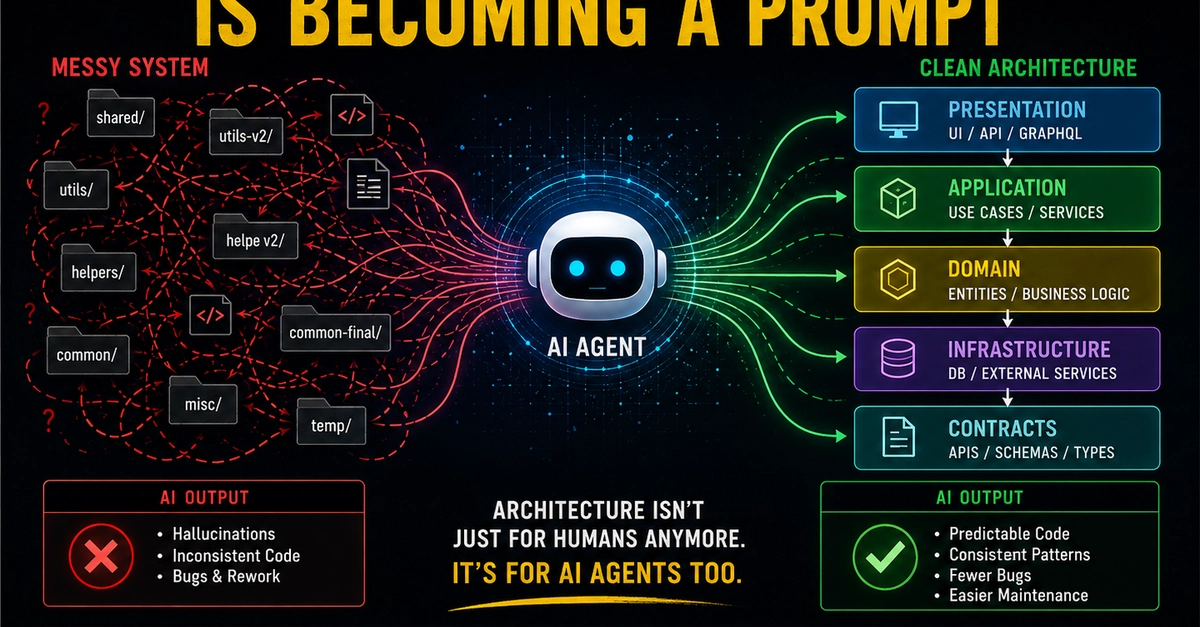
For decades, software architecture documentation has been the bane of a developer's existence. It's often a dusty, forgotten relic—a collection of outdated Visio diagrams and stale wikis that bear little resemblance to the codebase they're supposed to describe. This "documentation drift" creates a massive cognitive load, forcing developers to spend countless hours reverse-engineering the system by reading thousands of lines of code just to understand how the pieces fit together.
But a fundamental shift is underway. Artificial Intelligence is transforming software architecture documentation from a static, manual chore into a dynamic, automated, and intelligent process. This revolution is not just about saving time; it's about making architectural knowledge accessible, accurate, and alive.
The Old World: The Crisis of Manual Documentation
The traditional approach to software architecture documentation is fundamentally broken for modern, fast-paced development. It suffers from three critical failures:
It's Labor-Intensive and Outdated: Creating and maintaining a comprehensive Software Architecture Description (SAD) is a massive undertaking. As systems evolve, these documents are almost immediately obsolete. The velocity of development at companies like Google means keeping pace with documentation is a core problem.