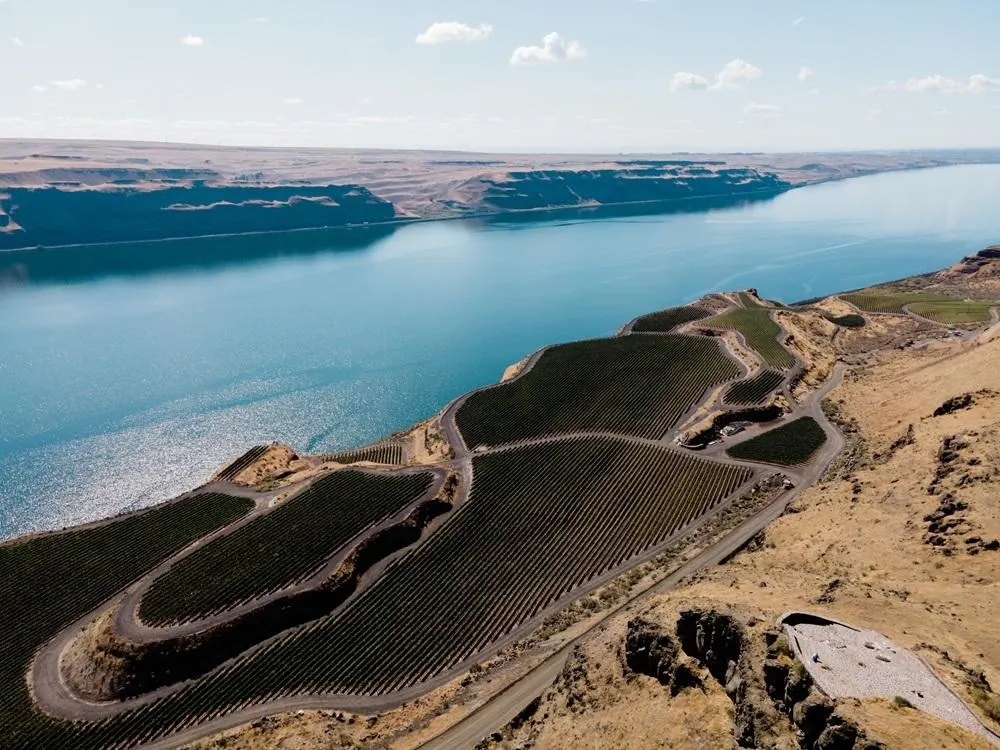
Quilceda Creek specialzies in 100% estate grown cabernet sauvignon from its acclaimed vineyards in Washington.Quilceda CreekSummer is here, steaks are on the grill, smashburgers are on the griddle and brisket is in the smoker, and to me, that screams “cabernet sauvignon.” But all year round, and all over the world, for collectors and wine lovers, cabernet sauvignon has long been the gold standard of grape varietals, the backbone of both the French Bordeaux industry and the grape that put Napa, Sonoma and American winemaking in general on the global radar. The most collectible wines skew heavily towards cabernet, and when done very well, the grape commands hefty prices. But there is an exception, one truly great American cabernet sauvignon specialist that has been racking up awards, 100-point ratings and gold medals for decades, yet maintains a low profile outside the world of serious wine lovers and sells its wine for less, often much less, then what similar quality cabs go for. That wine is Quilceda Creek, and if you love cabernet, you need to know this great American winemaker.(See my article on summer BBQ and grilling wine pairings here at Forbes)Why You Need To Know This Great American Winemaker100-Point Perfection From WashingtonIn a rare sweep, all four of Quilceda Creek's 100% cabernet labels got perfect 100-point scores for the 2023 vintage shown.Quilceda Creek“If they were in Napa or Sonoma they would be much more famous and twice as expensive,” said my wine loving California collector friend I turn to when I need wine advice, who lived in Sonoma for years and has extensive cellars at his multiple homes (and prefers to remain anonymous). “Washington has some perfect soil and weather for growing cab, but it’s just never gotten the cache or name recognition of Napa or Bordeaux. Quilceda is a great value in first-class cabernet.”MORE FOR YOUHe’s hardly alone in this belief, and when ultra-high profile critic Robert Parker’s The Wine Advocate gave Quilceda its first 100-point rating in 2002, it was a historic event, the first American wine from outside California to achieve perfection. The Wine Advocate has given Quilceda at least six more 100s in the years since.While it lacks name recognition among the general public and people who would be familiar with popular higher-end cab names like Caymus, Heitz Cellars and Silver Oak, within the wine industry, Quilceda sits on a lofty pedestal of respect and acclaim, especially for a small family-owned winery with just a dozen employees. Well-known wine critic Owen Bargreen gave four of the five Quilceda 2023 cabernets perfect 100-point ratings and wrote, “I’ve tried every vintage of these wines and I can confidently say that these are the best wines that have ever been made at this historic Washington house. The overall quality was nothing short of insanely good. In terms of flavor density, flavor complexity and varietal character Quilceda Creek stands alone in this state for Cabernet Sauvignon. This is the first time I have ever awarded perfect 100 point scores for four or more wines at any house in North America.” Most wineries never get one such score in their entire history, and this was four in a single vintage. Quilceda just earned Washington’s first ever 100-point rating from prestigious wine site and blog JamesSuckling.com, for the 2023 Tchelistcheff Cabernet. Suckling’s site gave all five 2023 Quilceda cabs 97 or higher. Other recent 100-point awards have come from Decanter, The Wine Palate, JebDunnock.com and The Wine Independent, all well-known to serious wine lovers. The small winery where family owned Quilceda Creek, with just 12 employees, produces some of the most acclaimed wines in the U.S.Quilceda CreekWine Spectator magazine, arguably the single most important industry voice, put out its list of the World’s Greatest Vineyards, and listed Quilceda’s Champoux Vineyard in Washington as one of top 30 terroirs on earth, alongside legendary spots such as Romanee-Conti, Montrachet and Tignanello. Quilceda cabs have landed on the magazine’s annual Top 10 Wines of the Year several times, as high as Number Two in the World in 2015. Wine Spectator’s Harvey Steiman wrote, “Quilceda Creek specializes in Cabernet Sauvignon, and it's a doozy. I have been reviewing it since the initial 1979 vintage. It consistently rates in the "outstanding" range (90-plus on the Wine Spectator 100-point scale). The core of the wine, with its gorgeous expressions of fruit and other nuances, fills the mouth with such intensity that it is irresistible.”I could go on with such praise for pages, since Quilceda Creek has earned no fewer than 46 perfect 100s from top critics, but these staggering reviews are not the point. The point is to get your hands on some of this tricky to find but well worth the effort to hunt down red elixir.Making Cabernet Sauvignon The StarUnlike just about every other top winery, Quilceda Creek does just one thing, cabernet sauvignon, and does it very well (I recently wrote here at Forbes about a favorite Napa cabernet specialist of mine, but they also make a lot of other wines, which is typical). There is no white, there is no pinot noir, there are just five labels, all cabernets, four of them 100% cabernets, and three of these single vineyard bottlings. The first wine released each year, the CVR, is the only blend, a Bordeaux-style cabernet that in the most recent 2023 release was 84% cabernet sauvignon, 8% cabernet franc, 5% merlot and 3% petit Verdot.“It’s always been cabernet, it’ s still cabernet,” said Paul Golitzin, Quilceda’s President and Director of Winemaking, whose parents started the winery almost half a century ago. “The reason we did that is because we wanted to be focused on just one thing, like Chateau Latour if you will, where you hear Quilceda Creek and the next thing you’re thinking is cabernet sauvignon, and to have that persona around the world and have people know what it is. My parents started the winery in 1979 and I started here in 1992 myself and I just keep tweaking things and pushing quality along the way, trying to always outdo ourselves and compete against the best of the best in the world. We are all estate grown now, so we control every element of production, including growing, so we can make the wines the best they can be.”Estate Grown GrapesJust this month (August) Quilceda completed the purchase of the final small portion of its flagship Champoux Vineyard that it did not own, located in the acclaimed Horse Haven AVA. This was the vineyard Wine Spectator recognized in 2024, and the winery has been using its grapes for four decades. “Champoux is a vineyard that will go down in winegrowing history,” says Vineyard Manager Dan Nickolaus. “It’s an extraordinary site for red wine grapes, consistently producing fruit of the highest quality year after year.”Champoux grapes comprise almost all of the 2023 Quilceda Creek Columbia Valley Cabernet, while the Palengat and Tchelistcheff cabernets come entirely from its acclaimed Mach One vineyard, and the Galitizine label from the Galitizine vineyard. All four of these were released to members of the winery mailing list for $160 a bottle or less, while recent releases of similarly rated first-growth Bordeaux routinely sell for $500-$1100. The better known California cult cabs typically start at $3-$400 per bottle and can run into the thousands, with an “s.”Why You Need To Know This Great American Winemaker: The 2023 Wines While the winery and tasting room (by limited advance appointment only) sit on Puget Sound just outside of Seattle, the vineyards are four hours away on the dry side of the state, with roughly 300 days of sunshine and six inches of rain annually. The entire operation is quite small, and so is annual production. I had the pleasure of doing a tasting of the five 2023 releases with Golitzin and Nickolaus, and I was blown away.The Columbia Valley Cabernet Sauvignon is the only of the four flasghip 100% cabs that goes on the open market to retailers.Quilceda CreekFor starters, they were all ready to drink now, which is not the norm in this high-class category, even though they could age for a long time. The duo told me they do not want these positioned as trophy wines to be hidden away forever, but rather to be enjoyed and actually drank, now or later. “Our customers have a lot of patience, and we’ve been drinking some of our wines that are 25 years old and they’re great, but these are also delicious right now, today,” said Golitzin.To me, these are all quintessential big cabs in the finest style associated with Napa, dark and dense, with a lot of black fruit and they go really, really well with red meat or lamb, the classic pairing for Bordeaux. The house style is definitely consistent across the wines, but they are also noticeably differentiated. I found the Columbia Valley the most “stereotypical” big cab, dense, dark with just a hint of chocolate. The Palengat was similar but I got more ripe fruit and a hint of coffee. The Tchelistcheff was a touch lighter, still very fruit forward but more blueberry than black fruit, and little less dense. The Galitizine was dark, dense and almost jammy with an irresistible mouth feel. The CVR, which is the most different, was also a big red but had more dried fruit, raisin or currant, than fresh fruit flavor.Any of these is an exceptional wine, and ultimately most customers take whatever they can get from the annual production and mailing list allocation. I wouldn’t seek out any one over the others in general, but if I were drinking one on its own or with lighter fare, I’d probably opt for the Tchelistcheff. All would be fabulous with steak or similar foods, but these are more versatile food friendly wines than you’d expect, and I would not hesitate to pair them with anything rich, like cream or morel mushroom sauce, even if it were on poultry, pasta or seafood. These are celebratory wines worthy of special meals and occasions, but at the price of middle of the road options on a typical steakhouse list. Only the Columbia Valley and CVR get commercial release, with the latter the winery’s entry level at $80, and you can find it today at online wine stores. The Columbia Valley is released at $250, more than 50% higher than you would pay for it on the mailing list ($160), but if you just have to try it there are a handful of good online wine retailers that have the 2023 in stock. The three single vineyard expressions go entirely direct to consumers, at steep discounts ($155) to what these wines would command in the open market, but unlike the California cult wines, many of which shut their lists to new members two decades ago, you can still sign up.“The winery is not open to the public, we do very limited tours and tastings, with an emphasis on existing customers,” said Golitzin. “Go to the website, sign up to join our list, and we will get back to you. We do four releases a year, so if you signed up now you’ll likely get your first opportune to order within six months. We try to spread it out so most people can get something.” Typically, an offer is for up to a number of bottles of a particular wine being released, but they also take requests and keep lists of those who want to buy more of a favorite. It’s worth the effort, worth the wait, and for anyone who appreciates exceptional wines, well worth the money.Cheers!
If You Love Cabernet, You Need To Know This Great American Winemaker
There are more famous producers of cabernet sauvignon, but there is probably none this acclaimed, with this many 100-point wines, at these prices.
1,931 words~9 min read