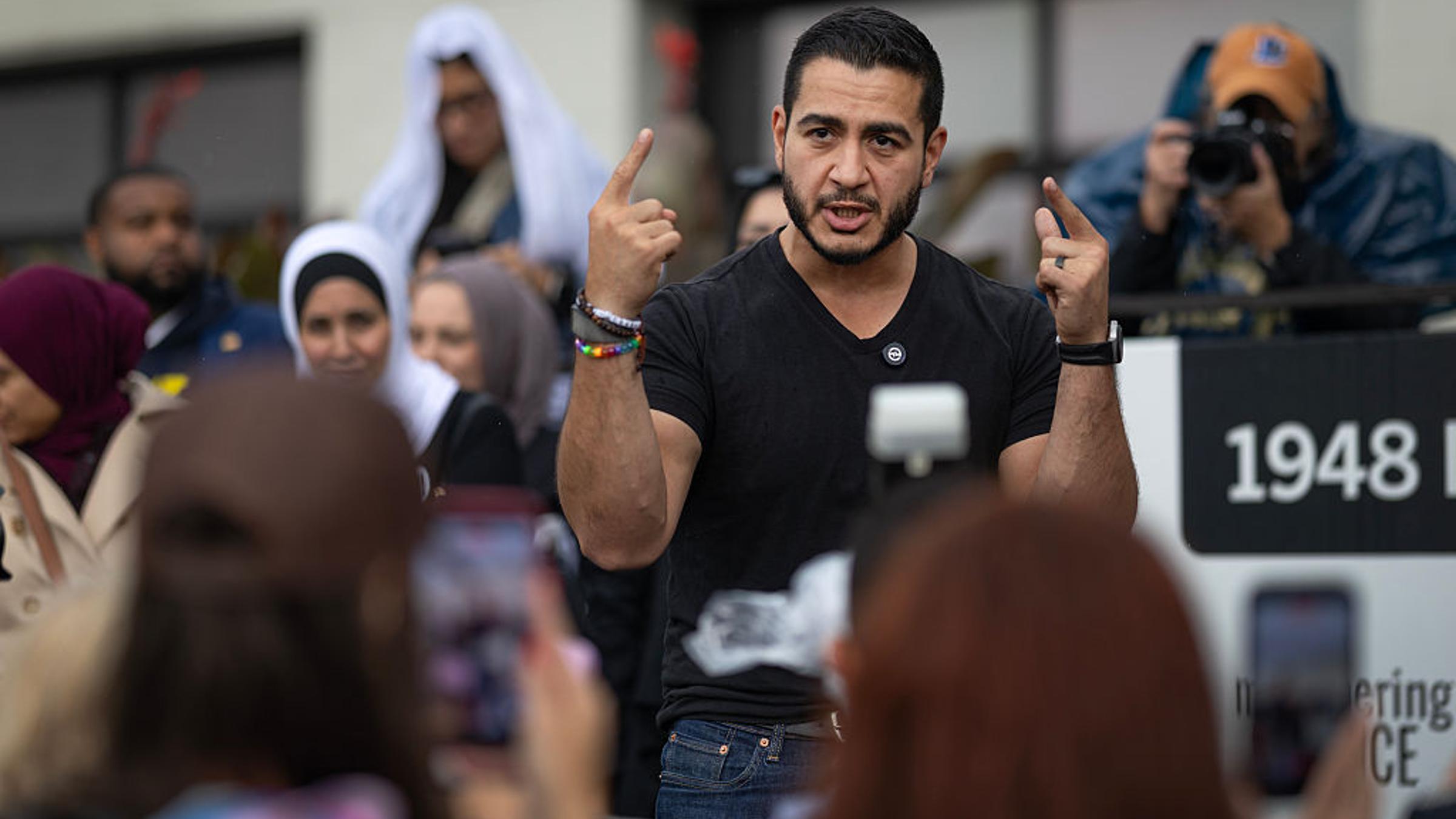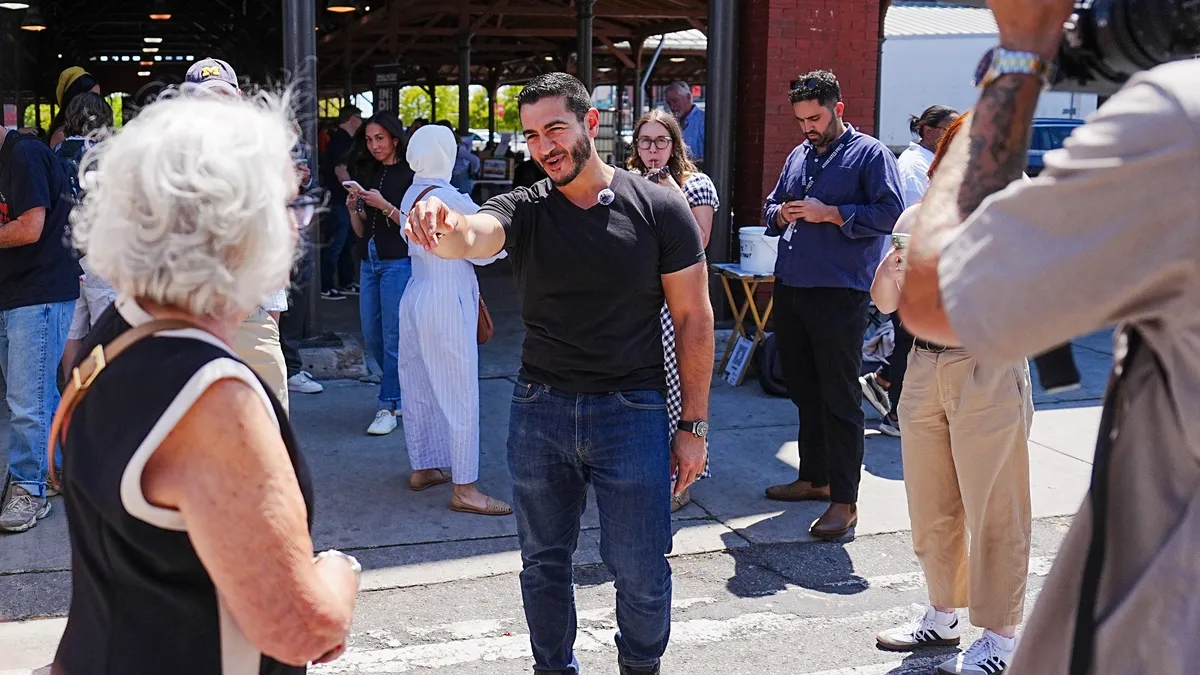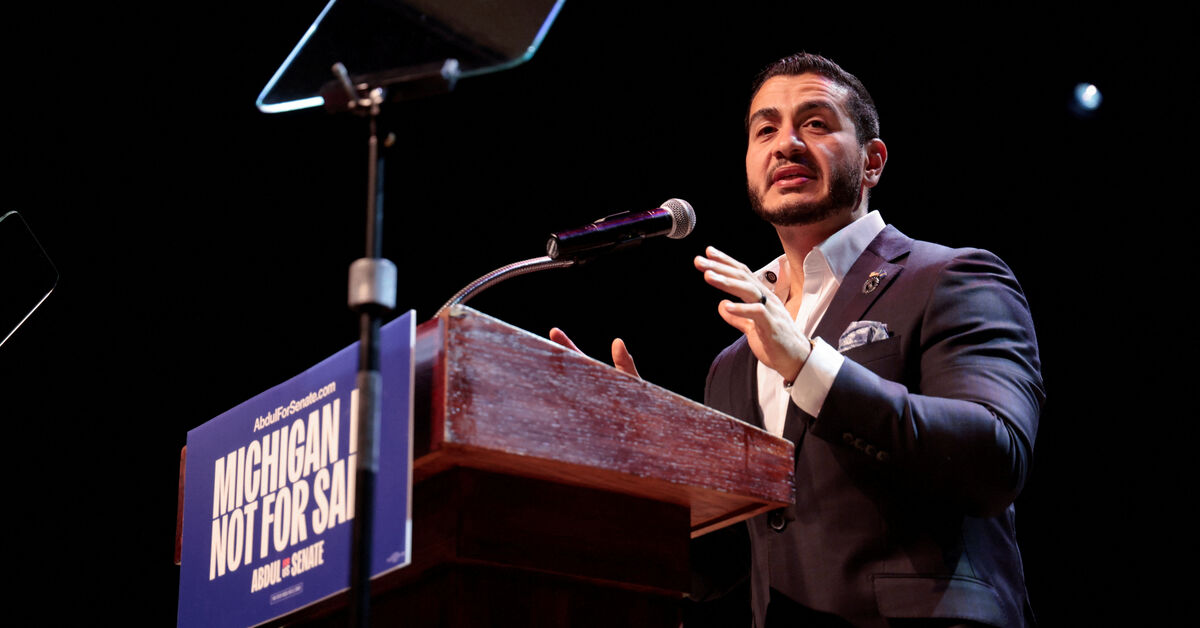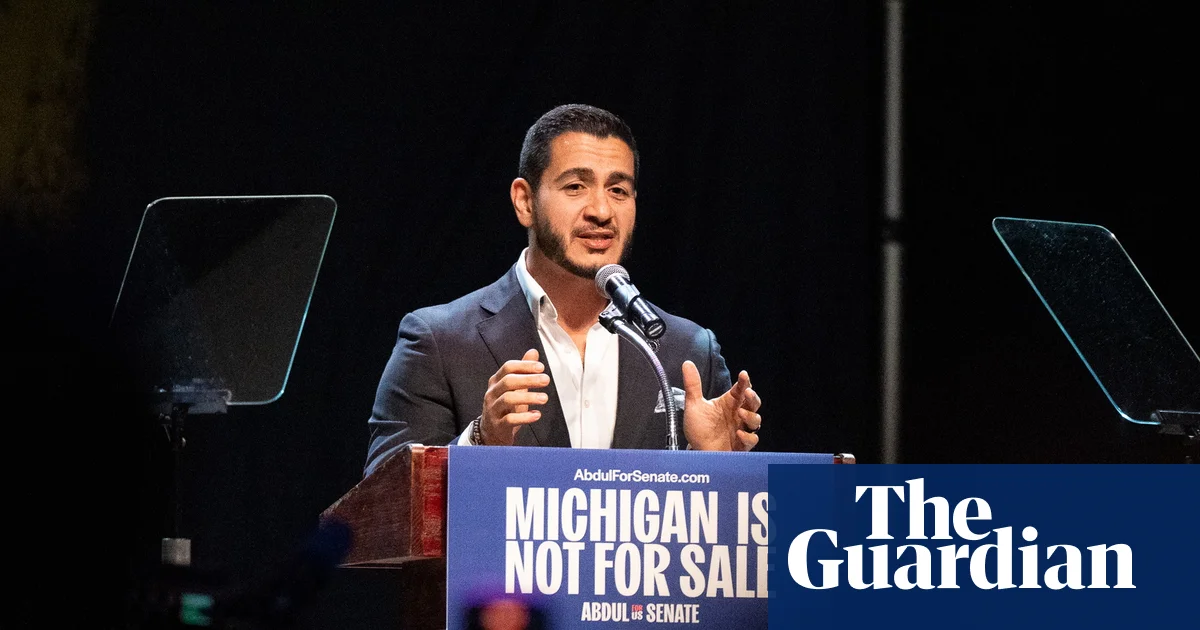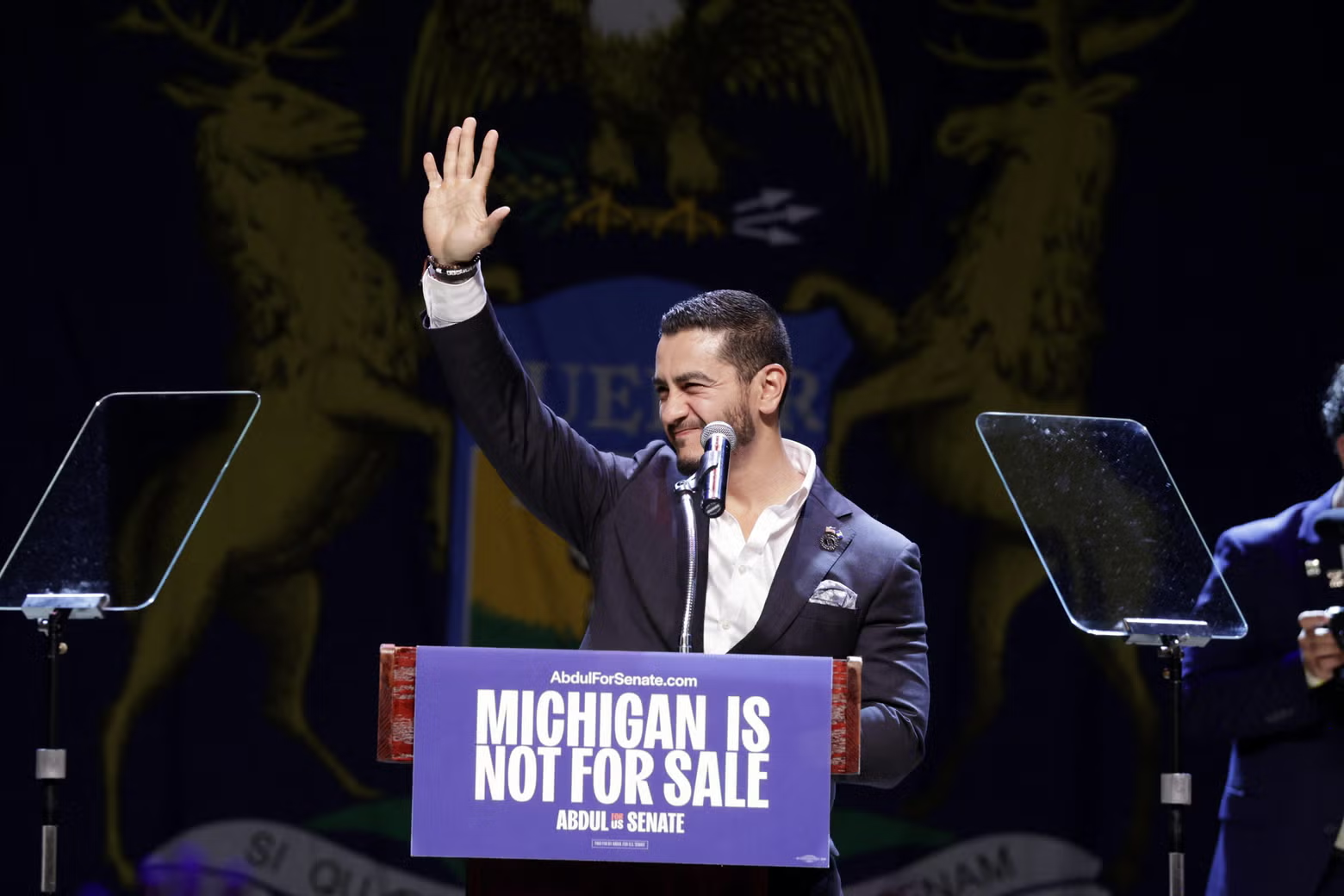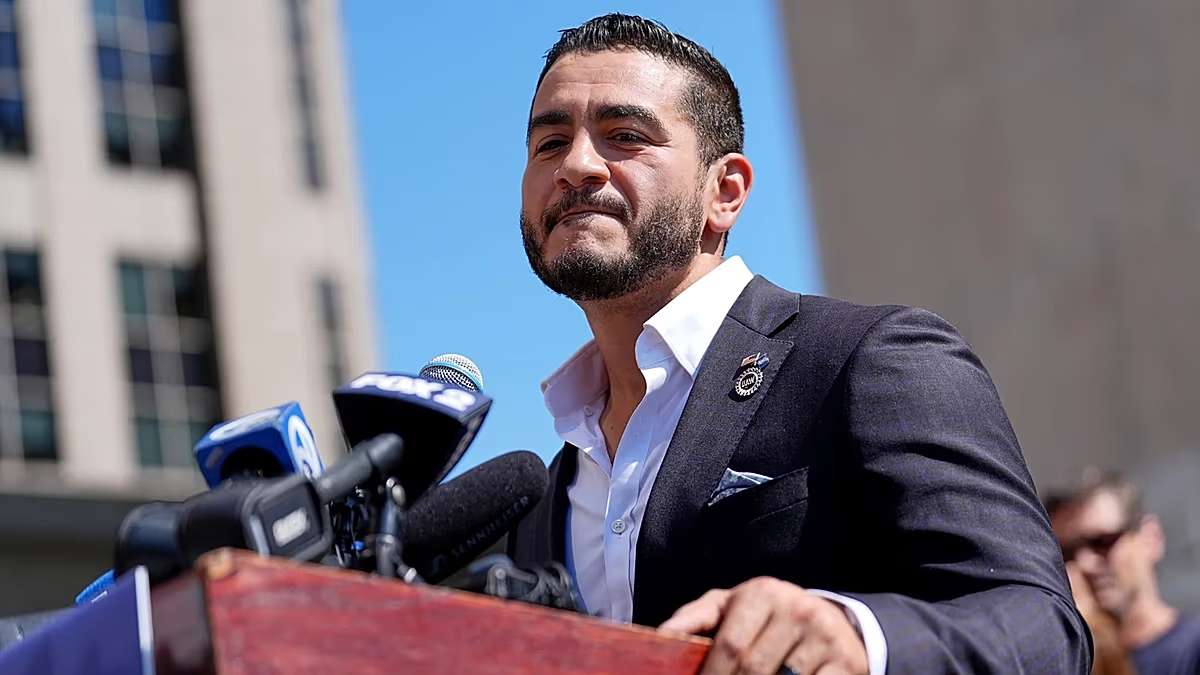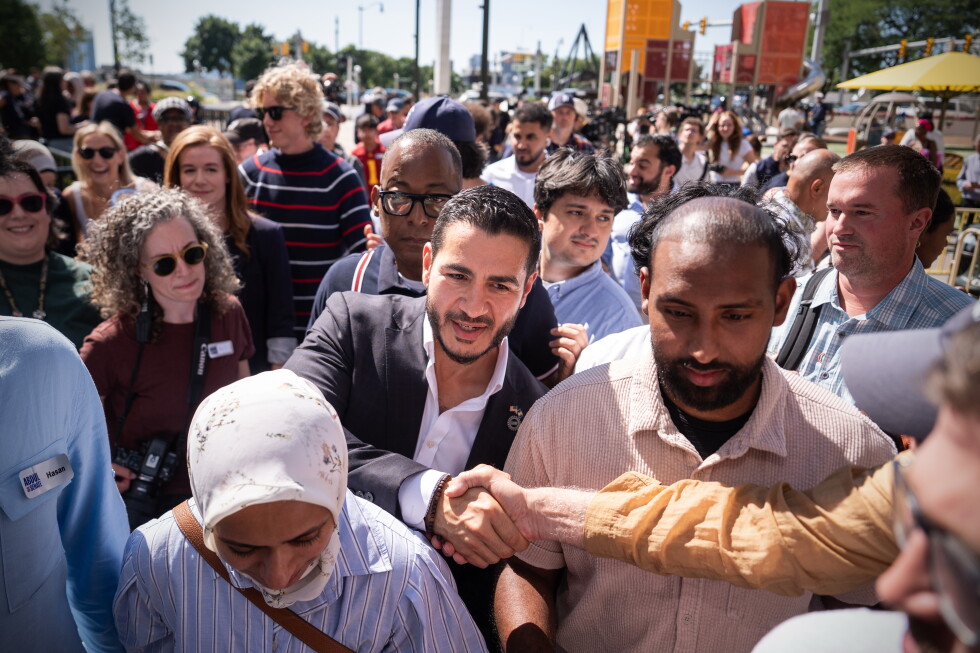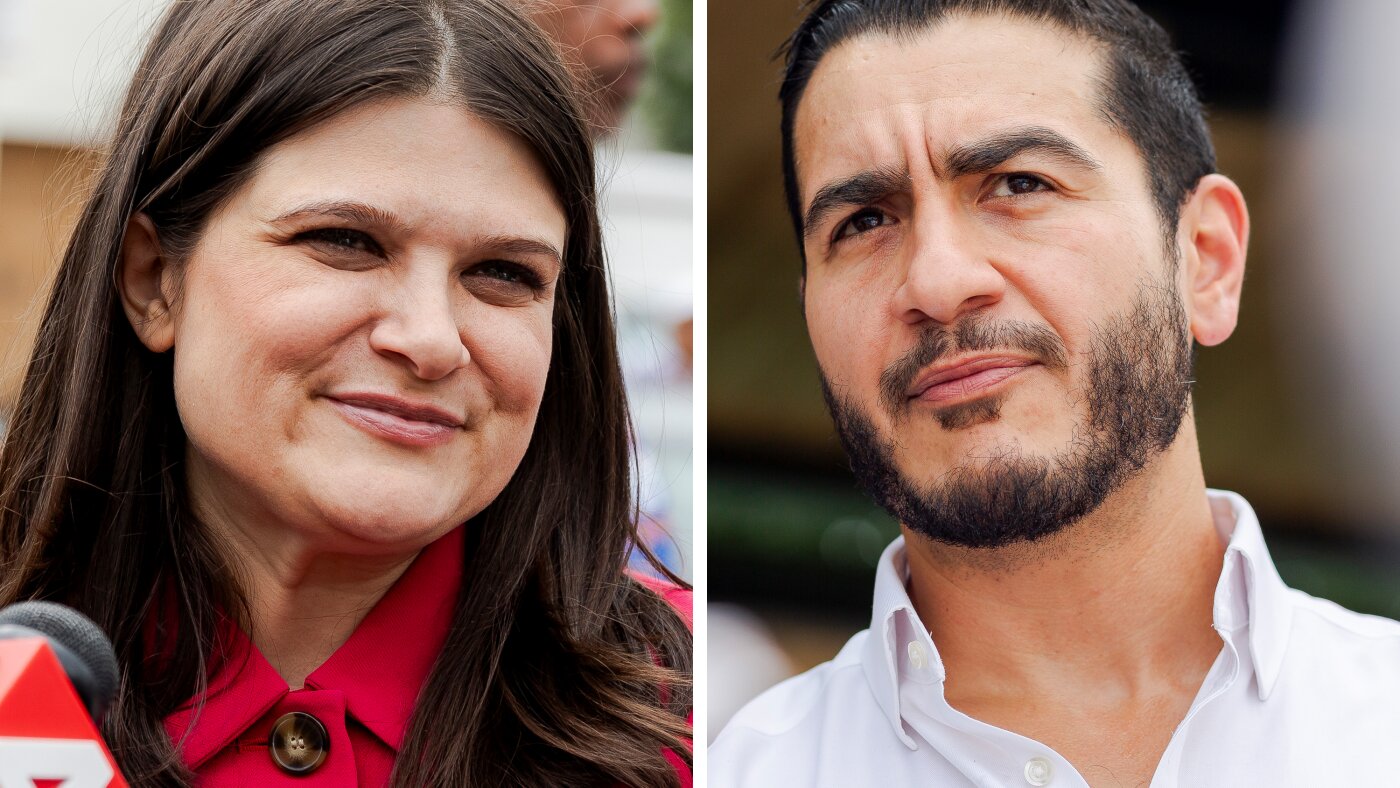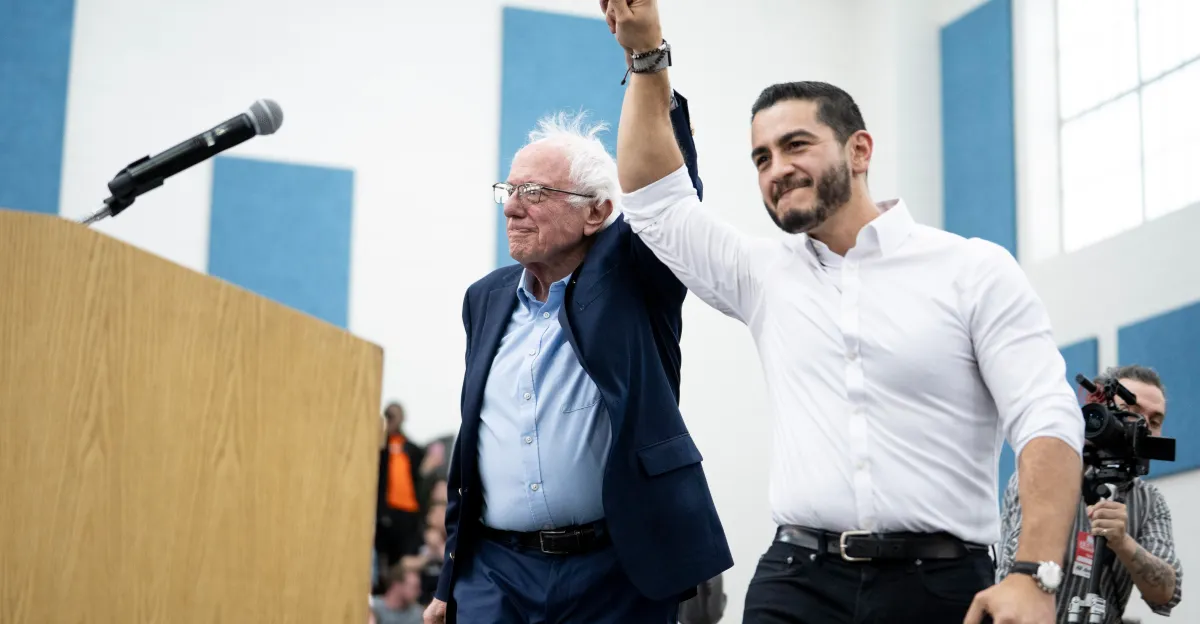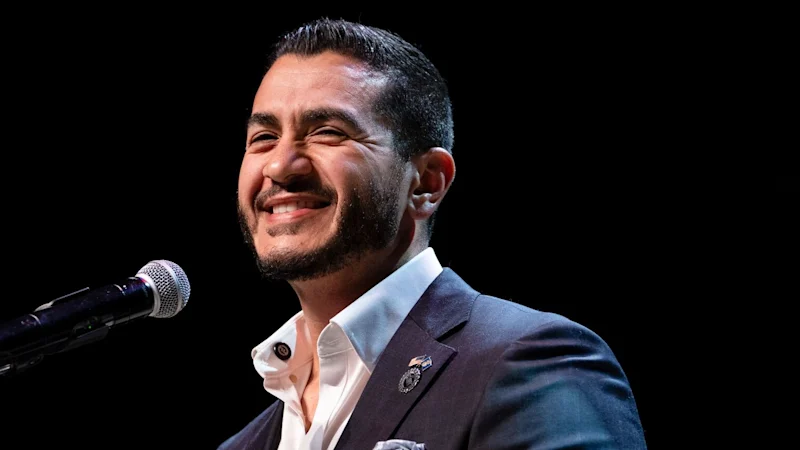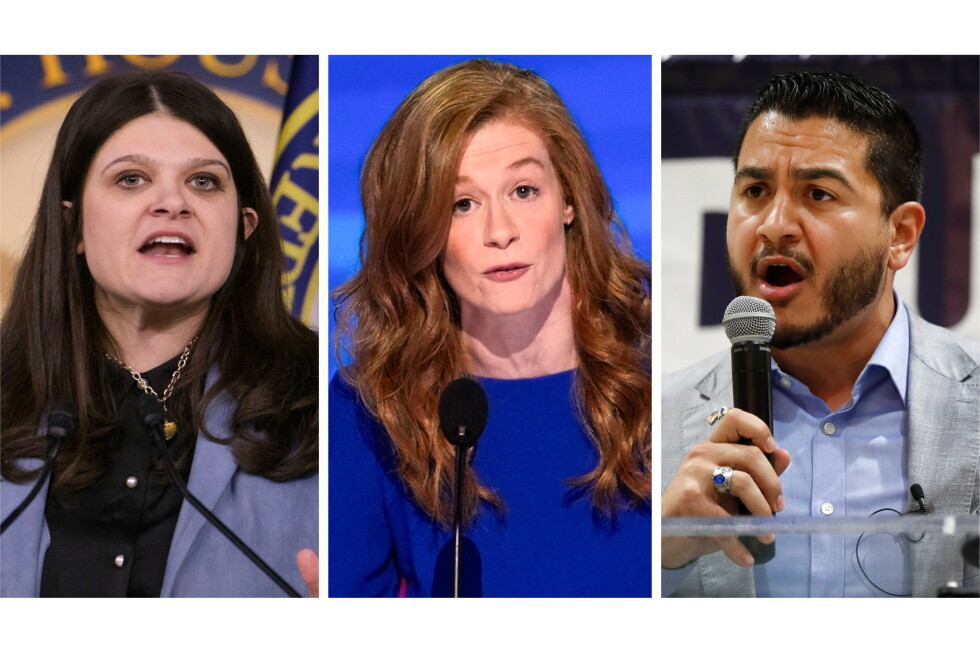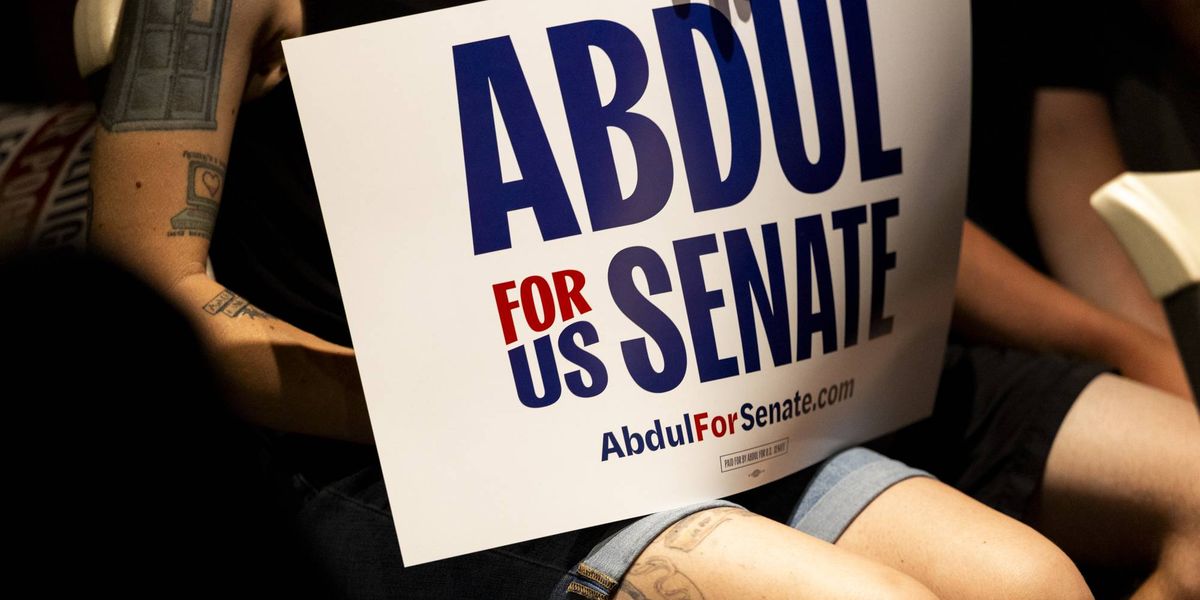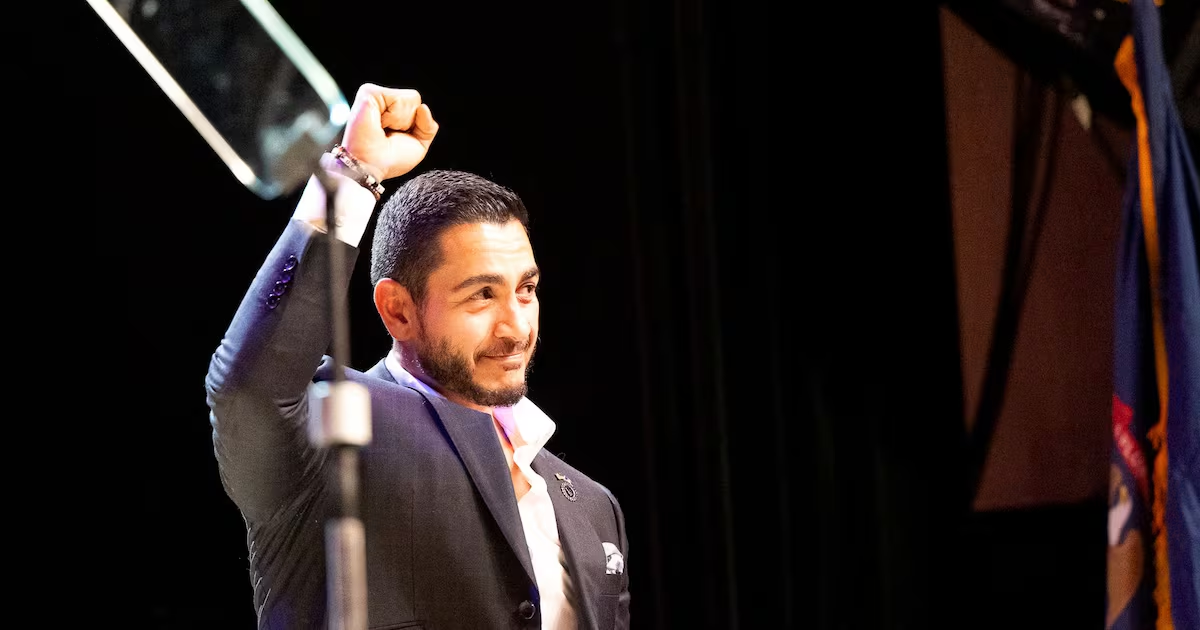
Late on Tuesday night Abdul El-Sayed, the progressive candidate in Michigan’s high-profile Senate Democratic primary election, took to the stage of the Majestic Theatre in Detroit. His supporters in the crowded venue were waiting for updates on a gripping campaign held up as a mirror to the soul of the Democratic Party – and described by the New York Times as “the ugliest election race of the year”.It would be well into the wee hours of Wednesday morning before any major network – NBC, in this case – was willing to declare he had defeated his opponent, Haley Stevens. But most held off. The candidates still weren’t certain of the result by dawn. With 95 per cent of Michigan’s notoriously slow vote-count in, El-Sayed led with 48.7 per cent of the votes to Stevens’s 47.3 per cent.The race has held the US political establishment riveted not only because of El-Sayed’s emergence, but because of what it presages about the future direction of the Democratic Party – and what it says about the electorate’s tolerance for the prevailing system.“Ad after ad after ad on TV,” El-Sayed, a 41-year-old epidemiology professor, told the crowd, referencing the $62 million (€54 million) spent by outside interest groups supporting his opponent. Stevens is the face of traditional Democratic centrism, the endorsed choice of Michigan’s governor Gretchen Whitmer and US Senate leader Chuck Schumer. While welcoming the endorsement of prominent socialist Democrats such as Alexandria Ocasio-Cortez and Bernie Sanders, El-Sayed, the Muslim son of Egyptian immigrants and a Detroit native, has rejected that specific label. But he has emerged as one of the most high-profile candidates of the wave of left-leaning younger candidates vocally rejecting the corporate donor system, promising Michiganders free medical aid and affordable housing and vowing to end the pernicious influence of corporate financial contributions.“We didn’t know they were going to outspend us by $11 to $1. And yet we are still standing,” he said on Tuesday night.Abdul El-Sayed speaks to supporters at his primary election night watch party in Detroit, Michigan. Photograph: EPA A supporter of Democratic Senate candidate from Michigan Abdul El-Sayed. Photograph: EPA El-Sayed is not a new name to Michigan voters. He ran for governor of the state in 2018, when Whitmer defeated him. But there is an urgency to his Senate message, and for his supporters in the Majestic it was not difficult to hear the cadence of the emergent Barack Obama’s campaign rallies when he told them that they had spent the last 18 months traversing the state “up and down in churches in Detroit and livingrooms in Lansing, VFW yards in Escanaba, back yards in Grand Rapids, sometimes in rooms of two or three, sometimes in rooms of two or 3,000.“Across that movement that we built, there was inspiration in the idea that we could take our government back – government of the people, by the people, for the people – instead of government of the corporations, by the special interests and for the billionaires ... you had the audacity to believe in that.”Stevens has campaigned by portraying herself as “Michigan’s workhorse”, a proven House representative who can point to a vital body of work during the national recession when, still in her 20s, she was the only Michigander to serve on the auto-rescue taskforce during the Obama administration, before flipping the 11th district seat held by Republican Dave Trott in 2018. Stevens portrayed Michigan, which Donald Trump narrowly won in the 2024 presidential election, as a state plagued with “an affordability crisis because of Donald Trump’s reckless tariffs and chaotic policies”.Haley Stevens, a Democrat from Michigan and US Senate candidate, arrives to speak during a primary election night watch party in Detroit. Photograph: Emily Elconin/Bloomberg People at a primary night watch party for Haley Stevens. Photograph: Finn Gomez/Getty Images “I’m going to lower costs for Michiganders,” she said, describing herself as a “manufacturing geek” and her opponent as a comparative dilettante.“He was involved in the Uncommitted movement. We need a proven fighter to go and beat Mike Rogers. I’m a tough-as-nails Democrat. Abdul has chosen a path of anger. He’s really frustrated, as are a lot of Michiganders. But this is six years of hard, unglamorous work. That’s what I’m signing up for. I am Michiganders’ workhorse. My opponent ... he’s already got his website for president. I just want to help Michigan.”To do so, she has accepted huge donations. Over half of the $62 million has come from the American Israel Public Affairs Committee. El Sayed has been heavily critical of Israel’s blanket bombing of Gaza – Hasan Piker, the left-wing podcaster and scourge of pro-Israel politicians – has been a prominent campaigner.During the presidential campaign, the refusal of the Biden/Harris administration to intervene as Gaza was destroyed and many thousands of Palestinians killed by Israeli bombs caused many Muslim-Democrats in Dearborn, outside Detroit, to switch their vote to Trump. In the two years since, Binyamin Netanyahu’s policy towards Gaza has become a source of widespread criticism within the Democratic Party movement. Stevens has sought to portray herself as a critic of Israel’s prime minister.“We have two different views. I want a two-state solution and long-term peace. I have called out Netanyahu. He has attacked me by name. My opponent, he equivocates; he will not recognise Israel’s right to exist as a state.”But both candidates offer a distinct fork in the roads for Democratic voters. Republicans believe they can exploit the ideological split in the November elections by portraying candidates such as El-Sayed as de facto “communists” seeking to destroy the tenets of American life. Strategically, they will hope to repeat their trick of appealing to Michigan’s black voter demographic, which makes up about 25 per cent of the electorate.In 2024, Trump’s populist message convinced a significant percentage of that demographic, frustrated by the inflation crisis and the hazy messaging of the Obama campaign, to vote for him. A July poll from The Detroit News reflected just 34 per cent of black respondents intended voting for El-Sayed over Stevens. A notional Epic-MRA poll published on Wednesday showed the likely Republican candidate – Trump endorsed Mike Rogers – beating El-Sayed in a November matchup but losing to Stevens. That scenario reflects the subconscious fear running through the Democratic movement as summer dwindles: that despite the rampant unpopularity of the president and his administration, the Democratic Party may yet defeat itself through these gripping, contentious primaries that have illuminated the internal Democratic struggle. It was something to which El-Sayed alluded when forecasting the November election as he called for unity.A TV broadcasts election results during a primary election night watch party in Detroit. Photograph: Emily Elconin/Bloomberg Democratic Senate candidate from Michigan Abdul El-Sayed. Photograph: EPA Previewing his autumn attack lines, El-Sayed described Rogers as “the worst of the neo-con era and the Maga era”.“I promise you, Mike, by the time we are done with you, all of Michigan is going to know who you are. You are a corporate sell-out who voted to raise our drug prices and supported wars we don’t want to fight. We’ve got 13 weeks to defeat Mike Rogers. However we might feel about the campaign we have come through, I want you to understand that it pales in comparison to the cynicism, in comparison to the corporatism, in comparison to the lies that Mike Rogers and Donald Trump are going to tell. There is so much more that unites us than divides us. Tomorrow, we begin to mend fences. Whatever happens tonight we have a responsibility to unite to make sure Mike Rogers never sees the inside of the US Senate.”The numbers suggested that El-Sayed might just squeak through. The big gamble lies in whether he can convince a sufficient number of moderate, older Michigan Democrats that he is their future, too.
‘Ugliest election race of the year’: Democrats’ civil war erupts in Michigan
Abdul El-Sayed’s rise reflects a party increasingly defined by generational change, economic anger and foreign-policy dissent
1,301 words~6 min read