Why Stateless MCP Is Winning: The Shift That Recaptured My Interest
It started with a Hacker News thread quietly rising to the top of the front page in early 2026. The title was simple: "Stateless MCP has recaptured my interest." Hundreds of comments later, a clear consensus emerged — the stateless approach to the Model Context Protocol is not just a niche design preference, it's becoming the default mental model for connecting AI agents to the outside world.
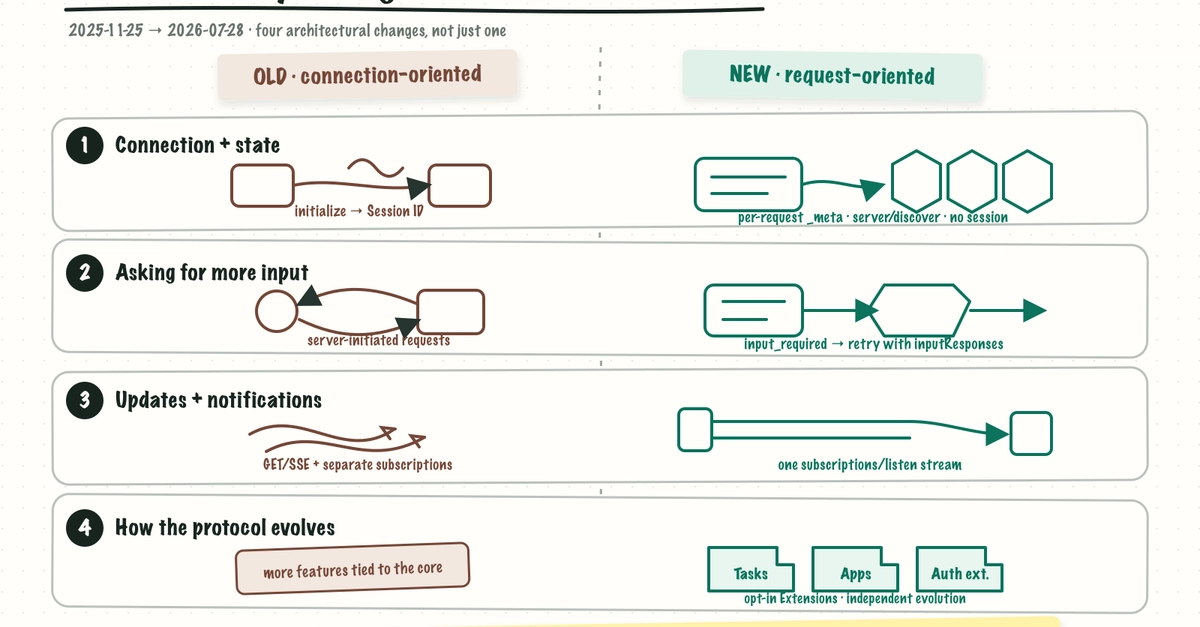
For years, MCP implementations were dominated by stateful, long-lived sessions. Tools like context stores, conversation memory, and interactive workflows all leaned on the server maintaining per-client state. But as the AI ecosystem matured, the costs of that approach became impossible to ignore. Stateless MCP flips the script: each request carries everything the server needs to produce a response. No hidden sessions, no in-memory context, no sticky connections. And that simple change has awakened a wave of interest from developers who previously wrote MCP off as too heavyweight.
What Is MCP and Why Does Statelessness Matter?
The Model Context Protocol (MCP) is an open standard that lets AI assistants and agents connect to external tools, data sources, and services. Think of it as a universal USB-C port for AI: instead of building bespoke integrations for each tool, a developer can implement MCP once and any compatible AI client can use that tool.