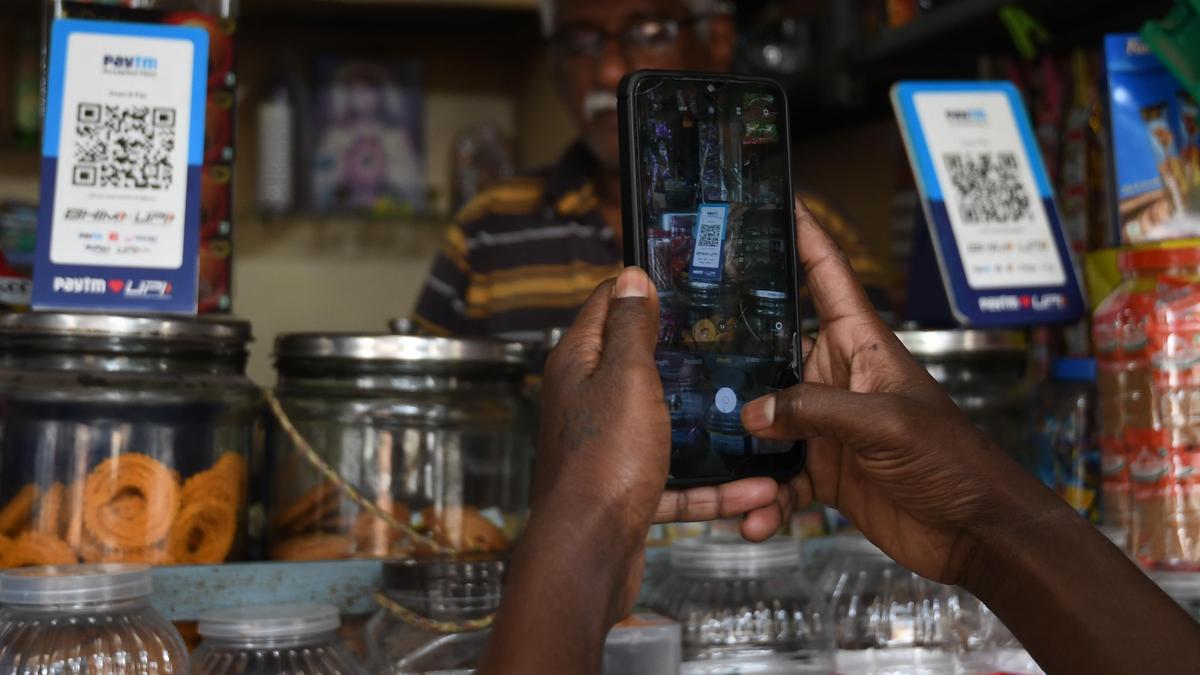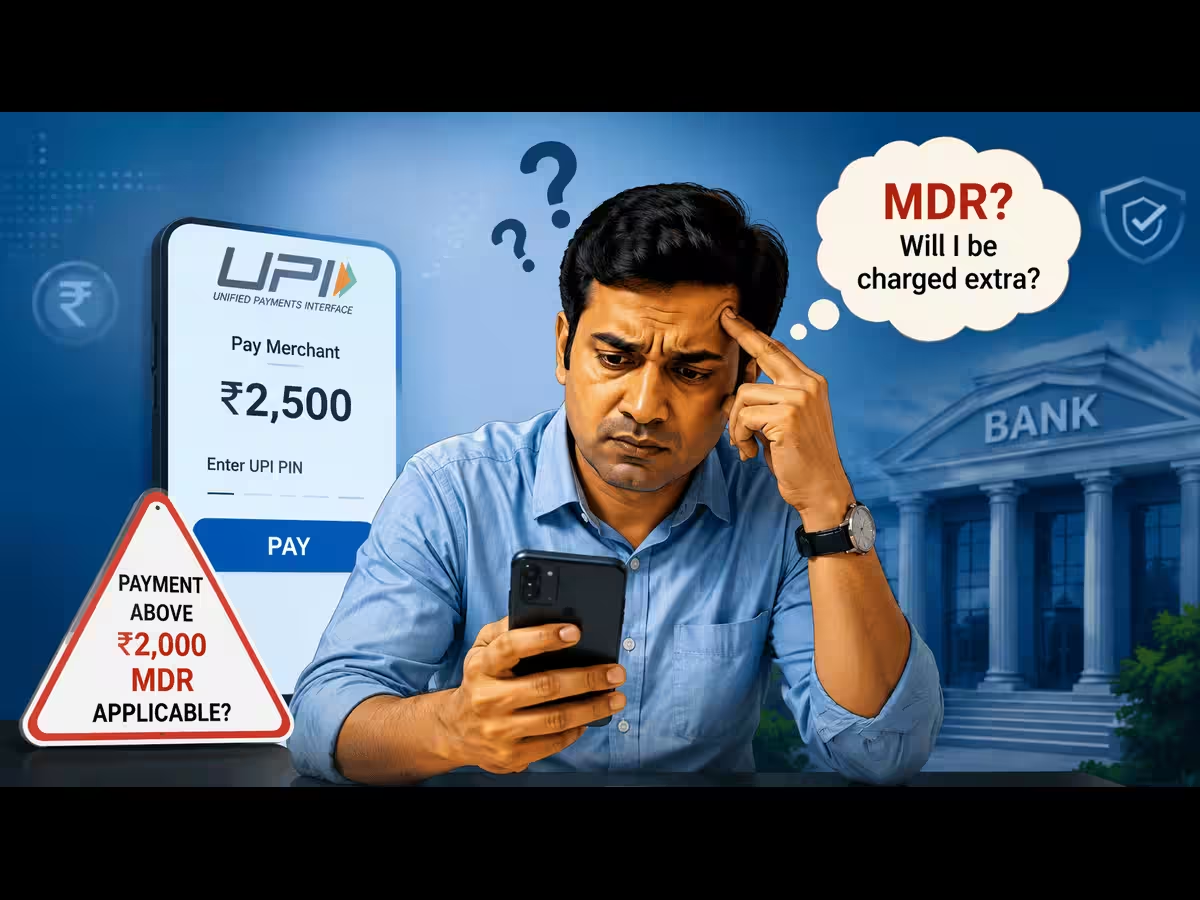
A proposed amendment to the Payment and Settlement Systems Act has sparked speculation about potential charges on UPI transactions, though experts say the zero-MDR regime for UPI remains unchanged for now.
| Photo Credit:
The Ministry of Finance on Tuesday tabled the Taxation and Other Laws (Amendment) Bill, 2026, inter alia, intending to amend the Payment and Settlement Systems Act, 2007. This move has stoked widespread speculation that the government’s aim is to introduce MDR charges for UPI, which has remained free until now. Here’s an explainer decluttering the noise around the move.What is Merchant Discount Rate (MDR)?The Merchant Discount Rate (MDR) is a fee charged by banks and payment processing companies (such as Visa and Mastercard) to merchants for each credit or debit card transaction made by customers. This fee ranges from 0.25 per cent to 1 per cent of the transaction value for debit card transactions, and from 1 to 3 per cent for credit card transactions. MDR compensates banks and payment service providers (PSPs) for processing digital payments and maintaining supporting infrastructure.What is likely to change with the MDR once the government passes the Taxation and Other Laws (Amendment) Bill, 2026?Through the Taxation and Other Laws (Amendment) Bill, the government aims to amend section 10A of the Payment and Settlement Systems Act, 2007. This section restricts banks and PSPs from imposing any charge on a person making or receiving a payment using certain electronic modes of payment. These modes of payment are currently provided under section 269SU of the Income-tax Act, 1961, read with rule 119AA of the Income-tax Rules, 1962, namely, RuPay debit card, UPI, and QR code-based UPI.Now that the new Income-tax Act, 2025, is in force, the government plans to remove references to the old legislation and instead notify those modes of payment in a future Ministry of Finance notification. Going forward, one must refer to this notification to understand which modes of payment are exempt from MDR rather than to refer to the Income-tax Act.Who is currently bearing the cost of operating UPI now?Currently, banks and PSPs are largely bearing the cost. However, the government is incentivising them to an extent for person-to-merchant (P2M) transactions of less than ₹2,000 involving a ‘small merchant’. For budget documents, the allocation for this stands at ₹2,000 crore for FY27, up from ₹2,196 crore for FY26 and ₹1,923 crore for FY25.Besides, NPCI, which owns and manages UPI, spent ₹2,270 crore in revenue expenditure and ₹742 crore in capital expenditure in FY25 (latest available financials).Will UPI become chargeable once the bill is passed?There is little clarity on this at this point, leading to speculation. The government’s move can be interpreted in two ways.One, given that the Income-tax Act, 2025, has come into force, the move can be interpreted as merely removing the reference to the old Income-tax Act, 1961, in the Payment and Settlement Systems Act.Two, the government could’ve amended the Payment and Settlement Systems Act to include a reference to the relevant provisions of the new Income-tax Act, 2025. Section 269SU and rule 119AA of the old tax legislation has largely been carried forward to section 187 of the Income-tax Act, 2025 and rule 133 of Income-tax Rules, 2026. Instead, the government intends to notify the list of exempt payment modes itself, without referring to the taxation law. Given that payment ecosystem players and the Lok Sabha Standing Committee on Finance have voiced the unsustainable nature of the status quo and called for MDR on UPI, the government’s move in this manner may be interpreted as addressing their grievance.Nevertheless, expert opinion tilts towards the former view. According to Smita Jha, Partner at Khaitan & Co, the proposed amendment is simply a consequential legislative measure to preserve the operative force of this provision following the repeal and replacement of the Income-tax Act, 1961. The amendment neither affects the substantive zero-MDR regime applicable to UPI transactions nor creates any new legal basis for levying charges that did not previously exist. Any introduction of MDR on UPI would require an independent policy action by the Central Government through a separate notification.Will a charge for using UPI be a dampener for users?Consumers can reasonably expect not to be charged. Even in the current scenario with cards, it’s the merchant who bears the charge. The government might even keep small merchants out of the UPI MDR purview. UPI MDR may be set at competitive rates relative to card MDR to encourage adoption.However, merchants may resort to inflating the prices of goods and services to the extent of the possible UPI MDR, thereby ultimately passing the cost on to the consumer.How this transpires in the long term remains to be seen.Published on August 5, 2026