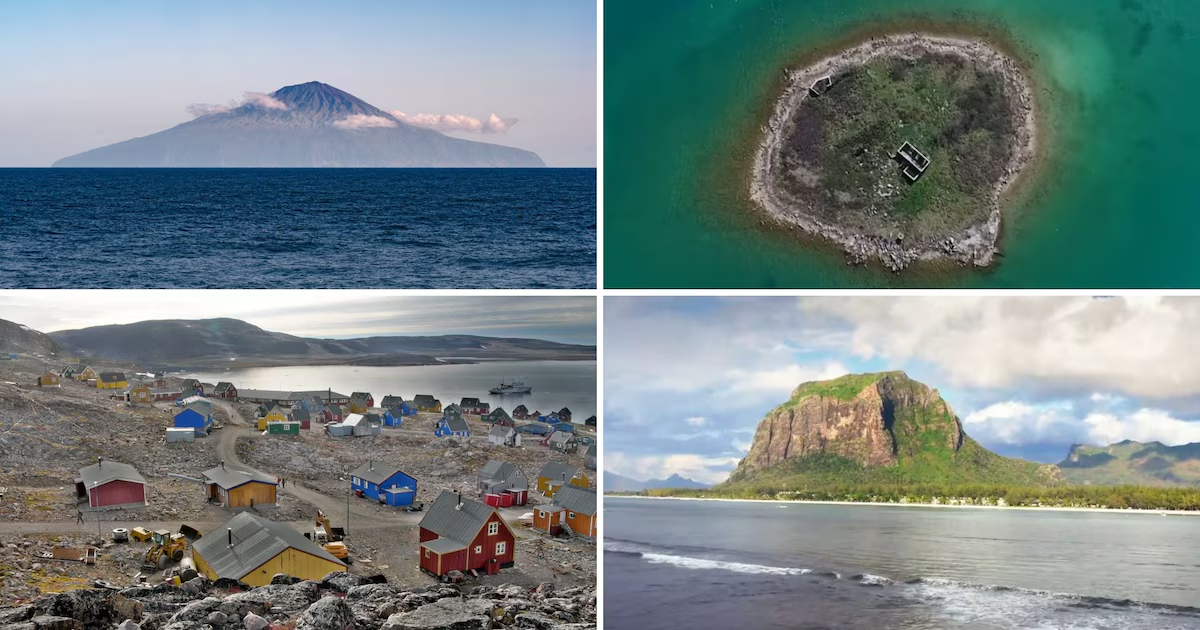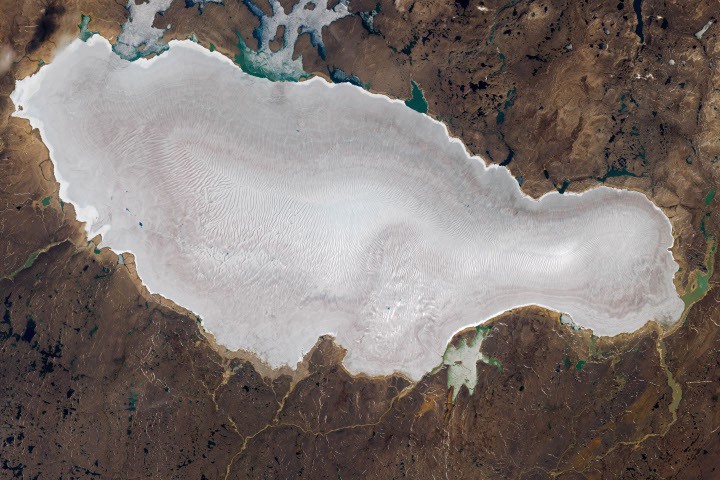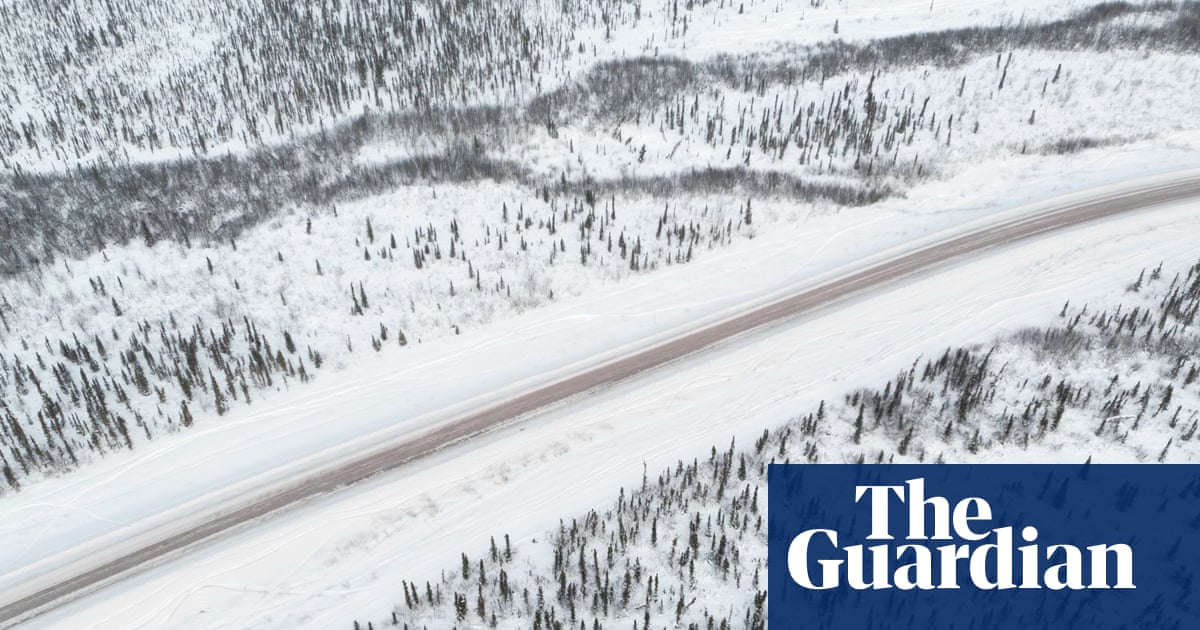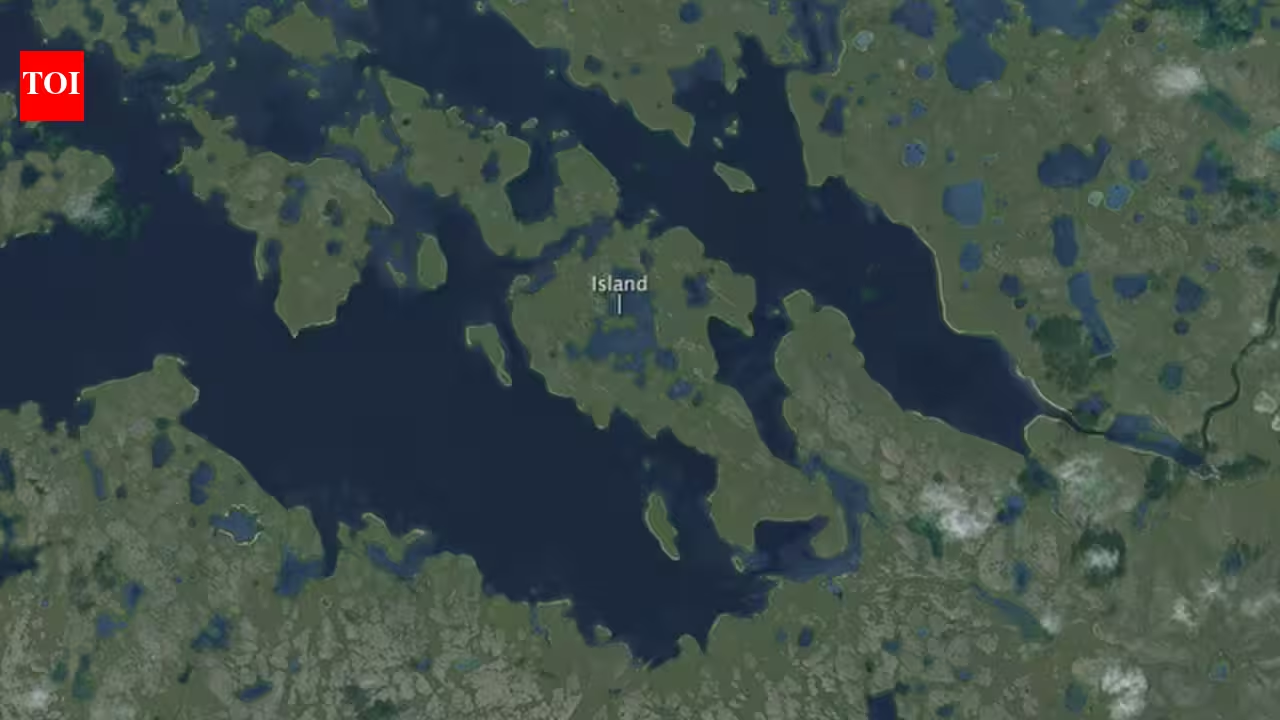
Arctic Tundra in Nunavut | Wikimedia CommonsMaps usually simplify the world, but this one makes it slightly stranger: A tiny unnamed island is surrounded by a small lake that lies deep within Canada’s Arctic. That lake sits on another unnamed island, which itself rises from a larger lake on Victoria Island, the world’s eighth-largest island. The chain continues outward until it reaches mainland Canada, which has created one of the most extraordinary examples of what geographers call a recursive island: an island within a lake, on an island, within another lake, on another island. The innermost island is so remote that no published record confirms anyone has ever visited it. According to the Canadian Geographical Names Database, the feature lies on Victoria Island in Nunavut, one of the least populated regions on Earth, where vast stretches of tundra remain accessible only by aircraft during much of the year.Satellite imagery of Victoria Island | Wikimedia CommonsA geographical puzzle hidden in the ArcticThis unusual chain first attracted widespread attention after satellite imagery and digital mapping made it easier for cartographers and geography enthusiasts to examine Canada’s labyrinth of Arctic lakes and islands in detail. Islands inside lakes are common, but each additional layer becomes dramatically rarer because it depends on a precise sequence of geological events. A lake must first form on an island, and inside that lake, another island must emerge. That second island must then contain its own lake, which must also contain another island. The unnamed feature on Victoria Island represents the largest known example of this nesting pattern documented anywhere in the world. According to BBC Travel, the location has become a curiosity among geographers mainly because of its isolation and because there has been no confirmed expedition that has reported landing on the smallest island, which leaves its visitation history unknown rather than conclusively unvisited.Why nobody can say for certainIt is far more difficult to reach the area than to locate it the area than locating it on a map, since Victoria Island spans more than 217,000 square kilometers yet is home to only a handful of small communities separated by hundreds of miles of tundra, rivers and lakes. There are no roads leading to the site, no marked hiking routes and no tourism infrastructure. Most travel across this part of Nunavut relies on small aircraft, seasonal ice routes or boats during the brief Arctic summer. Even then, the unnamed island would require navigating several increasingly smaller bodies of water before reaching the final patch of land. The possibility that Indigenous Inuit hunters or earlier explorers passed through the region centuries ago cannot be ruled out, but no documented account identifies a visit to the innermost island itself. The absence of evidence is what keeps the mystery alive rather than proving that no human has ever reached it.Arctic Tundra in Nunavut | Wikimedia Commons A reminder that maps still hold surprisesIt is easy to assume that Earth has surrendered all of its geographical secrets in an age when satellites photograph nearly every corner of the planet. But places like this demonstrate the difference between being visible from space and being visited on the ground. The island’s significance has little to do with its size, since it is simply a tiny piece of land surrounded by a sequence of lakes and islands that almost never occurs naturally. Canada’s Arctic archipelago contains some of the planet’s most complex freshwater landscapes, which have been shaped over thousands of years by glaciers that carved basins before retreating at the end of the last Ice Age. Hidden within that immense landscape is a geographical curiosity so obscure that it remains unnamed, unmarked by tourists and, for now, without any confirmed human footprint.
Canada’s Arctic has an unnamed island inside a lake, on an island, inside another lake, on Victoria Island, with no confirmed record of anyone reaching it
Maps usually simplify the world, but this one makes it slightly stranger: A tiny unnamed island is surrounded by a small lake that lies deep within Canada’s Arctic. That lake sits on another unnamed island, which itself rises from a larger lake on Victoria Island, the world’s eighth-largest island.
620 words~3 min read