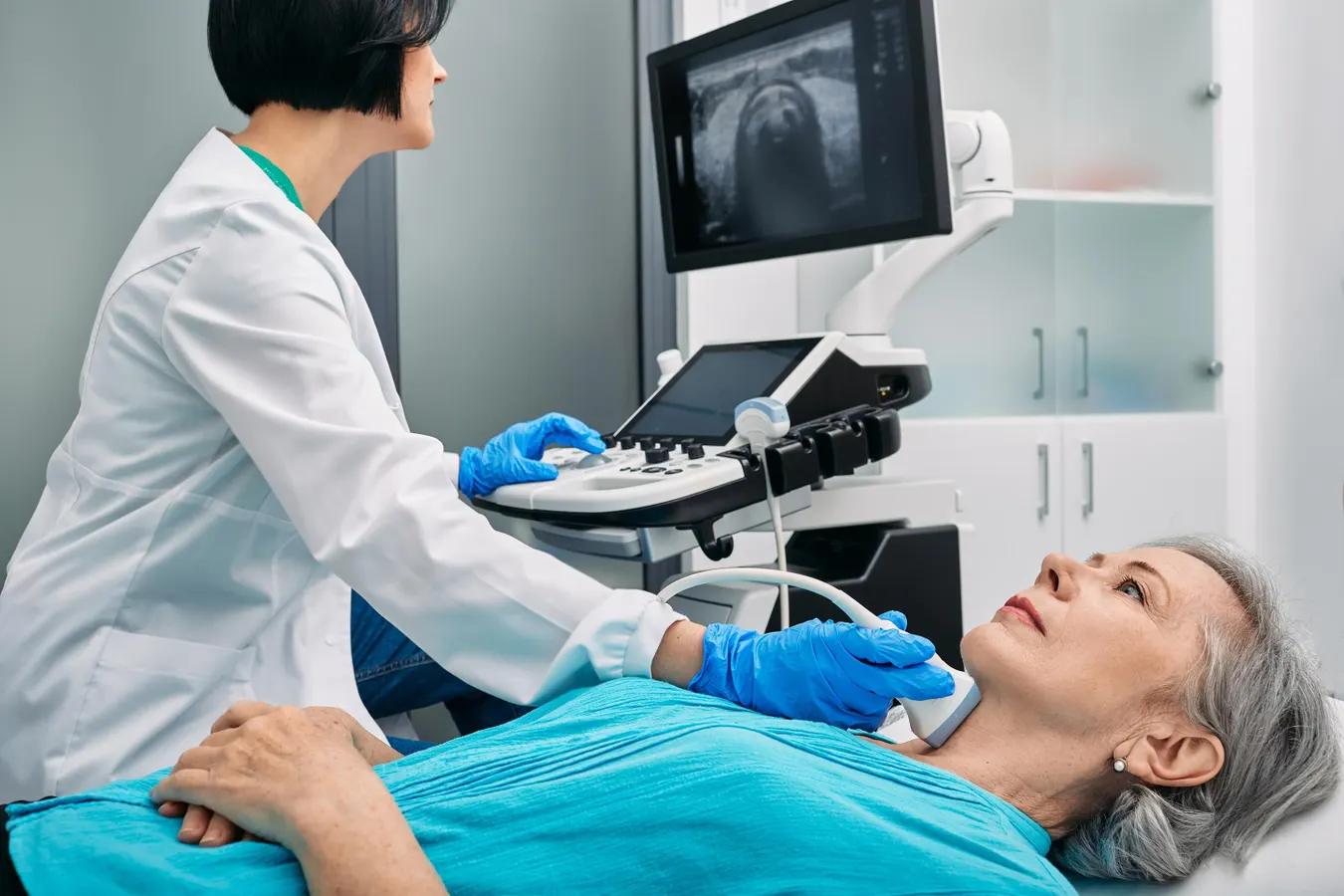
WHEN A DOCTOR examines a patient's throat, they use a process that’s been handed down pretty much unchanged since ancient times. It’s one of the most fundamental components of the physical exam, alongside measuring body temperature and listening to a heartbeat. However, the patterns of findings that appear in the throat differ depending on the pathogen, and an enormous amount of information lies hidden there. A Japanese company called Iris, led by Sho Okuyama, is seeking to unlock that information using artificial intelligence.
The system developed by Iris, Nodoca, uses AI to analyze images of the pharynx captured with a compact camera-equipped device, together with information from the patient's medical interview and other data, and returns an influenza assessment in a little over 10 seconds. It eliminates the need for the conventional test—one that is prone to causing discomfort because it requires inserting a swab deep into the nose to collect a nasal specimen—and can also be used at an earlier stage after symptom onset.
In 2022, it became the first AI-equipped medical device in Japan to receive approval as a “new medical device” and gain coverage under the national health insurance system. It has since been introduced at more than 2,000 medical institutions across Japan. In October 2025, it also received approval for an additional function related to Covid-19.