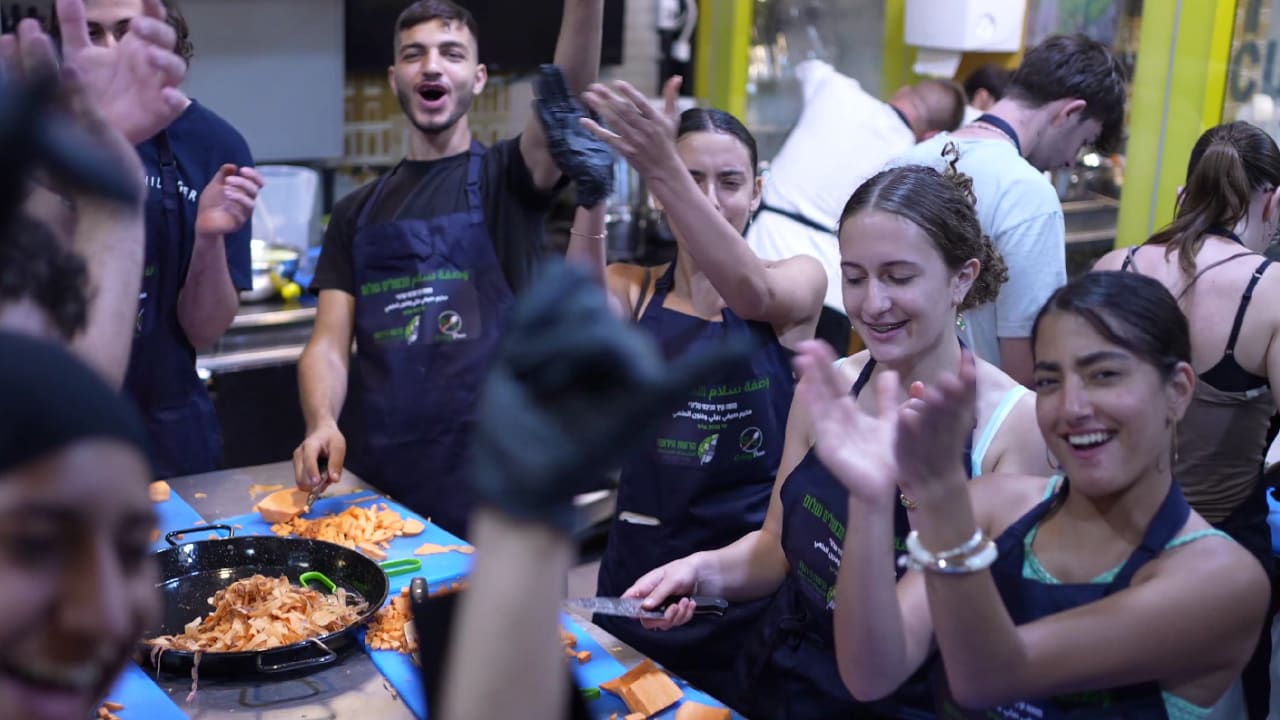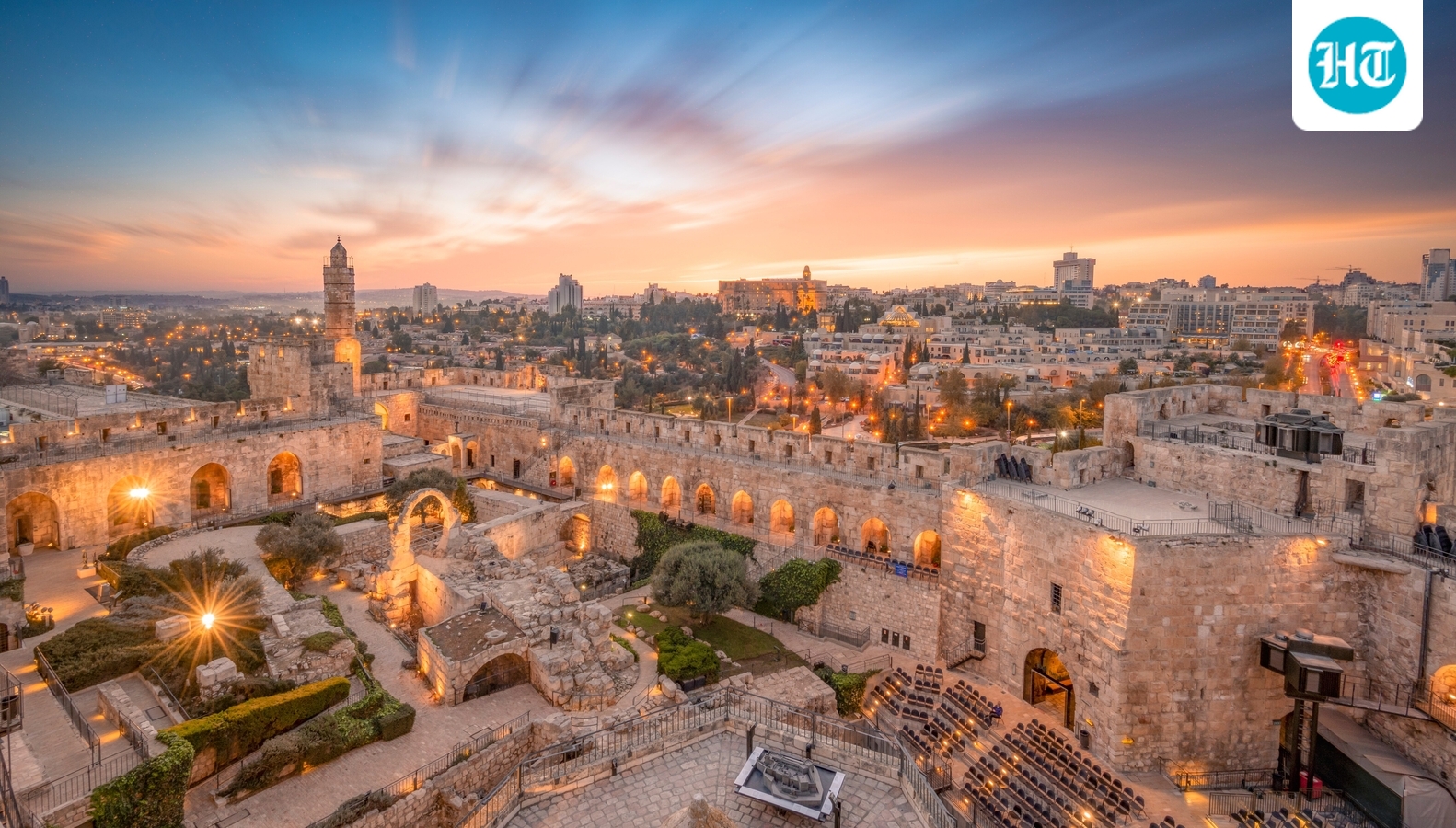
From bustling markets to home kitchens, my journey through Israel offered a taste of its diverse culinary heritage. For many around the world, Israel is defined by conflict. Years of headlines have shaped that perception, and understandably so. Yet even amid war, the country's spirit endures. Beyond the conflict lies a nation with a rich cultural heritage, remarkable resilience and a dynamic food culture shaped by generations of migration and diverse traditions. It is this quieter, everyday Israel - one that continues to create, celebrate and gather around the table - that often goes unseen. It is a true melting pot of identities, and nowhere is this diversity more evident than on its dining table.View from the top of The Tower of David Jerusalem MuseumWhether you're a vegetarian or a non-vegetarian, Israel has something to delight every palate.Abulafia BakeryMy culinary journey began in Tel Aviv, a city packed with restaurants and cafés. Yet, nothing captured the city's spirit quite like the Lewinsky Food Market. Walking through its bustling lanes, I found everything from artisanal cheeses and fresh seafood to refreshing fruit-and-botanical drinks. The market is also a paradise for anyone looking to shop for dried fruits, cakes and aromatic spices. One delicacy I simply couldn't miss was the Parsi Falude. Similar to the Indian falooda, this refreshing dessert is prepared with chilled water instead of milk, making it uniquely different yet equally delicious.Just a short walk away stands the iconic Abulafia Bakery, a 147-year-old institution that has been serving freshly baked breads for generations. I met Saeed Abulafia, the sixth-generation owner, who proudly shared, “We prepare traditional Middle Eastern pastries, ranging from sesame bagels and pita with za'atar to stuffed sambousaks filled with cheese, feta and potatoes. Our bakery has become a well-known brand in Israel. We are a Muslim Arab family, and our bakery is loved by Jews, Christians and Muslims alike. Even many Indians working in Israel, especially those employed in the diamond exchange, are our regular customers.”If there's one place seafood lovers simply cannot miss, it's Uri Buri in the historic port city of Akko. The restaurant, housed in a 400-year-old Ottoman-era building overlooking the sea, was founded by Uri Buri himself. Interestingly, he isn't a professionally trained chef and had never worked in a restaurant before opening his own. Encouraged by friends, he turned his passion into one of Israel's most celebrated seafood destinations."I believe in minimalism," he told me. "If you look around, there's nothing fancy about the restaurant. When people step out of their homes, they want silence so they can talk to each other. That's why you'll never hear music playing in the background."The simplicity extends to his cooking philosophy. Every dish lets the seafood shine. From salmon with wasabi sorbet and European sea bass served with olive oil, garlic, chilli, lemon and coriander to whole grilled fish and Mediterranean shrimp cooked in fragrant olive oil, every bite was unforgettable.I was pleasantly surprised to discover that Israel is also home to several Indian restaurants. Among the most renowned is Tandoori Lands End, run by celebrated restaurateur Rina Pushkarna. Serving authentic North Indian cuisine, the restaurant has become a favourite among both locals and visitors."I just met an Indian who asked if we serve khichdi," she laughed. “Although it's not on the menu, I asked my staff to prepare it.” Pushkarna, who is known for overseeing Prime Minister Narendra Modi's meals whenever he visits Israel, clearly enjoys making every Indian feel at home.Maqluba, the fomous "upside-down" dishOne of the most memorable experiences of my trip wasn't at a restaurant but inside the home of a member of Israel's Druze community. The Druze are a close-knit Arabic-speaking minority, and I had the opportunity to participate in a traditional cooking workshop hosted by Galil Eat at the home of one of its members.Together, we prepared thin, griddled Druze pita topped with labneh and za'atar, comforting mujaddara made with lentils and rice, and maqluba, the famous "upside-down" dish in which layers of meat, vegetables and rice are dramatically flipped onto a serving platter before being enjoyed. More than the food, it was the warmth and hospitality that stayed with me.No food journey through Israel would be complete without exploring Jerusalem. The holy city, where Christianity, Islam and Judaism coexist, is also home to the vibrant Mahane Yehuda Market, a paradise for food lovers.As I wandered through its colourful alleys, I sampled rogalach, the refreshing rimonada, mufleta, burekas pinukim filled with cheese and potatoes and served with boiled egg, pickle, tahini and schug, and the ever-popular schnitzel challah sandwich. Every stall had a story, every bite reflected the city's multicultural heritage.The perfect ending to my culinary adventure came in the form of a traditional Shabbat dinner hosted by Mama Rachel (@MAMA_RACHEL), a 75-year-old Jewish woman who has made it her mission to welcome visitors to Israel into her home.Her table was nothing short of a feast.We began with salads and starters including matbucha, a traditional Moroccan cooked tomato and pepper salad; zaalouk made with roasted eggplant, bell peppers and tomatoes; salmon with vegetables in a spicy Moroccan sauce; and fried cod served with fresh lemon.Rice cake wrapped in wine leavesThe main course was equally elaborate, featuring osso buco with root vegetables, chicken sofrito, stuffed grape leaves layered with herb-infused rice and decorated with apples and dried plums, stuffed cabbage leaves in tangy tomato sauce, and turlu, a traditional Turkish baked vegetable casserole.Just when I thought I couldn't eat another bite, dessert arrived—homemade dairy-free vanilla ice cream, rich chocolate fudge and a classic tarte Tatin.The evening concluded with a cup of fresh mint herbal tea—the perfect ending after days of indulgence and perhaps exactly what I needed to help digest everything I had happily eaten throughout the trip.The author's trip was sponsored by Ministry of Tourism (Israel)
Beyond the conflict: Discovering Israel through its food, markets and people
From bustling markets to home kitchens, my journey through Israel offered a taste of its diverse culinary heritage.
968 words~4 min read