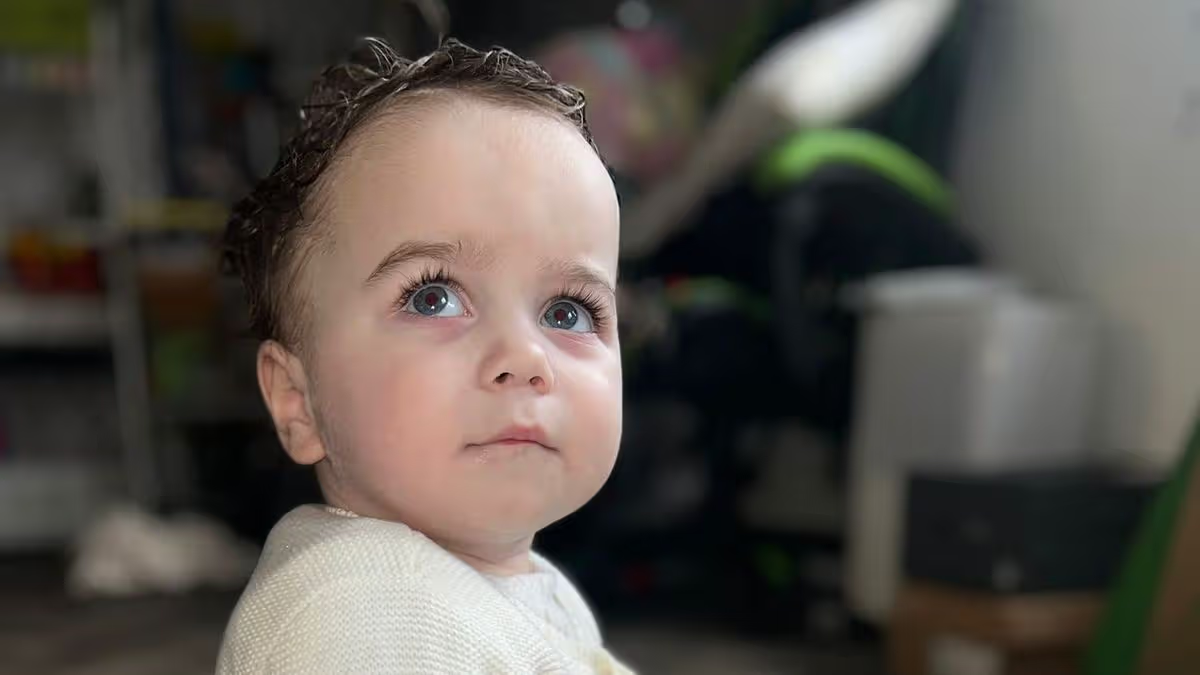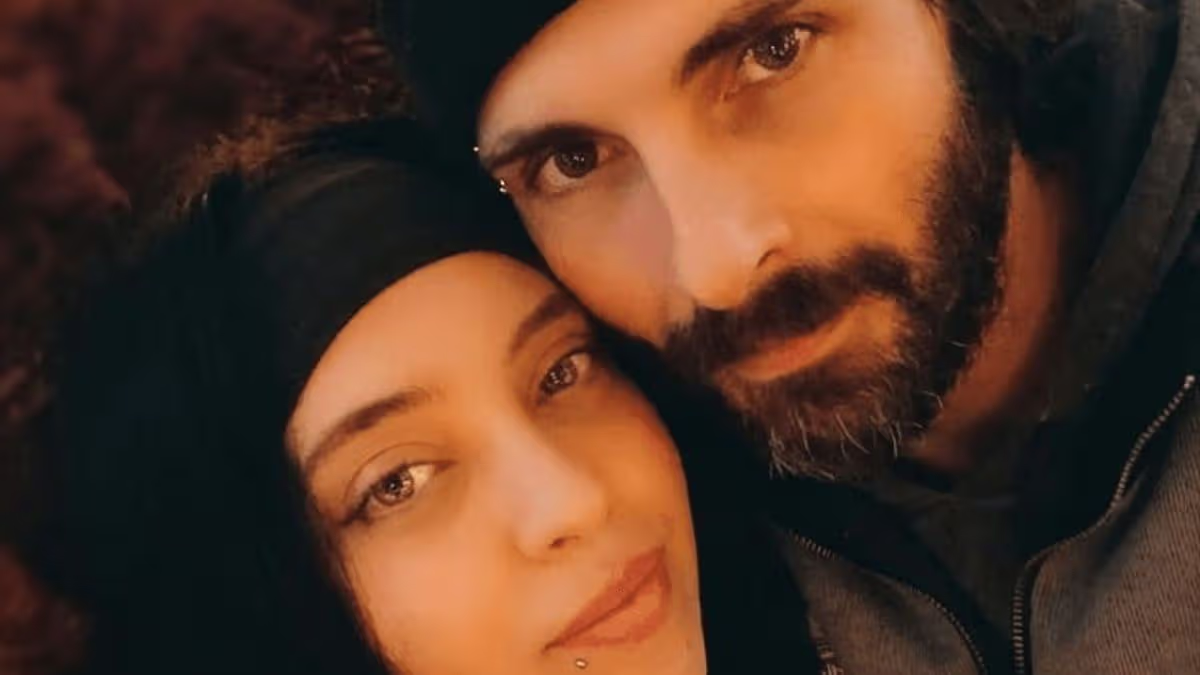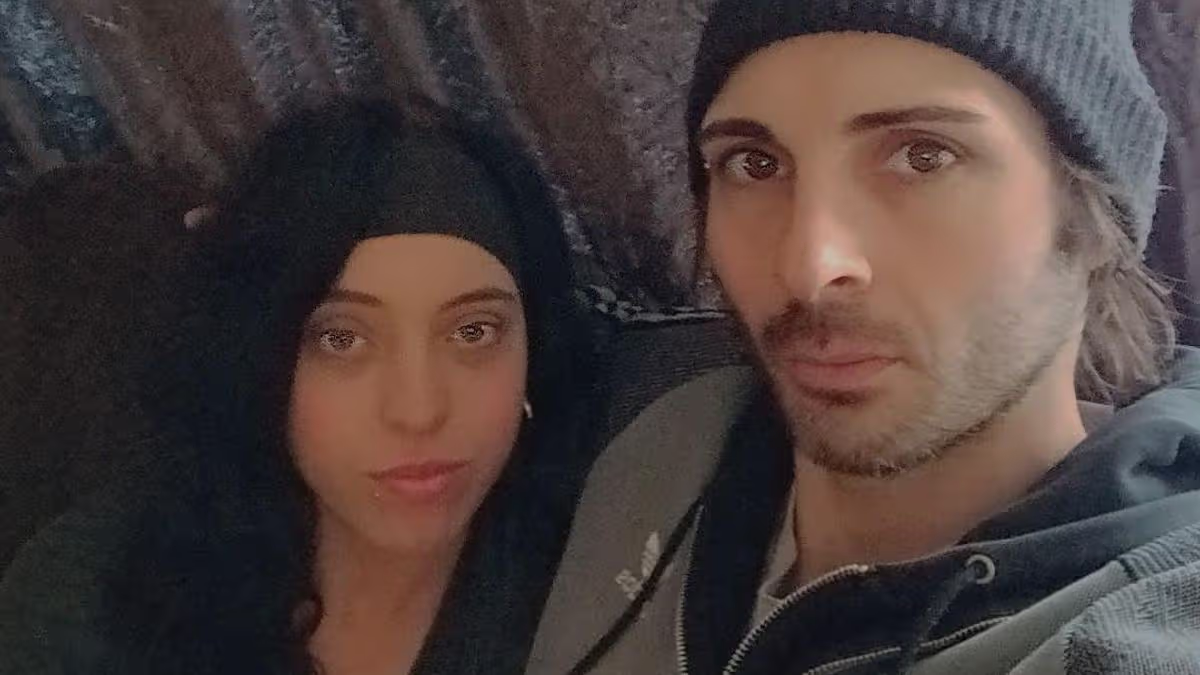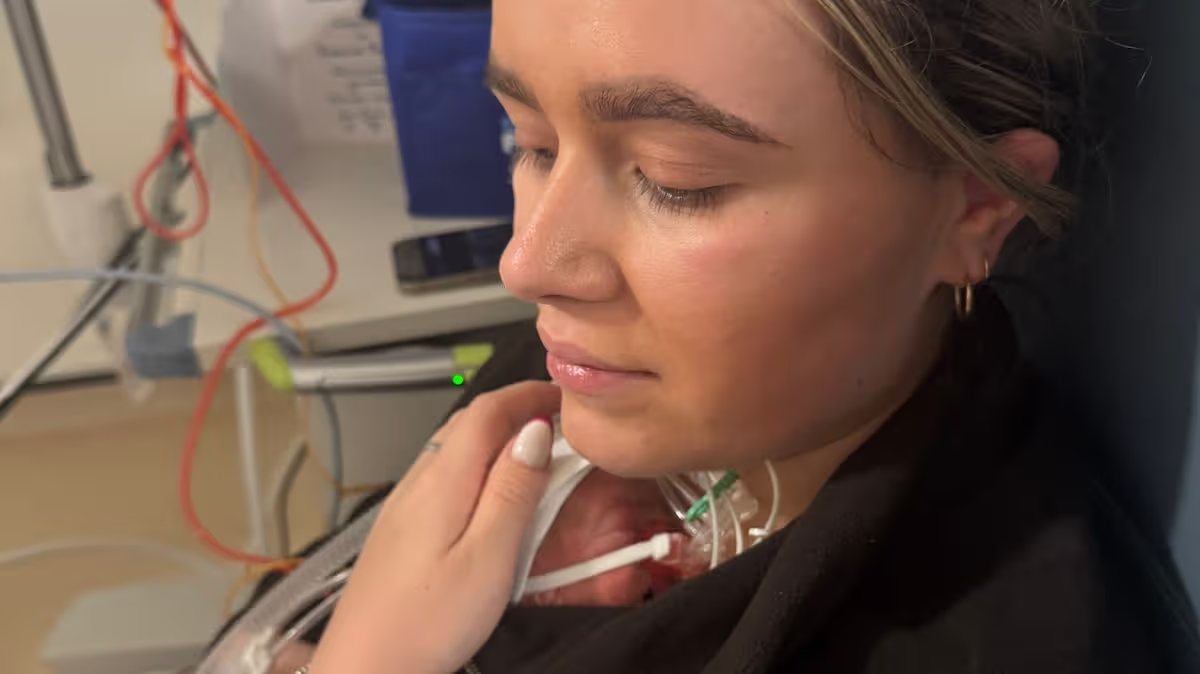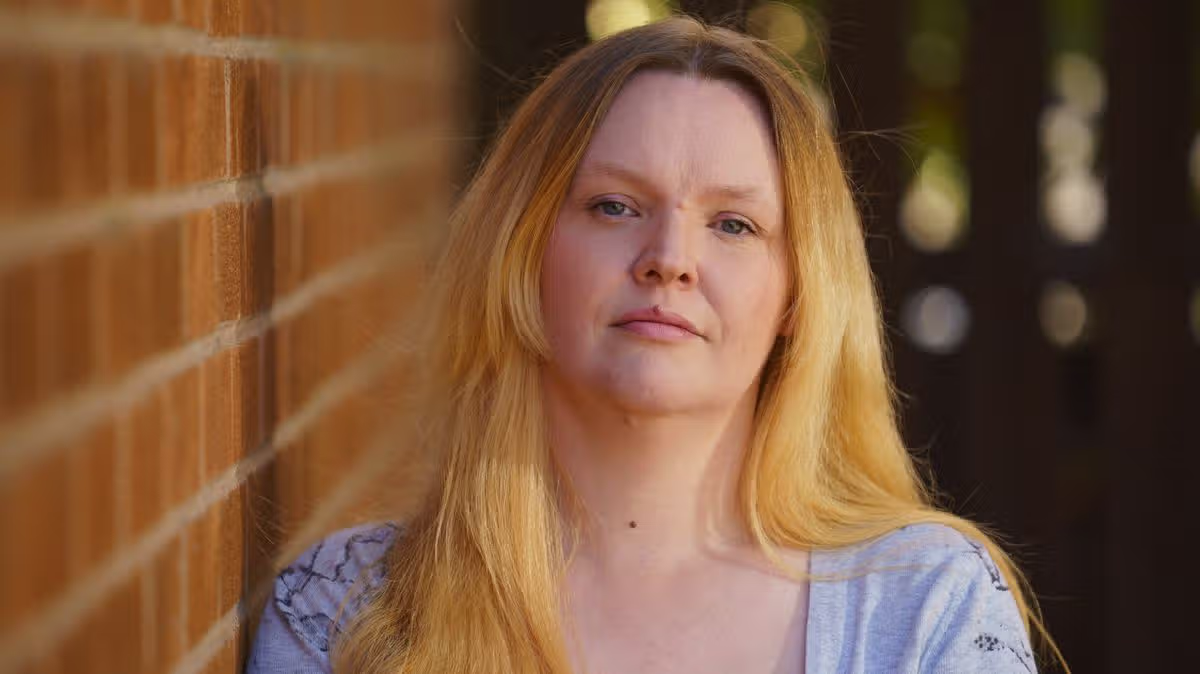
Kelly Whitehead missed 10 weeks of crucial care which she believes led to her son, Christopher, losing his life08:45, 05 Aug 2026A mum lost her baby after the NHS failed to provide basic antenatal care because they had not updated her details when she moved house. Kelly Whitehead, 37, is suing a hospital and says her son Christopher, who was stillborn at 41 weeks, would still be alive without the grave admin error.Kelly moved home but later discovered her updated details had not been correctly recorded across NHS services. She says it saw her miss 10 crucial weeks of antenatal care.Kelly received no medical appointments between the "critical period" that covered 31 and 41 weeks of pregnancy. Under NHS guidance, women who miss antenatal appointments should be followed up under “did not attend” procedures by offering alternatives such as home visits, GP liaison and escalated safeguarding procedures.Kelly says this did not happen and if she had been in hospital just a "week earlier" - she would still have her son today. Nottingham University Hospitals NHS Trust, which is already under scrutiny as part of the ongoing Ockenden Review, acknowledged in a letter to Kelly that "there was a missed opportunity to monitor Christopher’s growth on scan which may potentially have resulted in a missed opportunity to deliver Christopher earlier".Kelly, from Nottingham, said: "I want to make sure Christopher's name isn't forgotten. The hardest thing to live with is the years I've spent blaming myself."I will never forget being put into the labour ward, where I could hear the other babies crying and had to lie there thinking my end result was going to be very different."It just felt criminal because these are professionals and you trust them - and I felt forgotten by the system that was supposed to help me."Planning a funeral for the son I will never have will stay with me for the rest of my life. I have been in a state of survival and grief ever since."Before Kelly became pregnant with Christopher in September 2018, she gave birth to twins George and Felicity, who were born premature via an emergency C-section. Due to the traumatic birth, which has left her two children disabled with high-needs autism, Kelly was informed she would be classed as high risk.Initially she was provided with extra scans and monitoring which gave her reassurance that everything was progressing well - until she moved out of the local area. She said: "Neither of my twins weighed more than a small bag of sugar."We didn't know at points if we were going to be able to bring them home."Kelly said when she realised she had fallen pregnant again with Christopher, she wanted to push to have a planned C section as she was told it would be safer on her already damaged body. She said: "I was living in a single bedroom flat at the time, already trying to find somewhere to move to."It was scary, we already had two twins with high medical needs - but I found a renewed sense of hope in me when I knew Christopher was on the way, that maybe this can be the healing journey I need because I've spent so long blaming myself and my body for failing to carry them safely."My body is meant to be the safest place for them as far as we're told, but I wanted another chance to do right by my children."Despite going into the hospital asking for a planned c-section, Kelly said she was talked out of it by hospital staff - and left with a pamphlet feeling "half-reassured".She said: "They told me the VBAC was the best option but I wanted a c-section because I knew the recovery is the one I had done before."I remember leaving that room feeling as though I had been talked out of something I wanted so strongly to happen. They weren't listening to me."I felt they were cost cutting and talked me out of it because of the cost of a C section which required several trained members of staff."Not long after, Kelly moved to a larger council house on the other side of Nottingham, went into the hospital for a general appointment and provided the front desk with her new address and telephone number.Around half way through her second trimester, Kelly began struggling to keep up with caring for her seriously unwell twins, settling into her new flat and doing it all alone."I was really struggling and getting more and more tired," Kelly said. "I missed a few appointments because I couldn't get there on public transport - but when I tried to explain my situation they didn't seem to care, it just felt like, 'oh come to your appointments and get on with it'. I soon felt as though I fell through the cracks."Signposting could have happened, they could have offered home visits but they didn't make that happen - and I now have discovered they were sending letters out to my old address this whole time."Community services were apparently sending home visits out to my old address too, and recording it as no one in - they didn't even bother to check, call, or ask neighbours."Kelly said she tried to contact both the hospital and GP practice numerous times to no avail. She said: "I was just getting ping-ponged back and forth - my GP told me I wasn't even on their records as a patient anymore."It was painful and I felt forgotten and alone - so I stopped trying after a while. I thought things seemed fine, and I'll wait for next appointment - not realising the hospital hadn't updated that either. I felt like I was hitting up against a brick wall."As her pregnancy progressed, Kelly began to worry something was wrong. At almost 42 weeks pregnant, with no signs of labour, Kelly says she called the hospital again and spoke with someone from the birthing unit at the hospital on the phone.She said: "I knew the baby had turned and shifted and was sitting lower, I thought maybe I had a sign of mislabour, but when I spoke with this nurse they said it was Braxton hicks - sporadic, practice uterine tightenings that prepare your body for labour. I didn't know the difference."When Kelly called again just days later, she was told to come into the hospital - but they could not see her on that day, only the day after. When doctors tried to find Christopher's heartbeat and failed, they informed Kelly he had been stillborn."My world fell apart," Kelly said. "The hardest part was hearing that as far as they could tell, he had only been dead a few days. I believe if I'd been seen a week prior, he would still be there."In a follow-up letter from the hospital, they stated: “Because of the missed appointments, there was a missed opportunity to monitor Christopher’s growth on scan which may potentially have resulted in a missed opportunity to deliver Christopher earlier.”Kelly added: "I had to lay Christopher in his coffin just before the funeral and dress him in his new baby garments with his little monkey teddy, one that will stay with him forever and one that I keep with me."That's the last act I felt like I could do as his mother: the last time I was ever going to be able to touch or see him. I will never forget that - and now I just want to be able to buy him a grave stone."Kelly, who has struggled with depression and grief ever since, is now working with Fletchers Solicitors after she realised her son's death could have been prevented.The practice are working with a number of families who have raised concerns about maternity and neonatal care in Nottingham. Nottingham University Hospitals NHS Trust maternity services remain under scrutiny as part of the ongoing Ockenden Review, which began in 2022.The Trust is also subject to a separate ongoing police investigation into maternity care concerns. Clinical negligence solicitor Priya Singh, who is supporting Kelly with a legal case, said: “Kelly's experience is heartbreaking because no expectant mother should go 10 weeks without antenatal care during the final stages of pregnancy, particularly when national guidance is clear that missed appointments should trigger active follow-up and safeguarding measures."The Trust has acknowledged missed opportunities in her care, including opportunities to monitor Christopher's growth and potentially deliver him earlier, raising serious questions about how the systems designed to protect mothers and babies were allowed to fail."The Ockenden Review reinforced the devastating consequences that can arise when communication breaks down and continuity of care is lost."When a communication failure like this happens, the outcomes can be devastating and Kelly's experience is a stark reminder that those lessons must be embedded into everyday practice, not simply remain recommendations. Families deserve confidence that the changes being suggested will prevent other parents from suffering the same devastating loss.”Tracy Pilcher, chief nurse at Nottingham University Hospitals, said: "We would like to extend our sincere condolences to Ms Whitehead on the loss of her son, Christopher."Following a review of the care provided during Christopher’s birth in April 2019, it was identified that opportunities were missed for community and hospital maternity teams to effectively share information regarding missed appointments. We deeply regret that these opportunities were not taken.Article continues below"As part of the case review, several areas for learning were highlighted, including the need to strengthen processes, guidelines and procedures relating to non-attendance at appointments."We continue to regularly review and improve our procedures and provide ongoing staff training in this area."
'My baby died after hospital didn't realise I'd moved house'
Kelly Whitehead missed 10 weeks of crucial care which she believes led to her son, Christopher, losing his life
1,599 words~7 min read