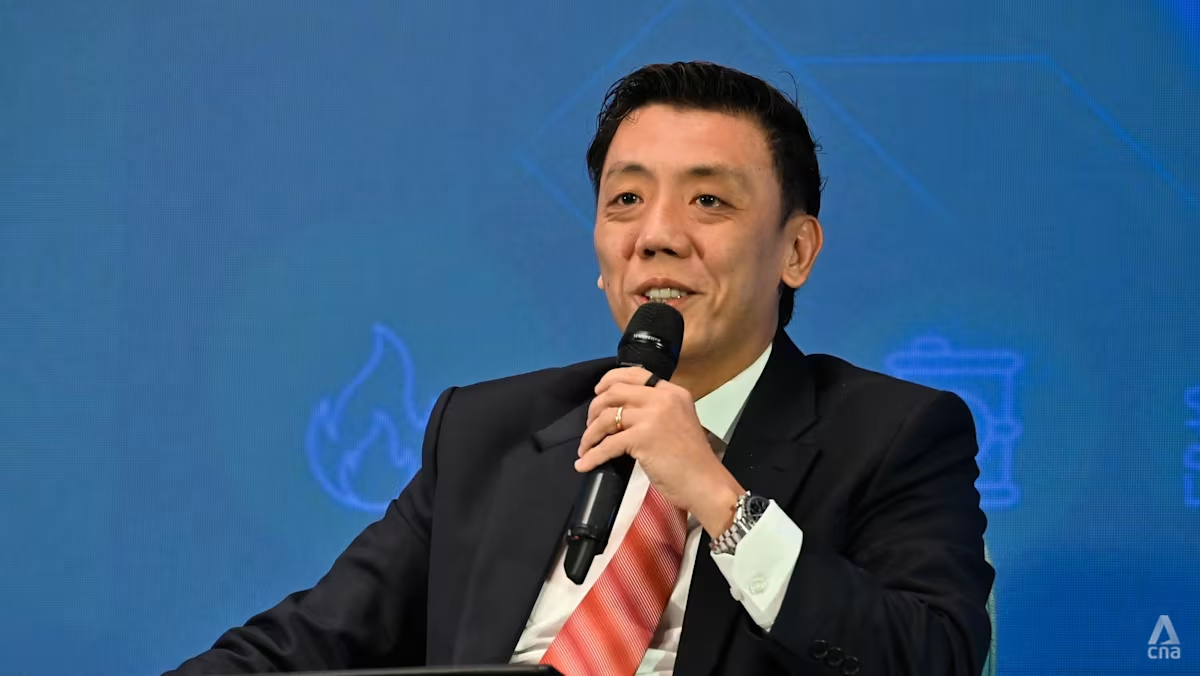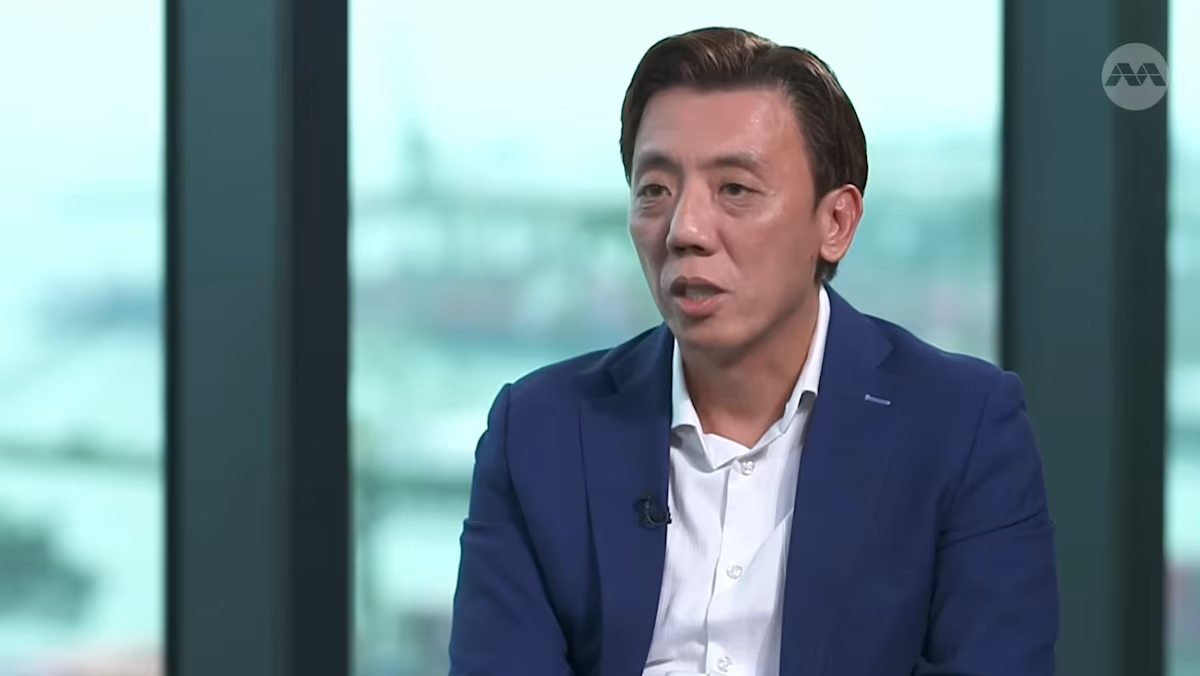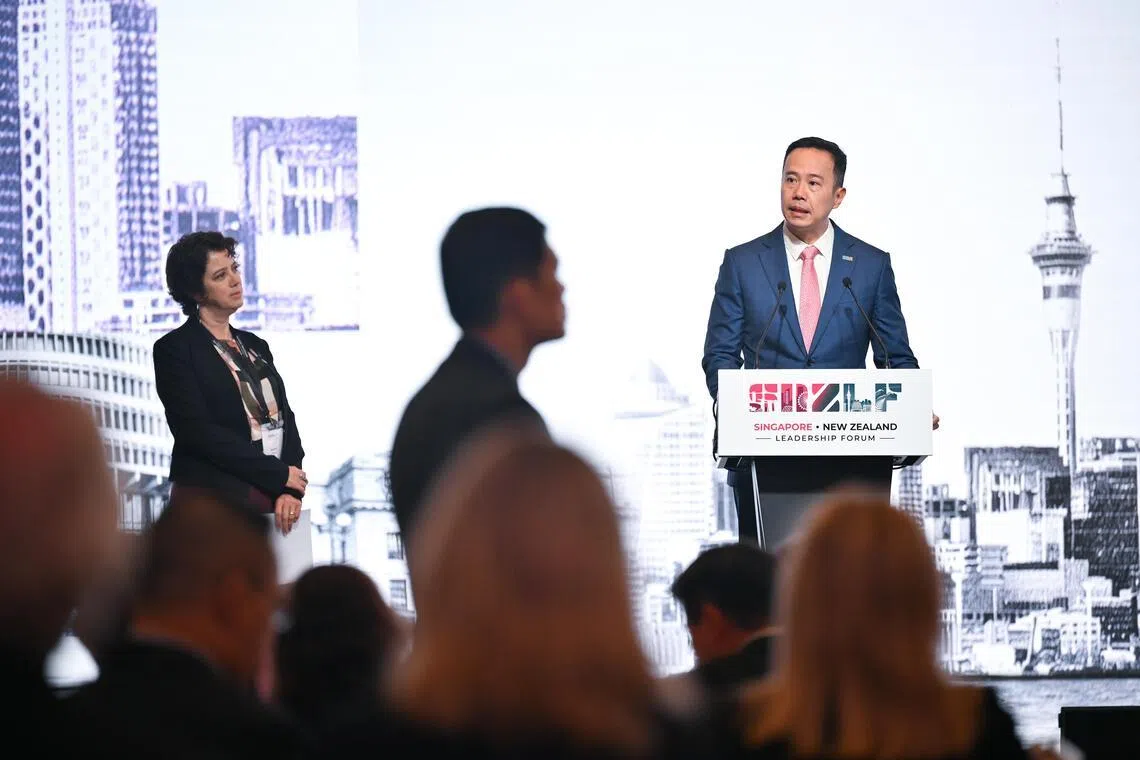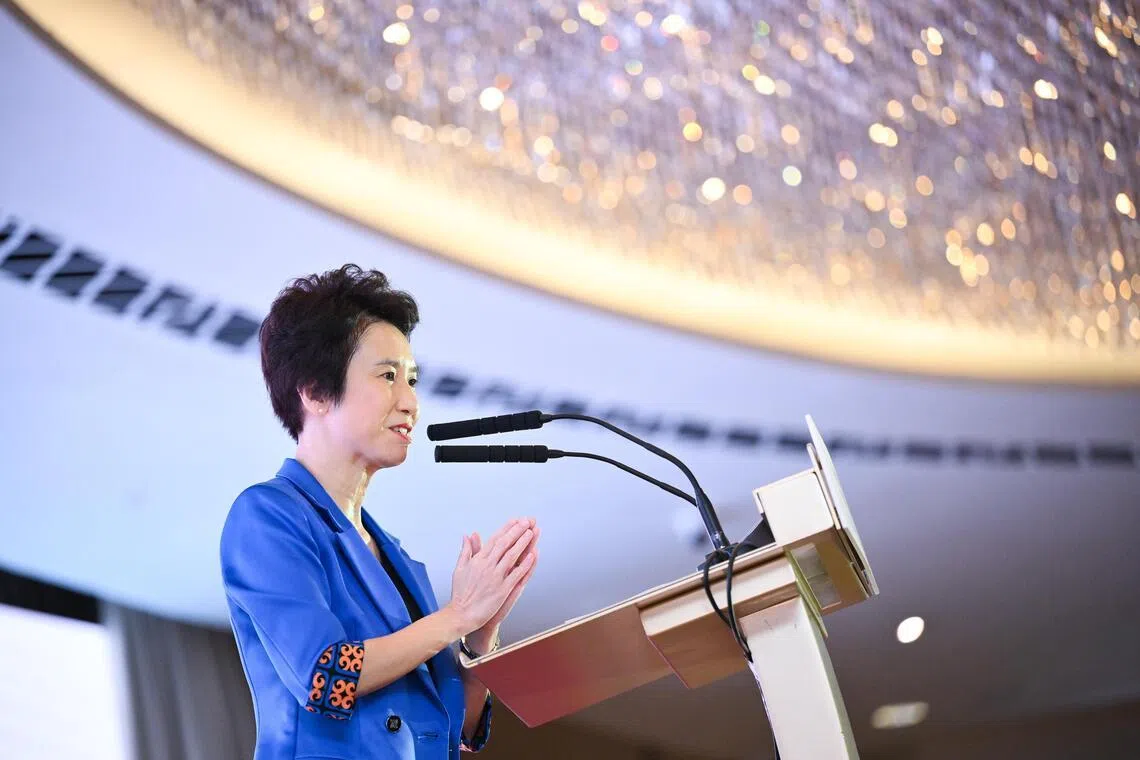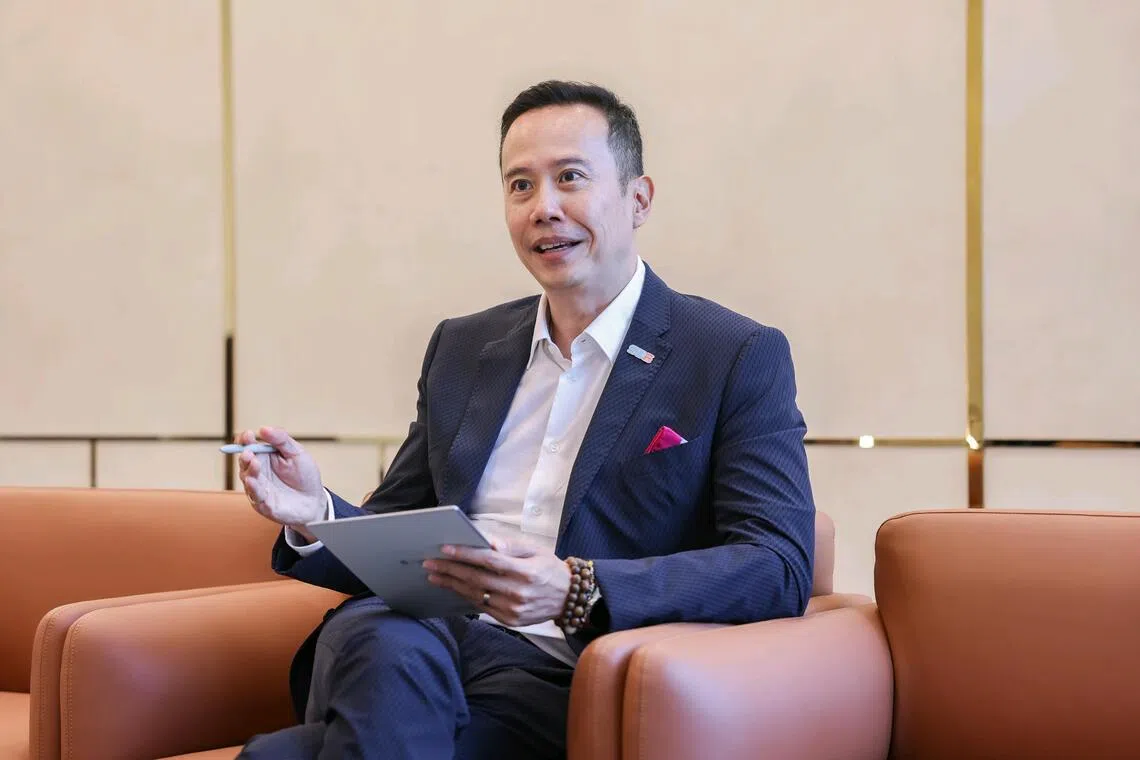
SINGAPORE – Expanding into overseas markets at a time when the business environment is uncertain might seem daunting, but it is a non-negotiable for firms, said Singapore Business Federation (SBF) chairman Mark Lee.In an interview with local media on Aug 3, Lee called on businesses to “double down on diversification” in an operating environment made more complex by US tariffs and wars in regions such as the Middle East.“The markets that you operate in today may no longer be that tenable due to tariffs or the fact that there would be certain barriers. What these barriers are, no one knows,” he said.“The whole idea is to have options on the table. That, I think, is getting more and more non-negotiable. You need to diversify your risk.”Lee, who is chief executive of Sing Lun Group, has seen the benefits of overseas expansion.In the early 2000s, his family-owned business, which was then focused on manufacturing textiles for brands such as US multinational retailer Gap, braced for more competition because China was then set to become a member of the World Trade Organization.At that time, Lee pushed to widen his company’s manufacturing footprint from Singapore, Malaysia and Sri Lanka to include Vietnam, Cambodia and China.“We didn’t know how intense the Chinese competition was going to be. We had to dilute our manufacturing costs,” he said.Lee also learnt a hard lesson on diversification in 2009, when the global financial crisis sharply hit economies in Asia.That was when a key client, which accounted for 40 per cent of Sing Lun’s profits, pulled its business.“I realised at that stage that I had to shut the Malaysia (factory). I had to shut Singapore because they contributed a large part,” Lee said.“I wasn’t prepared. That helped me to realise the importance of customer diversification.“I was very fortunate because five years later, the customer came back. But we cannot foresee that. At the end of the day, you must diversify your markets, you must diversify your supply chain. If not, you can really go belly up overnight.”Sing Lun continues to navigate disruptions today. Its factory in China now serves domestic clients and no longer supplies to the United States – a decision driven by a range of factors beyond US tariffs, Lee said.In Parliament on Aug 4, Lee stressed the point and said that protectionism is not the answer, even if supporting local businesses venturing overseas means opening the door to more competition from foreign firms at home.Businesses in Singapore cannot rely on domestic demand as their main engine of growth, he said, while acknowledging that widening the Republic’s hinterland is no free lunch.Lee, who is serving his second term as a Nominated MP, pointed to a recent study examining the impact of the Johor Bahru-Singapore Rapid Transit System (RTS) Link – released by the business chamber with the Restaurant Association of Singapore and the Singapore Retailers Association – which he said illustrates this trade-off.The study projected that Singaporeans will spend $1.05 billion more annually across the Causeway – nearly 40 per cent higher than the $756 million expected increase in spending by Johor visitors in Singapore – after the RTS Link begins passenger service in January 2027.Lee said Singapore’s response to this cannot be to stop people from crossing the border. The answer to that competition is not protection, he said, but to enable Singapore companies to become strong enough to compete.The RTS Link, set to have the capacity to transport up to 10,000 travellers an hour in each direction, will ease access to the Johor-Singapore Special Economic Zone (JS-SEZ).The JS-SEZ’s 3,500 sq km area is more than four times the size of Singapore and extends beyond Johor Bahru.Since the start of 2026, SBF has supported 79 Singapore companies in 108 projects across 44 overseas markets, in line with the Government’s push for businesses to internationalise in the face of a volatile operating environment.Lee was elected in June as SBF’s chairman for the 2026 to 2028 term, replacing shipping veteran Teo Siong Seng, who had said he would not seek re-election amid the US Department of Justice’s accusations of price fixing.Lee said the allegations against Teo have not resulted in an internal review at the SBF, or impacted how it is run.“The case is still ongoing. How the ruling goes, it’s yet to be seen,” Lee added.Meanwhile, the SBF is finding new ways to spur the Singapore economy, riding on developments like the RTS Link.The recent joint study recommended reinventing night-time offerings to increase tourists’ spending and length of stay in Singapore.“We will probably be working with different trade associations and chambers to look at the possibility of reigniting more night-time activities to attract people to come – not just Johorians, but as a whole,” Lee said.
Internationalisation is key for businesses: SBF chief
Singapore Business Federation chairman Mark Lee stresses that internationalisation and business diversification are non-negotiable amid global uncertainty. Read more at straitstimes.com. Read more at straitstimes.com.
789 words~4 min read