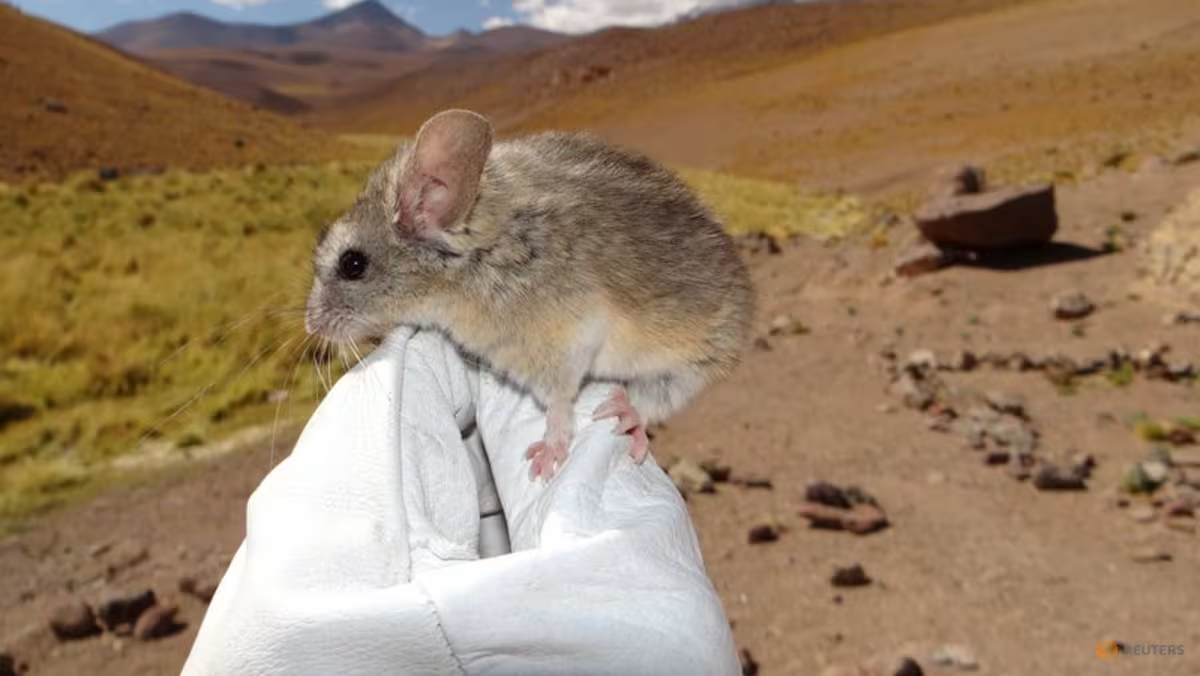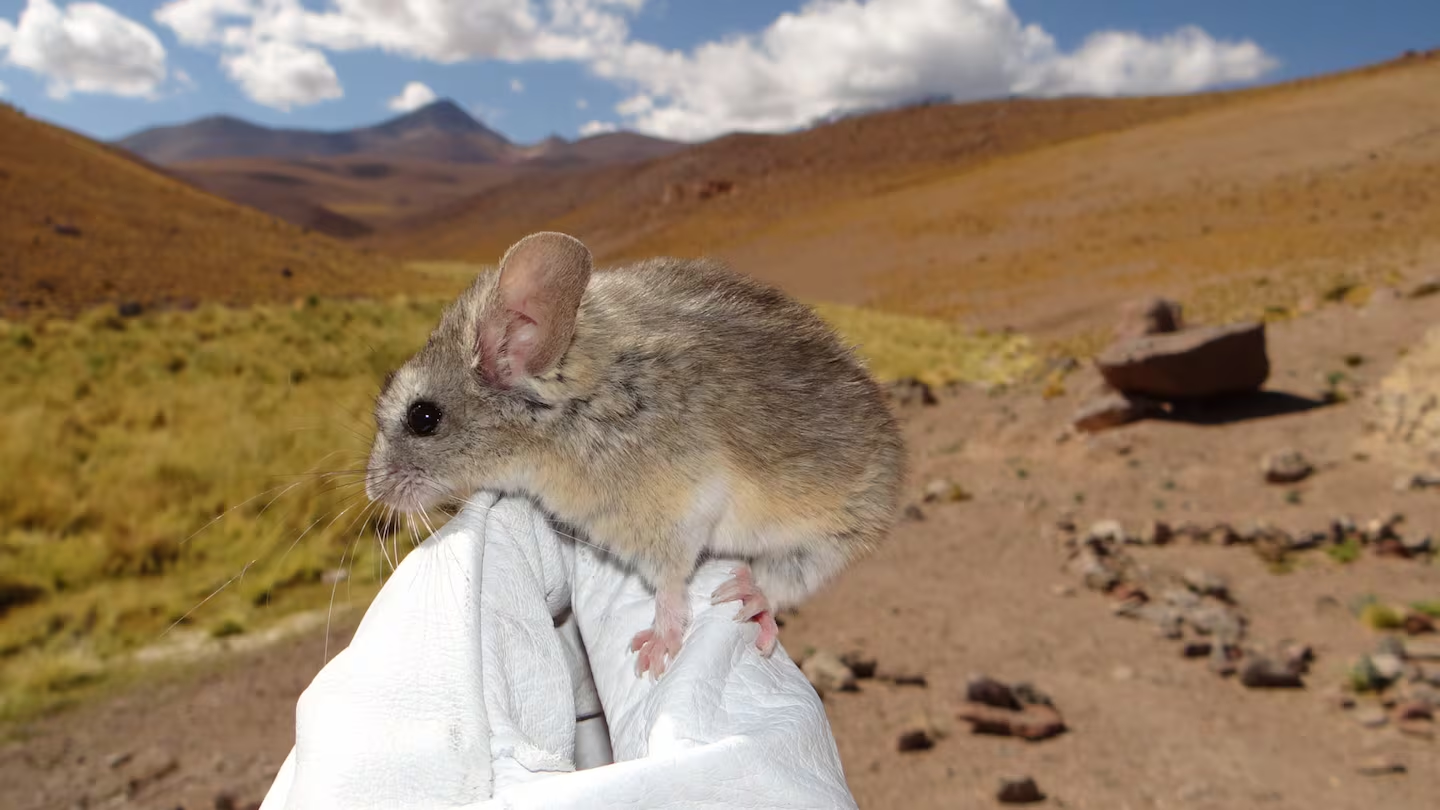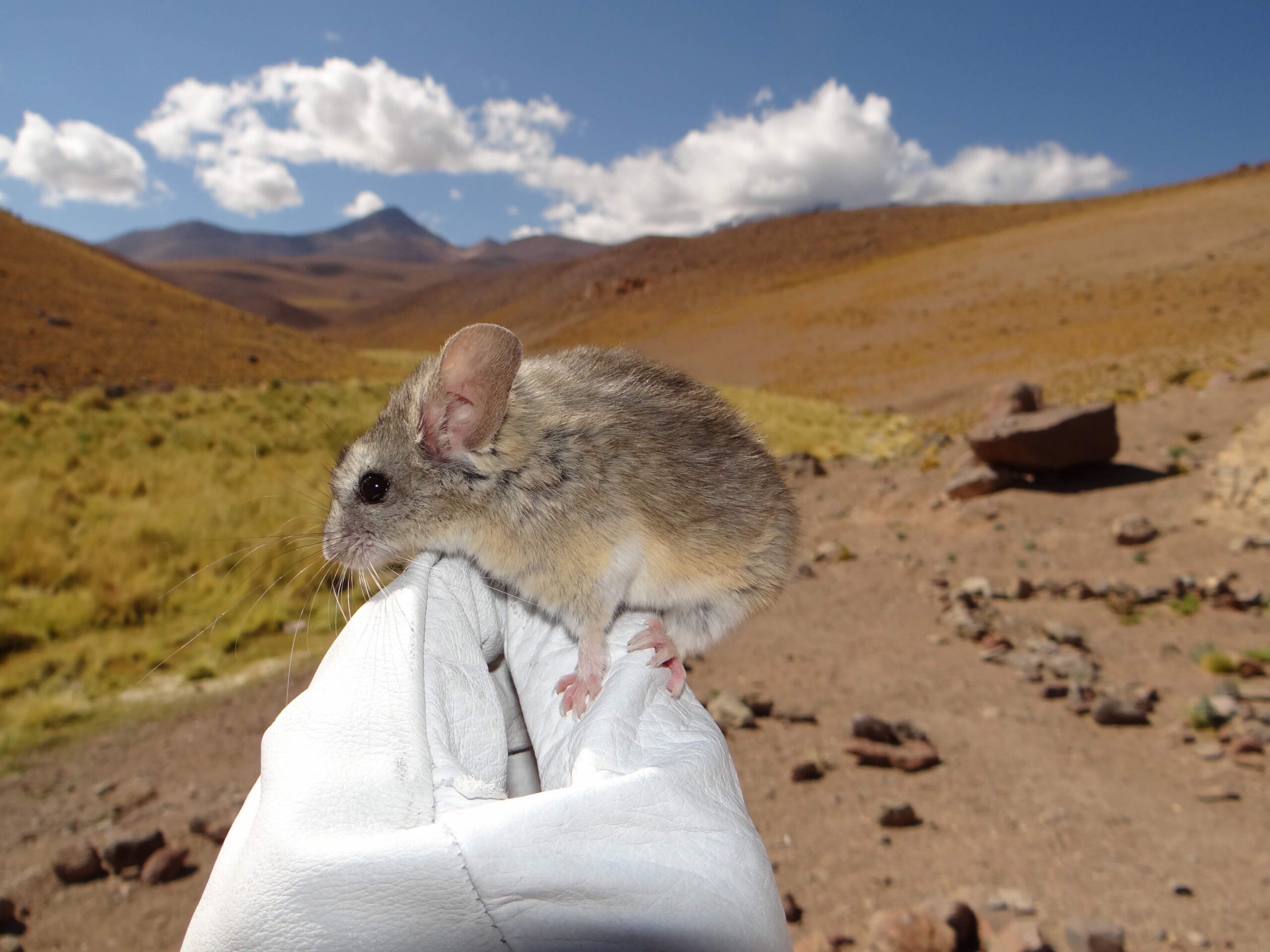
The Andean leaf-eared mouse thrives at extreme elevations where most other mammals wouldn’t survive. At these altitudes, oxygen levels are low; temperatures are permanently below freezing; and humans can’t survive for long without oxygen masks and insulated clothing. Yet, the mighty mouse is right at home, and scientists have now figured out the biological adaptations that allow it to live there, according to a new study.
The small, brown Andean leaf-eared mouse (Phyllotis vaccarum) occupies a wide range of altitudes. Some populations live on the summits of volcanoes in the central Andes Mountains at elevations above 6,700 meters (22,000 feet); others live at sea level along the desert coast of northern Chile.
To find out how the rodent lives in conditions uninhabitable to other vertebrates, the researchers collected 167 leaf-eared mice, from sea level to their highest elevation homes in the Andes. This allowed them to test the physiology of lowland Andean leaf-eared with their highland relatives.
In the laboratory, the researchers exposed the mice to simulated conditions of elevations up to 7,000 m (22,966 ft). They found that the highland Andean leaf-eared mice from the volcano summits were able to use oxygen more efficiently in their skeletal muscle and generate more body heat than lowland individuals.