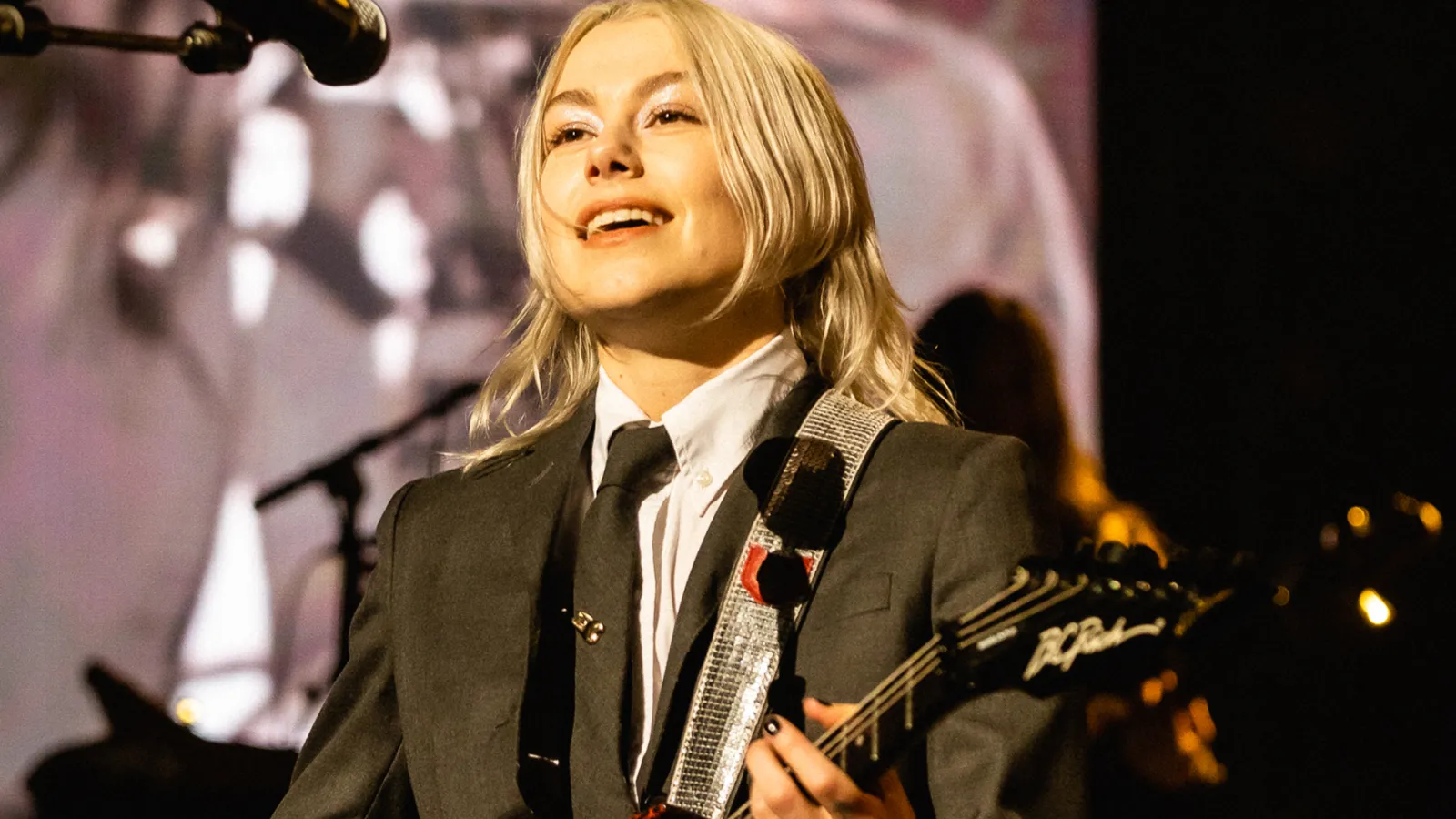
The last time Phoebe Bridgers put out a solo album was six years ago, at the height of the Covid pandemic: Punisher not only ended 2020 near the top of many critics’ best-of lists, it made the UK Top 10 and sold half a million copies in the US. The intervening period has proved just as commercially triumphant. With the release of their debut album The Record, Boygenius – the band she had formed with Lucy Dacus and Julien Baker – went from a kind of supergroup for Pitchfork readers to a genuine mainstream phenomenon: the album won three Grammys. Another win, for Bridgers’ collaboration with SZA, Ghost in the Machine, meant Bridgers left the 2024 ceremony the night’s biggest winner. Other pop stars called on her services: she sang on Taylor Swift’s re-recorded version of Red (and supported on the Eras tour), Lorde’s Solar Power and on Paul McCartney’s McCartney III Imagined.Phoebe Bridgers: Lost Weekend But to judge by Lost Weekend’s opening track, all was not well. The Outside depicts the singer crowd-surfing at a gig in Ohio – “they never let me hit the ground, way beyond the barricade” – and ending a song with her fist triumphantly raised. Then it adds a qualifier. “But I was on the outside, watching,” she sings, the sense of dislocation heightened by the fact that her voice is smothered by a vocoder, and the musical accompaniment – a sweet fingerpicked acoustic guitar figure – keeps vanishing into an ambient backing that sounds like static.It acts as a signpost to the rest of Lost Weekend, musically and lyrically. There is a lot of emotional turmoil in the latter, largely occasioned by the death of her father, with whom Bridgers had a strained relationship – though the album is dedicated “For Dad” – and the collapse of her high-profile relationship with actor Paul Mescal: the title track confirms that they were, as rumoured, engaged (“I’m supposed to be married but I called it off”). If you’re the kind of person who gets their kicks combing new albums for celebrity gossip, there’s plenty here to occupy you, not least a line in The Governor’s Waltz that could be interpreted as a swipe at Mescal’s current partner, Gracie Abrams (“she can pretend to be me / Since she took my place in my bed, on that stage”).Phoebe Bridgers: Lost Boys – videoThat said, you certainly don’t need to have a prurient interest in the vacillations of celebrity romance to feel the album’s emotional impact. The Governor’s Waltz would be an acutely drawn and genuinely affecting portrait of a relationship in its clingy death throes regardless of who the protagonists were; the clattering, chaotic Bobby is equally impactful in its depiction of the heady early days of a love affair, complete with a line about no longer requiring the services of a vibrator, or rather “a thing in a box I don’t fuck any more”. Still Standing, meanwhile, describes the disquieting sensation of being unable to muster the emotions you’re supposed to feel at the death of a parent: digging around for fond memories, Bridgers instead comes up with recollections of spousal abuse, distance and irrational behaviour and ends up “feeling indifferent, wearing black”. “I am my old man’s oldest son,” she sings at the album’s conclusion. “I fought the wall and the wall won.”Bridgers’ lyrics are brilliant throughout, but they’re matched by the individuality of Lost Weekend’s sound. At heart it’s a well-written Americana-infused indie singer-songwriter album, complete with the yearning melodies, acoustic guitars, mandolins and melancholy violin you might expect, made by people well-versed in such things: the cast list features Jack Antonoff, Bridgers’ Boygenius bandmates, Jon Brion, Alex G and Conor Oberst. But perhaps the most telling credits are those for “sound design”: for huge swathes of Lost Weekend, the standard indie singer-songwriter instruments struggle to make themselves heard amid waves of droning electronics, splinters of feedback and eerie wordless vocals.skip past newsletter promotionafter newsletter promotionSongs suddenly plunge into silence, or are drenched in swirling, dreamlike echo or subject to unexpected codas that often pull in different emotional directions. Kill Me’s closing desire to vanish – the lyrics reference the case of the Somerton Man, an unidentified body found in late 1940s Adelaide – is far more aggressive than the rest of the song; the title track explodes into chattering euphoria. The overall effect is disorientating, occasionally disturbing and really thrilling: there’s something really daring about the sound of Panorama, where a beautiful melody and a rustic banjo figure are almost completely buried under occasionally discordant murk.The result is a heady, potent, occasionally wrenching album, albeit one flecked with optimism. The most straightforward thing here is Never Going Back!, which repeats the line “the way it used to be is not the way it is” over and over to a charging indie-rock backing. As Above looks ahead to the point where the first flush of romance fades into familiarity, and gives it a positive spin: “You’re gonna take me for granted but I can handle it.”“The past is looking brighter all the time,” sings Bridgers on Liberty Tree. The path to get to that point has evidently been a trying one: Lost Weekend transforms it into a rich and rewarding journey.
Phoebe Bridgers: Lost Weekend review – long-awaited return is a thrilling, daring study in dislocation
After sweeping the Grammys and being scrutinised by the press, Bridgers deploys electronics and unsettling sound design to brilliantly evoke emotional turmoil
878 words~4 min read