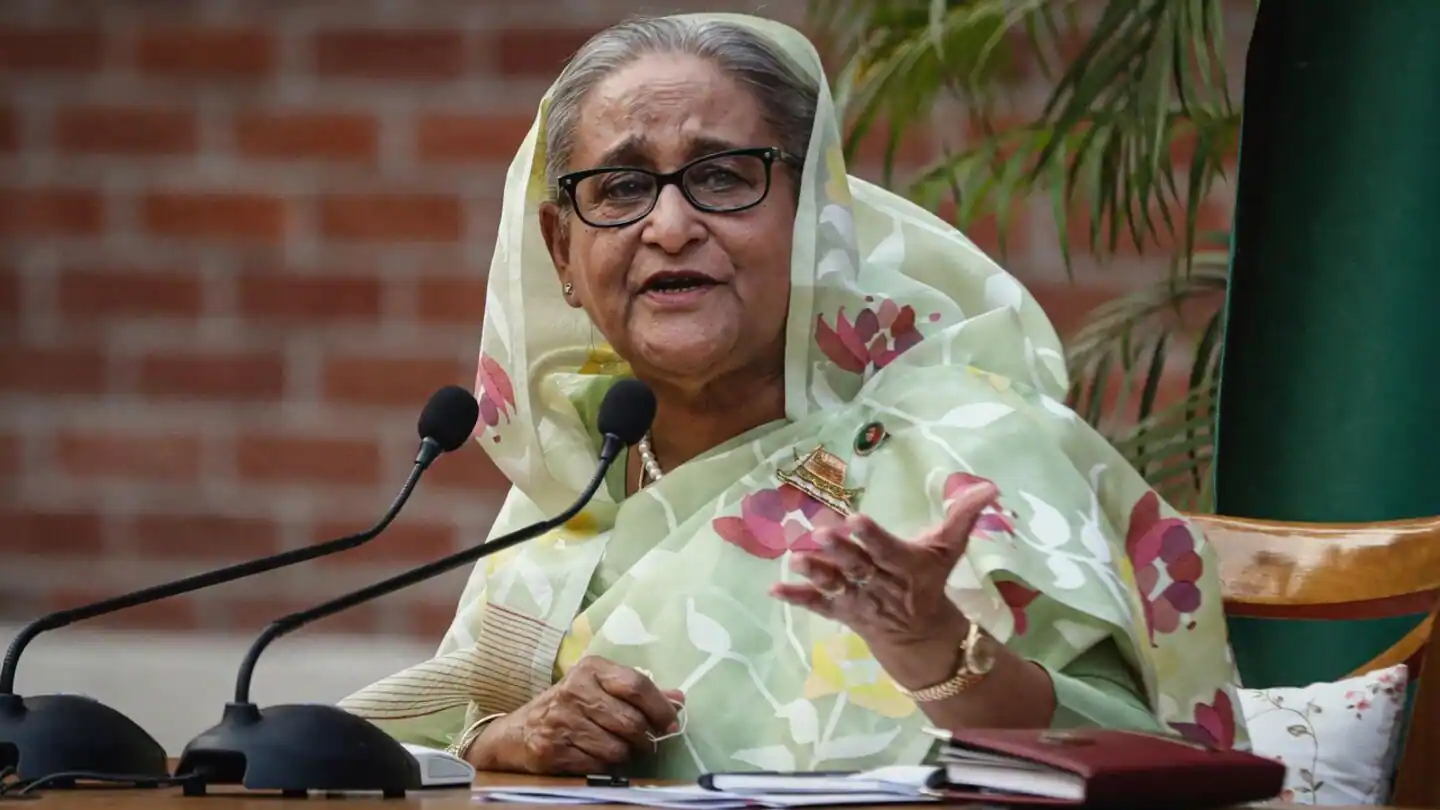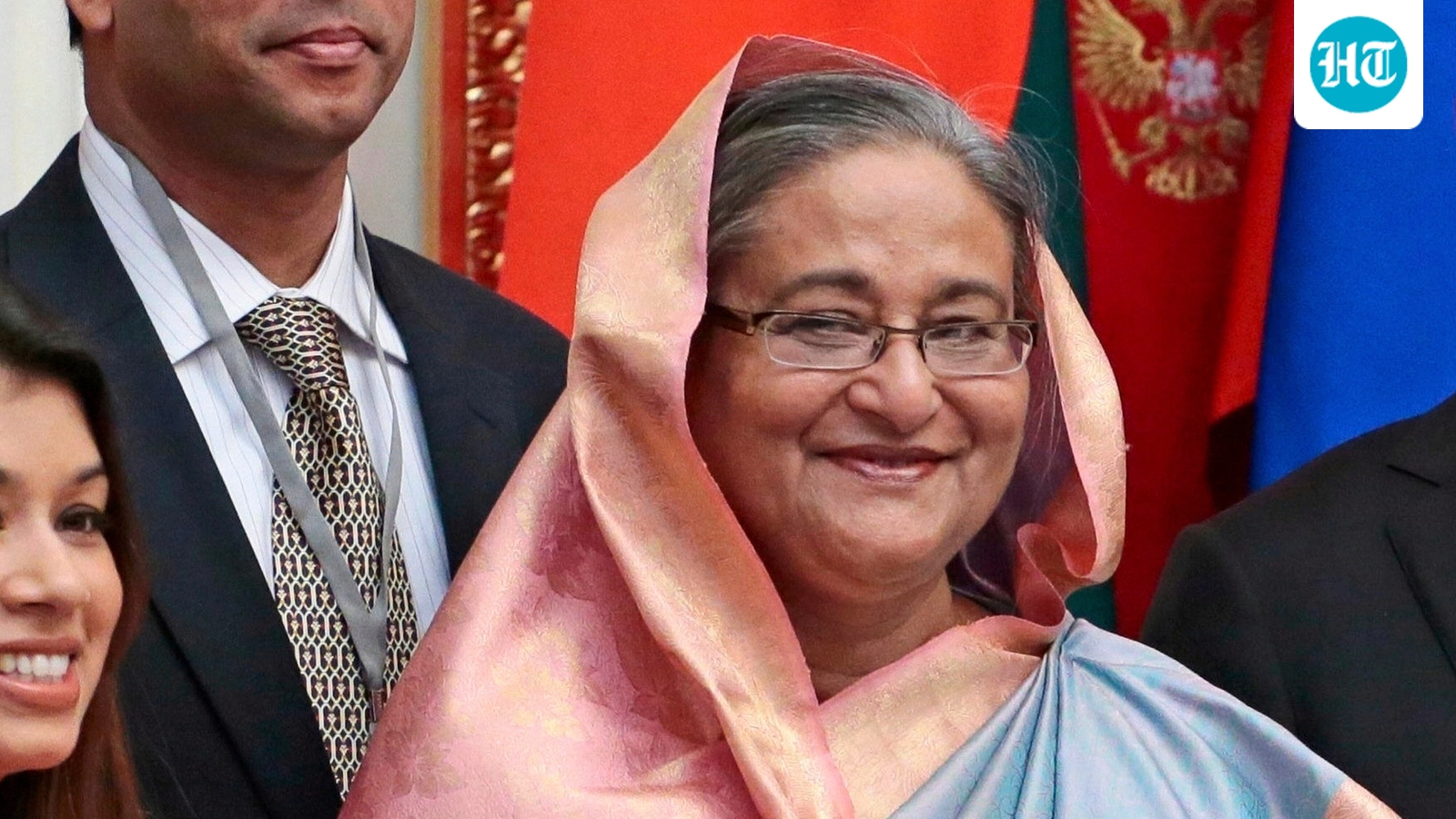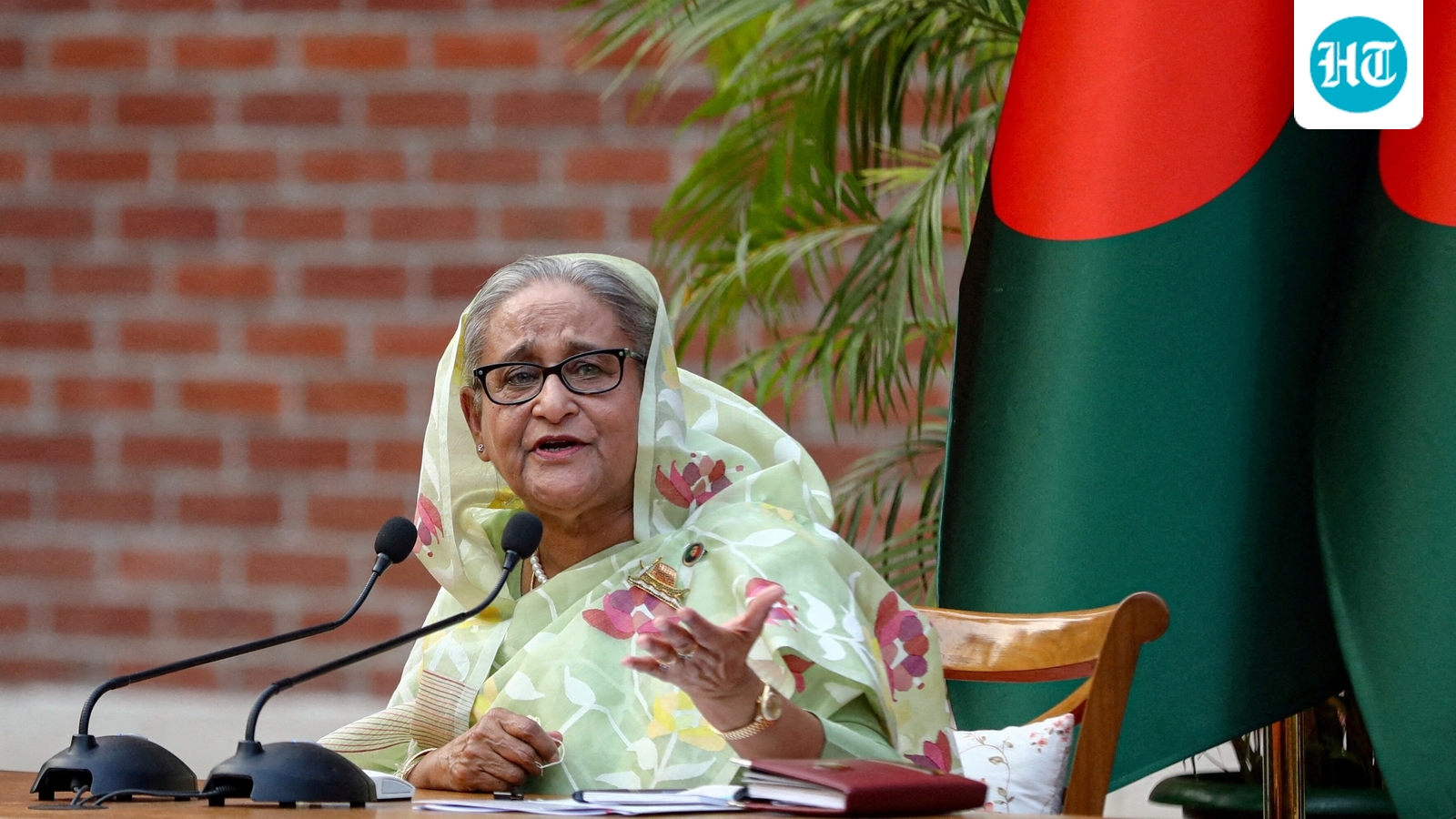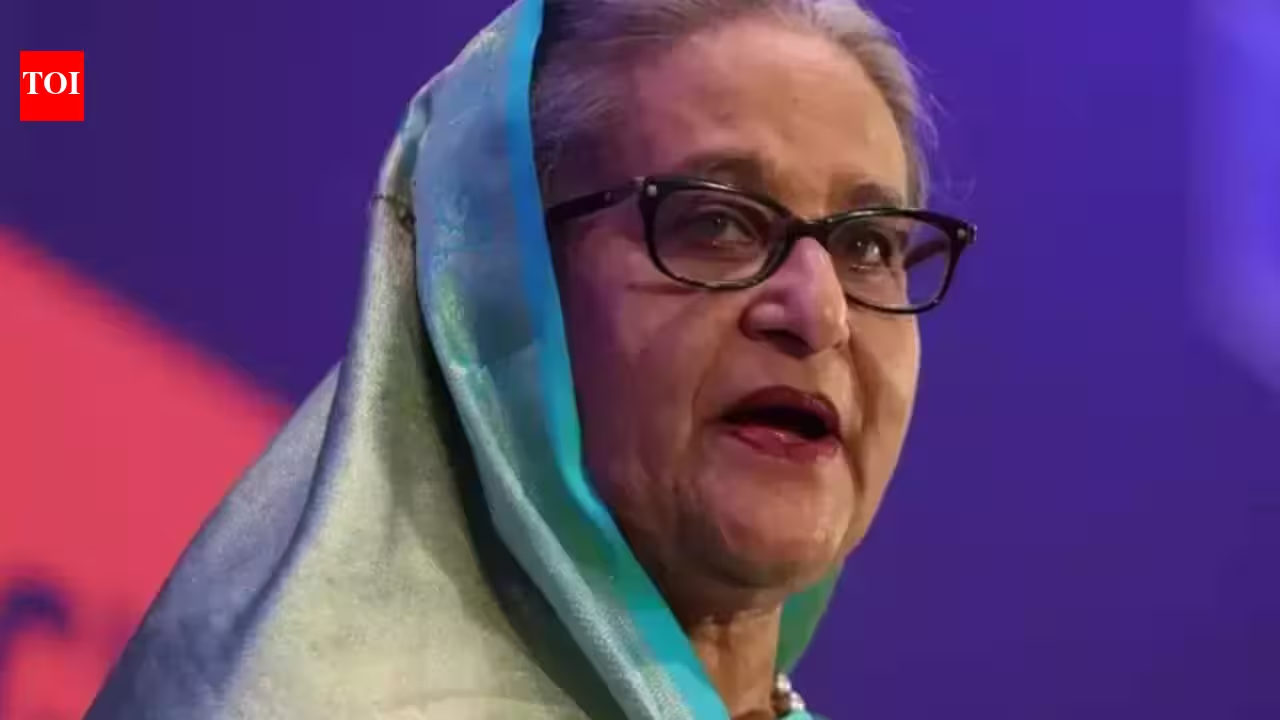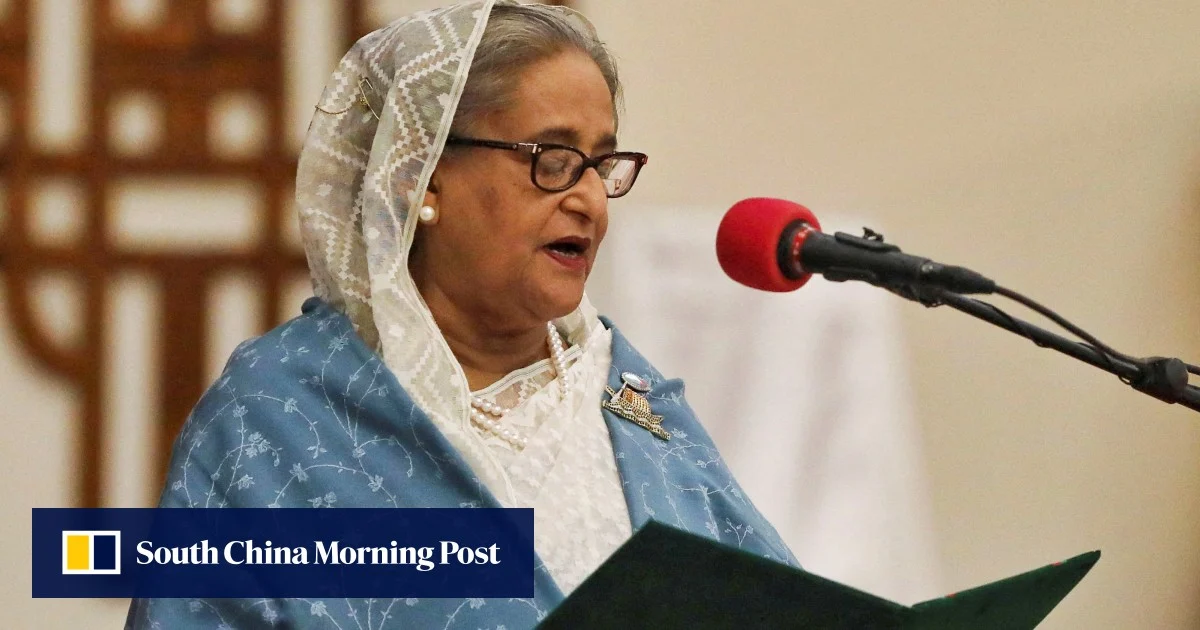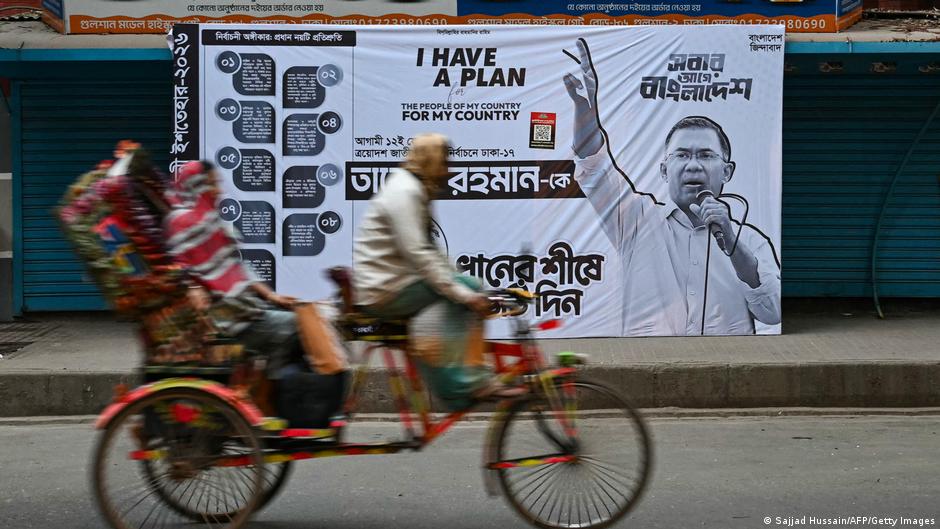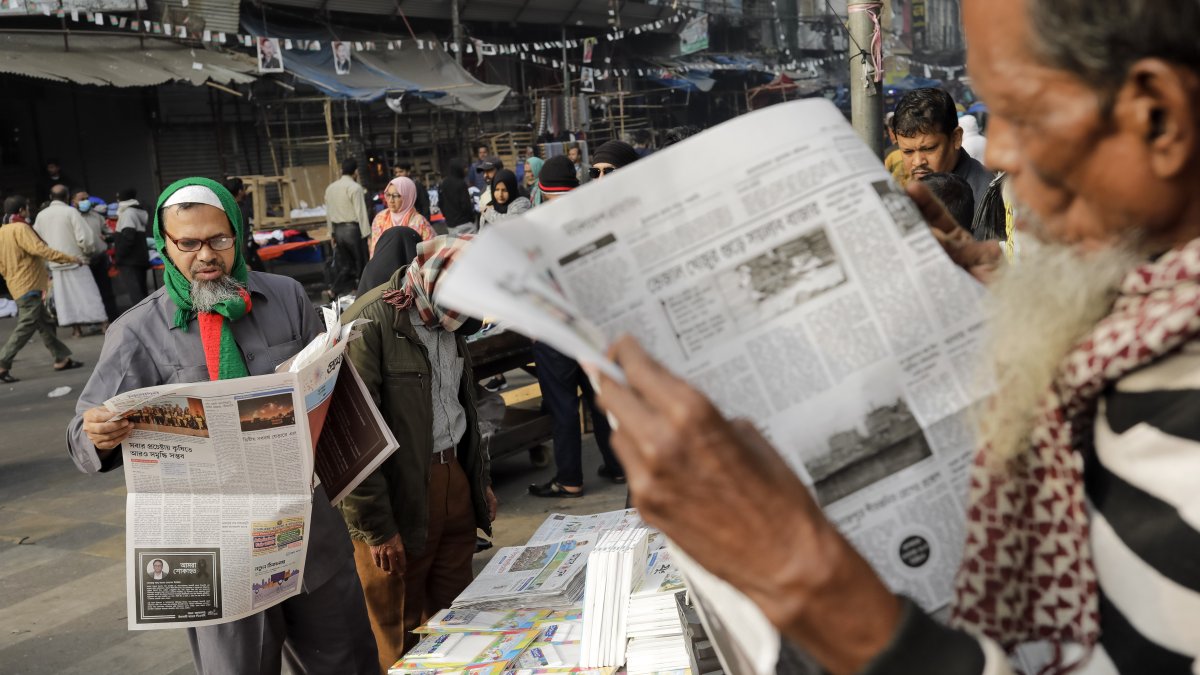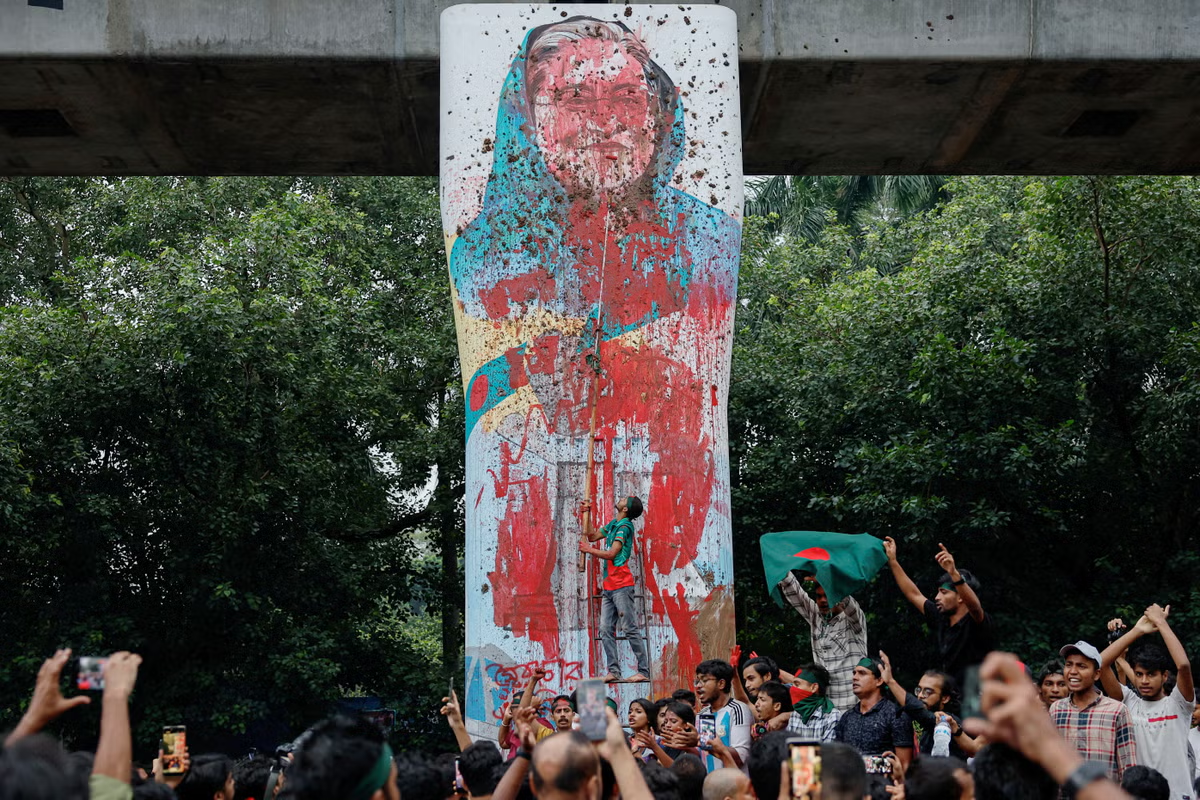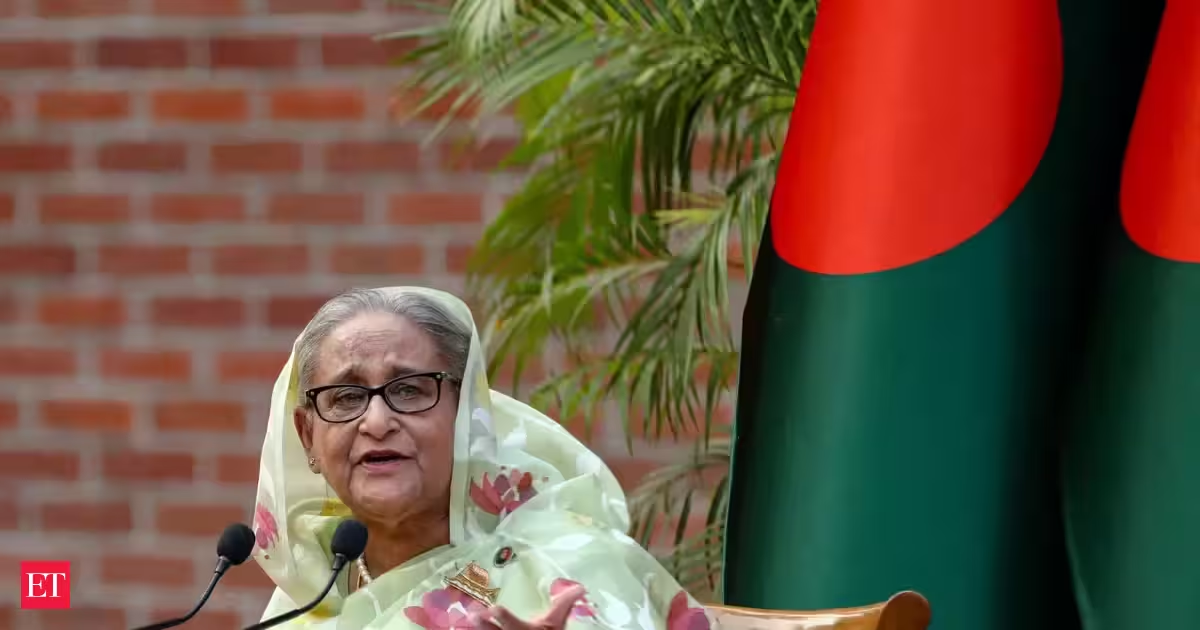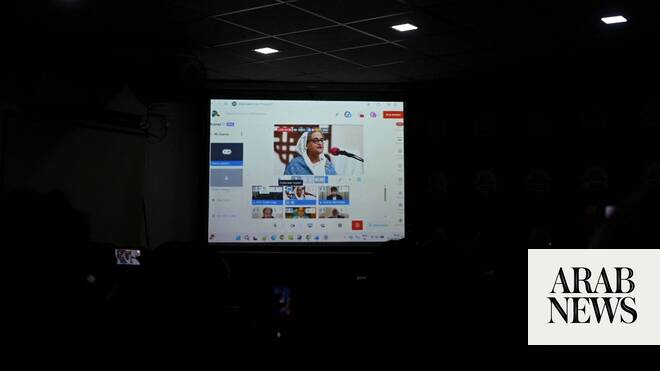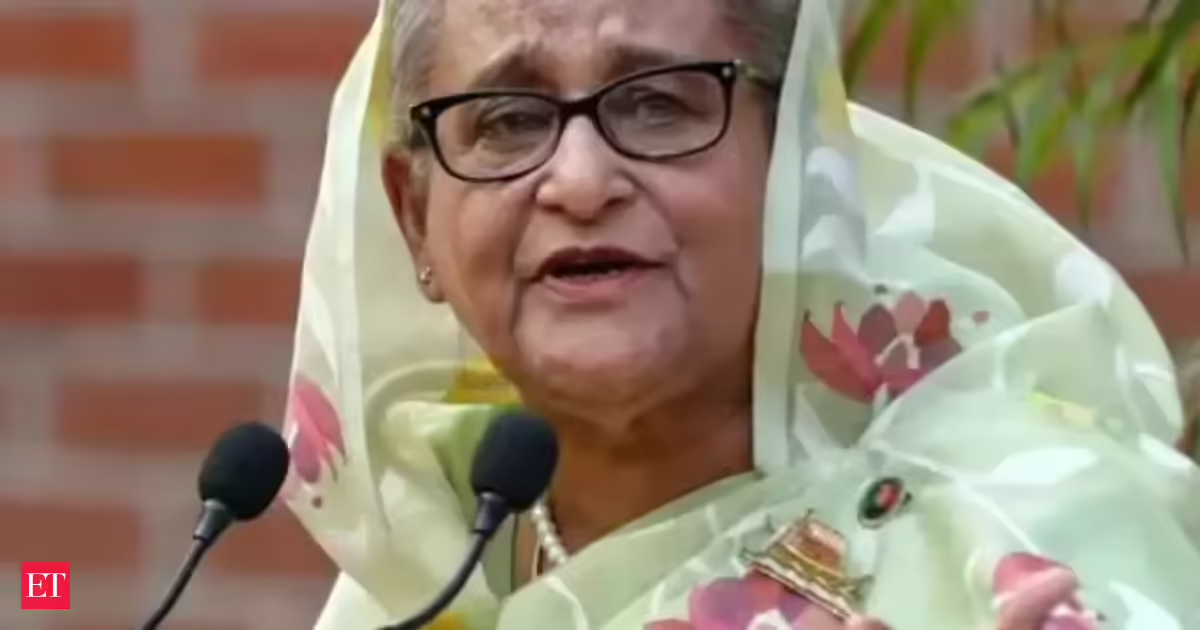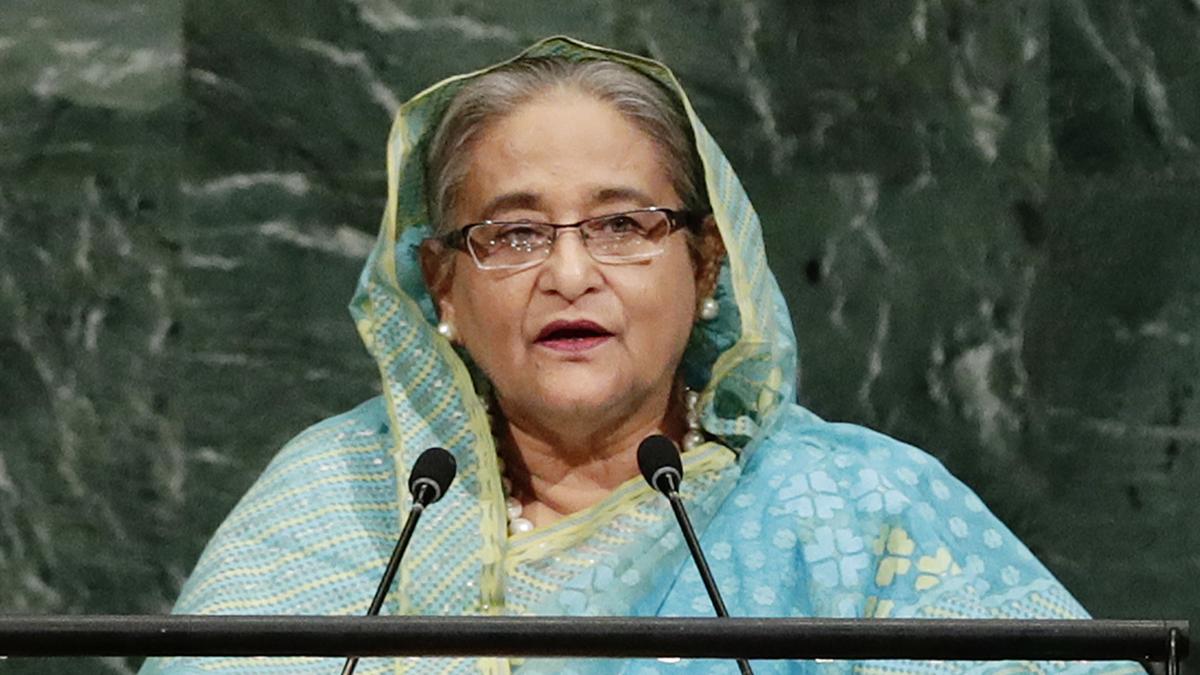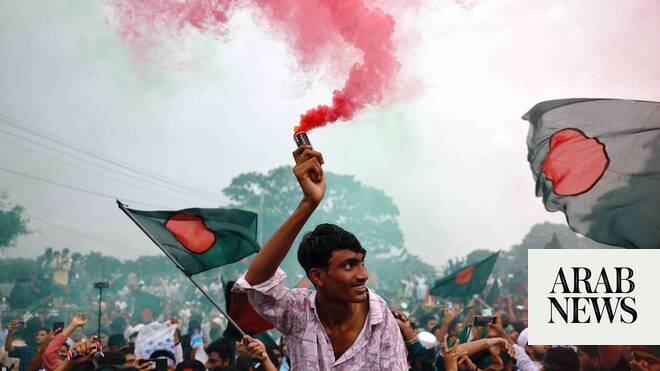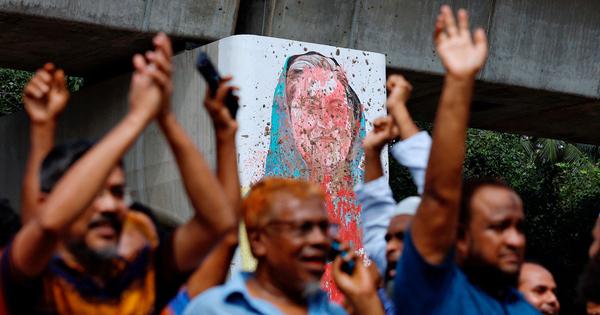
Wednesday, August 5, marks two years since Sheikh Hasina’s 15-year rule ended in a student-led uprising that raised hopes of a new political beginning for Bangladesh.The anniversary comes as Hasina is set to make her first public appearance since fleeing to India. She is scheduled to speak at an online event hosted by the Foreign Correspondents’ Club of South Asia in New Delhi, alongside her son, Sajeeb Wazed Joy, and cricketer Shakib Al Hasan.The planned appearance has drawn a strong response from Dhaka.State Minister for Foreign Affairs Shama Obaed Islam said Bangladesh had asked India to clarify its position, warning that allowing a “fugitive” to engage in political activities from Indian soil could affect the recent improvement in bilateral ties.“India has to be clear about its stance,” she said, adding Dhaka would pursue the matter diplomatically if needed.The issue is particularly sensitive because Bangladesh has been seeking Hasina’s extradition since she fled the country two years ago.Last year, a tribunal sentenced her to death for crimes against humanity over the 2024 crackdown, which the United Nations estimated killed up to 1,400 people. Hasina has rejected the verdict as invalid and has repeatedly declared in recent weeks that she intends to return to Bangladesh in December.For Dhaka, therefore, Hasina’s appearance in New Delhi is more than just another public event.It also serves as a reminder of how much has changed – and how much has not – since the July Uprising. While many of the movement’s promises remain unfulfilled, tensions over India’s role in post-Hasina Bangladesh have only grown.The fading of July’s other promisesThe 2024 movement was never just about removing Sheikh Hasina. It also promised a discrimination-free, democratic Bangladesh with stronger institutions and a political culture free from the patronage and impunity that many associated with the Awami League’s years in power.Two years on, many of those ambitions remain unrealised.At the beginning of July, Nahid Islam, who later founded the National Citizen Party, marked the uprising’s anniversary at the graves of those killed in Rayerbazar by acknowledging that Bangladesh had yet to become the country the movement had envisioned and that justice for many of those killed remained elusiveThe National Citizen Party’s own evolution reflects some of that disillusionment.Formed by student leaders at the forefront of the uprising, the party entered an electoral alliance with the Islamist party, the Jamaat-e-Islami, ahead of February’s parliamentary polls. The decision triggered resignations within the National Citizen Party and fuelled criticism that the movement had increasingly come under Islamist influence.Only a few days ago, Mahfuj Alam, a key leader of the student movement, alleged that the National Citizen Party had failed to meet public expectations after the July Uprising.The movement’s broader reform agenda has also made only limited progress.In February, when the country elected the Bangladesh Nationalist Party government under Tarique Rahman to power, it also approved a referendum endorsing the July Charter, which set out a roadmap for constitutional and institutional reform.Six months later, however, many of those changes have yet to be implemented, while disagreements over their scope and pace continue to test the broad political consensus that emerged after the uprising.Economist Anu Muhammad, who emerged as a prominent civilian voice during the July Uprising, argued in a recent column that much of the “enthusiasm, emotion and hope” generated by the 2024 movement had faded, blaming the resurgence of what he described as a fascistic style of politics.Left-leaning organisations have similarly argued that the uprising’s promises of social justice and accountability remain largely unrealised. Many women who emerged as prominent faces of the movement have complained of being sidelined in post-uprising politics while continuing to face abuse and harassment both online and offline.What has enduredOne feature of the post-Hasina period, however, has proved far more enduring: distrust of India and its perceived role in sheltering Bangladesh’s ousted leader.The border has remained a persistent source of tension. Rights group Ain o Salish Kendra recorded 34 Bangladeshis killed by India’s Border Security Force in 2025 and at least 10 more in the first half of 2026.Dhaka has also accused the Border Security Force of “pushing” thousands of people – including Rohingya refugees, Myanmar nationals and Indian citizens – across the border since August 2024.The issue dominated border guard talks in New Delhi in June, but ended without a breakthrough despite the Bangladesh Nationalist Party government’s election pledge to take a tougher stance on both border killings and push-ins.Diplomatic ties have also remained uneasy. Prime Minister Tarique Rahman’s decision to visit Malaysia and China, rather than India, on his first overseas trip in June drew considerable attention in the Indian media.Months later, Indian Prime Minister Narendra Modi’s invitation for Rahman to visit India and attend the BRICS summit remains, in Dhaka’s words, “under review”, reflecting the cautious state of bilateral relations.Even the gradual normalisation of people-to-people ties has been difficult. India resumed issuing tourist visas to Bangladeshis only on June 28, nearly two years after suspending the service following attacks on its diplomatic missions in the aftermath of Hasina’s fall.However, within days, visa applicants and travel agencies began reporting widespread fraud in the online appointment system, claiming it had become nearly impossible for ordinary applicants to secure slots to submit their passports at Indian Visa Application Centres. The issue remains unresolved.Hasina herself remains another source of friction. Since relocating to India, she has repeatedly made public remarks that Dhaka considers interference in Bangladesh’s internal affairs.This week’s diplomatic protest over her scheduled appearance at the event in New Delhi is the clearest indication yet that Bangladesh sees India’s willingness to host her public engagements as a test of bilateral relations.The controversy has been compounded by recent remarks from exiled writer Taslima Nasrin, who described the July Uprising as “disastrous”, argued that Hasina should be allowed to return to Bangladesh and called for the ban on Awami League activities to be lifted.If the July Uprising created one lasting political consensus beyond the approval at the fall of Sheikh Hasina, it may well be that Bangladesh’s relationship with India now occupies a far more contested place in the country’s politics than it did before August 2024.How New Delhi responds to that shift could shape bilateral ties for years to come.Jannatul Naym Pieal is a Dhaka-based writer, researcher and journalist. His email address is jn.pieal@gmail.com.
Two years after the July Uprising, Bangladesh’s only political consensus may be distrust of India
New Delhi’s role in giving shelter to ousted leader Sheikh Hasina has prompted many across the border to view its larger neighbour with suspicion.
1,058 words~5 min read