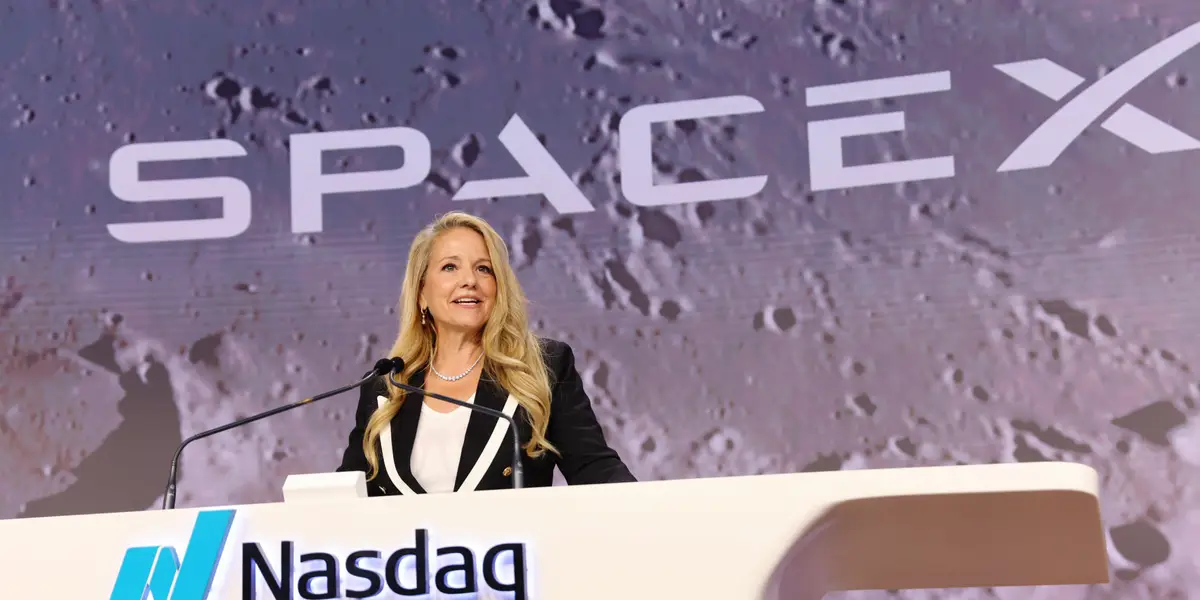
Aug 4 : SpaceX's ambition to build a full-fledged mobile service rattled investors in the U.S. wireless sector on Tuesday, as the company outlined plans that could eventually pit Starlink against industry leaders Verizon, AT&T and T-Mobile.SpaceX acquired 65 megahertz of wireless spectrum licenses from EchoStar for a total of $19.6 billion through two deals announced last year, giving Starlink airwaves to expand into mobile services."The spectrum that we purchased from EchoStar does have terrestrial components, so we definitely intend to build out terrestrial," SpaceX President Gwynne Shotwell said during a post-earnings call on Tuesday.Shotwell said the company will build the infrastructure needed to make Starlink "a true mobile service" and expects to win "quite a few" customers from the Big Three wireless carriers.
The remarks mark SpaceX's clearest indication yet that it intends to pair its satellite network with ground-based infrastructure to offer a broader wireless service, moving beyond its current direct-to-device service for areas without cellular coverage.Shares of Verizon, AT&T and T-Mobile fell between 2.2 per cent and 4 per cent in after-hours trading. Starlink and SpaceX's broader connectivity operations remain the company's primary financial engine, underpinning Musk's expensive push into AI, data centers and next-generation rockets.Analysts, however, cautioned that turning Starlink into a nationwide wireless business would require years of investment and execution.The three largest U.S. wireless carriers have invested hundreds of billions of dollars over three decades into acquiring spectrum licenses, building and upgrading their networks, and spending heavily to attract and retain subscribers — advantages analysts say would be difficult for SpaceX to match."Unless Starlink can secure an MVNO (Mobile Virtual Network Operator) agreement from one of the carriers, which would provide a baseline of coverage, it's extraordinarily challenging to imagine a direct-to-consumer service from Starlink that could be competitive with carrier services in the next five years," said Craig Moffett of MoffettNathanson.An MVNO provides wireless service without owning a nationwide cellular network. Instead, it leases network capacity from an existing carrier and sells service under its own brand.Shotwell said she didn't want to talk about how much it would cost to build out mobile services because the company has "great and new ideas" on how to do it, which she said would be capital efficient."It makes no sense for SpaceX to try to replicate what terrestrial players have built over 30 years with 1000 MHz between them, with 65 MHz," David Barden from New Street Research said. Some investors said the market may be underestimating the potential disruption. "I definitely think what Elon said on the call about investors undervaluing that side of the business is absolutely correct in my mind," said David Wagner, portfolio manager at Aptus Capital Advisors.Wagner said traditional wireless carriers risk being outpaced by SpaceX's willingness to innovate.Under its partnership with T-Mobile, SpaceX uses Starlink satellites to provide direct-to-cell connectivity for compatible smartphones outside traditional cellular coverage, complementing rather than competing with the carrier's network.