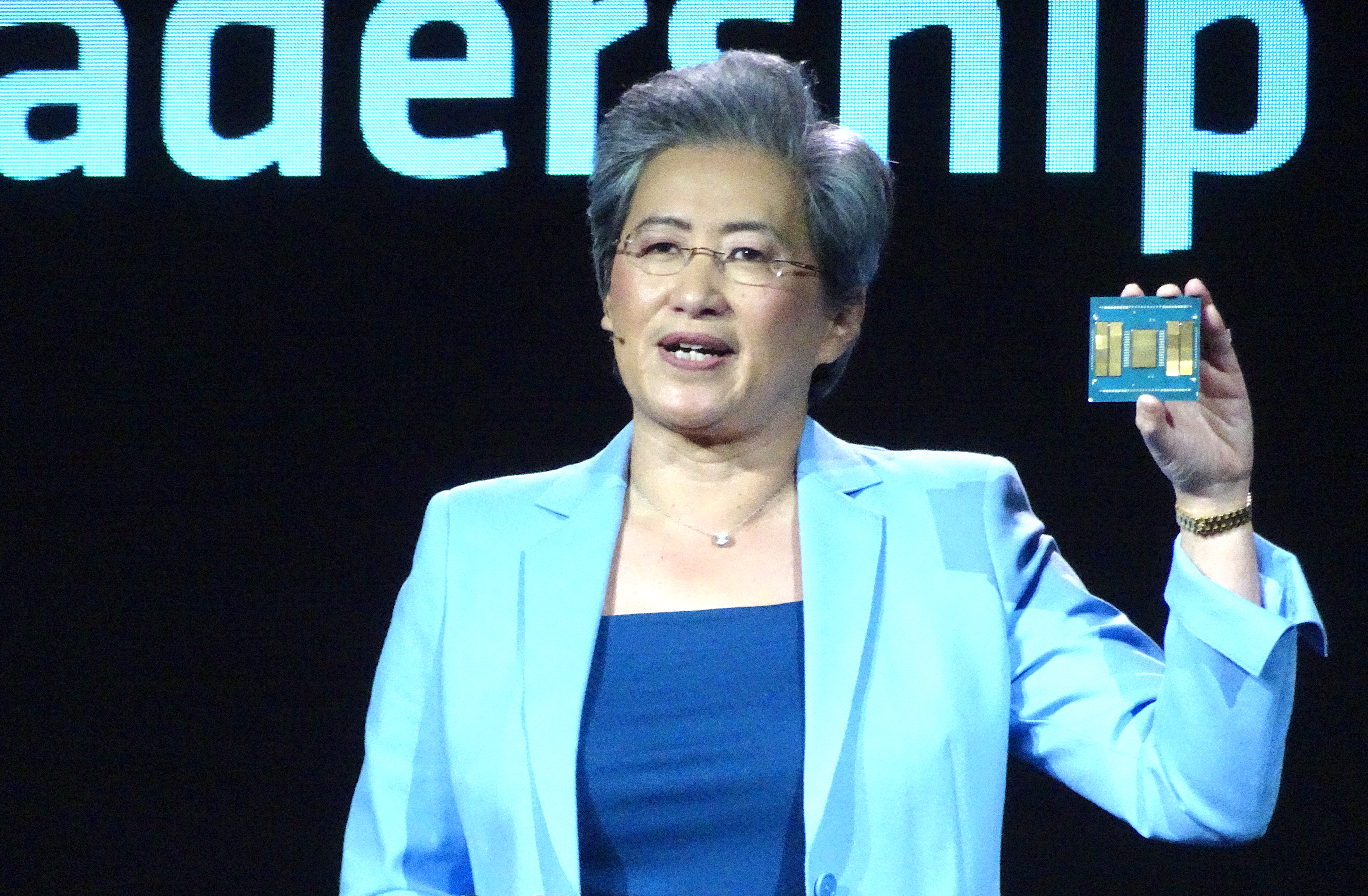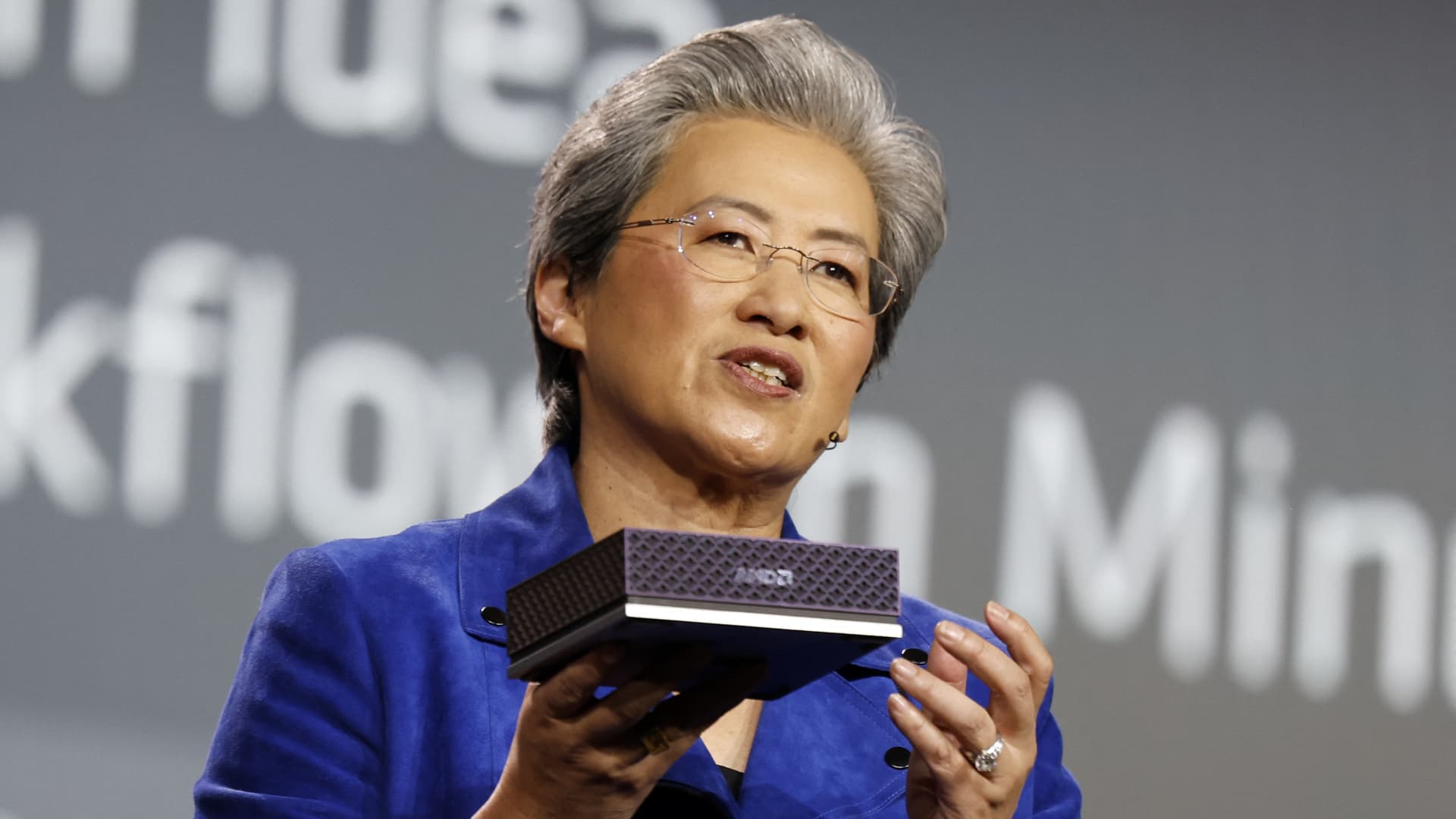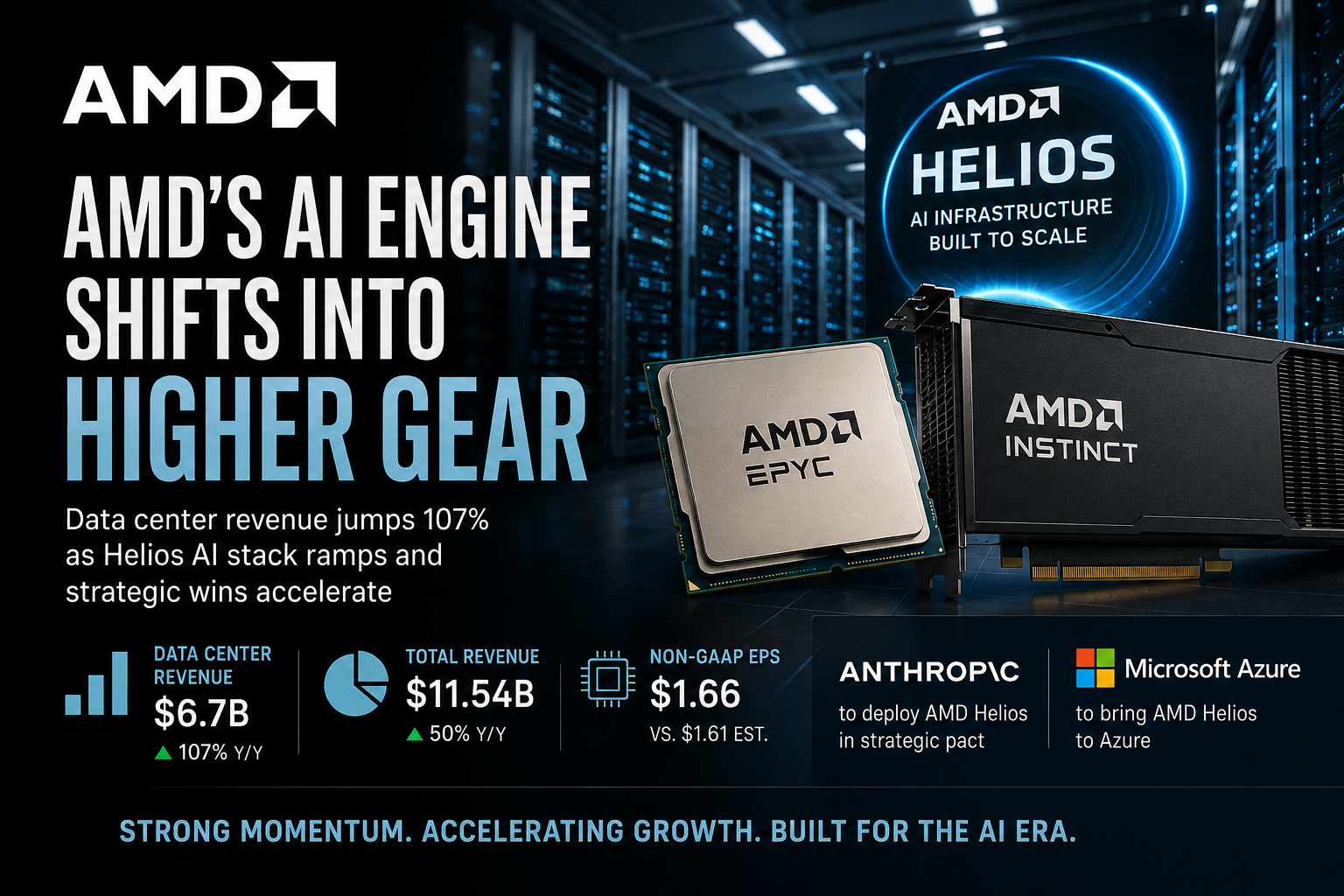
SAN FRANCISCO - Advanced Micro Devices (AMD) disappointed investors with its latest sales outlook, a sign shareholders expected more of a return from the global expansion of AI data centres.Third-quarter revenue will be US$13 billion (S$16.7 billion), plus or minus US$300 million, the chipmaker said in a statement on Aug 4. Though analysts predicted US$12.5 billion on average, some Wall Street estimates were well north of US$13 billion, according to data compiled by Bloomberg.AMD shares sank 8.8 per cent in postmarket trading after the report was released.The reaction suggests that the company needs to show more rapid growth to justify its valuation. The chipmaker’s stock had more than doubled this year – far outpacing a broader rally – after AMD emerged as a key contender to Nvidia in artificial intelligence processors.In July, chief executive officer Lisa Su rolled out new products that the company said will outperform offerings from Nvidia, adopting a more aggressive stance in a market it predicts will reach US$1.4 trillion by 2030. That further raised already lofty investor expectations. AMD’s second-quarter sales rose 50 per cent to US$11.5 billion. Profit, minus certain items, was US$1.66 a share. Analysts had estimated US$11.3 billion in revenue and a profit of US$1.62 a share.Sales at AMD’s data centre business more than doubled to US$6.7 billion. Analysts had predicted US$6.6 billion on average.It’s not uncommon for AMD to report positive results and still see its stock slump. Its earnings reports have drawn negative reactions more often than not in recent years, even as the company topped Wall Street estimates. AMD’s report also comes late in the tech earnings season. Strong showings by the chipmaker’s customers and rivals, such as Intel, added to expectations.Spending on data centres is accelerating, fuelling demand for processors and other equipment. Capital expenditures by the biggest owners of data centres will rise to over US$1 trillion in 2027, according to an estimate by Bernstein analysts. AMD makes accelerator chips that are used to train and run AI software – a market pioneered by Nvidia, which remains dominant.“AMD has already established itself as a meaningful second supplier to Nvidia in AI accelerators,” Emarketer analyst Jacob Bourne said in a note.But that leaves a bigger question over whether it can keep up with Nvidia in the broader market for AI infrastructure, he said. “AMD is evolving from a chip challenger into an AI infrastructure competitor,” he said. AMD also makes central processing units, or CPUs, where it’s rapidly closing in on longtime leader Intel. That type of generalist chip has enjoyed a renaissance in data centers, where it’s helping support AI services.AMD isn’t immune to the downside of the AI data centre build-out. The frenzy has caused shortages of memory chips, hurting makers of personal computers, smartphones and other devices.The crunch has led to higher prices and less supply of PCs, which is still AMD’s largest market by volume. BLOOMBERG
AMD data centre sales double but AI chip giant’s shares sink on lofty expectations
Its stock had more than doubled this year after the company emerged as a key contender to Nvidia in AI processors. Read more at straitstimes.com. Read more at straitstimes.com.
TL;DRAI
AMD reported Q2 revenue of $11.5B with data centre sales doubling to $6.7B; Q3 guidance of $13B disappointed Wall Street (stock -8.8%). AMD is Nvidia's second AI supplier, but must maintain momentum in the $1.4T AI infrastructure market to justify valuation.
482 words~2 min read