A peptide vaccine targeting KRAS mutations in patients at high risk for pancreatic cancer induced durable T-cell responses.In 16 patients with evaluable pancreatic cysts, three had complete resolution of the cysts, three had partial regression, and the rest had stable cyst status.No patient developed severe vaccine-related adverse events.
A peptide vaccine targeting KRAS mutations in pancreatic cancer showed preliminary evidence of activity in a small study of high-risk patients.
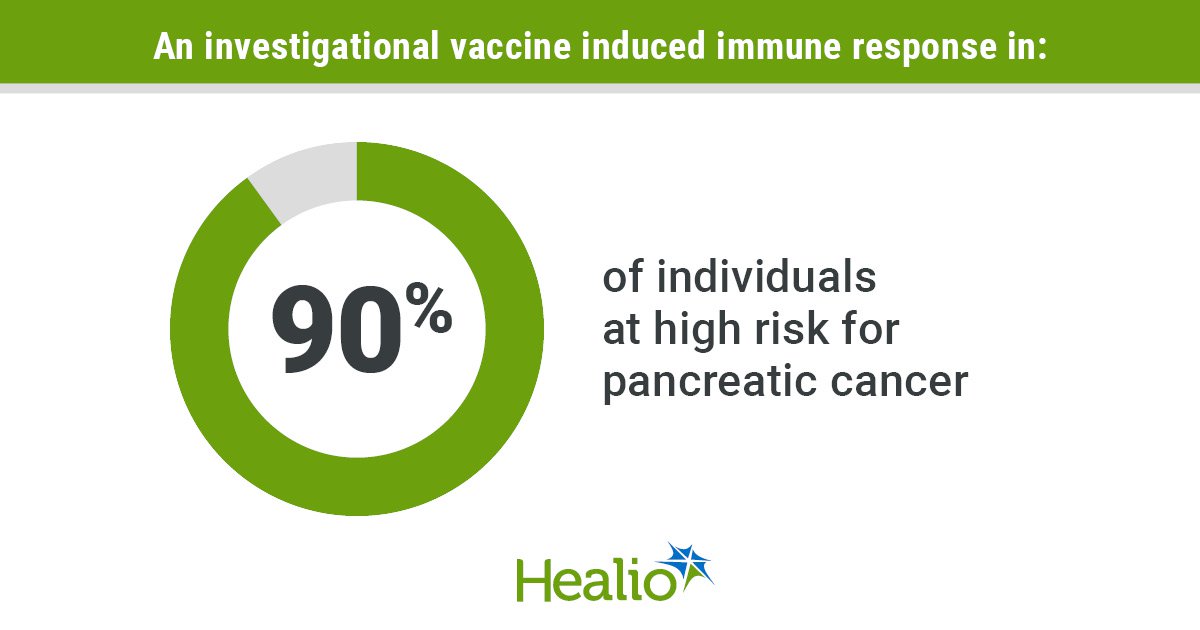
The vaccine elicited KRAS-specific T-cell responses in 18 of 20 patients with mutations associated with pancreatic ductal adenocarcinoma (PDAC). Vaccine-induced T-cell clonotypes persisted for up to 2 years, and no patient developed pancreatic cancer during 16.5 months of follow-up. No patient developed grade ≥3 adverse events (AEs).
The findings support continued evaluation of the vaccine for PDAC interception, reported Neeha Zaidi, MD, of Johns Hopkins Medicine in Baltimore, and colleagues in Cancer Discovery.
"We were able to collect blood before and after vaccination and look at whether there was an immune response specific to the vaccine, but we weren't able to look at what happened at the tissue level," Zaidi told MedPage Today. "Were these immune cells actually able to get into the tissue? What were they doing there?"