CHAUTAUQUA, New York — The road here feels like one of those places that America keeps tucked away on purpose — the kind that you don’t stumble into by accident. You come in from the hills and hollows and farm country, past the modest storefronts and weathered porches, and then the land opens up near Chautauqua Lake, where the place that gave the movement its name still seems to hold the memory of a nation trying to teach itself how to learn.It began in 1874, not as a grand national idea, but as a practical one. John H. Vincent, a Methodist minister, and Lewis Miller, an inventor and businessman, gathered Sunday school teachers at the lake for a summer assembly. They wanted to educate people who were teaching others, and they understood something that still feels almost radical: Knowledge should not belong only to the educated elite, and learning should not be confined to winter classrooms and elite institutions. It could happen outdoors, among ordinary people, with lectures, music, religion, recreation, and conversation mixed together like threads in the same cloth.That was the beginning. But what happened next tells the real story.
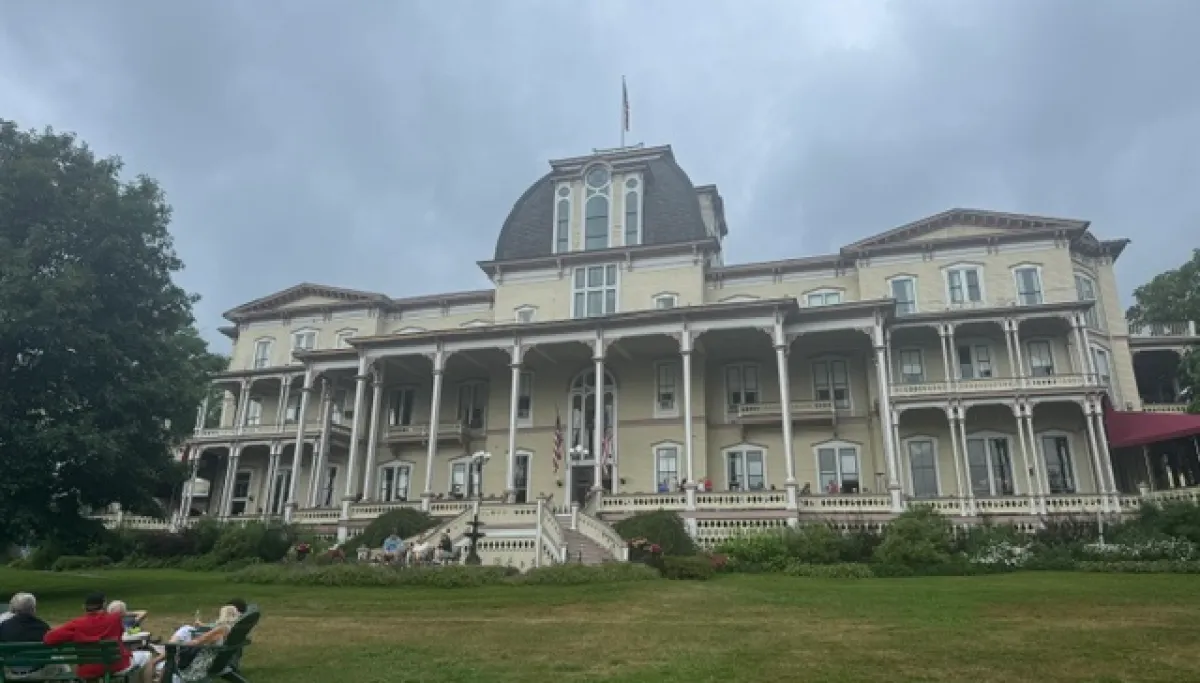
Chautauqua did not stay a gathering for teachers. It became a movement because it answered a hunger that was bigger than its founders probably imagined. In towns across the country, especially in places far from cities and universities, people wanted a way to make sense of a nation changing quickly. Factories were rising. Railroads were knitting distant places together. Immigration, industrialization, and modern life were remaking work, family, and faith. Chautauqua offered something steady in the middle of all that motion: a place to listen, to argue, to sing, to pray, to read, and to believe that a better self and a better public life were still possible.The Chautauqua Institute began in 1874, not as a grand national idea, but as a practical one. John H. Vincent, a Methodist minister, and Lewis Miller, an inventor and businessman, gathered Sunday school teachers at the lake for a summer assembly. (Salena Zito/Washington Examiner)