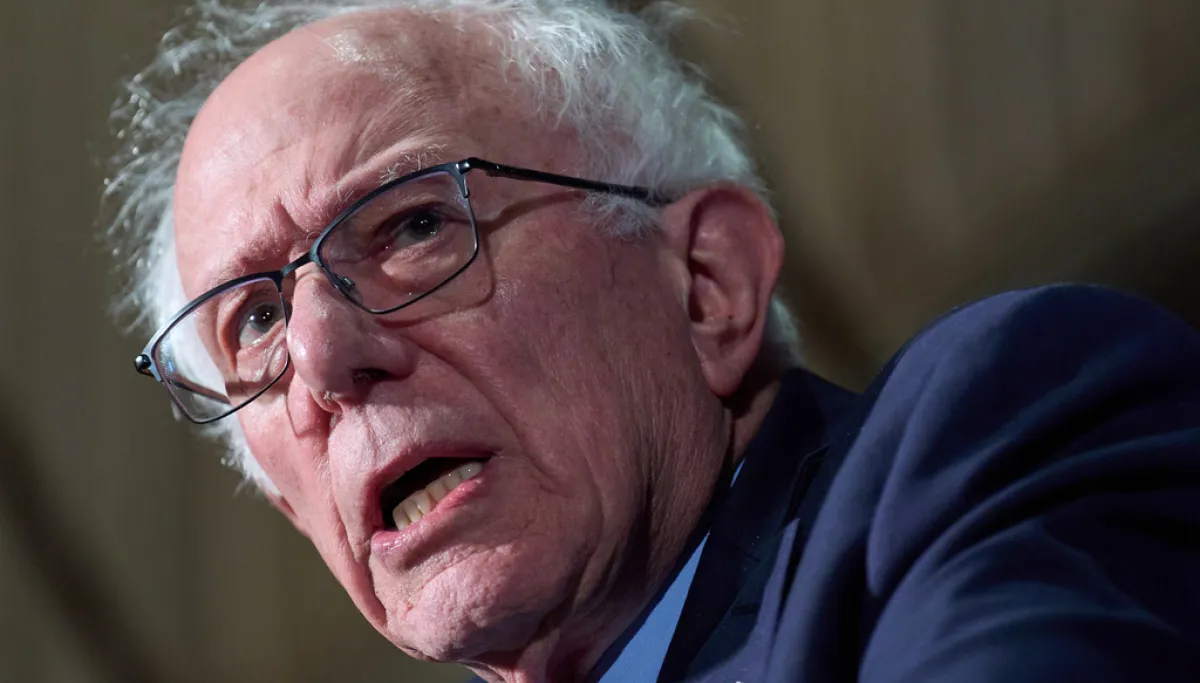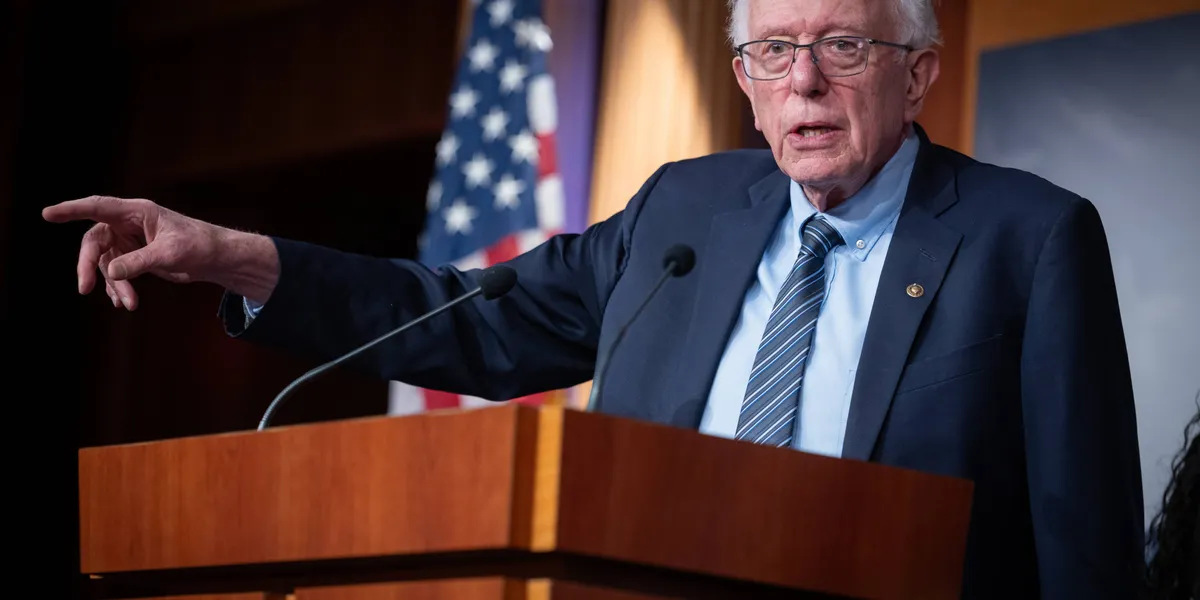
US Sen. Bernie Sanders on Tuesday warned his Democratic colleagues against supporting bipartisan legislation that would open the door to fast-tracked Social Security cuts under the guise of rescuing the New Deal program from insolvency.In a Dear Colleague letter, Sanders (I-Vt.) wrote that the best and most popular way to extend the life of Social Security and expand its modest benefits is to lift the payroll tax cap, which currently exempts annual income above $184,500 from taxation. But the senator argued that the Protecting Retirement Opportunities and Maintaining Income Security for Everyone (PROMISE) Act—introduced last month by a bipartisan group of senators—"moves us in exactly the wrong direction.""The so-called PROMISE Act would direct four unelected members of the Social Security Advisory Board to produce, in little more than a month, a proposal to make Social Security solvent for the next 50 years—with virtually no transparency, no meaningful public input, and no accountability," Sanders wrote. "If the Advisory Board reaches an agreement, Congress would be required to vote on their proposal during the lame-duck session after the November elections when Republicans still control the Senate and the House.""If the board cannot reach an agreement, the PROMISE Act would allow any member of Congress to force a vote on their own Social Security proposal under expedited procedures without the opportunity to amend it or seek a compromise—also during the lame-duck session," Sanders continued. "In other words, Members of Congress who have been defeated at the polls or who have chosen to retire could determine the future of Social Security for the next half century."The PROMISE Act's lead sponsors are Sens. Bill Cassidy (R-La.), Dick Durbin (D-Ill.), Thom Tillis (R-NC), Tim Kaine (D-Va.), John Cornyn (R-Texas), Angus King (I-Maine.), and Alan Armstrong (R-Okla.). Five of the bill's seven sponsors either lost reelection or aren't running again in 2026."In other words, members of Congress who have been defeated at the polls or who have chosen to retire could determine the future of Social Security for the next half century," Sanders wrote in his letter. "Even more significantly, a political party that was repudiated by the electorate in the midterm elections could determine the fate of Social Security. That would be absurd, anti-democratic, and unacceptable."Sanders isn't alone in warning against the PROMISE Act. A week after the bill's introduction, the AARP's executive vice president expressed opposition in a letter to Cassidy and Durbin, writing that "we strongly object to fast-tracking Social Security changes through Congress, as your bill would do."Max Richtman, president and CEO of the National Committee to Preserve Social Security and Medicare, echoed Sanders' concern that the legislation's changes "would likely occur during a lame-duck session, after the election, when many members are on their way out.""Those members could be asked to vote on sweeping changes to Americans’ earned benefits, when they’ll no longer be accountable because they’re leaving office. I think that’s a real problem," said Richtman. "And I think members of Congress should be 100% responsible for any changes to the Social Security program.""We will strengthen and expand Social Security by requiring the wealthiest Americans to finally pay the same percentage of their income into Social Security as tens of millions of working people."In early June, Social Security's Board of Trustees said in its annual report that—in the absence of congressional action—the program will be unable to pay out full benefits by the end of 2032. At that point, the Social Security trust fund "will be sufficient to pay 78% of total scheduled benefits," the trustees said.Sanders argued on Tuesday that the solution is straightforward: "strengthen and expand Social Security by requiring the wealthiest Americans to finally pay the same percentage of their income into Social Security as tens of millions of working people do today."Last year, Republicans blocked Sanders' attempt to pass via unanimous consent his legislation to expand Social Security benefits by $2,400 a year per recipient. The expanded benefits would be funded by subjecting all annual income above $250,000 to Social Security payroll taxes. According to the senator's office, his legislation would ensure Social Security's solvency for the next 75 years. Data for Progress polling shows Sanders' proposal is overwhelmingly popular, with 80% of US voters supporting the measure."If the Democratic Party is ever to regain the faith of ordinary Americans it must stand firm on the issue of Social Security," Sanders wrote on Tuesday. "That means: We will not cut Social Security benefits. We will not raise the retirement age. We will not reduce cost-of-living adjustments. We will not privatize Social Security.""We will not support procedural shortcuts that make it easier to reduce earned Social Security benefits behind closed doors while limiting public debate," Sanders continued. "Instead, we will strengthen and expand Social Security by requiring the wealthiest Americans to finally pay the same percentage of their income into Social Security as tens of millions of working people do today."
Sanders Warns Democrats: Don't Support Bill to Fast-Track Social Security Cuts | Common Dreams
"If the Democratic Party is ever to regain the faith of ordinary Americans it must stand firm on the issue of Social Security," said Sen. Bernie Sanders.
813 words~4 min read