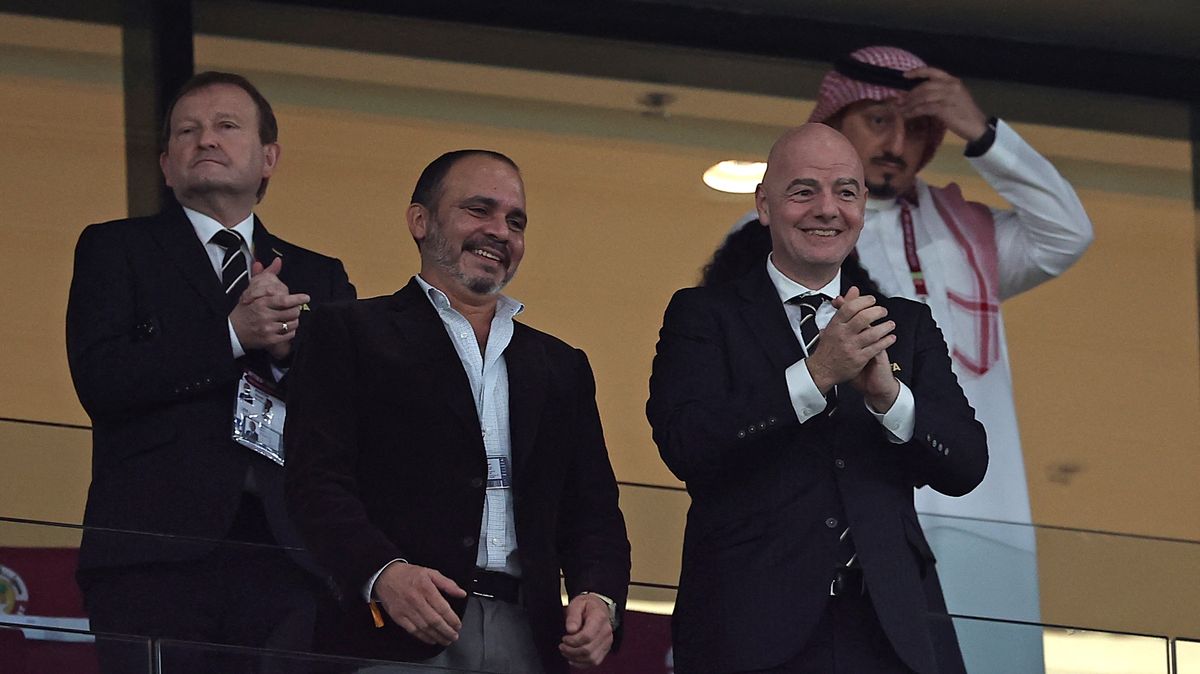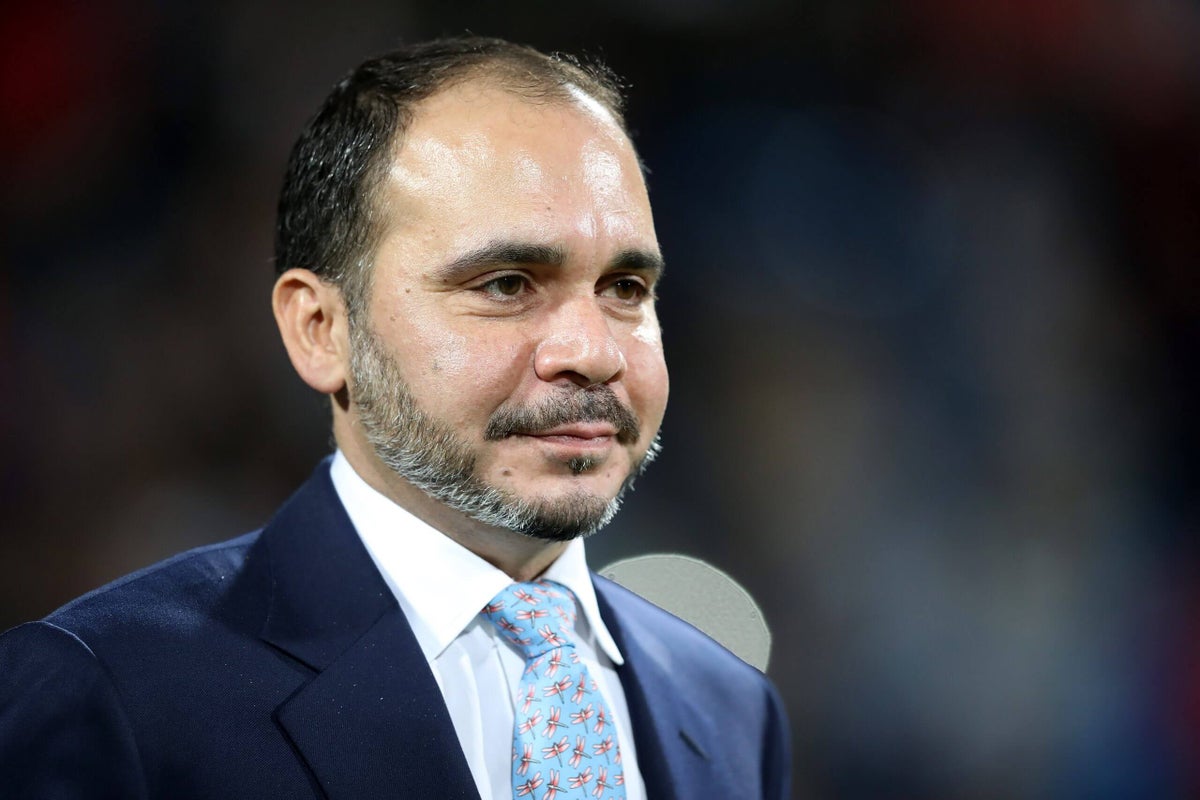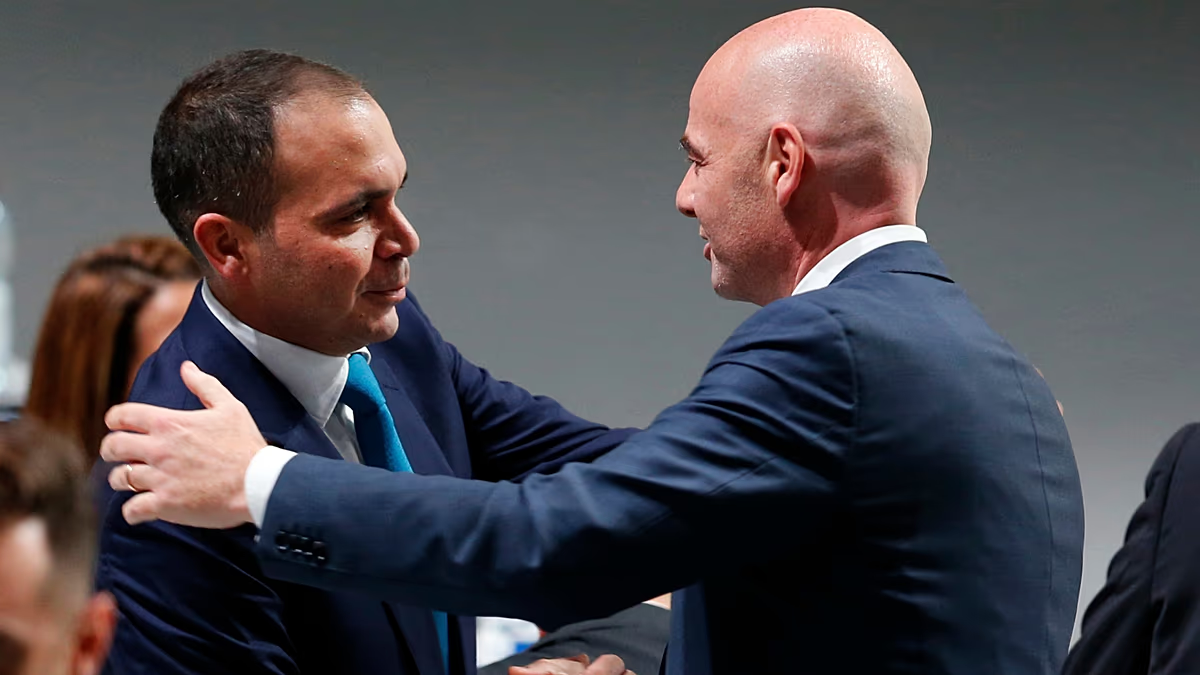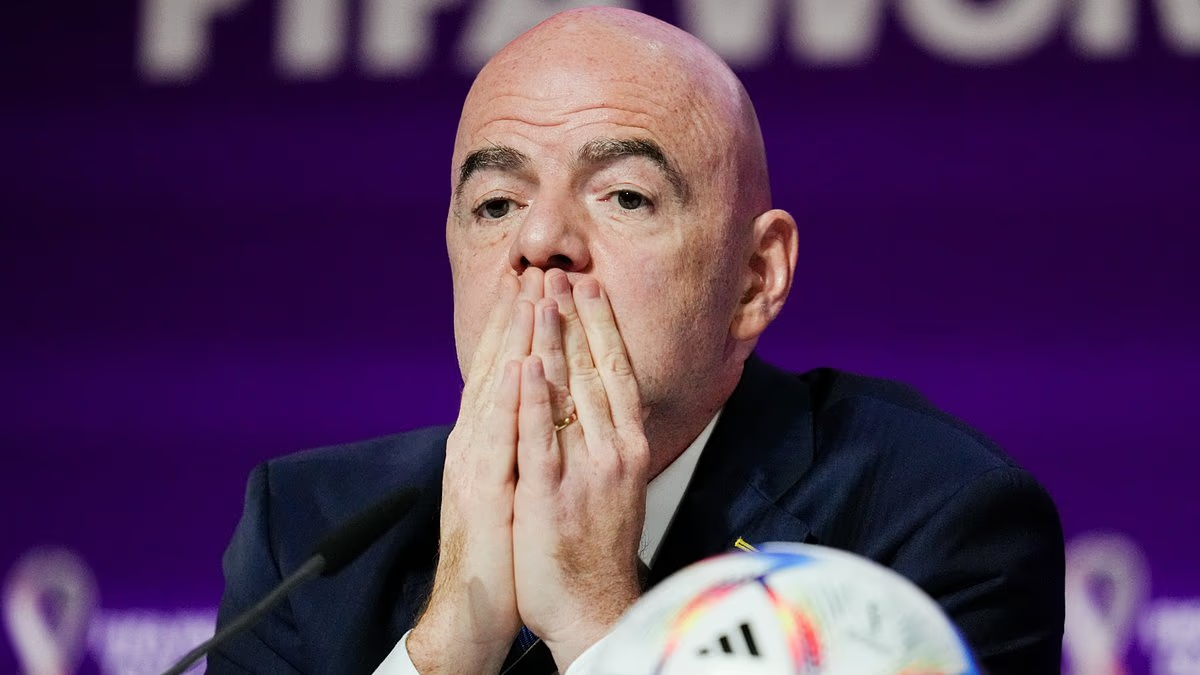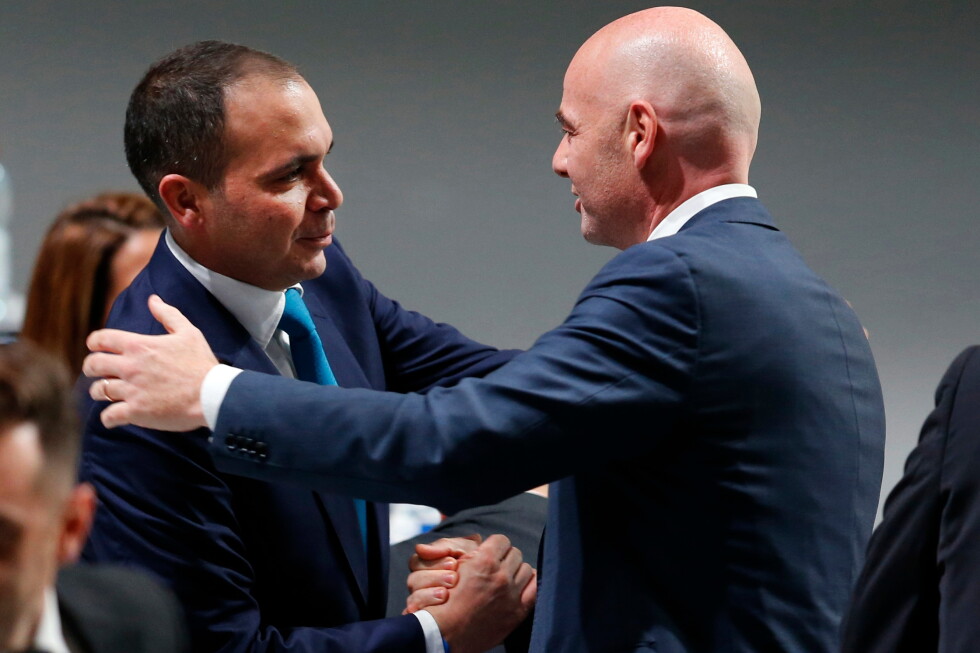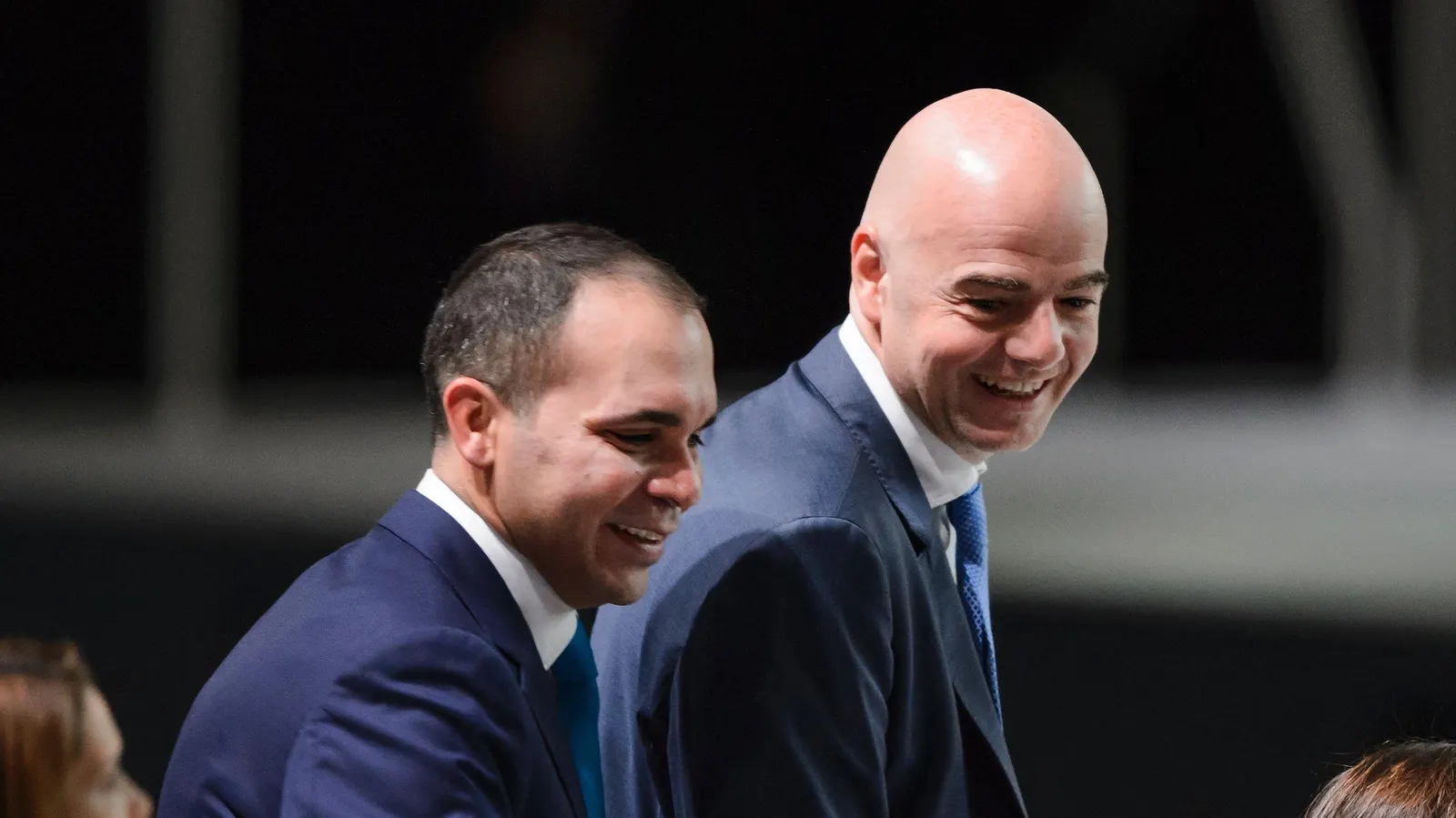
ToplineThe president of the Jordanian Football Association, Prince Ali Bin Al Hussein, on Tuesday accused FIFA president Gianni Infantino of blackmailing his organization in attempts to secure the Jordan team’s vote in the organization's next leadership election. Prince Ali bin al Hussein, left, and Gianni Infantino in 2016. AFP via Getty ImagesKey FactsInfantino, who once had the backing of almost all of FIFA’s 211 member organizations, is facing a potential outster in March’s election after he angered a substantial number of national federations with a plan to sell a 20% stake in the World Cup to a group of private investors. The plan was dropped late last week, but he’s now reportedly racing to drum up enough votes to secure his reelection to a fourth term as president as teams like England, Wales, Finland and Sweden retract their support. In a social media post Tuesday, Ali said it was “verbally communicated” to him during the World Cup that issues faced by his team—including unpaid player reward money and problems with World Cup visas—could be solved if Jordan endorsed Infantino for a fourth term. Ali, a former FIFA vice president, said Jordan didn’t endorse Infantino before the alleged coercion and still doesn’t, adding, “the whole situation amounts to blackmail and we refuse to give in to that.”WHAT DID JORDAN ALLEGE? Ali wrote in his post that the Jordanian Football Association has had a number of problems related to FIFA in recent months. He said a number of Jordanian fans weren’t allowed into the U.S. despite having tickets that were sold to them at “exorbitant prices,” and criticized the financial set up that sees players, coaches and staff taxed by the U.S. “through FIFA” on income earned from playing in the World Cup on American soil (Ali alleged teams with base camps in Canada and Mexico are not being taxed in the same way). He also alleged FIFA has been withholding player reward money earned during December’s Arab Cup in Qatar. Ali said all of these problems highlight issues “with leadership,” and said FIFA was refusing to help until suggesting an endorsement for Infantino “would go a long way.” Key backgroundAli’s accusation comes as Infantino works to save his job by lobbying the support of FIFA member nations who haven’t already condemned him for the World Cup privatization plan he announced last month to spectacular backlash. The plan would have seen FIFA raise an estimated $4.2 billion this year by selling a reported 20% minority stake in a new subsidiary, called FIFA Forward Enterprise, at an equity valuation of $20 billion. The backlash to the idea was immediate—both for its content and for how it was presented (federations said they weren’t consulted before it went public). The plan was immediately rejected by the 55 members of UEFA Europa League, who said they would unanimously vote against it and boycott all FIFA competitions in protest. CONCACAF, which oversees football in North, Central America and the Caribbean, and the Asian Football Confederation also rejected the plan, and it was later withdrawn. Since then, a number of teams who’d previously pledged their support to Infantino have said they won’t vote for him again. Wales, Finland, Serbia, Sweden and England have broken with him and more European teams are expected to follow. SURPRISING FACTJordan has opposed Infantino for the last decade. Prince Ali ran for FIFA president in 2015 against Sepp Blatter, but dropped out in the second round. The next year, after Blatter was ousted amid a corruption scandal, Ali ran against Infantino. Ali campaigned heavily on FIFA reform and transparency, but finished third behind Infantino and earned only four votes in the second round. Infantino has run unopposed ever since. further readingForbesFIFA’s Infantino Scrambles To Save Job After World Cup Equity Plan BackfiresBy Mary Whitfill RoeloffsForbesCan Infantino Get 106 Votes For FIFA World Cup Plan? Here’s How Members Are LeaningBy Mary Whitfill Roeloffs
Gianni Infantino Accused Of ‘Blackmail’ As FIFA President Job In Peril
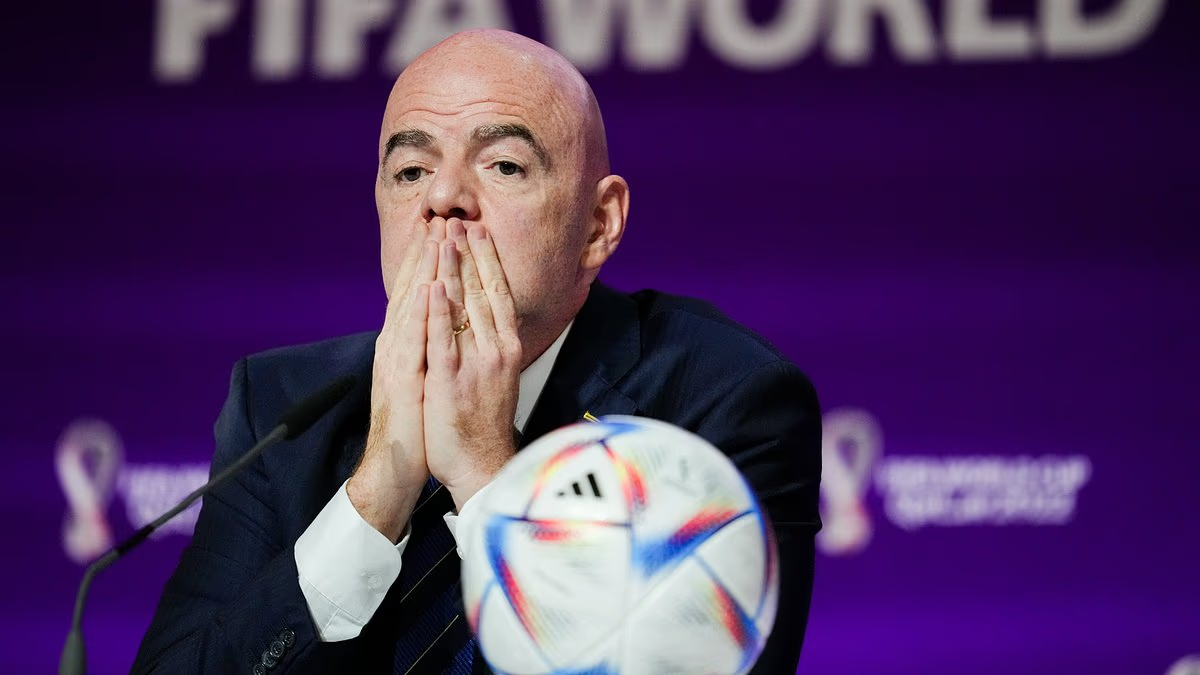
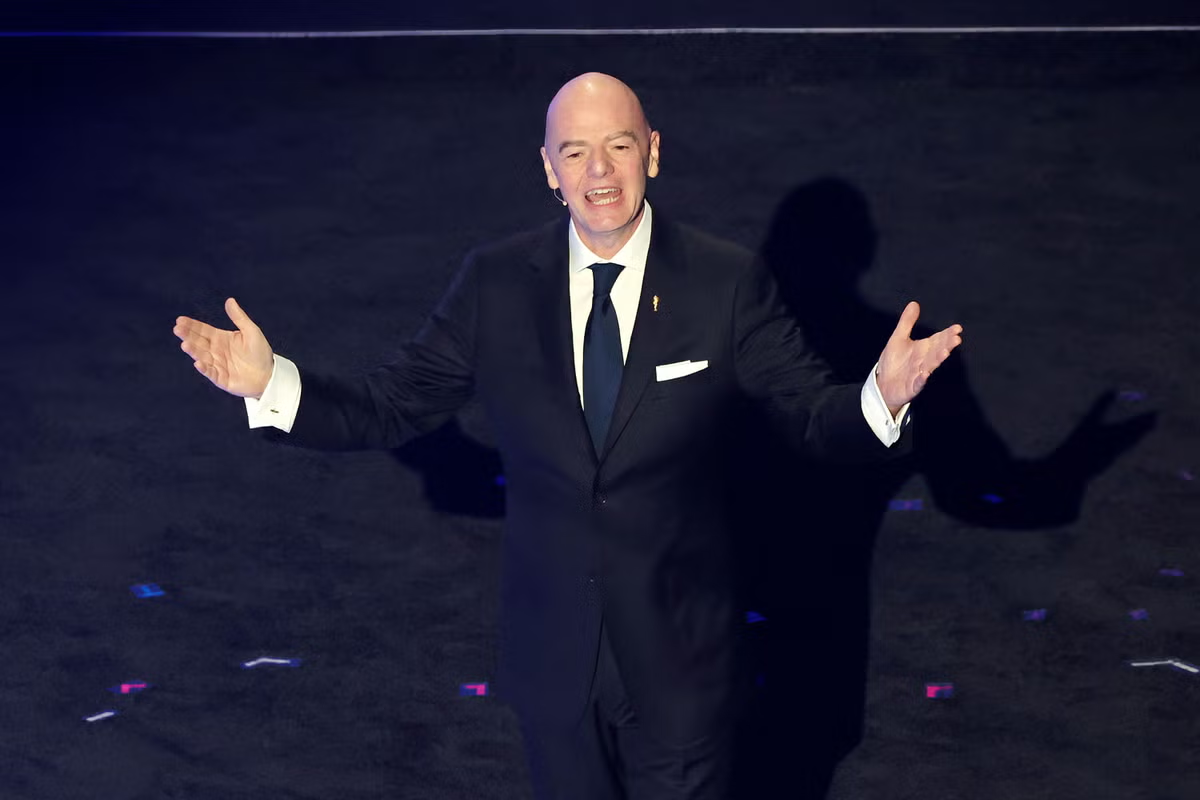
Infantino’s future was thrust into uncertainty when he presented an unpopular plan to privatize a portion of the FIFA World Cup.
649 words~3 min read