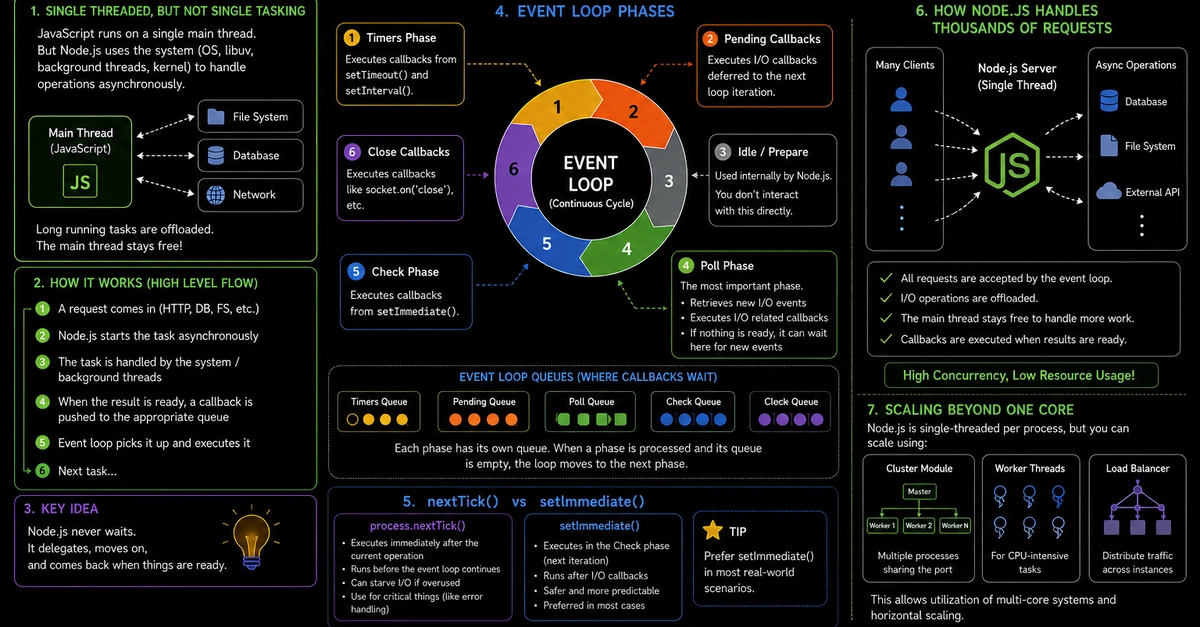
In part 1, we built the shared mental model: call stack, microtask queue, macrotask queue, and the rule that microtasks fully drain before the next macrotask runs. That model is spec-level JavaScript behavior — but it's not the whole story once you actually run code.
The event loop isn't part of the JS language spec. It's part of the host environment — the browser or Node — and each one implements it differently around that shared core. This is the post most "event loop" explainers skip, because it means going past the diagram and into how each runtime is actually built.
The browser: event loop meets rendering
In a browser, the event loop isn't just juggling callbacks — it's also responsible for keeping the page visually responsive. That means rendering has to get a turn too, and the browser has to decide when.
Here's the roughly accurate sequence per loop iteration: